

Feb . 11, 2026 00:01 Back to list
grey pvc pipe manufacturers Performance Analysis
Introduction
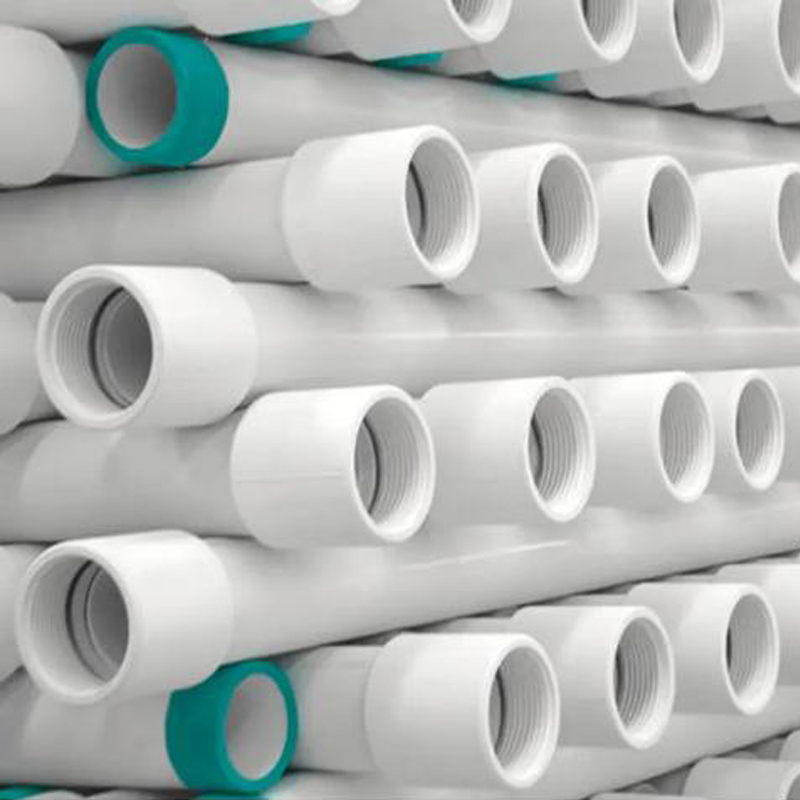
Polyvinyl Chloride (PVC) pipe, specifically grey PVC, represents a foundational material in modern infrastructure. Primarily utilized for non-pressure applications like drainage, wastewater, and irrigation, its prevalence stems from a favorable combination of cost-effectiveness, durability, and ease of installation. Grey PVC distinguishes itself from white PVC through its differing formulation, incorporating UV inhibitors to enhance resistance to sunlight degradation, making it ideally suited for above-ground, exposed applications. The manufacturing process, while seemingly straightforward, demands precise control over compounding, extrusion, and quality assurance to meet stringent industry standards. This guide provides a comprehensive technical overview of grey PVC pipe, encompassing material science, manufacturing processes, performance characteristics, failure modes, and relevant industry standards. The core industry pain points center around long-term durability in aggressive chemical environments, maintaining dimensional stability under varying temperature loads, and consistently achieving compliance with evolving regulatory requirements. Grey PVC’s role within the construction and civil engineering value chain is critical, acting as a conduit for essential services, and its performance directly impacts the reliability of those systems.
Material Science & Manufacturing
Grey PVC pipe production begins with the polymerization of vinyl chloride monomer (VCM). This process, typically suspension or emulsion polymerization, results in polyvinyl chloride resin. The resin itself is brittle, necessitating the addition of plasticizers, primarily phthalates or alternatives like DINCH, to impart flexibility and impact resistance. Stabilizers, such as organotin compounds or calcium-zinc formulations, are crucial for preventing thermal degradation during processing. The ‘grey’ color is achieved through the incorporation of titanium dioxide (TiO2) and carbon black, the ratio of which dictates the final shade and UV protection level. The TiO2 provides opacity and contributes to UV resistance, while carbon black further enhances UV stability and offers cost benefits.
Manufacturing typically involves compounding the PVC resin with the aforementioned additives using high-shear mixers. This homogenous mixture is then fed into an extruder, where it’s heated and melted. Extrusion parameters – barrel temperature profile (typically ranging from 180°C to 220°C), screw speed, and die geometry – are critical. Precise control is required to achieve uniform melt viscosity and prevent localized overheating, which can lead to degradation. The extruded pipe is then cooled via water baths, calibrated to achieve the desired outer diameter and wall thickness, and cut to specified lengths. Quality control measures include hydrostatic pressure testing (to verify burst resistance), impact testing (to assess toughness), and dimensional checks. The choice of plasticizer significantly influences the pipe's flexibility and low-temperature performance; lower-temperature applications require higher plasticizer content.
Performance & Engineering
The structural integrity of grey PVC pipe is governed by principles of ring stiffness and hoop stress. Ring stiffness, measured in psi, indicates the pipe's resistance to flattening under external loads, such as soil overburden. Higher ring stiffness values denote greater load-bearing capacity. Hoop stress, the stress acting circumferentially within the pipe wall, is a critical factor in determining burst pressure. Finite Element Analysis (FEA) is commonly employed to model stress distribution under various loading conditions, including internal pressure, external loads, and temperature variations.
Environmental resistance is paramount. Grey PVC exhibits good resistance to most acids and alkalis, however, prolonged exposure to strong oxidizing agents or aromatic hydrocarbons can cause swelling and degradation. Temperature significantly impacts mechanical properties. PVC becomes more brittle at lower temperatures and can soften under high temperatures. The glass transition temperature (Tg) of PVC is approximately 80°C; exceeding this temperature compromises its structural integrity. Compliance requirements, dictated by standards like ASTM D1785 and EN 1401-1, specify minimum performance criteria for hydrostatic pressure, impact resistance, and dimensional tolerances. Understanding soil corrosivity and groundwater chemistry is crucial for selecting appropriate PVC formulations and ensuring long-term performance in buried applications. UV exposure, even with UV stabilizers, leads to gradual degradation, manifested as surface chalking and embrittlement over extended periods.
Technical Specifications
| Parameter | Units | Typical Value (Schedule 40) | Test Standard |
|---|---|---|---|
| Nominal Pipe Size | inches | 4 | ASTM D1785 |
| Outside Diameter | inches | 4.500 | ASTM D1785 |
| Wall Thickness | inches | 0.218 | ASTM D1785 |
| Ring Stiffness | psi | 225 | ASTM D2412 |
| Hydrostatic Design Pressure | psi | 350 | ASTM D1595 |
| Impact Resistance (Longitudinal) | ft-lbs | 12 | ASTM D2444 |
Failure Mode & Maintenance
Grey PVC pipe is susceptible to several failure modes. Fatigue cracking can occur under cyclic loading, particularly in areas of stress concentration, such as fittings or joints. Environmental Stress Cracking (ESC) results from the combined effects of tensile stress and exposure to aggressive chemicals, leading to brittle failure. UV degradation causes surface chalking, discoloration, and a reduction in mechanical properties over time. Soil settlement or ground movement can induce excessive stress on buried pipes, leading to cracking or joint separation. Delamination can occur in improperly manufactured pipe, where layers of PVC separate due to inadequate bonding. Oxidation can occur in extreme high temperature environments.
Maintenance primarily focuses on preventative measures. Regular inspections for cracks, leaks, and deformation are essential. Proper bedding and backfill materials should be used during installation to provide adequate support and minimize stress. Avoid exposing PVC pipe to incompatible chemicals. For minor cracks, specialized PVC repair compounds can be used. For significant damage, pipe sections should be replaced. Joints should be regularly inspected to ensure watertight seals. Consider utilizing protective sleeves or coatings in environments with high UV exposure or aggressive chemical concentrations. Proper installation techniques, adhering to industry best practices, are the most effective means of mitigating potential failure modes.
Industry FAQ
Q: What is the impact of plasticizer migration on the long-term performance of grey PVC pipe?
A: Plasticizer migration, the gradual leaching of plasticizers from the PVC matrix, can lead to increased brittleness and reduced flexibility over time. The rate of migration is influenced by temperature, exposure to chemicals, and the type of plasticizer used. Lower molecular weight phthalates are more prone to migration than higher molecular weight alternatives like DINCH. Selecting PVC compounds with optimized plasticizer formulations and employing appropriate protective measures can mitigate this effect.
Q: How does the choice of stabilizer affect the thermal stability of grey PVC during processing and service life?
A: Stabilizers prevent thermal degradation during extrusion and exposure to high temperatures during service. Organotin stabilizers were historically common, but environmental concerns have led to increased use of calcium-zinc stabilizers. Calcium-zinc stabilizers offer improved environmental profiles but may require higher loading levels and can sometimes affect clarity. The choice of stabilizer impacts the processing window and the long-term resistance to heat and UV exposure.
Q: What are the key differences between Schedule 40 and Schedule 80 grey PVC pipe, and when should each be used?
A: Schedule 40 and Schedule 80 refer to the pipe's wall thickness. Schedule 80 has a thicker wall and, consequently, higher pressure rating and ring stiffness compared to Schedule 40. Schedule 40 is generally suitable for lower-pressure drainage and irrigation applications, while Schedule 80 is preferred for applications requiring greater strength and resistance to impact or higher pressures, such as industrial wastewater systems.
Q: What is the recommended bedding material for grey PVC pipe installations to prevent soil-induced stress?
A: A granular bedding material, such as sand or gravel, is recommended. This material provides uniform support to the pipe and prevents localized stress concentrations caused by rocks or debris in the surrounding soil. The bedding material should be properly compacted to provide adequate load distribution. Avoid using angular or abrasive materials that can damage the pipe surface.
Q: How does the chemical composition of the surrounding soil affect the long-term durability of grey PVC pipe?
A: Soil chemistry can significantly impact PVC pipe durability. Highly acidic or alkaline soils, as well as soils containing sulfates or chlorides, can accelerate degradation. Exposure to organic solvents can also cause swelling and cracking. Selecting a PVC formulation with appropriate chemical resistance and implementing protective measures, such as external coatings, can mitigate these effects. Conducting a soil analysis prior to installation is highly recommended.
Conclusion
Grey PVC pipe remains a vital material for a broad range of infrastructure applications due to its cost-effectiveness, durability, and ease of installation. However, achieving optimal long-term performance requires a thorough understanding of its material properties, manufacturing processes, and potential failure modes. Precise control over compounding, extrusion parameters, and quality assurance procedures is paramount. Furthermore, careful consideration of environmental factors, such as temperature, UV exposure, and soil chemistry, is essential for selecting the appropriate PVC formulation and implementing preventative maintenance strategies.
Future advancements in PVC technology will likely focus on the development of more sustainable plasticizers, enhanced UV stabilizers, and improved manufacturing techniques to further enhance durability and reduce environmental impact. Increased emphasis on lifecycle assessments and standardized testing methodologies will also be critical for ensuring the continued reliability and longevity of grey PVC pipe systems. Proactive monitoring and adoption of best practices in installation and maintenance will be key to maximizing its service life and minimizing the risk of premature failure.
-
DN25 HDPE Compression Fitting-HORON INTERNATIONAL|Reliable Irrigation Solutions
NewsFeb.11,2026
-
china ppr for hot water Performance Analysis
News2026-04-22
-
china bulk pvc pipe Technical Analysis
News2026-04-22
-
china pvc pipes price list Performance Analysis
News2026-04-22
-
china 20 ft pvc pipe Performance Analysis
News2026-04-22
-
china ppr cold water pipe Performance Analysis
News2026-04-22
-
china double wall hdpe pipe Performance Analysis
News2026-04-21
-
china transition coupling hdpe to pvc Performance Analysis
News2026-04-21
-
china water pipe ppr Performance Analysis
News2026-04-21
-
china dn150 hdpe Performance Analysis
News2026-04-21
-
china sprinkler hdpe pipe Material Performance
News2026-04-21
-
china underground pvc pipe price Performance Analysis
News2026-04-10
-
china water pipes under sink Material Science
News2026-04-10
-
china 40mm ppr pipe price Performance Analysis
News2026-04-10
-
china hdpe transition coupling Performance Analysis
News2026-04-10
-
china bulk pvc pipe for sale Performance Analysis
News2026-04-10