

Feb . 11, 2026 00:01 Back to list
grey pvc pipe factory Manufacturing Analysis
Introduction
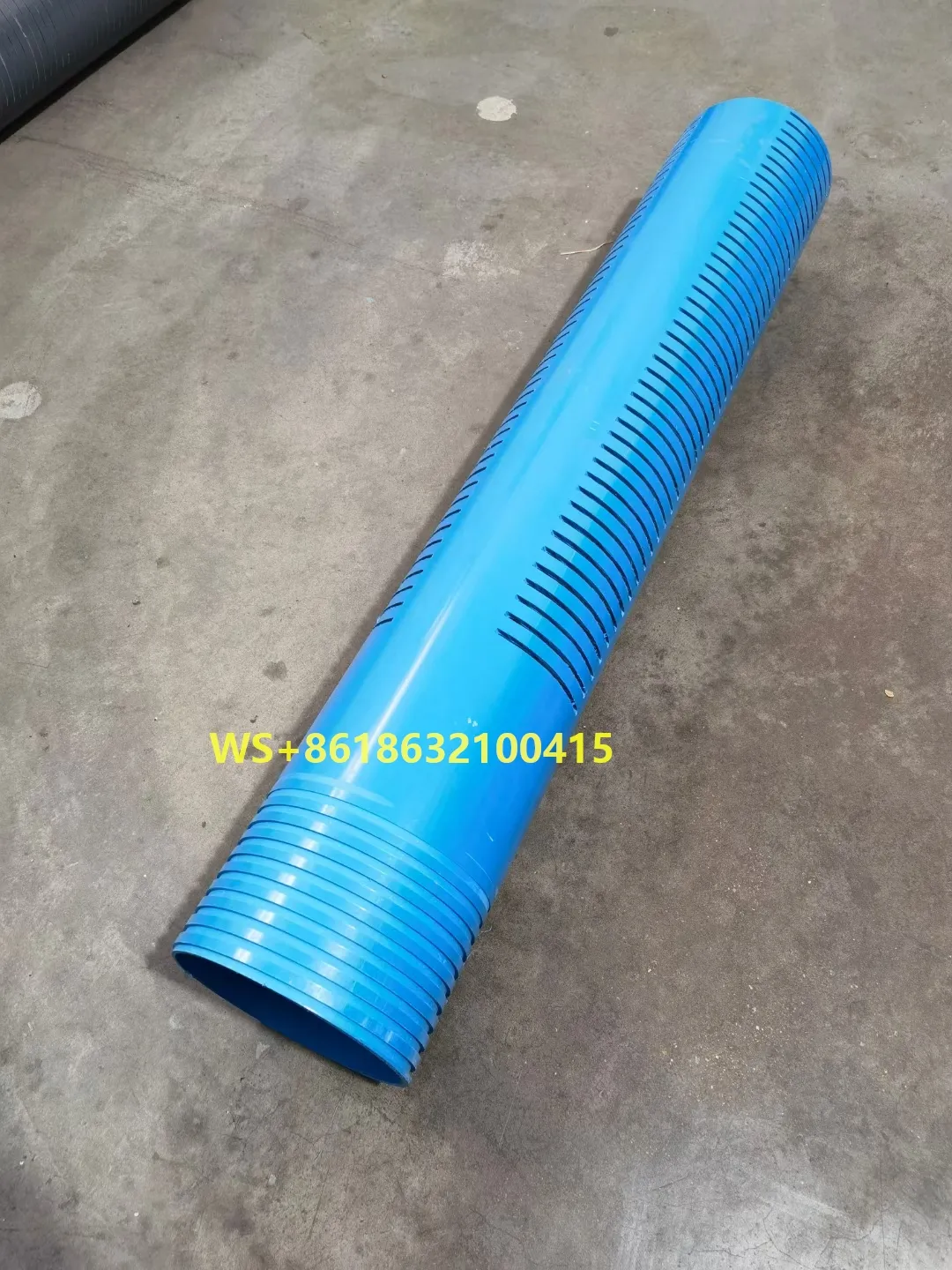
Grey Polyvinyl Chloride (PVC) pipe represents a significant segment of the industrial piping solutions market, crucial for diverse applications including potable water distribution, irrigation, drainage, and industrial effluent conveyance. Its position in the value chain extends from raw material sourcing (ethylene and chlorine) through polymerization, compounding, extrusion, and finally, fabrication and installation. Grey PVC’s prominence stems from its cost-effectiveness, durability, chemical resistance, and ease of installation relative to metallic alternatives. Core performance characteristics revolve around pressure containment, long-term hydrolytic stability, resistance to soil corrosivity, and compliance with relevant potable water standards. A key industry pain point is consistently achieving dimensional accuracy during extrusion, ensuring consistent wall thickness, and maintaining long-term material integrity under varying environmental stresses, particularly UV exposure and temperature fluctuations. This guide provides an in-depth technical assessment of grey PVC pipe, encompassing material science, manufacturing processes, performance criteria, failure modes, and relevant industry standards.
Material Science & Manufacturing
Grey PVC pipe is fundamentally composed of Polyvinyl Chloride, a thermoplastic polymer created by the polymerization of vinyl chloride monomer (VCM). The “grey” coloration is achieved through the addition of stabilizers and pigments during the compounding process, typically iron oxides. Raw material quality, specifically the molecular weight distribution of the PVC resin, directly impacts the pipe’s mechanical properties. Key properties include a tensile strength ranging from 50-70 MPa, a flexural modulus of 3-4 GPa, and a glass transition temperature (Tg) around 80-85°C. The addition of plasticizers, such as phthalates or alternatives like DINCH, modifies the PVC’s flexibility and impact resistance, influencing its suitability for specific applications. However, plasticizer migration can be a long-term concern, potentially impacting material properties over time.
Manufacturing predominantly utilizes extrusion processes. PVC compound (resin, stabilizers, lubricants, pigments) is fed into a single or twin-screw extruder, where it’s heated and homogenized. The molten PVC is then forced through a die to form the pipe’s shape. Critical process parameters include extruder screw speed, barrel temperature profile (typically 180-220°C), die temperature, and haul-off speed. Maintaining precise temperature control is paramount to prevent thermal degradation and ensure uniform material properties. Cooling is achieved through water baths, followed by dimensional stabilization and cutting to length. Quality control at this stage involves rigorous dimensional checks (diameter, wall thickness, ovality) and hydrostatic pressure testing to verify pressure containment capability. The compounding stage itself is crucial; proper dispersion of stabilizers (typically calcium-zinc or lead-based, with increasing preference for lead-free formulations due to environmental concerns) is critical for UV resistance and long-term durability.
Performance & Engineering
The performance of grey PVC pipe is fundamentally governed by its ability to withstand internal hydrostatic pressure (IHP) and external loads. IHP testing, conducted according to ASTM D1597 or equivalent standards, verifies the pipe’s burst strength and short-term sustained pressure capability. Long-term hydrostatic strength is predicted using established equations that consider factors such as temperature, sustained pressure levels, and material creep characteristics. External loads can include soil loads, traffic loads (for buried pipelines), and bending moments during installation. Finite element analysis (FEA) is frequently employed to assess stress distribution under these loading conditions and optimize pipe wall thickness.
Environmental resistance is a key consideration. PVC is susceptible to UV degradation, leading to embrittlement and discoloration. UV stabilizers (e.g., hindered amine light stabilizers - HALS) are incorporated into the compound to mitigate this effect. However, the effectiveness of these stabilizers diminishes over time, necessitating careful consideration of the pipe’s intended service life and exposure conditions. Chemical resistance is generally excellent, with PVC being inert to most acids, bases, and salts. However, it can be affected by certain solvents and hydrocarbons. Compliance requirements vary depending on the application. Potable water pipes must meet NSF/ANSI Standard 61, ensuring that the pipe does not leach harmful contaminants into the water supply. Drainage pipes must comply with local building codes and environmental regulations regarding wastewater discharge.
Technical Specifications
| Parameter | Unit | Typical Value (SDR 21) | Typical Value (SDR 17) |
|---|---|---|---|
| Nominal Pipe Size | inch | 4 | 6 |
| Outside Diameter | mm | 114.3 | 168.3 |
| Wall Thickness | mm | 4.4 | 6.6 |
| Pressure Rating (at 23°C) | psi | 350 | 500 |
| Tensile Strength | MPa | 62 | 62 |
| Impact Strength (Izod Notched) | J/m | 400 | 400 |
Failure Mode & Maintenance
Common failure modes in grey PVC pipe include brittle fracture, cracking, and degradation. Brittle fracture can occur due to impact loads, particularly at low temperatures, or due to pre-existing flaws in the material. Cracking can arise from stress corrosion cracking (SCC) in the presence of certain chemicals, or from sustained tensile stress combined with UV exposure. Degradation manifests as embrittlement, discoloration, and loss of mechanical properties, primarily due to UV exposure and thermal oxidation. Long-term creep, a time-dependent deformation under sustained stress, can also lead to pipe deformation and eventual failure.
Failure analysis involves visual inspection, microscopic examination (to identify crack initiation sites and failure mechanisms), and mechanical testing (to determine residual strength and ductility). Preventative maintenance includes regular visual inspections for cracks or signs of degradation, ensuring adequate soil cover for buried pipelines to protect against UV exposure, and avoiding exposure to incompatible chemicals. Repair options range from patching small cracks with epoxy compounds to replacing damaged sections of pipe. Proper jointing techniques are critical to prevent leaks and failures at connections. The use of appropriate PVC cement and proper curing times are essential. Additionally, cathodic protection may be considered in aggressive soil environments to mitigate corrosion of any metallic components used in conjunction with the PVC pipe.
Industry FAQ
Q: What is the impact of temperature on the long-term performance of grey PVC pipe?
A: Elevated temperatures accelerate the degradation of PVC, reducing its long-term hydrostatic strength and increasing the rate of creep. The rate of degradation increases exponentially with temperature. Design guidelines, such as those outlined in ISO 16101, provide derating factors to account for temperature effects when calculating allowable operating pressures.
Q: How does the SDR (Standard Dimension Ratio) affect the pipe's pressure rating?
A: SDR is the ratio of the pipe’s outside diameter to its wall thickness. A lower SDR indicates a thicker wall and, consequently, a higher pressure rating. Higher SDR pipes are typically used for lower-pressure applications, while lower SDR pipes are designed for higher pressures. The pressure rating is directly proportional to the wall thickness and inversely proportional to the pipe diameter.
Q: What are the primary concerns regarding lead-based stabilizers in PVC?
A: Lead-based stabilizers, while effective in preventing thermal degradation, pose environmental and health risks. Lead can leach into the soil and water supply, potentially contaminating the environment. Regulatory pressures are increasingly favoring lead-free stabilization systems, utilizing calcium-zinc or organic-based alternatives.
Q: What types of chemicals should be avoided when using grey PVC pipe?
A: Grey PVC pipe is generally resistant to most common chemicals, but it can be affected by certain solvents, ketones, esters, and aromatic hydrocarbons. These chemicals can cause swelling, softening, and ultimately, failure of the pipe. A compatibility chart should be consulted before exposing PVC pipe to any unknown chemical.
Q: What is the role of hydrostatic testing in quality control?
A: Hydrostatic testing is a critical quality control measure that verifies the pipe's ability to withstand internal pressure without failure. Pipes are typically subjected to a test pressure significantly higher than their intended operating pressure for a specified duration. This test identifies any manufacturing defects, such as pinholes or weak spots, and ensures that the pipe meets the required performance standards.
Conclusion
Grey PVC pipe remains a dominant material in numerous piping applications due to its favorable balance of cost, performance, and durability. Understanding the underlying material science, manufacturing intricacies, and potential failure modes is crucial for ensuring its long-term reliability. Careful selection of materials, precise process control during extrusion, and adherence to relevant industry standards are paramount for maximizing the service life and minimizing the risk of premature failure.
Future trends in grey PVC pipe technology focus on developing more sustainable formulations, incorporating bio-based plasticizers, enhancing UV resistance through advanced stabilizer systems, and improving installation techniques to minimize stress concentrations. Continued research and development are essential for addressing emerging challenges and optimizing the performance of this versatile material in a rapidly evolving industrial landscape.
-
DN25 HDPE Compression Fitting-HORON INTERNATIONAL|Reliable Irrigation Solutions
NewsFeb.11,2026
-
china ppr for hot water Performance Analysis
News2026-04-22
-
china bulk pvc pipe Technical Analysis
News2026-04-22
-
china pvc pipes price list Performance Analysis
News2026-04-22
-
china 20 ft pvc pipe Performance Analysis
News2026-04-22
-
china ppr cold water pipe Performance Analysis
News2026-04-22
-
china double wall hdpe pipe Performance Analysis
News2026-04-21
-
china transition coupling hdpe to pvc Performance Analysis
News2026-04-21
-
china water pipe ppr Performance Analysis
News2026-04-21
-
china dn150 hdpe Performance Analysis
News2026-04-21
-
china sprinkler hdpe pipe Material Performance
News2026-04-21
-
china underground pvc pipe price Performance Analysis
News2026-04-10
-
china water pipes under sink Material Science
News2026-04-10
-
china 40mm ppr pipe price Performance Analysis
News2026-04-10
-
china hdpe transition coupling Performance Analysis
News2026-04-10
-
china bulk pvc pipe for sale Performance Analysis
News2026-04-10