

Feb . 11, 2026 00:01 Back to list
32mm pvc pipe service Performance Analysis
Introduction
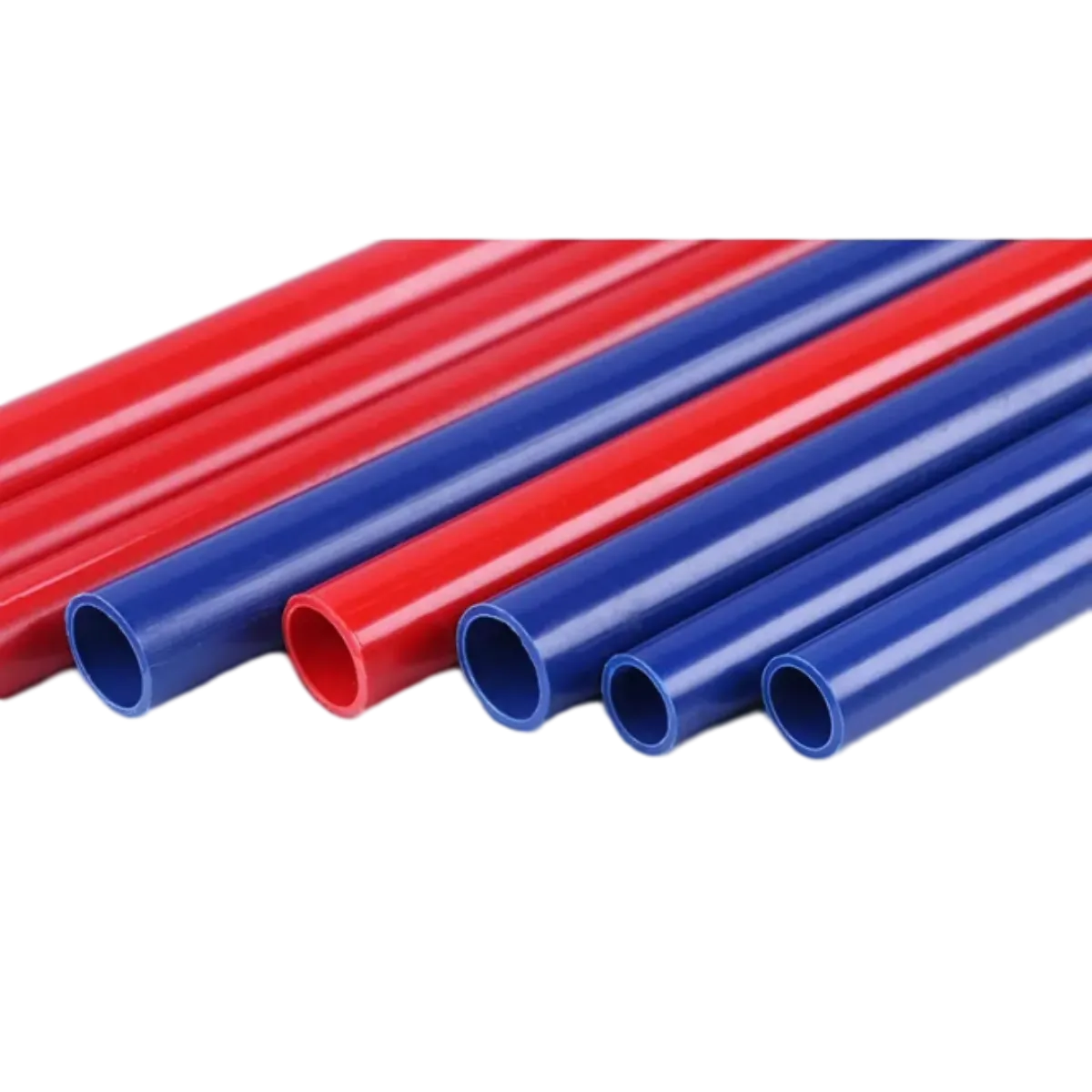
32mm Polyvinyl Chloride (PVC) pipe is a widely utilized thermoplastic piping system, predominantly in non-pressure applications like drainage, waste, and vent (DWV) systems, irrigation, and conduit for electrical wiring. This diameter represents a common size for residential and light commercial applications, balancing flow capacity with ease of installation and cost-effectiveness. Its technical position in the industry chain lies as a downstream product of ethylene and chlorine, processed through polymerization into PVC resin, then extruded and formed into rigid pipes. Core performance characteristics center around its chemical resistance, lightweight nature, ease of solvent welding, and relatively low cost, providing a robust solution for fluid and wire conveyance. However, limitations such as temperature sensitivity and potential for degradation from UV exposure necessitate careful consideration during selection and installation. The industry faces ongoing challenges related to plasticizers leaching, sustainability concerns related to PVC production, and competition from alternative materials like polyethylene (PE) and polypropylene (PP).
Material Science & Manufacturing
The primary raw material for 32mm PVC pipe is PVC resin, typically produced via suspension polymerization of vinyl chloride monomer (VCM). The resin is often compounded with additives, including plasticizers (phthalates, adipates, or alternatives like DINCH), stabilizers (tin-based or calcium-zinc based compounds to prevent thermal degradation), lubricants (to aid processing), and pigments (for color). The selection of plasticizers significantly impacts the pipe’s flexibility and temperature performance; higher plasticizer content increases flexibility but lowers heat distortion temperature. Manufacturing predominantly employs extrusion. PVC resin, along with additives, is fed into a single-screw or twin-screw extruder where it is heated and plasticized. The molten PVC is then forced through a die that forms the 32mm diameter pipe. Precise control of die temperature, screw speed, and pullulating speed is crucial to ensure dimensional accuracy and consistent wall thickness. Following extrusion, the pipe is cooled via water tanks, printed with markings (size, standard, manufacturer), and cut to desired lengths. Quality control involves hydrostatic pressure testing to verify burst strength and dimensional checks to confirm adherence to standards. The impact strength and long-term creep resistance are directly correlated to the quality of the resin and the meticulousness of the extrusion process.
Performance & Engineering
The performance of 32mm PVC pipe is governed by several engineering principles. Hydrostatic pressure rating, dictated by the pipe’s schedule (e.g., Schedule 40, Schedule 80), determines its ability to withstand internal fluid pressure. This is calculated using Barlow’s formula: P = (2St)/D, where P is the pressure, S is the tensile strength of the PVC, t is the wall thickness, and D is the outer diameter. Soil loading capacity, relevant for buried applications, is dependent on the pipe’s stiffness (measured by its modulus of elasticity) and the surrounding backfill material. PVC’s relatively low modulus of elasticity compared to metals requires careful consideration of bedding and compaction to prevent ovalization and cracking under load. Chemical resistance is a key advantage; PVC resists most acids, alkalis, and salts, but is susceptible to degradation by strong oxidizing agents and some aromatic hydrocarbons. Temperature performance is limited; PVC becomes brittle at low temperatures (below 5°C) and can soften or deform at high temperatures (above 60°C). UV exposure causes degradation, leading to embrittlement and discoloration; UV stabilizers are essential for outdoor applications. Compliance requirements include adherence to standards such as ASTM D1785 (for PVC pipe), NSF/ANSI 61 (for potable water systems), and local building codes regarding drainage and venting.
Technical Specifications
| Parameter | Schedule 40 | Schedule 80 | ASTM D1785 |
|---|---|---|---|
| Nominal Pipe Size (mm) | 32 | 32 | 32 |
| Outside Diameter (mm) | 34.9 | 34.9 | 34.9 |
| Wall Thickness (mm) | 2.4 | 3.2 | - |
| Pressure Rating @ 23°C (PSI) | 400 | 600 | - |
| Burst Pressure (PSI) | 1600 | 2400 | - |
| Density (g/cm³) | 1.40 | 1.40 | 1.38 – 1.42 |
Failure Mode & Maintenance
Common failure modes in 32mm PVC pipe service include brittle fracture, particularly in cold weather or when subjected to impact loads. This is exacerbated by pre-existing stress concentrations around fittings or damaged areas. Cracking due to stress corrosion is another potential issue, often initiated by residual stresses from manufacturing or improper installation. Long-term creep, or slow deformation under sustained load, can lead to sagging or distortion, especially in horizontal runs. Degradation from UV exposure causes embrittlement and surface cracking, reducing the pipe’s impact resistance. Chemical attack from incompatible substances can cause swelling, softening, or dissolution of the PVC. Joint failures commonly occur at solvent-welded connections due to inadequate surface preparation, improper solvent application, or insufficient curing time. Maintenance involves regular visual inspection for cracks, leaks, or signs of degradation. Supporting horizontal runs adequately to prevent sagging is critical. Protecting exposed pipe from UV radiation with paint or shielding is recommended. Promptly repairing leaks or damaged sections with appropriate PVC fittings and solvent cement is essential. Avoid exposing PVC pipe to temperatures outside its recommended operating range. Prevent contact with incompatible chemicals.
Industry FAQ
Q: What is the impact of different plasticizers on the long-term performance of 32mm PVC pipe?
A: The type of plasticizer significantly influences the long-term performance. Phthalates, while cost-effective, can leach over time, leading to embrittlement and reduced flexibility. Adipates and DINCH offer improved leach resistance and lower volatility but may come at a higher cost. The migration rate of plasticizers is also temperature-dependent; higher temperatures accelerate leaching. Selecting a plasticizer appropriate for the intended application and operating temperature is critical to ensuring longevity.
Q: How does soil corrosivity affect the lifespan of buried 32mm PVC pipe?
A: Highly corrosive soils can accelerate the degradation of PVC, particularly if the pipe is not adequately protected. Soil pH, chloride content, and the presence of sulfates contribute to corrosion. While PVC itself is chemically resistant, prolonged exposure to corrosive environments can lead to cracking and embrittlement. Proper bedding material (sand or gravel) and cathodic protection (in extreme cases) can mitigate corrosion risks.
Q: What is the acceptable level of deflection in a 32mm PVC pipe run, and how is it measured?
A: Acceptable deflection typically depends on the application and local building codes, but a general guideline is a maximum of 5% of the pipe's diameter. Excessive deflection indicates inadequate support or soil loading, potentially leading to stress cracking or joint failure. Deflection is measured using surveying equipment or specialized pipe alignment tools, comparing the as-built profile to the designed alignment.
Q: Can 32mm PVC pipe be used for hot water applications? What are the limitations?
A: Generally, 32mm PVC pipe is not recommended for sustained hot water applications above 60°C. Exposure to higher temperatures causes softening, deformation, and a reduction in pressure rating. CPVC (Chlorinated Polyvinyl Chloride) is a more suitable material for hot water systems, offering higher temperature resistance. Even short-term exposure to elevated temperatures can compromise the pipe’s structural integrity.
Q: What are the best practices for solvent welding 32mm PVC pipe to ensure a leak-proof connection?
A: Best practices include thorough surface preparation (cleaning and deburring the pipe and fitting), using the correct solvent cement for PVC, applying a uniform coat of cement to both surfaces, quickly joining the parts with a slight twisting motion, holding them firmly together for the recommended curing time (typically 30-60 seconds), and allowing sufficient ventilation. Avoiding excessive cement application and ensuring proper alignment are also critical for a durable, leak-proof connection.
Conclusion
32mm PVC pipe remains a prevalent and cost-effective solution for a range of non-pressure applications due to its inherent chemical resistance, ease of installation, and relatively low material cost. However, its limitations regarding temperature sensitivity, UV degradation, and potential for plasticizer leaching necessitate careful consideration during material selection, installation, and maintenance. Understanding the underlying material science, manufacturing processes, and potential failure modes is paramount for ensuring long-term system reliability and preventing costly repairs.
Future development focuses on bio-based plasticizers, enhanced UV stabilizers, and improved manufacturing techniques to address sustainability concerns and improve overall performance. Adherence to evolving industry standards and best practices will continue to be crucial for maximizing the lifespan and minimizing the environmental impact of 32mm PVC pipe systems. Ongoing research into alternative materials and optimized installation methods will further refine the industry’s approach to fluid and wire conveyance.
-
DN25 HDPE Compression Fitting-HORON INTERNATIONAL|Reliable Irrigation Solutions
NewsFeb.11,2026
-
china 100mm pvc pipe price Performance Analysis
News2026-05-23
-
china pvc pipe used for Performance Analysis
News2026-05-23
-
china ppr water pipe fittings Performance Analysis
News2026-05-23
-
china hdpe pipe couplings Performance Analysis
News2026-05-23
-
china 50mm ppr pipe price Performance Analysis
News2026-05-23
-
china corrugated hdpe pipe fittings Performance Analysis
News2026-05-22
-
china ppr pipe for hot water Performance Analysis
News2026-05-22
-
china ppr Technical Performance Analysis
News2026-05-22
-
china corrugated dual wall pipe Performance Analysis
News2026-05-22
-
china sink inlet pipe Material Performance Analysis
News2026-05-22
-
china 1 2 inch pvc Performance Analysis
News2026-05-21
-
china hdpe pipe joint coupler Performance Analysis
News2026-05-21
-
china ppr pipes and fittings price list Technical Analysis
News2026-05-21
-
china 9 inch pvc pipe price Performance Analysis
News2026-05-21
-
china 2 inch borewell column pipe price Performance Engineering
News2026-05-21