

Feb . 11, 2026 00:01 Back to list
discount water pipe ppr Performance Analysis
Introduction
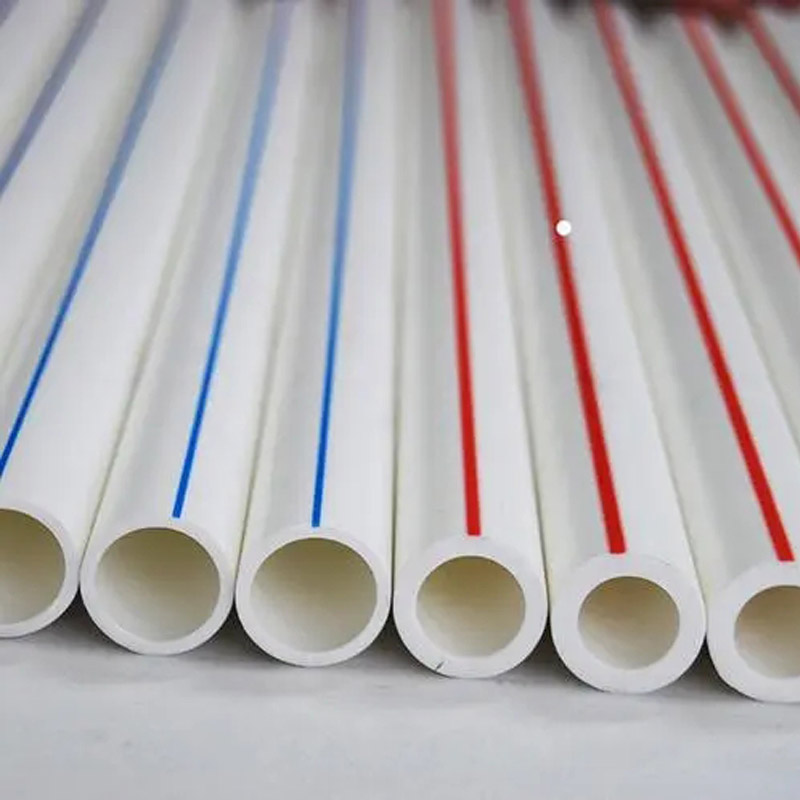
Polypropylene Random (PPR) piping systems represent a significant advancement in potable water distribution and heating/cooling infrastructure. Discount PPR water pipe refers to competitively priced PPR pipes, often manufactured to meet or exceed industry standards while offering cost-effectiveness. These pipes are characterized by their homogenous material composition – typically a copolymer of polypropylene with enhanced random distribution of comonomers – resulting in superior physical and chemical properties compared to traditional materials like PVC or galvanized steel. PPR pipes are typically joined using heat fusion welding, creating a leak-proof, durable, and corrosion-resistant connection. Their positioning in the industry chain is as a direct replacement for metallic piping in low to medium pressure applications, offering a lightweight, installation-friendly alternative with a lifespan projected at 50+ years under normal operating conditions. Core performance characteristics revolve around pressure resistance, temperature tolerance (up to 95°C), chemical inertness, and low thermal conductivity.
Material Science & Manufacturing
PPR pipes are fabricated from polypropylene homopolymer or copolymer resins. The most common grade used is PP-R Type III, which signifies a copolymer with a random distribution of ethylene comonomers. Raw material properties are critical: polypropylene’s density typically ranges from 0.90 to 0.91 g/cm³, influencing its strength and rigidity. Melt Flow Index (MFI) – a measure of the ease with which the material flows during processing – is a key parameter, generally between 0.3-1.0 g/10min for pipe extrusion, dictating processing speeds and weldability. Manufacturing typically involves extrusion. Polypropylene granules are fed into an extruder, melted, and forced through a die to form the pipe’s shape. Critical parameters during extrusion include barrel temperature (190-230°C), die temperature (200-240°C), and cooling rate. Precise temperature control is paramount to avoid thermal degradation and ensure consistent pipe dimensions. Post-extrusion, the pipes undergo dimensional inspection, hydrostatic testing (to verify pressure resistance), and marking for traceability. Quality control focuses on verifying wall thickness uniformity, ovality, and the absence of defects like pinholes or air pockets. The choice of catalyst during polypropylene polymerization significantly affects the final product's properties, including its resistance to slow crack growth (SCG).
Performance & Engineering
The performance of PPR piping is fundamentally governed by its ability to withstand internal hydrostatic pressure and external loads. Force analysis focuses on hoop stress (σ = PD/2t, where P is pressure, D is diameter, and t is wall thickness) which determines the pipe’s resistance to bursting. Temperature variations induce thermal expansion and contraction, which must be accounted for during installation using expansion loops or flexible connections. PPR exhibits a low coefficient of thermal expansion (approximately 0.15 mm/m°C), minimizing stress on joints. Chemical resistance is excellent against most common waterborne contaminants, but prolonged exposure to strong oxidizing agents should be avoided. Regarding compliance, PPR piping must meet relevant potable water standards (e.g., NSF/ANSI 61 in North America, DVGW W544 in Germany, EN 1610 in Europe). Engineering design must consider the pipe’s pressure rating (PN10, PN16, PN20 – corresponding to 1.0 MPa, 1.6 MPa, and 2.0 MPa, respectively), operating temperature, and potential water hammer effects. Water hammer, caused by sudden changes in flow velocity, can generate significant pressure surges, potentially leading to pipe failure. Implementing surge arrestors and controlling valve closure rates are crucial mitigation strategies. Long-term creep resistance – the tendency of the material to deform under sustained stress – is a critical consideration, particularly at elevated temperatures.
Technical Specifications
| Parameter | PN10 (SDR 6) | PN16 (SDR 5) | PN20 (SDR 4) | Units |
|---|---|---|---|---|
| Nominal Diameter | 20-160 | 20-125 | 20-63 | mm |
| Wall Thickness | 2.3-8.0 | 3.7-12.5 | 5.0-18.0 | mm |
| Hydrostatic Pressure (at 20°C) | 1.0 | 1.6 | 2.0 | MPa |
| Maximum Operating Temperature | 95 | 95 | 95 | °C |
| Oxygen Permeability | < 0.1 | < 0.1 | < 0.1 | cm³/m²/day |
| Melt Flow Index (MFI) | 0.3 - 1.0 | 0.3 - 1.0 | 0.3 - 1.0 | g/10min |
Failure Mode & Maintenance
PPR piping, while durable, is susceptible to certain failure modes. Slow Crack Growth (SCG) is a primary concern, particularly in systems exposed to chlorine or other oxidizing agents. SCG initiates at stress concentrations (e.g., around fittings or welds) and propagates slowly over time, leading to brittle failure. Thermal fatigue, caused by repeated thermal cycling, can lead to cracking at joints. Improper welding techniques – insufficient heating, excessive heating, or inadequate fusion pressure – are major contributors to joint failure. External mechanical damage, such as impact or abrasion, can also compromise the pipe’s integrity. Oxidation, while generally slow, can occur at elevated temperatures and in the presence of oxygen. Maintenance involves regular visual inspection for signs of leaks, discoloration, or deformation. Hydrostatic testing can be performed periodically to assess the system’s overall pressure integrity. If SCG is suspected, affected sections should be replaced. Welding repairs should only be performed by qualified technicians using appropriate equipment and procedures. Preventative measures include using high-quality PPR materials, employing proper welding techniques, avoiding excessive stress on joints, and protecting the piping from mechanical damage and exposure to harsh chemicals.
Industry FAQ
Q: What is the impact of water hardness on the long-term performance of PPR piping?
A: Water hardness, specifically calcium and magnesium content, can lead to scale buildup inside PPR pipes over time. While PPR itself is resistant to scaling, the scale can reduce the internal diameter, increasing flow resistance and potentially contributing to localized stress concentrations. Regular flushing and, in severe cases, chemical descaling may be required. The scale’s thermal insulating effect can also impact temperature stratification in hot water systems.
Q: How does PPR piping compare to PEX piping in terms of oxygen permeability?
A: PPR generally exhibits lower oxygen permeability than PEX (cross-linked polyethylene). This is particularly important in closed heating systems, where oxygen ingress can promote corrosion of metallic components. However, some PEX formulations incorporate oxygen barrier layers to mitigate this issue. For potable water applications, oxygen permeability is less critical.
Q: What are the key considerations when selecting a welding machine for PPR pipe joining?
A: The welding machine must provide precise temperature control and consistent heating across the welding surface. It's crucial to select a machine with appropriate dies for the pipe diameter being joined. Digital temperature controllers are preferred over analog models for greater accuracy. The welding machine should also comply with relevant safety standards.
Q: Can PPR piping be used for compressed air systems?
A: Generally, PPR piping is not recommended for compressed air systems. While it can withstand the pressure, the material is susceptible to permeation of air molecules, leading to leakage. Additionally, the lack of flexibility can make PPR unsuitable for applications involving vibration or movement.
Q: What are the environmental considerations associated with PPR pipe disposal?
A: Polypropylene is recyclable (recycling code #5), but recycling infrastructure for PPR piping is not universally available. Incineration with energy recovery is a common disposal method. Efforts are being made to develop more sustainable PPR formulations incorporating recycled content.
Conclusion
Discount PPR water pipe represents a cost-effective and reliable solution for a wide range of plumbing and heating/cooling applications. Its inherent corrosion resistance, lightweight nature, and ease of installation make it a compelling alternative to traditional metallic piping. However, careful attention must be paid to material selection, proper welding techniques, and consideration of potential failure modes such as slow crack growth and thermal fatigue to ensure long-term system performance.
Successful implementation of PPR piping systems relies on a comprehensive understanding of the material's properties, compliance with relevant industry standards, and diligent adherence to best practices during installation and maintenance. Ongoing research and development are focused on enhancing PPR’s resistance to SCG, improving its recyclability, and expanding its range of applications.
-
DN25 HDPE Compression Fitting-HORON INTERNATIONAL|Reliable Irrigation Solutions
NewsFeb.11,2026
-
discount hdpe pipe coupling Performance Analysis
News2026-06-27
-
discount kitchen sink water lines Performance Analysis
News2026-06-27
-
discount dn25 hdpe Performance Analysis
News2026-06-27
-
discount hdpe sprinkler coupler Performance Analysis
News2026-06-27
-
discount black pvc pipe for sale Performance Analysis
News2026-06-27
-
discount 40mm pvc pipe Performance Analysis
News2026-06-26
-
discount hdpe to pvc connection Performance Analysis
News2026-06-26
-
discount ppr pipe 1 price Technical Analysis
News2026-06-26
-
discount colored pvc pipe Material Science and Manufacturing
News2026-06-26
-
discount hdpe pipe price list pdf Performance and Engineering
News2026-06-26
-
discount ppr for hot water Performance Analysis
News2026-06-25
-
discount bulk pvc pipe Material Performance
News2026-06-25
-
discount pvc pipes price list Material Science and Manufacturing
News2026-06-25
-
discount 20 ft pvc pipe Performance Analysis
News2026-06-25
-
discount ppr cold water pipe Performance Analysis
News2026-06-25