

Feb . 11, 2026 00:01 Back to list
discount transition coupling hdpe to pvc Performance Analysis
Introduction
The discount transition coupling HDPE to PVC is a critical component in fluid transfer systems, facilitating the connection between High-Density Polyethylene (HDPE) and Polyvinyl Chloride (PVC) piping. Its primary function is to provide a leak-proof and structurally sound interface between these two dissimilar materials, which possess differing thermal expansion rates, chemical compositions, and joining methodologies. The coupling is vital in municipal water distribution, irrigation, wastewater treatment, and industrial process piping where integration of HDPE and PVC is required for cost optimization, material compatibility with specific fluids, or existing infrastructure integration. Performance relies on robust sealing mechanisms and appropriate material selection to withstand pressures, temperatures, and chemical exposure inherent in the application. Failure to select the correct coupling or install it properly can lead to system failures, environmental contamination, and significant economic losses. This guide provides a comprehensive overview of the material science, manufacturing processes, performance characteristics, failure modes, and maintenance protocols associated with discount transition coupling HDPE to PVC.
Material Science & Manufacturing
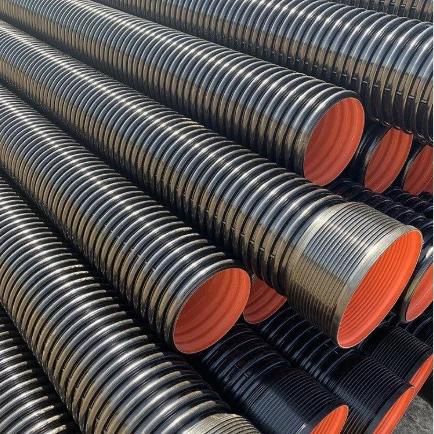
The discount transition coupling HDPE to PVC typically comprises several key components: the HDPE end, the PVC end, and a central transition section incorporating a sealing element. The HDPE portion is fabricated from high-density polyethylene resin, characterized by its high tensile strength, chemical resistance, and low permeability. HDPE’s semi-crystalline structure imparts a degree of flexibility and impact resistance. Manufacturing typically involves injection molding, where molten HDPE is forced into a mold cavity under high pressure. Critical parameters include melt temperature (typically 180-220°C), mold temperature (30-60°C), and cooling rate, all of which influence crystallinity and mechanical properties. The PVC end is manufactured from rigid PVC, chosen for its durability, chemical inertness, and cost-effectiveness. PVC production utilizes extrusion processes, where PVC compound (resin, stabilizers, plasticizers, lubricants) is heated and forced through a die to form the desired shape. Extrusion temperature control (160-200°C) is paramount to prevent thermal degradation and maintain dimensional accuracy. The transition section often employs a rubber gasket (EPDM, Nitrile, or Viton) for sealing. Gasket material selection is application-specific, based on fluid compatibility and temperature range. The coupling body itself might be a composite material or a specialized PVC formulation designed to accommodate differential thermal expansion between the HDPE and PVC sections. Bonding between the dissimilar materials presents a challenge, often addressed via mechanical interlocking features in the coupling design or specialized adhesive bonding techniques. Quality control at each stage is essential to ensure dimensional accuracy, material integrity, and sealing effectiveness.
Performance & Engineering
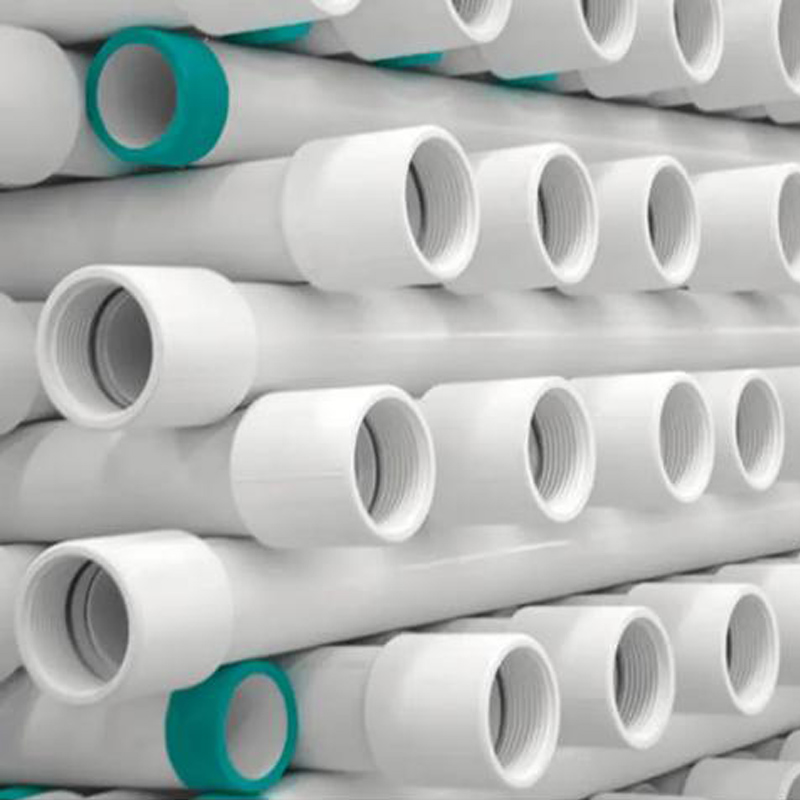
The performance of a discount transition coupling HDPE to PVC is governed by several critical engineering considerations. Firstly, pressure rating is determined by the weakest point in the assembly – typically the coupling body or the gasket seal. Hydrostatic pressure testing is conducted to verify the coupling's ability to withstand internal pressure without leakage or structural failure. Secondly, thermal expansion and contraction differences between HDPE and PVC must be accommodated. HDPE exhibits a significantly higher coefficient of thermal expansion than PVC. Coupling designs incorporate flexible elements, such as the gasket or a bellows-like structure, to absorb these movements and prevent stress concentration. Force analysis, utilizing Finite Element Analysis (FEA), is crucial to optimize the coupling geometry and material distribution to minimize stress under varying temperature conditions. Chemical compatibility is another vital factor. The coupling materials must be resistant to the fluids being conveyed, preventing degradation, swelling, or leaching. Long-term exposure to aggressive chemicals can compromise the gasket seal and reduce the coupling's service life. Compliance requirements, such as those mandated by NSF/ANSI 61 for potable water systems, dictate material selection and manufacturing processes to ensure water quality. Furthermore, the coupling must conform to relevant pressure standards (e.g., ASTM D2412) and dimensional standards (e.g., ASTM D2241 for HDPE pipe). Installation procedures, including proper pipe preparation (beveling, cleaning) and tightening torque specifications, are critical to ensure a reliable and leak-proof connection.
Technical Specifications
| Parameter | HDPE Side | PVC Side | Overall Coupling |
|---|---|---|---|
| Material | High-Density Polyethylene (HDPE) | Polyvinyl Chloride (PVC) | HDPE, PVC, Rubber (EPDM/Nitrile/Viton) |
| Pressure Rating (PSI) | Up to 150 PSI (dependent on size) | Up to 100 PSI (dependent on size) | Minimum of 100 PSI (matching lower rated side) |
| Temperature Range (°C) | -40 to 60 °C | 0 to 60 °C | 0 to 60 °C (gasket dependent) |
| Connection Type | Butt Fusion, Socket Fusion, Electrofusion | Solvent Cement, Threaded | Combination (compatible with both) |
| Size Range (inches) | 0.5 to 6 | 0.5 to 4 | 0.5 to 4 (common availability) |
| Standards Compliance | ASTM D3350 | ASTM D1785 | NSF/ANSI 61, ASTM D2412 |
Failure Mode & Maintenance
Discount transition couplings HDPE to PVC are susceptible to several failure modes. Fatigue cracking can occur in the coupling body due to repeated pressure cycles or thermal stress. This is often initiated at stress concentration points, such as near the transition between materials. Gasket failure is a common issue, manifesting as leaks. Degradation of the gasket material due to chemical attack, UV exposure, or temperature extremes reduces its sealing effectiveness. Delamination can occur at the interface between the HDPE, PVC, and gasket, particularly if bonding is inadequate. Oxidation of the HDPE component, particularly at elevated temperatures, can lead to embrittlement and cracking. Corrosion, although less common with these materials, can affect metallic components within the coupling (e.g., retaining rings). Improper installation is a significant contributor to failure, including over-tightening (damaging the gasket or coupling body) or insufficient tightening (leading to leaks). Maintenance involves periodic visual inspections for leaks, cracks, or signs of degradation. Gasket replacement is often required every 3-5 years, depending on the application and fluid compatibility. Regularly cleaning the coupling exterior prevents the buildup of contaminants that can accelerate corrosion. If cracking is observed, the coupling should be replaced immediately. Preventive maintenance programs, including torque checks and gasket inspections, can significantly extend the coupling's service life.
Industry FAQ
Q: What are the key considerations when selecting a gasket material for a discount transition coupling HDPE to PVC used in a wastewater treatment plant?
A: For wastewater applications, the gasket material must exhibit excellent resistance to a broad range of chemicals commonly found in wastewater, including acids, bases, and solvents. EPDM is a common choice due to its good overall chemical resistance and low cost. However, for particularly aggressive environments, Nitrile or Viton may be necessary, although they are more expensive. The gasket must also be capable of maintaining its sealing properties over a wide temperature range, as wastewater temperatures can fluctuate significantly. Consider the presence of abrasive solids in the wastewater, as these can accelerate gasket wear.
Q: How does thermal expansion affect the long-term performance of these couplings, and what design features mitigate this issue?
A: Thermal expansion differences between HDPE and PVC are substantial. Without mitigation, these differences can induce significant stress on the coupling, leading to leaks or structural failure. Coupling designs typically incorporate flexible elements, such as a rubber gasket or a bellows-like expansion joint, to accommodate these movements. The gasket compresses and expands, absorbing the differential expansion without stressing the rigid coupling body. Proper installation, allowing for some axial movement of the pipe, is also crucial.
Q: What is the proper procedure for solvent cementing the PVC side of the coupling to PVC pipe?
A: Correct solvent cementing is vital. Begin by thoroughly cleaning and deburring both the pipe and the PVC end of the coupling. Apply a primer to both surfaces to soften the PVC and enhance adhesion. Then, apply a liberal coat of PVC cement, ensuring complete coverage. Quickly insert the pipe into the coupling with a slight twisting motion to distribute the cement evenly. Hold the assembly firmly for 30-60 seconds to allow the cement to set. Avoid disturbing the joint for at least 24 hours while the cement fully cures. Follow the cement manufacturer’s instructions precisely.
Q: What are the typical failure modes associated with improper tightening of the coupling?
A: Over-tightening can compress the gasket excessively, causing it to deform or extrude, leading to leaks. It can also crack the coupling body, especially if it is constructed from brittle PVC. Under-tightening, conversely, creates a loose connection that is prone to leakage under pressure. Consistent and appropriate torque application, using a calibrated torque wrench, is essential. The manufacturer’s specifications should always be followed.
Q: How do these couplings compare to flanged connections in terms of cost, installation time, and long-term reliability?
A: Flanged connections are generally more expensive upfront, requiring additional components (flanges, bolts, gaskets). Installation is also more time-consuming, involving precise alignment and bolting. Discount transition couplings are typically more cost-effective and faster to install, especially for smaller pipe sizes. In terms of long-term reliability, both can perform well if properly installed and maintained. However, flanged connections may be better suited for applications involving frequent disassembly or high pressures, while couplings offer a simpler and more compact solution for less demanding applications.
Conclusion
The discount transition coupling HDPE to PVC serves as a crucial interface component in fluid handling systems, bridging the gap between two commonly used piping materials. Its successful implementation hinges on a thorough understanding of the material science involved – the distinct properties of HDPE and PVC, the characteristics of sealing materials, and the intricacies of bonding techniques. Careful consideration of performance parameters, including pressure rating, thermal expansion, and chemical compatibility, is essential for ensuring long-term operational reliability.
Ultimately, proper selection, installation, and ongoing maintenance are paramount. Adherence to relevant industry standards, diligent inspection protocols, and timely component replacement are all vital for maximizing the service life and minimizing the risk of failure. The evolution of coupling designs will likely focus on enhancing gasket materials, improving sealing mechanisms, and incorporating advanced materials to further mitigate the challenges posed by differential thermal expansion and aggressive chemical environments.
-
DN25 HDPE Compression Fitting-HORON INTERNATIONAL|Reliable Irrigation Solutions
NewsFeb.11,2026
-
discount hdpe pipe coupling Performance Analysis
News2026-06-27
-
discount kitchen sink water lines Performance Analysis
News2026-06-27
-
discount dn25 hdpe Performance Analysis
News2026-06-27
-
discount hdpe sprinkler coupler Performance Analysis
News2026-06-27
-
discount black pvc pipe for sale Performance Analysis
News2026-06-27
-
discount 40mm pvc pipe Performance Analysis
News2026-06-26
-
discount hdpe to pvc connection Performance Analysis
News2026-06-26
-
discount ppr pipe 1 price Technical Analysis
News2026-06-26
-
discount colored pvc pipe Material Science and Manufacturing
News2026-06-26
-
discount hdpe pipe price list pdf Performance and Engineering
News2026-06-26
-
discount ppr for hot water Performance Analysis
News2026-06-25
-
discount bulk pvc pipe Material Performance
News2026-06-25
-
discount pvc pipes price list Material Science and Manufacturing
News2026-06-25
-
discount 20 ft pvc pipe Performance Analysis
News2026-06-25
-
discount ppr cold water pipe Performance Analysis
News2026-06-25