

Feb . 11, 2026 00:01 Back to list
discount hdpe flexible irrigation pipe Performance Analysis

Introduction
High-Density Polyethylene (HDPE) flexible irrigation pipe represents a crucial component in modern agricultural water management systems. Positioned as a cost-effective alternative to rigid PVC or metal piping, it facilitates efficient water delivery to crops, landscapes, and nurseries. Its inherent flexibility allows for adaptation to varying terrain and minimizes the need for extensive jointing, reducing installation time and labor costs. This guide will delve into the material science, manufacturing processes, performance characteristics, potential failure modes, and relevant industry standards governing discount HDPE flexible irrigation pipe, providing a comprehensive technical overview for engineers, procurement managers, and agricultural professionals.
Material Science & Manufacturing
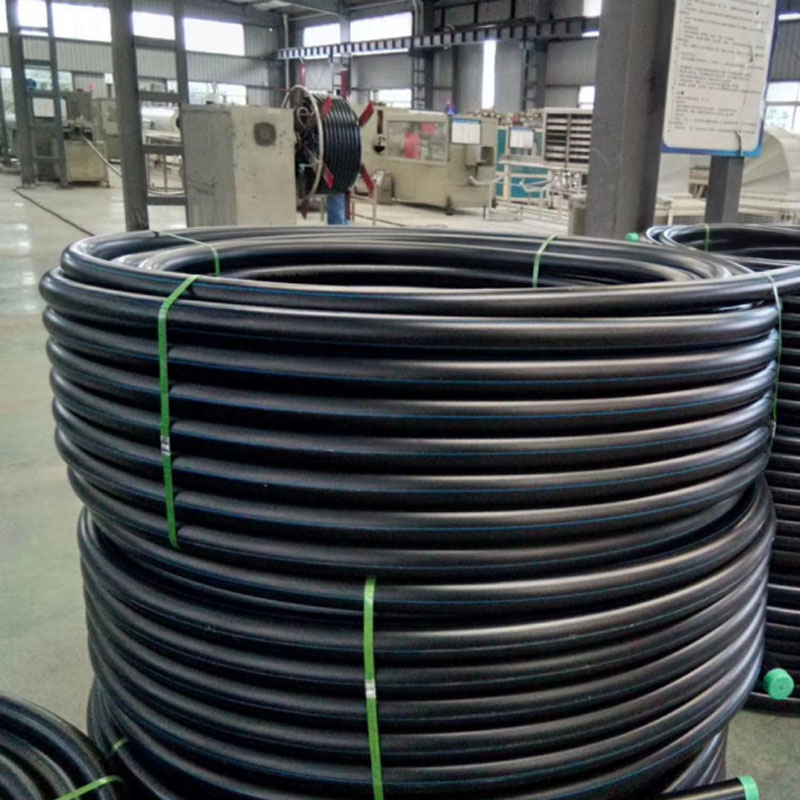
HDPE irrigation pipe is primarily manufactured from high-density polyethylene resin, typically grades meeting or exceeding ASTM D3350 standards. The resin's key properties impacting pipe performance include molecular weight distribution, density (typically 0.941 – 0.965 g/cm³), and melt flow index (MFI). Higher molecular weight translates to improved impact resistance and creep resistance, while density affects stiffness and barrier properties. The manufacturing process commonly employs extrusion. Raw HDPE pellets are fed into an extruder where they are heated and melted. The molten plastic is then forced through a die to form a continuous pipe. Critical parameters during extrusion include die temperature, extrusion pressure, and cooling rate. Improper control of these parameters can lead to inconsistencies in wall thickness, material crystallinity, and overall pipe diameter. Post-extrusion, the pipe undergoes cooling in a water bath to solidify the plastic, followed by coiling or cutting to desired lengths. Pigmentation is often added to the HDPE resin during compounding to provide UV resistance and color-coding for identification. Carbon black is a commonly used UV stabilizer. The quality of the raw material and precise control of the extrusion process are fundamental to achieving consistent mechanical properties and long-term durability.
Performance & Engineering
The performance of HDPE irrigation pipe is dictated by several key engineering factors. Pressure rating, determined through hydrostatic pressure testing (ASTM D1597), is paramount. Discount HDPE pipes commonly range from 50 PSI to 150 PSI, dependent on wall thickness and pipe diameter. Burst pressure, a critical safety parameter, is significantly higher than working pressure. Long-term hydrostatic strength (LTHS) is calculated based on accelerated aging tests to predict pipe lifespan under sustained pressure. Flexibility is another critical performance characteristic. The pipe’s ability to bend without kinking or cracking is essential for adapting to terrain variations. This is quantified by the bend radius, typically expressed as a multiple of the pipe's outer diameter. Environmental resistance is vital, especially regarding UV degradation. While carbon black pigmentation provides UV protection, prolonged exposure can still lead to embrittlement. Soil chemical compatibility is also important; exposure to certain fertilizers or aggressive soil conditions can accelerate degradation. Furthermore, the pipe must resist creep, the slow deformation under sustained load, which can lead to leakage or rupture over time. Proper installation practices, including adequate bedding and backfill, are crucial to minimizing stress and maximizing long-term performance.
Technical Specifications
| Parameter | Typical Value (1/2" Pipe) | Testing Standard | Units |
|---|---|---|---|
| Outer Diameter | 0.625 | ASTM D2467 | inches |
| Wall Thickness | 0.062 | ASTM D2467 | inches |
| Pressure Rating | 100 | ASTM D1597 | PSI |
| Burst Pressure | 400 | ASTM D1597 | PSI |
| Long-Term Hydrostatic Strength (LTHS) | 80 | ASTM D2837 | PSI |
| Minimum Bend Radius | 6 | Manufacturer Specification | inches |
Failure Mode & Maintenance
HDPE irrigation pipe is susceptible to several failure modes. Slow Crack Growth (SCG), induced by sustained stress in the presence of aggressive chemicals, is a common failure mechanism. This often manifests as fine cracks propagating slowly over time, eventually leading to rupture. UV degradation, despite the presence of carbon black, can cause embrittlement and cracking, particularly in areas with prolonged sun exposure. Impact damage, resulting from rocks or other debris, can cause localized cracking or puncture. Joint failures, if using compression fittings, can occur due to improper installation or seal degradation. Creep rupture, a slow failure due to sustained stress over a prolonged period, can also occur. Maintenance involves regular visual inspection for cracks, leaks, and signs of UV degradation. Flushing the system periodically to remove sediment and debris can prevent clogging and maintain flow rates. For minor leaks, repair sleeves or couplings can be used. In cases of significant damage, pipe replacement is often the most practical solution. Proper storage of the pipe, protecting it from direct sunlight and extreme temperatures, is essential to prevent premature degradation. It is also important to avoid sharp bends or kinks during installation to prevent stress concentration.
Industry FAQ
Q: What is the impact of water hammer on HDPE irrigation pipe?
A: Water hammer, a pressure surge caused by sudden changes in flow velocity, can significantly stress HDPE pipe. The flexible nature of HDPE allows it to absorb some of the shock, but repeated or severe water hammer events can lead to fatigue cracking and joint failures. Mitigation strategies include installing surge arrestors, using slow-closing valves, and ensuring proper pipe anchoring.
Q: How does the presence of chlorine in irrigation water affect HDPE pipe longevity?
A: While HDPE is generally resistant to chlorine, prolonged exposure to high chlorine concentrations can cause oxidative degradation, leading to embrittlement and reduced lifespan. The rate of degradation depends on chlorine concentration, temperature, and exposure duration. Using lower chlorine levels or alternative disinfection methods can minimize this effect.
Q: What is the recommended bedding material for HDPE irrigation pipe?
A: Well-graded sand or fine gravel is recommended as bedding material. The bedding should provide uniform support to the pipe and protect it from rocks or sharp objects that could cause damage. Compaction of the bedding material should be controlled to avoid overstressing the pipe.
Q: What is the difference between SDR (Standard Dimension Ratio) and pipe pressure rating?
A: SDR is a dimensionless ratio of pipe outside diameter to wall thickness. A lower SDR indicates a thicker wall and, therefore, a higher pressure rating. Pressure rating is the maximum sustained pressure the pipe can handle safely. SDR is a design parameter used to calculate pressure rating according to established formulas (e.g., ASTM D2837).
Q: Can HDPE irrigation pipe be used for sub-surface drip irrigation?
A: Yes, HDPE pipe is commonly used for sub-surface drip irrigation (SDI). However, SDI applications require pipe with higher UV resistance and tighter manufacturing tolerances to prevent clogging. Specifically formulated HDPE resins and advanced filtration systems are often employed for SDI systems.
Conclusion
Discount HDPE flexible irrigation pipe provides a robust and economical solution for various agricultural and landscape water delivery applications. Its inherent flexibility, ease of installation, and resistance to corrosion make it a superior alternative to traditional piping materials in many scenarios. However, understanding the material’s limitations, particularly regarding UV degradation, chemical compatibility, and susceptibility to slow crack growth, is crucial for ensuring long-term performance and minimizing potential failures.
Successful implementation requires careful consideration of factors such as pressure rating, environmental conditions, and installation practices. Adhering to relevant industry standards and conducting regular inspections are essential for maximizing the lifespan and reliability of HDPE irrigation systems. Future advancements in HDPE resin technology and manufacturing processes will likely focus on enhancing UV resistance, improving creep resistance, and developing more sustainable materials.
-
DN25 HDPE Compression Fitting-HORON INTERNATIONAL|Reliable Irrigation Solutions
NewsFeb.11,2026
-
discount hdpe pipe coupling Performance Analysis
News2026-06-27
-
discount kitchen sink water lines Performance Analysis
News2026-06-27
-
discount dn25 hdpe Performance Analysis
News2026-06-27
-
discount hdpe sprinkler coupler Performance Analysis
News2026-06-27
-
discount black pvc pipe for sale Performance Analysis
News2026-06-27
-
discount 40mm pvc pipe Performance Analysis
News2026-06-26
-
discount hdpe to pvc connection Performance Analysis
News2026-06-26
-
discount ppr pipe 1 price Technical Analysis
News2026-06-26
-
discount colored pvc pipe Material Science and Manufacturing
News2026-06-26
-
discount hdpe pipe price list pdf Performance and Engineering
News2026-06-26
-
discount ppr for hot water Performance Analysis
News2026-06-25
-
discount bulk pvc pipe Material Performance
News2026-06-25
-
discount pvc pipes price list Material Science and Manufacturing
News2026-06-25
-
discount 20 ft pvc pipe Performance Analysis
News2026-06-25
-
discount ppr cold water pipe Performance Analysis
News2026-06-25