

Feb . 11, 2026 00:01 Back to list
transition coupling hdpe to pvc factory Performance Analysis
Introduction
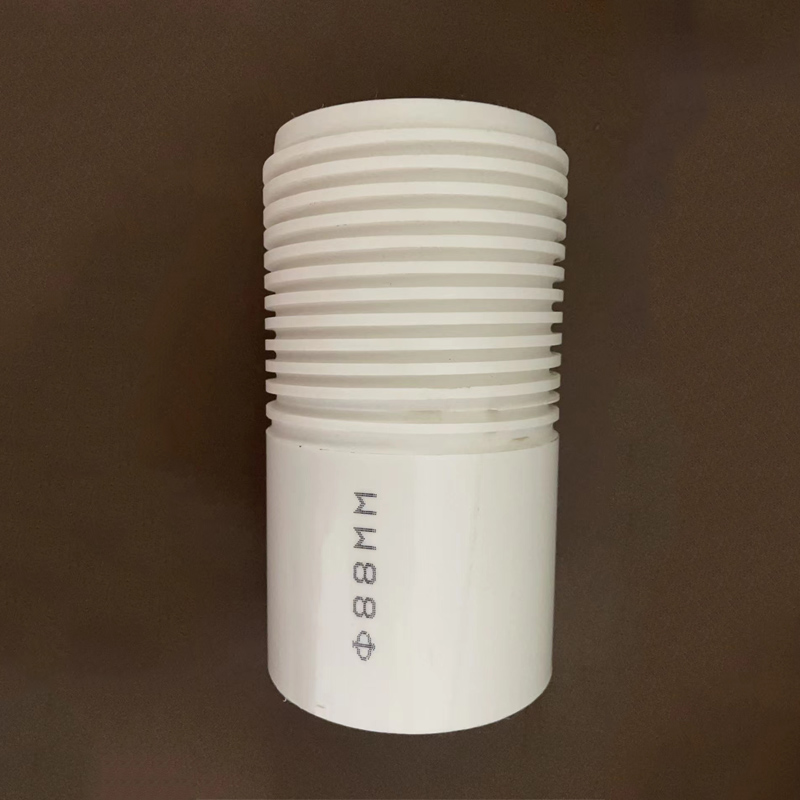
Transition couplings designed for HDPE to PVC pipe connections represent a critical component in fluid and gas conveyance systems across various industries, including water management, irrigation, chemical processing, and wastewater treatment. These couplings facilitate the joining of polyethylene high-density (HDPE) and polyvinyl chloride (PVC) pipes, materials possessing differing thermal expansion rates, chemical compositions, and structural characteristics. The effective performance of these couplings is paramount to maintaining system integrity, preventing leaks, and ensuring long-term operational reliability. This technical guide provides a comprehensive analysis of transition coupling design, material science, manufacturing processes, performance parameters, potential failure modes, and relevant industry standards. Addressing the core industry pain point of ensuring a durable, leak-proof, and chemically resistant joint between dissimilar piping materials is central to this document. Effective transition coupling selection and installation minimize system downtime, reduce maintenance costs, and enhance overall process efficiency.
Material Science & Manufacturing
The primary materials utilized in transition coupling construction are polypropylene (PP), acrylonitrile butadiene styrene (ABS), or PVC for the coupling body, with sealing elements composed of elastomers such as ethylene propylene diene monomer (EPDM), nitrile butadiene rubber (NBR), or fluoroelastomers (FKM). HDPE and PVC, the materials being joined, exhibit significant differences in their properties. HDPE possesses a semi-crystalline structure, offering high tensile strength and flexibility, but a lower glass transition temperature. PVC is amorphous, offering rigidity and chemical resistance, but is more brittle and susceptible to temperature-induced deformation. The manufacturing process typically involves injection molding for the coupling body. Precise mold design and temperature control are essential to achieving dimensional accuracy and eliminating internal stresses. The sealing element is often molded separately and assembled into the coupling body. Critical parameters in the injection molding process include melt temperature, mold temperature, injection pressure, and cooling time. Post-molding operations may include deburring, surface finishing, and quality inspection. Rubber seals are manufactured via compression molding or injection molding, requiring careful control of curing time and temperature to achieve optimal elasticity and chemical resistance. Material compatibility is assessed through immersion testing, where coupling materials are exposed to the fluids they will encounter in service to evaluate swelling, degradation, and leaching. The inherent thermal expansion coefficient mismatch between HDPE and PVC requires the coupling design to incorporate features that accommodate movement without compromising the seal.

Performance & Engineering
The mechanical performance of transition couplings is governed by factors such as tensile strength, shear strength, and resistance to internal pressure. Force analysis, utilizing finite element analysis (FEA) software, is critical in optimizing coupling geometry to distribute stresses effectively and prevent failure. Coupling designs often incorporate internal gripping mechanisms, such as serrations or barbed features, to provide a secure connection to the HDPE and PVC pipes. These features must be engineered to avoid damaging the pipe walls during installation or removal. Environmental resistance is a key consideration, particularly in applications involving exposure to UV radiation, extreme temperatures, or corrosive chemicals. The choice of materials, specifically the elastomer seal, must be compatible with the intended operating environment. Compliance requirements, such as those outlined by ASTM D2412 (PVC pipe fittings) and ASTM F439 (HDPE pipe fittings), dictate material specifications, dimensional tolerances, and performance criteria. The coupling’s ability to maintain a watertight seal under varying pressure and temperature conditions is assessed through hydrostatic pressure testing. Leakage rates are measured to ensure compliance with industry standards. Furthermore, the design must account for soil loading in buried applications and the potential for external impact damage. The long-term creep resistance of the coupling materials is also important, as sustained stress over time can lead to dimensional changes and seal failure. The use of appropriate lubricants during installation can reduce friction and minimize stress concentrations.
Technical Specifications
| Parameter | Unit | Specification (Typical) | Test Standard |
|---|---|---|---|
| Nominal Pipe Size | inch | 1/2", 3/4", 1", 1.25", 1.5", 2", 3", 4" | ASTM D2412/F439 |
| Maximum Operating Pressure | psi | Up to 150 psi (dependent on material and size) | ASTM D2412 |
| Operating Temperature Range | °F | -40°F to 140°F (EPDM seal) | ASTM D2412 |
| Material (Coupling Body) | - | Polypropylene (PP), ABS, PVC | ASTM D696/D2569 |
| Material (Seal) | - | EPDM, NBR, FKM | ASTM D2000 |
| Pressure Rating | psi | PN10, PN16 (depending on material and size) | EN 1092-1 |
Failure Mode & Maintenance
Common failure modes in transition couplings include seal degradation due to chemical attack or UV exposure, cracking of the coupling body due to stress concentration or impact damage, and loosening of the connection due to thermal expansion/contraction cycling. Fatigue cracking can occur in couplings subjected to repeated pressure fluctuations. Delamination of the seal can result from improper installation or material incompatibility. Oxidation of the elastomer seal over time reduces its elasticity and sealing performance. Failure analysis involves visual inspection for cracks, deformation, and material degradation. Chemical analysis can identify the cause of seal degradation. Microscopic examination can reveal the presence of stress fractures. Maintenance procedures include regular visual inspections for leaks and signs of damage. Periodic tightening of the coupling may be necessary to compensate for thermal cycling. Lubricating the seal during installation and re-installation can reduce friction and prevent premature wear. Replace couplings exhibiting signs of cracking, deformation, or seal degradation immediately. Proper storage of couplings, protected from UV radiation and extreme temperatures, is crucial to maintaining their performance characteristics. Ensure compatibility between the coupling materials and the conveyed fluid to prevent chemical attack and seal failure.
Industry FAQ
Q: What is the primary advantage of using a transition coupling versus directly solvent welding HDPE to PVC?
A: Directly bonding HDPE and PVC is not feasible due to their differing chemical compositions and thermal expansion properties. Solvent welding is specifically designed for joining similar thermoplastics. Transition couplings provide a mechanically secure and chemically compatible connection, accommodating the differing expansion rates and preventing material degradation. They also allow for easier disassembly for maintenance or repair.
Q: How does the selection of the seal material impact the long-term performance of the coupling?
A: The seal material is critical for maintaining a watertight connection and preventing leakage. The seal must be chemically compatible with the conveyed fluid and resistant to degradation from UV exposure, temperature fluctuations, and pressure. EPDM is a common choice for water applications, while NBR is suitable for oil-based fluids, and FKM offers superior resistance to aggressive chemicals.
Q: What are the key installation considerations to ensure a leak-proof seal?
A: Proper pipe preparation is essential, ensuring that the pipe ends are clean, smooth, and free from burrs. The pipe ends should be fully inserted into the coupling, engaging the gripping mechanisms. Tightening the coupling to the manufacturer's specified torque is crucial. Using an appropriate lubricant on the seal can facilitate installation and prevent damage.
Q: Can these couplings be used in buried applications, and if so, what precautions should be taken?
A: Yes, these couplings can be used in buried applications. However, it is important to select a coupling designed for underground use, with sufficient strength to withstand soil loading. Proper bedding and backfill procedures should be followed to prevent stress on the coupling. Corrosion protection may be necessary in aggressive soil environments.
Q: What is the expected service life of a properly installed and maintained transition coupling?
A: The expected service life varies depending on the operating conditions and the quality of the coupling. With proper installation and maintenance, a transition coupling can typically provide reliable service for 10-20 years or more. Regular inspections and timely replacement of worn or damaged components are essential for maximizing service life.
Conclusion
Transition couplings for HDPE to PVC pipe connections are indispensable components in numerous fluid and gas conveyance systems. Their functionality relies on a complex interplay of material science, precise manufacturing, and meticulous engineering design. Selecting a coupling with appropriate material compatibility, pressure rating, and temperature resistance is paramount for ensuring long-term system integrity. Understanding potential failure modes and implementing proactive maintenance procedures are essential for preventing costly downtime and maximizing operational efficiency.
Future developments in transition coupling technology will likely focus on enhancing seal materials for improved chemical resistance and longevity, incorporating smart monitoring systems for early leak detection, and optimizing coupling designs for reduced weight and installation complexity. Adhering to relevant international standards and best practices in installation and maintenance will continue to be critical for ensuring the reliable performance of these essential components.
-
DN25 HDPE Compression Fitting-HORON INTERNATIONAL|Reliable Irrigation Solutions
NewsFeb.11,2026
-
china flexible pvc tubing Performance Analysis
News2026-06-16
-
china water pipe kitchen sink Material Performance
News2026-06-16
-
china upvc column pipes for submersible pumps Performance Analysis
News2026-06-16
-
china 36 hdpe corrugated pipe Manufacturing Analysis
News2026-06-16
-
china kitchen sink water pipe Performance Analysis
News2026-06-16
-
china 90mm pvc pipe Performance Analysis
News2026-06-15
-
china ppr polypropylene pipe Technical Analysis
News2026-06-15
-
china hdpe pipe sizes and prices Performance Analysis
News2026-06-15
-
china hdpe quick coupling Performance Analysis
News2026-06-15
-
china ppr water line Performance Analysis
News2026-06-15
-
china 4 hdpe to pvc coupling Performance Analysis
News2026-06-14
-
china dn500 Ductile Iron Pipe Performance Analysis
News2026-06-14
-
china hdpe corrugated pipe Performance Analysis
News2026-06-14
-
china pvc pipe dimensions Technical Analysis
News2026-06-14
-
china perforated pvc pipe for drainage Performance Analysis
News2026-06-14