

Feb . 11, 2026 00:01 Back to list
pipe hdpe size products Performance Analysis
Introduction
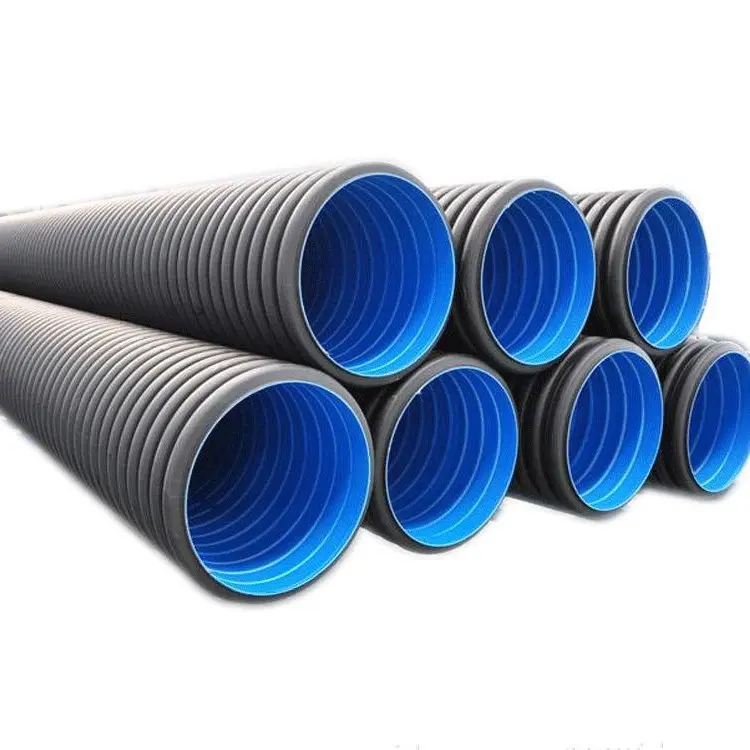
High-Density Polyethylene (HDPE) pipe, categorized by size based on nominal pipe diameter (NPD) and Schedule number (SDR), represents a critical component in fluid and gas conveyance systems across diverse industries. Its position within the industrial chain spans from raw material production – ethylene polymerization – through extrusion and fabrication processes, culminating in applications ranging from potable water distribution and sewer systems to industrial pipelines and mining operations. Core performance characteristics of HDPE pipe are defined by its exceptional chemical resistance, durability, lightweight nature, and ease of installation via fusion welding, enabling leak-free joints. The selection of the appropriate pipe size is paramount to ensuring optimal flow rates, minimizing pressure drop, and maintaining system integrity. This guide provides a comprehensive technical overview of HDPE pipe size products, detailing material science, manufacturing processes, performance parameters, failure modes, and relevant industry standards.
Material Science & Manufacturing
HDPE pipe is manufactured from high-density polyethylene resin, a thermoplastic polymer produced through the polymerization of ethylene. The raw material's key physical properties include a density typically ranging from 0.93 to 0.97 g/cm³, a tensile strength of 20-30 MPa, and a relatively high degree of crystallinity (60-80%). These properties contribute to its strength and resistance to chemical attack. Manufacturing predominantly utilizes extrusion processes. In extrusion, HDPE resin is melted and forced through a die to create a continuous pipe profile. Critical parameters during extrusion include melt temperature (typically 180-210°C), die pressure, and cooling rate. The cooling process, often employing water baths, influences the pipe's crystalline structure and dimensional stability. Pipe size dictates die geometry and extrusion speed. For larger diameter pipes, co-extrusion techniques are often employed to create multiple layers with varying material properties, enhancing structural integrity. Post-extrusion processes include sizing, marking, and cutting to length. Quality control focuses on dimensional accuracy (diameter, wall thickness), hydrostatic pressure testing, and assessment of material properties based on ASTM D3350 standards. The grade of HDPE resin (e.g., PE3408, PE4710) significantly impacts the pipe’s pressure-bearing capacity and long-term performance. The molecular weight distribution (MWD) and the presence of short-chain branches also influence the processing characteristics and final product properties.
Performance & Engineering
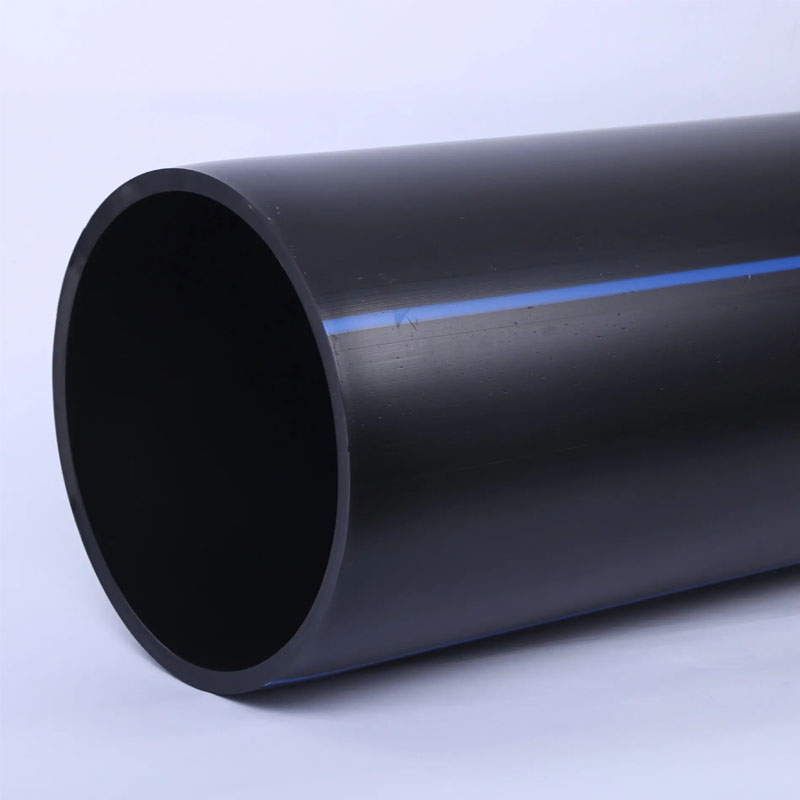
The performance of HDPE pipe is intrinsically linked to its ability to withstand internal and external pressures, resist environmental degradation, and maintain long-term structural integrity. Force analysis involves evaluating hoop stress (σh = PD/2t, where P is internal pressure, D is diameter, and t is wall thickness) and longitudinal stress. These stresses must remain below the material’s yield strength to prevent failure. SDR (Standard Dimension Ratio, D/t) is a crucial parameter defining the pipe’s pressure-bearing capacity; lower SDR values indicate thicker walls and higher pressure ratings. Environmental resistance is a key consideration. While HDPE exhibits excellent resistance to most chemicals, prolonged exposure to UV radiation can cause degradation, reducing its tensile strength and causing surface cracking. Therefore, UV stabilizers (carbon black or other additives) are incorporated into the resin formulation. Soil loading, particularly in buried pipelines, introduces external pressure and bending stresses. Proper bedding and backfill procedures are essential to distribute these loads evenly. Compliance with standards such as AWWA C906 (for potable water distribution) and ASTM F891 (for irrigation) dictates minimum performance requirements, including hydrostatic design basis (HDB) and long-term creep resistance. The thermal expansion coefficient of HDPE (approximately 0.2 mm/m/°C) must be accounted for during installation to prevent stress build-up. Jointing methods, specifically butt fusion, socket fusion, and electrofusion, create welded joints that exhibit strength comparable to the base pipe material, ensuring leak-proof performance.
Technical Specifications
| Nominal Pipe Diameter (NPD) (inches) | Schedule Number (SDR) | Wall Thickness (mm) | Pressure Rating (psi) at 73°F |
|---|---|---|---|
| 0.5 | 17 | 3.7 | 280 |
| 0.75 | 17 | 5.5 | 220 |
| 1.0 | 17 | 7.3 | 180 |
| 1.25 | 17 | 9.1 | 150 |
| 1.5 | 17 | 10.9 | 130 |
| 2.0 | 17 | 14.6 | 90 |
Failure Mode & Maintenance
HDPE pipe, while durable, is susceptible to several failure modes. Slow Crack Growth (SCG), induced by sustained tensile stress in combination with aggressive environments (e.g., certain detergents or solvents), results in brittle failure. Environmental Stress Cracking (ESC) is similar, but often occurs at lower stress levels. Fatigue cracking can occur under cyclical loading, especially at joints or areas of stress concentration. Oxidation, particularly at elevated temperatures, can degrade the material. UV degradation causes surface embrittlement and reduces impact resistance. Joint failures, primarily due to improper fusion welding (incomplete fusion, excessive weld bead size, or contamination), are also common. Maintenance typically involves visual inspections for cracks, deformations, or leaks. Hydrostatic testing can verify pipe integrity. For SCG prevention, avoiding exposure to aggressive chemicals and ensuring proper stress management during installation are critical. For UV protection, consider burying the pipe or using UV-resistant coatings. Regular cleaning to remove debris and sediment prevents abrasion and corrosion. Repair of minor leaks can be achieved with saddle clamps or heat fusion patches. Major failures usually necessitate pipe replacement. Cathodic protection is not typically required for HDPE due to its non-conductive nature, but may be considered if metallic components are present in the system.
Industry FAQ
Q: What is the impact of temperature on the long-term performance of HDPE pipe?
A: Elevated temperatures accelerate creep deformation in HDPE. While HDPE maintains adequate strength at operating temperatures, exceeding the recommended maximum operating temperature (typically 60°C) significantly reduces its long-term burst pressure and service life. Conversely, low temperatures can increase brittleness, making the pipe more susceptible to impact damage. Derating factors, as specified in industry standards, must be applied when operating outside the recommended temperature range.
Q: How does the SDR (Standard Dimension Ratio) affect the suitability of HDPE pipe for different applications?
A: A lower SDR indicates a thicker wall and, therefore, a higher pressure rating. Higher SDR pipes are more cost-effective for low-pressure applications like irrigation or drainage, while lower SDR pipes are essential for high-pressure systems such as municipal water distribution. The appropriate SDR must be selected based on the maximum operating pressure, soil loading, and anticipated surge pressures.
Q: What are the critical factors to consider during butt fusion welding to ensure a reliable joint?
A: Proper surface preparation (cleaning and removal of contaminants) is paramount. Maintaining the correct welding parameters (temperature, pressure, and dwell time) based on the pipe size and material grade is crucial. Adequate heat soak time before and after welding allows for uniform temperature distribution. Visual inspection of the weld bead for defects (e.g., incomplete fusion, overlap) is essential, along with non-destructive testing methods like visual inspection and pressure testing.
Q: How does HDPE pipe compare to PVC pipe in terms of long-term durability and environmental impact?
A: HDPE generally exhibits superior long-term durability, particularly in terms of resistance to SCG and impact damage. HDPE is also more recyclable than PVC, and its production process typically has a lower environmental footprint. While PVC may be less expensive upfront, the longer service life and recyclability of HDPE often result in a lower total cost of ownership.
Q: What types of bedding materials are recommended for buried HDPE pipelines?
A: Well-graded sand or gravel is typically recommended as bedding material to provide uniform support and distribute external loads. Avoid using rocks or sharp objects that could damage the pipe. Proper compaction of the bedding material is essential to prevent settlement and maintain pipe alignment. Geotextile fabric can be used to separate the bedding material from the surrounding soil, preventing migration and maintaining drainage.
Conclusion
HDPE pipe size selection is a complex engineering task requiring a thorough understanding of material properties, manufacturing processes, and application-specific performance requirements. The parameters of NPD, SDR, and wall thickness directly dictate a pipe’s capacity to withstand internal and external pressures, ensuring safe and reliable fluid or gas conveyance. Proper installation techniques, particularly fusion welding, and adherence to relevant industry standards are crucial for maximizing the lifespan and minimizing the risk of failure.
Continued advancements in HDPE resin technology, including the development of enhanced UV stabilizers and improved creep resistance formulations, promise to further extend the service life and broaden the applications of HDPE pipe systems. Furthermore, the increasing focus on sustainability and circular economy principles will likely drive greater adoption of HDPE due to its recyclability and reduced environmental impact. Therefore, a comprehensive understanding of this material and its associated engineering principles is vital for professionals involved in pipeline design, procurement, and maintenance.
-
DN25 HDPE Compression Fitting-HORON INTERNATIONAL|Reliable Irrigation Solutions
NewsFeb.11,2026
-
china 3 4 ppr pipe price Performance Analysis
News2026-06-07
-
china underground pvc pipe Material and Manufacturing
News2026-06-07
-
china type of hdpe pipe Technical Performance Analysis
News2026-06-07
-
china upvc Performance Analysis
News2026-06-07
-
china outside diameter of pvc pipe Dimensional Analysis
News2026-06-07
-
china ppr water pipe price Performance Analysis
News2026-06-06
-
china ppr composite pipe Performance Analysis
News2026-06-06
-
china ppr pipe 25mm price Performance Analysis
News2026-06-06
-
china ppr pipe use Performance Analysis
News2026-06-06
-
china pvc sewer pipe Technical Performance
News2026-06-06
-
china hdpe coupling joint Performance Analysis
News2026-06-05
-
china ppr pipe connector Manufacturing Analysis
News2026-06-05
-
china ppr pipe 20mm Manufacturing Analysis
News2026-06-05
-
china pvc pipe used for water supply Performance and Engineering
News2026-06-05
-
china orange pvc pipe Performance Engineering
News2026-06-05