

Feb . 11, 2026 00:01 Back to list
wholesale what are pvc pipes used for Material Science Manufacturing

Introduction
Polyvinyl Chloride (PVC) pipes are thermoplastic pipes widely employed in a multitude of applications, ranging from potable water distribution and wastewater conveyance to irrigation, drainage, and industrial fluid handling. Their prevalence stems from a unique combination of cost-effectiveness, durability, corrosion resistance, and ease of installation. Within the industrial supply chain, PVC pipes represent a significant component of infrastructure projects globally. This guide provides a comprehensive technical overview of PVC pipes, detailing their material science, manufacturing processes, performance characteristics, potential failure modes, and relevant industry standards. A key pain point in procurement is ensuring the correct PVC compound grade is specified for the intended application; improper material selection leads to premature failure and costly replacements. This guide aims to equip engineers and procurement professionals with the knowledge to mitigate such risks. Furthermore, adherence to consistently evolving regulatory requirements surrounding PVC formulations – particularly those concerning phthalate plasticizers – necessitates a detailed understanding of material composition.
Material Science & Manufacturing
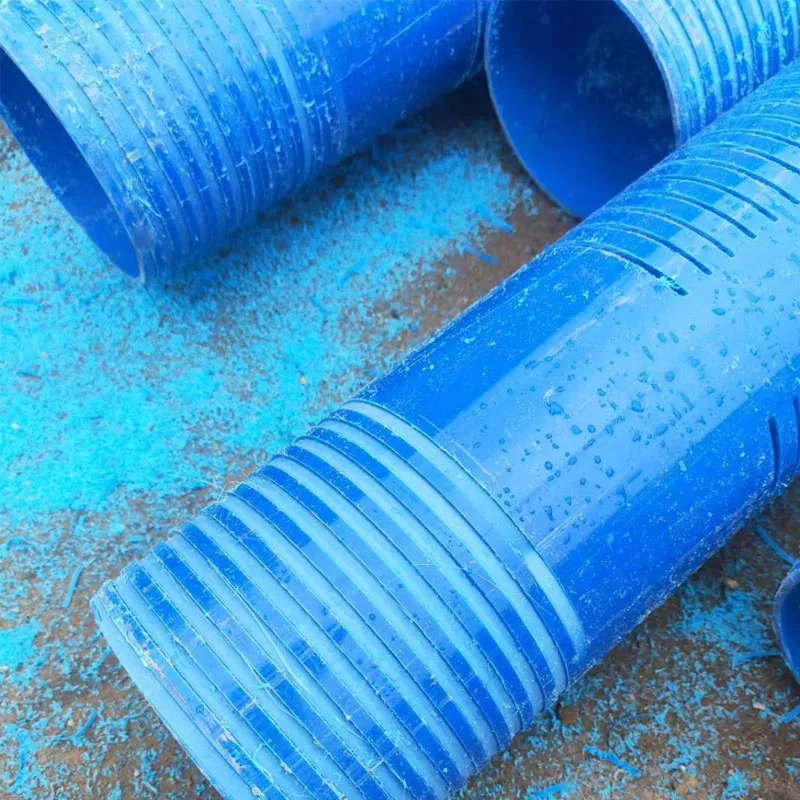
PVC is a homopolymer produced by the polymerization of vinyl chloride monomer (VCM). The resulting resin exists as a white, brittle powder. For pipe production, PVC resin is rarely used in its pure form. It's typically compounded with various additives – plasticizers (phthalates, adipates, trimellitates), stabilizers (organotin compounds, calcium-zinc stabilizers), lubricants, fillers (calcium carbonate), and pigments – to impart the desired mechanical properties and processability. The choice of plasticizer significantly impacts the pipe’s flexibility and temperature resistance. Schedule 40 PVC, commonly used for pressure applications, utilizes relatively low plasticizer content, resulting in a rigid pipe. Manufacturing commonly employs extrusion processes. PVC compound is fed into a single or twin-screw extruder, where it is heated, melted, and homogenized. The molten PVC is then forced through a die that defines the pipe's outer diameter and wall thickness. Critical parameters during extrusion include melt temperature (typically 180-210°C), screw speed, and die pressure. Precise control of these parameters is essential to ensure consistent pipe dimensions and avoid defects like surface irregularities or voids. Post-extrusion, pipes are cooled in a water bath to solidify the PVC and maintain dimensional stability. Quality control involves rigorous testing of physical properties like tensile strength, impact resistance, and hydrostatic pressure capacity.
Performance & Engineering
The performance of PVC pipes is governed by several key engineering principles. Hydrostatic pressure resistance is paramount, particularly for pressurized applications. This is determined by the pipe’s schedule number (e.g., Schedule 40, Schedule 80), which defines the wall thickness relative to the nominal pipe size. Higher schedule numbers indicate thicker walls and greater pressure-bearing capacity. Force analysis involves considerations of both internal pressure and external loads – soil loading, traffic loads, and bending moments. PVC exhibits relatively low tensile strength compared to metals, making it susceptible to cracking under excessive tensile stress. Consequently, proper bedding and backfilling practices are crucial to distribute external loads evenly and prevent pipe deformation. Environmental resistance is a significant advantage of PVC. It is inherently resistant to corrosion from most acids, alkalis, and salts, making it suitable for aggressive environments. However, prolonged exposure to UV radiation can cause degradation, leading to embrittlement and discoloration. UV stabilizers are added to PVC compounds to mitigate this effect, but pipes intended for outdoor use should still be protected from direct sunlight. Compliance with building codes and industry standards (discussed in the Standards & Regulations section) is essential to ensure the safe and reliable performance of PVC piping systems.
Technical Specifications
| Parameter | Schedule 40 PVC | Schedule 80 PVC | CPVC (Chlorinated PVC) | ASTM D1785 - PVC Compound |
|---|---|---|---|---|
| Tensile Strength (MPa) | 55-70 | 60-80 | 65-85 | Variable, depends on formulation |
| Flexural Modulus (GPa) | 3.0-3.5 | 3.5-4.0 | 3.8-4.2 | Variable, depends on formulation |
| Impact Strength (Izod Notched, J/m) | 500-800 | 600-900 | 800-1200 | Variable, depends on formulation |
| Maximum Working Pressure (at 23°C, MPa) | 2.0-2.7 | 3.5-4.8 | 4.0-5.5 | N/A |
| Operating Temperature Range (°C) | 0-60 | 0-60 | -15-93 | N/A |
| Water Absorption (% after 24 hours) | 0.1-0.3 | 0.1-0.3 | 0.05-0.15 | N/A |
Failure Mode & Maintenance
PVC pipes, while durable, are susceptible to several failure modes. Fatigue cracking can occur under cyclic loading, especially at joints or stress concentrators. Environmental Stress Cracking (ESC) is initiated by exposure to certain chemicals, particularly solvents and some detergents, in conjunction with tensile stress. Thermal deformation can occur if the operating temperature exceeds the material’s limit, leading to softening and loss of structural integrity. UV degradation causes embrittlement and discoloration, reducing impact resistance. Corrosion is generally not a significant issue for PVC itself, but degradation of gasket materials or corrosion of metallic fittings connected to PVC pipes can lead to leaks. Soil settlement can induce excessive bending stresses, causing cracks. Maintenance primarily focuses on preventative measures. Proper jointing techniques (solvent welding, rubber gasket joints) are critical. Regular inspections for cracks, leaks, and deformation are recommended. Protecting exposed pipes from UV radiation (e.g., with paint or coverings) extends their service life. In the event of a leak, repair can often be achieved using appropriate patching compounds or by replacing the damaged section of pipe. For larger-scale failures, a comprehensive assessment of the piping system is necessary to identify the root cause and prevent recurrence.
Industry FAQ
Q: What is the difference between Schedule 40 and Schedule 80 PVC pipe, and when should I use each?
A: Schedule 40 PVC pipe has thinner walls and is suitable for lower-pressure applications like irrigation and residential plumbing. Schedule 80 PVC pipe has thicker walls, providing higher pressure resistance and making it ideal for industrial applications, chemical processing, and situations where greater mechanical strength is required. The choice depends on the maximum operating pressure and the external loads the pipe will experience.
Q: How does temperature affect the performance of PVC pipe?
A: PVC's mechanical properties degrade at elevated temperatures. While standard PVC is generally suitable for temperatures up to 60°C, exceeding this limit can lead to softening and reduced pressure capacity. For higher temperature applications, Chlorinated PVC (CPVC) is recommended as it offers significantly improved heat resistance.
Q: What are the environmental concerns related to PVC, and what alternatives are available?
A: PVC contains chlorine, and the production of vinyl chloride monomer (VCM) can have environmental impacts. Phthalate plasticizers, historically used in PVC, are also subject to regulatory scrutiny due to potential health concerns. Alternatives include polyethylene (PE), polypropylene (PP), and CPVC, each with its own advantages and disadvantages. Recycling PVC is increasingly common, mitigating some environmental concerns.
Q: What is the best method for joining PVC pipes, and what precautions should be taken?
A: Solvent welding is a common method for joining PVC pipes, creating a chemical bond between the pipe and fitting. Proper surface preparation (cleaning and priming) is crucial for a strong joint. Rubber gasket joints are also widely used, offering ease of installation and disassembly. Ensure the gasket material is compatible with the fluid being conveyed. Always follow the manufacturer’s instructions for both methods.
Q: What are the implications of using incompatible solvents with PVC pipe?
A: Exposure to certain solvents can cause PVC to soften, swell, or even dissolve, leading to structural failure. Aromatic hydrocarbons, ketones, and esters are particularly damaging. Always verify the chemical compatibility of any fluid or solvent that will come into contact with the PVC pipe. Consult chemical resistance charts and material safety data sheets (MSDS).
Conclusion
PVC pipes remain a dominant material in fluid conveyance systems due to their favorable combination of cost, durability, and chemical resistance. However, informed material selection and adherence to proper installation and maintenance procedures are paramount to ensuring long-term performance and reliability. Understanding the nuances of PVC formulations, the impact of environmental factors, and potential failure modes is crucial for engineers and procurement professionals.
Future advancements in PVC technology are focused on developing more sustainable formulations, utilizing bio-based plasticizers, and enhancing the material's resistance to UV degradation and ESC. Continued research and development, coupled with stricter regulatory oversight, will further solidify PVC’s position as a vital material in infrastructure development worldwide.
-
DN25 HDPE Compression Fitting-HORON INTERNATIONAL|Reliable Irrigation Solutions
NewsFeb.11,2026
-
hdpe coupling joint product Manufacturing Analysis
News2026-11-18
-
ppr pipe heating time products Performance Analysis
News2026-11-16
-
hdpe pipe sizes factory Performance Analysis
News2026-11-09
-
HDPE Pipe Sizes Service Performance Analysis
News2026-10-26
-
wholesale 15mm ppr pipe Material Science and Performance Analysis
News2026-10-20
-
wholesale pvc pipe price per foot Technical Analysis
News2026-09-21
-
wholesale long pvc pipe Technical Analysis and Manufacturing Specifications
News2026-09-15
-
wholesale plumbing kitchen sink water lines Material Performance
News2026-09-15
-
wholesale hdpe drip irrigation Material Science
News2026-09-15
-
wholesale hot water ppr pipe Performance Analysis
News2026-09-15
-
wholesale ppr plumbing Performance Analysis
News2026-09-15
-
wholesale ppr pipe supplier Performance Analysis
News2026-09-13
-
wholesale 50mm ppr pipe Performance Analysis
News2026-09-13
-
wholesale hdpe drip pipe Performance Analysis
News2026-09-13
-
wholesale hdpe pipe 63mm price Manufacturing Specification and Performance Analysis
News2026-09-13