

Feb . 11, 2026 00:01 Back to list
wholesale water supply hdpe pipe Manufacturing Process and Performance Analysis

Introduction
High-Density Polyethylene (HDPE) pipe is a thermoplastic pipe manufactured from petroleum. Within the wholesale water supply industry, HDPE pipes represent a critical component of infrastructure, utilized for potable water distribution, irrigation, drainage, and sewage systems. Positioned as a direct replacement for traditional materials like ductile iron, concrete, and PVC, HDPE offers advantages in longevity, corrosion resistance, and installation efficiency. Core performance characteristics include pressure rating (PN), diameter, Schedule Designation (SDR), and resistance to slow crack growth (SCG). This guide details the material science, manufacturing processes, performance criteria, potential failure modes, and industry standards governing wholesale water supply HDPE pipe, targeting procurement managers, engineers, and field technicians involved in large-scale projects.
Material Science & Manufacturing
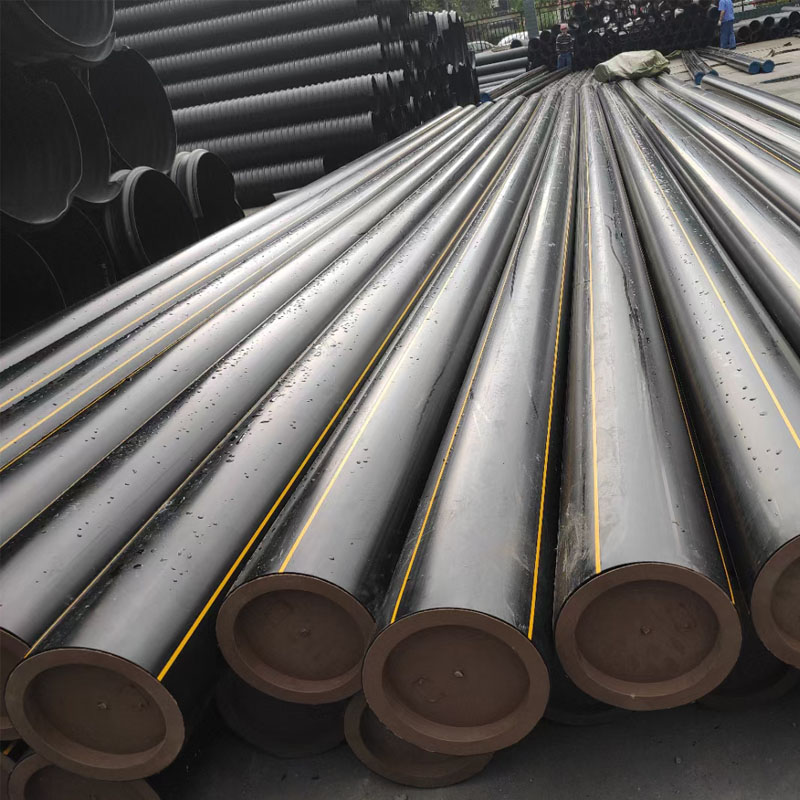
HDPE pipe is produced from polyethylene resin, typically a homopolymer or copolymer of ethylene. The resin’s molecular weight and density are key determinants of the pipe's strength and durability. High-density polyethylene exhibits a crystalline structure, contributing to its rigidity and resistance to environmental stress cracking. Raw material selection requires stringent quality control to ensure minimal contamination and consistent properties. Manufacturing processes primarily involve extrusion. The process begins with the melting of HDPE pellets, followed by forcing the molten plastic through a die of the desired pipe diameter and wall thickness. Key parameters during extrusion include temperature control (die temperature, melt temperature), screw speed, and haul-off speed. Precise control of these parameters ensures uniform wall thickness, consistent diameter, and minimizes internal stresses. Cooling is typically achieved through water baths, followed by coiling or straight-length cutting. Butt fusion, electrofusion, and socket fusion are common joining techniques, each requiring specific temperature and pressure controls to create a homogenous weld. The polyethylene grade used must conform to relevant standards (e.g., PE 100, PE 80) which dictate minimum performance characteristics. Post-manufacturing quality control includes hydrostatic pressure testing, impact resistance testing, and dimensional verification.
Performance & Engineering
The performance of HDPE pipe is primarily governed by its ability to withstand internal pressure and external loads. Force analysis requires consideration of hoop stress (resulting from internal pressure) and longitudinal stress (resulting from end loads or temperature fluctuations). The Barlow’s formula (S = PD/2t, where S=stress, P=pressure, D=diameter, t=wall thickness) is fundamental in calculating hoop stress. Environmental resistance is a crucial factor. HDPE exhibits excellent resistance to most chemicals, making it suitable for conveying a wide range of fluids. However, prolonged exposure to oxidizing agents or UV radiation can lead to degradation. Therefore, UV stabilizers are often incorporated into the resin formulation. Slow Crack Growth (SCG) is a critical failure mechanism in HDPE pipes. It's initiated by sustained tensile stress combined with aggressive chemicals, leading to crack propagation. Compliance requirements vary by region but generally adhere to standards like AWWA C906 (USA), EN 12201 (Europe), and ISO 4427 (International). Burial depth, soil conditions, and traffic loads must be considered in engineering designs to prevent pipe deformation or failure. The pipe's flexibility allows for some ground movement without causing stress fractures, a distinct advantage over rigid materials.
Technical Specifications
| Parameter | Metric (Imperial) | Testing Standard | Typical Value (DN160, PN16) |
|---|---|---|---|
| Outside Diameter | 160 mm (6.3 in) | ISO 4427 | 160 mm |
| Wall Thickness | 7.3 mm (0.29 in) | ASTM D2412 | 7.3 mm |
| Pressure Rating (PN) | 16 bar (232 psi) | ISO 4427 | 16 bar |
| SDR (Standard Dimension Ratio) | - | ASTM D2412 | 11.0 |
| Density | 0.953 g/cm³ | ASTM D1505 | 0.953 g/cm³ |
| Hydrostatic Stress Resistance | - | ISO 1167 | >160 hours |
Failure Mode & Maintenance
Several failure modes can affect wholesale water supply HDPE pipes. Slow Crack Growth (SCG), as previously mentioned, is initiated by sustained stress and chemical attack. Fatigue Cracking can occur from cyclic pressure fluctuations or external loads. Brittle Fracture is less common in HDPE, but can happen at very low temperatures or due to severe impact. Joint Failure is a significant concern; improper fusion welding can create weak points susceptible to leakage or rupture. Oxidation can degrade the polymer, reducing its strength and flexibility. Third-party Damage during excavation is also a frequent cause of failure. Maintenance typically involves regular inspections for visual defects like cracks, deformation, or joint misalignment. Pressure testing can identify leaks. For minor cracks, heat welding repair techniques can be employed. In cases of severe damage, pipe replacement is necessary. Preventive maintenance includes proper bedding and backfilling procedures during installation to provide adequate support and prevent external stresses. Surge protection devices should be implemented to mitigate pressure transients. Soil analysis is crucial to identify aggressive chemical environments that could accelerate SCG.
Industry FAQ
Q: What is the expected service life of HDPE pipe in a potable water application?
A: The expected service life of properly installed and maintained HDPE pipe in potable water applications is typically 50-100 years. This is significantly longer than many traditional materials due to its inherent corrosion resistance and resistance to scale buildup. However, actual service life depends heavily on factors like water quality, operating pressure, and soil conditions.
Q: How does HDPE pipe handle ground movement or seismic activity?
A: HDPE pipe’s inherent flexibility allows it to accommodate ground movement and seismic activity much better than rigid pipes like concrete or ductile iron. The pipe can deform and return to its original shape without fracturing, minimizing the risk of leaks or ruptures. Properly designed joints also contribute to this resilience.
Q: What are the key considerations for joining HDPE pipes?
A: Proper joint fusion is critical for long-term performance. Butt fusion, electrofusion, and socket fusion require trained personnel and adherence to strict procedural controls, including correct heating temperatures, pressure, and cooling times. Joint inspection is essential to verify weld integrity.
Q: Can HDPE pipe be used in corrosive soil conditions?
A: HDPE is highly resistant to most corrosive elements found in soil. However, prolonged exposure to specific aggressive chemicals can cause degradation. A soil analysis is recommended to determine if any protective measures, such as specialized coatings or backfill materials, are necessary.
Q: How does the SDR (Standard Dimension Ratio) affect pipe performance?
A: SDR is the ratio of pipe outside diameter to wall thickness. A lower SDR indicates a thicker wall and, therefore, a higher pressure rating and greater resistance to collapse. Selecting the appropriate SDR is crucial based on the operating pressure, burial depth, and soil conditions.
Conclusion
Wholesale water supply HDPE pipe provides a robust and long-lasting solution for water distribution and related infrastructure. Its superior corrosion resistance, flexibility, and ease of installation offer substantial advantages over traditional materials. However, successful implementation relies on a thorough understanding of material science, manufacturing processes, and engineering principles, alongside strict adherence to relevant industry standards.
Looking forward, advancements in HDPE resin formulations, particularly the development of enhanced UV stabilizers and improved resistance to SCG, will further extend the lifespan and broaden the application range of HDPE pipe. Continued investment in quality control measures and operator training are also essential to ensure the reliable performance of these critical infrastructure components.
-
DN25 HDPE Compression Fitting-HORON INTERNATIONAL|Reliable Irrigation Solutions
NewsFeb.11,2026
-
hdpe coupling joint product Manufacturing Analysis
News2026-11-18
-
ppr pipe heating time products Performance Analysis
News2026-11-16
-
hdpe pipe sizes factory Performance Analysis
News2026-11-09
-
HDPE Pipe Sizes Service Performance Analysis
News2026-10-26
-
wholesale 15mm ppr pipe Material Science and Performance Analysis
News2026-10-20
-
wholesale pvc pipe price per foot Technical Analysis
News2026-09-21
-
wholesale long pvc pipe Technical Analysis and Manufacturing Specifications
News2026-09-15
-
wholesale plumbing kitchen sink water lines Material Performance
News2026-09-15
-
wholesale hdpe drip irrigation Material Science
News2026-09-15
-
wholesale hot water ppr pipe Performance Analysis
News2026-09-15
-
wholesale ppr plumbing Performance Analysis
News2026-09-15
-
wholesale ppr pipe supplier Performance Analysis
News2026-09-13
-
wholesale 50mm ppr pipe Performance Analysis
News2026-09-13
-
wholesale hdpe drip pipe Performance Analysis
News2026-09-13
-
wholesale hdpe pipe 63mm price Manufacturing Specification and Performance Analysis
News2026-09-13