

Feb . 11, 2026 00:01 Back to list
wholesale submersible column pipe price Performance Analysis
Introduction
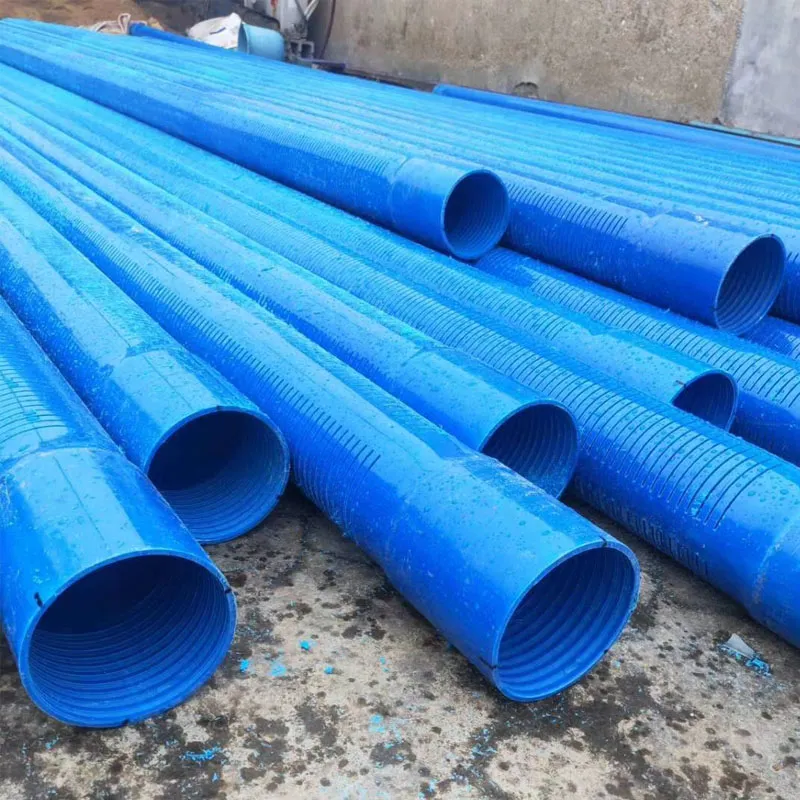
Submersible column pipe constitutes a critical component in submersible pump systems used extensively in water well, oil and gas, and dewatering applications. This guide provides a comprehensive technical overview of wholesale submersible column pipe, encompassing its material science, manufacturing processes, performance characteristics, potential failure modes, and relevant industry standards. Unlike surface-mounted pumping systems, submersible pumps rely on column pipe to transmit hydraulic power and provide structural support for the pump assembly within the wellbore. The integrity of this pipe directly impacts the overall system efficiency, longevity, and operational safety. The increasing demands for efficient water management and energy production drive continuous innovation in column pipe materials and construction techniques, focusing on corrosion resistance, tensile strength, and cost-effectiveness. A thorough understanding of these factors is vital for procurement managers, engineers, and operators responsible for selecting and maintaining these essential components.
Material Science & Manufacturing
Submersible column pipe is typically manufactured from carbon steel, with varying grades selected based on application demands. AISI 1018, 1020, and various alloy steels conforming to ASTM A53 Grade B are common choices. The raw material undergoes rigorous quality control, including chemical composition analysis to ensure adherence to specified standards. Manufacturing generally employs a seamless pipe production process, critical for withstanding high hydrostatic pressures. This process involves piercing a solid billet of steel, followed by rolling and drawing operations to achieve the desired dimensions and wall thickness. Welded pipe is also used, particularly for larger diameter pipes, requiring stringent weld quality control through non-destructive testing methods such as ultrasonic testing (UT) and radiographic testing (RT). A critical parameter during manufacturing is the control of surface roughness. Internal roughness affects flow characteristics and friction losses, while external roughness impacts corrosion resistance and coupling engagement. Following fabrication, pipes are typically subjected to galvanizing or epoxy coating to provide corrosion protection, particularly in aggressive groundwater environments. The quality of the coating is assessed using adhesion tests and salt spray testing. Threading operations, essential for joining pipe sections, are performed to precise tolerances conforming to API 5B standards, ensuring leak-proof connections under operating pressures.
Performance & Engineering
The primary performance requirement of submersible column pipe is its ability to withstand both internal hydrostatic pressure from the pumped fluid and external radial stress from the surrounding formation. Force analysis involves calculating hoop stress and longitudinal stress based on the operating pressure and pipe dimensions. Buckling analysis is crucial, particularly for long column strings, to ensure structural stability under compressive loads. Environmental resistance is paramount, especially in applications involving corrosive fluids or saline environments. Corrosion mitigation strategies include material selection (e.g., using higher alloy steels), protective coatings (galvanizing, epoxy, polyethylene), and cathodic protection systems. Compliance requirements vary by region, but commonly involve adherence to API standards, particularly API 5B for pipe dimensions and threading, and local regulations governing groundwater protection. Functional implementation dictates pipe selection criteria. For example, high-flow applications require larger diameter pipes with smooth internal surfaces to minimize friction losses. Deep well applications demand higher tensile strength materials to withstand increased hydrostatic pressures and potential axial loads. Furthermore, the pipe must be compatible with the submersible pump’s power cable, ensuring proper clearance and preventing cable damage. Fatigue analysis is also crucial, accounting for the cyclical stresses caused by pump start-stop cycles and fluid pulsation.
Technical Specifications
| Parameter | Unit | AISI 1018 | ASTM A53 Grade B |
|---|---|---|---|
| Tensile Strength | MPa | 440-560 | 345-485 |
| Yield Strength | MPa | 250-310 | 240-310 |
| Elongation | % | 20-30 | 20-25 |
| Outside Diameter | mm | 21.3-219.1 | 21.3-508 |
| Wall Thickness | mm | 2.6-12.7 | 2.8-19.1 |
| Corrosion Rate (in saltwater) | mm/year | 0.05-0.2 | 0.02-0.1 |
Failure Mode & Maintenance
Common failure modes for submersible column pipe include corrosion (both localized pitting and general corrosion), fatigue cracking (induced by cyclical stress), thread failure (due to improper installation or overloading), and buckling (resulting from excessive axial compression). Corrosion is often accelerated by the presence of chlorides, sulfides, and other aggressive ions in the pumped fluid. Fatigue cracking typically initiates at stress concentrators, such as threaded connections or surface imperfections. Failure analysis often involves metallographic examination of fractured surfaces to identify the root cause. Maintenance procedures include regular visual inspection for signs of corrosion or damage, torque verification of threaded connections, and periodic hydrostatic testing to assess pipe integrity. Cathodic protection systems should be inspected and maintained to ensure their effectiveness. If corrosion is detected, localized repairs may be possible, but complete pipe replacement is often the most reliable solution. Proper storage practices, including preventing moisture ingress and protecting against physical damage, are essential to extend the service life of the pipe. Preventative maintenance programs, incorporating scheduled inspections and testing, can significantly reduce the risk of unexpected failures and associated downtime.
Industry FAQ
Q: What is the impact of water hammer on submersible column pipe longevity?
A: Water hammer, caused by sudden changes in flow velocity, generates significant pressure surges within the column pipe. These surges induce cyclical stresses that can accelerate fatigue cracking, particularly at threaded connections. Mitigation strategies include installing check valves to prevent backflow, using slow-closing valves, and optimizing pump start-stop procedures to minimize flow transients. Proper pipe support also helps to dampen the effects of water hammer.
Q: How does the choice of coating affect the long-term cost of ownership?
A: While galvanizing offers initial cost benefits, epoxy coatings generally provide superior long-term corrosion protection, particularly in aggressive environments. The higher upfront cost of epoxy coatings can be offset by reduced maintenance requirements and a longer service life, leading to lower overall cost of ownership. Polyethylene coatings are also highly effective but can be more susceptible to mechanical damage.
Q: What are the key considerations when selecting column pipe for high-temperature applications?
A: Elevated temperatures can reduce the tensile strength and yield strength of carbon steel column pipe. For high-temperature applications (above 80°C), it’s crucial to select materials with higher temperature ratings, such as alloy steels. Furthermore, the coefficient of thermal expansion must be considered to account for potential stress induced by temperature fluctuations.
Q: What is the role of API 5B in ensuring interchangeability of column pipe components?
A: API 5B defines the standard dimensions, threading specifications, and material requirements for submersible pump components, including column pipe. Adherence to API 5B ensures interchangeability between components manufactured by different vendors, simplifying maintenance and reducing the risk of compatibility issues. It’s vital to verify API 5B compliance when procuring column pipe.
Q: How important is proper pipe alignment during installation, and what are the consequences of misalignment?
A: Proper pipe alignment is critical to minimize bending stresses and prevent premature failure. Misalignment introduces lateral loads on the pump and can lead to buckling or fatigue cracking. Accurate alignment is achieved using proper installation techniques, including the use of alignment guides and torque wrenches. Regular alignment checks should be performed during maintenance inspections.
Conclusion
The selection and application of wholesale submersible column pipe necessitate a comprehensive understanding of material science, manufacturing processes, and performance characteristics. Optimizing pipe selection based on specific application requirements – including fluid chemistry, operating pressure, temperature, and well depth – is critical for ensuring long-term reliability and minimizing total cost of ownership. A robust preventative maintenance program, encompassing regular inspections, testing, and corrosion mitigation strategies, is essential to proactively address potential failure modes and extend the service life of the column pipe.
Future advancements in column pipe technology are likely to focus on the development of lighter-weight, higher-strength materials, such as composite materials, and the implementation of advanced corrosion monitoring and control systems. Furthermore, enhanced manufacturing techniques, such as additive manufacturing, may enable the production of customized column pipe designs tailored to specific well conditions. These innovations will contribute to increased efficiency, reduced environmental impact, and improved operational safety within the submersible pumping industry.
-
DN25 HDPE Compression Fitting-HORON INTERNATIONAL|Reliable Irrigation Solutions
NewsFeb.11,2026
-
hdpe coupling joint product Manufacturing Analysis
News2026-11-18
-
ppr pipe heating time products Performance Analysis
News2026-11-16
-
hdpe pipe sizes factory Performance Analysis
News2026-11-09
-
HDPE Pipe Sizes Service Performance Analysis
News2026-10-26
-
wholesale 15mm ppr pipe Material Science and Performance Analysis
News2026-10-20
-
wholesale pvc pipe price per foot Technical Analysis
News2026-09-21
-
wholesale long pvc pipe Technical Analysis and Manufacturing Specifications
News2026-09-15
-
wholesale plumbing kitchen sink water lines Material Performance
News2026-09-15
-
wholesale hdpe drip irrigation Material Science
News2026-09-15
-
wholesale hot water ppr pipe Performance Analysis
News2026-09-15
-
wholesale ppr plumbing Performance Analysis
News2026-09-15
-
wholesale ppr pipe supplier Performance Analysis
News2026-09-13
-
wholesale 50mm ppr pipe Performance Analysis
News2026-09-13
-
wholesale hdpe drip pipe Performance Analysis
News2026-09-13
-
wholesale hdpe pipe 63mm price Manufacturing Specification and Performance Analysis
News2026-09-13