

Feb . 11, 2026 00:01 Back to list
wholesale ppr pipe 3 4 price Performance Analysis

Introduction
Polypropylene Random (PPR) piping systems are a ubiquitous solution for potable water supply and heating/cooling applications across residential, commercial, and industrial sectors. The designation "3/4" refers to a nominal pipe size, specifically indicating an inner diameter approximating ¾ inches. Wholesale PPR pipe 3/4 price reflects the cost per unit length, varying significantly based on manufacturing quality, raw material grade, certification adherence, and supplier margins. This technical guide provides an in-depth exploration of PPR piping, focusing on material science, manufacturing processes, performance characteristics, potential failure modes, and relevant industry standards. The increasing adoption of PPR is driven by its corrosion resistance, thermal stability, relatively low cost compared to traditional materials like copper, and ease of installation via heat fusion welding. A core industry pain point revolves around ensuring long-term performance reliability given variations in polymer quality and inadequate installation practices that lead to premature failures. This guide addresses these concerns with a focus on understanding the critical factors impacting PPR pipe longevity and suitability for diverse applications.
Material Science & Manufacturing
PPR pipes are manufactured from polypropylene random copolymers. The "random" designation indicates that the ethylene comonomer is randomly distributed along the polypropylene chain, disrupting the crystallinity and enhancing impact resistance and flexibility. The raw material is typically polypropylene homopolymer and random copolymer resins, characterized by a density ranging from 0.90 to 0.91 g/cm³. Key physical properties include a Vicat softening temperature between 130-150°C (crucial for hot water applications), a tensile strength of 20-30 MPa, and an elongation at break of 200-500%. Chemical resistance is excellent against most common acids, alkalis, and salts, but long-term exposure to strong oxidizing agents should be avoided.
The manufacturing process predominantly employs extrusion molding. Polypropylene granules are fed into an extruder, heated to a plasticized state, and forced through a die to form the desired pipe shape and diameter. Critical parameters during extrusion include temperature control (barrel and die temperatures must be precisely regulated to prevent degradation and ensure consistent dimensions), screw speed (influences melt homogeneity and output rate), and cooling rate (affects crystallinity and dimensional stability). Post-extrusion, pipes are typically marked with size, pressure rating, material grade, and manufacturer information. Heat fusion welding – socket fusion, butt fusion, and electrofusion – are the primary joining methods. Socket fusion relies on heating both the pipe and fitting, then inserting the pipe into the fitting. Butt fusion utilizes a heated tool to melt the ends of two pipes together, creating a homogenous weld. Electrofusion employs an electrical current to heat a fitting with an embedded heating element, fusing the pipe ends into the fitting. Parameter control during welding is paramount; insufficient heating leads to incomplete fusion, while excessive heating can cause material degradation and weakening of the joint.
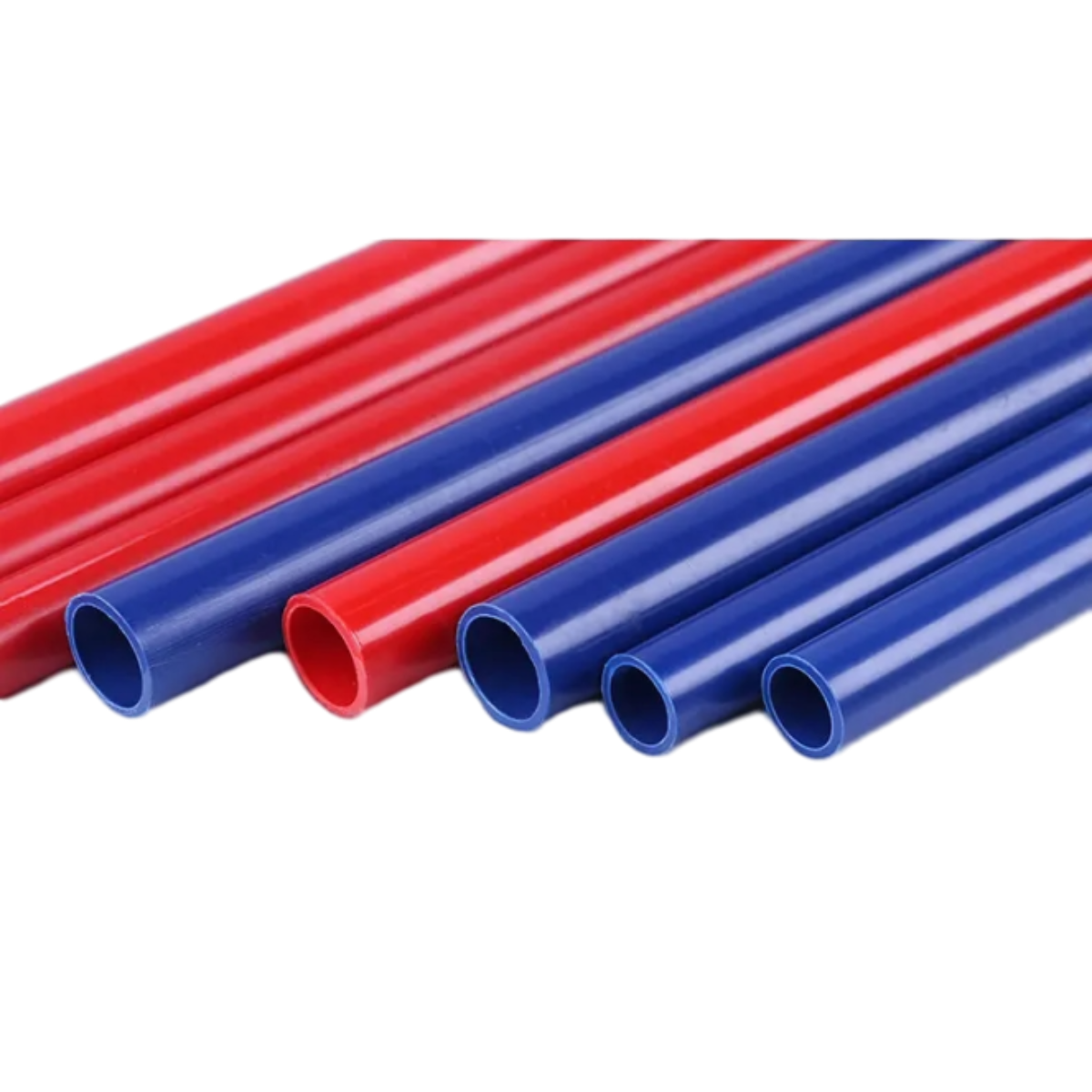
Performance & Engineering
The performance of PPR piping is heavily influenced by hydrostatic pressure resistance and temperature cycling. PPR pipes are classified according to their pressure rating, typically designated as PN (Nominal Pressure) followed by a number representing the maximum operating pressure in bar. PN16, PN20, and PN25 are common ratings. Force analysis under internal pressure demonstrates that hoop stress increases with both pressure and pipe diameter. Therefore, appropriate pipe thickness and pressure rating selection are critical to prevent burst failure. Long-term hydrostatic strength is determined through accelerated aging tests, exposing pipes to elevated temperatures and pressures to simulate years of service.
Environmental resistance is another key consideration. While PPR exhibits excellent resistance to many chemicals, UV degradation can occur upon prolonged exposure to sunlight. UV stabilizers are often added to the polymer formulation to mitigate this effect. Thermal expansion and contraction are also significant. PPR has a relatively high coefficient of thermal expansion (approximately 0.15 mm/m°C), necessitating the incorporation of expansion loops or flexible connectors to accommodate dimensional changes due to temperature fluctuations and prevent stress build-up at joints. Compliance requirements depend on the region and application. For potable water systems, PPR pipes must comply with regulations regarding leachables and extractables to ensure water quality. For heating systems, adherence to standards governing thermal conductivity and maximum operating temperature is essential. Proper support and anchoring of PPR pipes are vital to prevent sagging, bending stresses, and potential damage. Support spacing should be calculated based on pipe diameter, fluid temperature, and anticipated loads.
Technical Specifications
| Parameter | PN16 | PN20 | PN25 | Standard |
|---|---|---|---|---|
| Nominal Pressure (bar) | 1.6 MPa | 2.0 MPa | 2.5 MPa | DIN 8077/8078 |
| Hydrostatic Pressure Test (bar) | 2.4 | 3.0 | 3.75 | ISO 11671 |
| Operating Temperature (°C) | -20 to +80 | -20 to +90 | -20 to +95 | EN ISO 15876-2 |
| Tensile Strength (MPa) | 22 | 25 | 28 | ISO 527-2 |
| Elongation at Break (%) | 300 | 350 | 400 | ISO 527-2 |
| Vicat Softening Temperature (°C) | 135 | 140 | 145 | ISO 306 |
Failure Mode & Maintenance
Common failure modes in PPR piping include fatigue cracking at joints (often due to inadequate welding or excessive stress), creep rupture under sustained high temperatures and pressures, slow crack growth induced by environmental stress cracking (ESC) – particularly in the presence of chlorine or other aggressive chemicals – and delamination due to material incompatibility or insufficient fusion. Oxidation of the polymer can also occur over prolonged exposure to elevated temperatures, leading to embrittlement and reduced mechanical properties. A critical failure mode is thermal expansion-induced stress cracking, which occurs when pipes are rigidly fixed without allowance for expansion and contraction.
Preventative maintenance involves regular visual inspections for leaks, discoloration, or deformation. Periodic pressure testing can identify potential weaknesses before catastrophic failure. Proper welding technique is paramount; welders should be certified and adhere to manufacturer's recommendations regarding heating times and insertion depths. Avoid applying excessive mechanical loads or impacts to the piping system. Protect pipes from direct sunlight to minimize UV degradation. If chemical exposure is anticipated, verify the compatibility of the PPR material with the specific chemical. For minor leaks at joints, re-welding may be possible, provided the surrounding material is not significantly degraded. However, extensive damage typically necessitates pipe replacement. Flushing the system periodically can remove sediment buildup and prevent corrosion in metallic components connected to the PPR piping. Implementing a robust quality control program during installation is the most effective preventative measure.
Industry FAQ
Q: What is the impact of water hardness on the long-term performance of PPR pipes?
A: Water hardness, primarily due to calcium and magnesium ions, can lead to scale buildup inside PPR pipes. While PPR is resistant to scaling itself, the scale can reduce the internal diameter, increasing flow resistance and potentially creating localized stress points. Regular flushing and, in areas with extremely hard water, the use of water softening systems can mitigate this issue. The scale does not typically cause structural failure but can affect flow rates and system efficiency.
Q: Can PPR pipes be used for compressed air lines?
A: Generally, PPR pipes are not recommended for compressed air lines operating at significant pressures. While some PPR pipes may exhibit short-term resistance to compressed air, the material’s susceptibility to permeation and potential for brittle failure under cyclic pressure loading makes it unsuitable for this application. Specialized air compressor piping materials, such as polyethylene or metal, are preferred.
Q: What are the key differences between PPR Type 1, Type 2, and Type 3?
A: PPR Type 1 is suitable for cold water applications only. Type 2 is designed for hot and cold water systems up to +60°C. Type 3 offers enhanced thermal stability and can handle temperatures up to +95°C, making it ideal for heating applications. The distinction lies in the varying levels of ethylene comonomer content, influencing the crystallinity and temperature resistance of the material.
Q: How does the weld quality of PPR piping affect its overall lifespan?
A: Weld quality is arguably the single most critical factor determining the long-term lifespan of a PPR piping system. Incomplete fusion, excessive weld bead size, or contamination during welding significantly weaken the joint and create a potential failure point. Proper welder training, adherence to manufacturer’s welding parameters, and visual inspection of welds are essential.
Q: What is the recommended minimum bending radius for PPR pipes?
A: The recommended minimum bending radius for PPR pipes is generally 2.5 times the outer diameter of the pipe. Exceeding this radius can induce excessive stress on the pipe wall, leading to cracking or deformation. Using specialized bending tools that support the pipe during bending can help maintain the correct radius and prevent damage.
Conclusion
PPR piping represents a cost-effective and reliable solution for a wide range of fluid conveyance applications. However, realizing its full potential requires a thorough understanding of the material’s properties, manufacturing processes, and potential failure modes. The wholesale PPR pipe 3/4 price is a critical factor, but prioritizing material quality and proper installation practices are paramount to ensuring long-term system integrity and minimizing the risk of premature failures.
Future developments in PPR technology are likely to focus on enhancing UV resistance, improving chemical compatibility, and developing more robust welding techniques. Adoption of smart monitoring systems that track pressure, temperature, and flow rates within PPR pipelines could also provide valuable insights into system performance and enable proactive maintenance interventions. Ultimately, a holistic approach that considers the entire lifecycle of the piping system – from material selection to installation and maintenance – is essential for maximizing its longevity and ensuring optimal performance.
-
DN25 HDPE Compression Fitting-HORON INTERNATIONAL|Reliable Irrigation Solutions
NewsFeb.11,2026
-
hdpe coupling joint product Manufacturing Analysis
News2026-11-18
-
ppr pipe heating time products Performance Analysis
News2026-11-16
-
hdpe pipe sizes factory Performance Analysis
News2026-11-09
-
HDPE Pipe Sizes Service Performance Analysis
News2026-10-26
-
wholesale 15mm ppr pipe Material Science and Performance Analysis
News2026-10-20
-
wholesale pvc pipe price per foot Technical Analysis
News2026-09-21
-
wholesale long pvc pipe Technical Analysis and Manufacturing Specifications
News2026-09-15
-
wholesale plumbing kitchen sink water lines Material Performance
News2026-09-15
-
wholesale hdpe drip irrigation Material Science
News2026-09-15
-
wholesale hot water ppr pipe Performance Analysis
News2026-09-15
-
wholesale ppr plumbing Performance Analysis
News2026-09-15
-
wholesale ppr pipe supplier Performance Analysis
News2026-09-13
-
wholesale 50mm ppr pipe Performance Analysis
News2026-09-13
-
wholesale hdpe drip pipe Performance Analysis
News2026-09-13
-
wholesale hdpe pipe 63mm price Manufacturing Specification and Performance Analysis
News2026-09-13