

Feb . 11, 2026 00:01 Back to list
wholesale ppr flexible pipe Performance Analysis

Introduction
Polypropylene Random (PPR) flexible pipes represent a significant advancement in fluid conveyance systems, primarily utilized in hot and cold water distribution networks within building construction and industrial applications. Positioned as a viable alternative to traditional metallic piping (copper, steel, galvanized iron), PPR flexible pipe leverages the inherent properties of polypropylene random copolymer – notably its chemical resistance, thermal stability, and hygienic characteristics. Unlike rigid PPR, the ‘flexible’ designation denotes the incorporation of an aluminum reinforced layer, or a fully flexible design without reinforcement, enabling easier installation, accommodating thermal expansion and contraction, and resisting external stress. This guide will detail the material science, manufacturing processes, performance characteristics, failure modes, and relevant industry standards governing wholesale PPR flexible pipe, addressing core concerns for procurement professionals and engineers involved in large-scale projects.
Material Science & Manufacturing
The core material for PPR flexible pipe is polypropylene random copolymer, a thermoplastic polymer synthesized through the polymerization of propylene monomers. The ‘random’ designation signifies the random distribution of comonomers (typically ethylene) within the polymer chain, resulting in a material with improved impact resistance and flexibility compared to homopolymer polypropylene. The raw material, typically sourced as polymer granules, exhibits a density of approximately 0.905 g/cm³, a glass transition temperature around 0°C, and a melting point typically between 130-170°C, depending on the specific grade.
Manufacturing typically involves extrusion. For reinforced PPR flexible pipe, the process begins with co-extruding a layer of molten polypropylene directly onto a pre-formed aluminum strip. This aluminum layer provides dimensional stability, oxygen barrier properties, and enhanced pressure resistance. Subsequently, additional layers of polypropylene are extruded over the aluminum, forming a multi-layer structure. The final layer often incorporates a UV stabilizer to mitigate degradation from sunlight exposure. For fully flexible designs, a multi-layer extrusion process is employed utilizing various polypropylene formulations to achieve desired flexibility and strength. Key parameters rigorously controlled during extrusion include melt temperature, screw speed, die pressure, and cooling rate. Precise temperature control prevents polymer degradation and ensures consistent layer adhesion. Post-extrusion, pipes undergo hydrostatic testing to verify pressure resistance and leak-proof integrity, conforming to industry standards like DIN 8077/8078. The welding of PPR pipe sections utilizes thermal fusion welding, specifically butt welding or socket welding, which ensures a homogenous joint without the introduction of chemical adhesives.
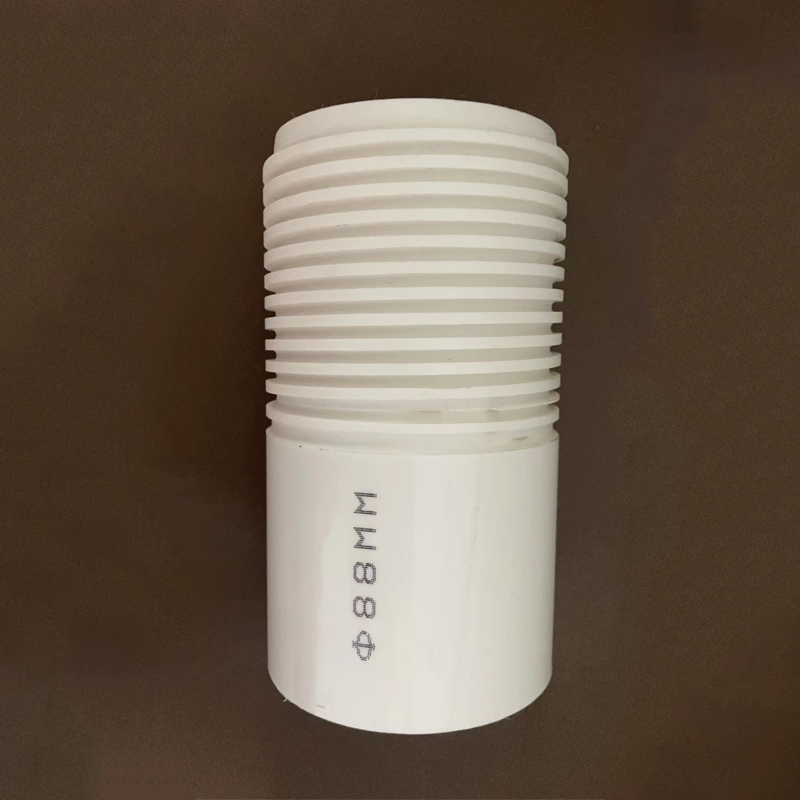
Performance & Engineering
PPR flexible pipe’s performance is primarily characterized by its pressure resistance, temperature tolerance, and chemical compatibility. The aluminum reinforcement significantly enhances burst pressure capabilities, allowing the pipe to withstand hydrostatic pressures ranging from PN10 (1 MPa) to PN25 (2.5 MPa), depending on the pipe diameter and wall thickness. Finite element analysis (FEA) is frequently employed during the design phase to optimize layer thicknesses and material combinations for specific pressure ratings. Temperature resistance is a critical factor, with PPR capable of handling continuous operating temperatures up to 70°C, and short-term temperature spikes up to 95°C, without significant deformation or degradation. However, prolonged exposure to temperatures exceeding these limits can lead to creep and reduced lifespan.
Chemical resistance is exceptional, exhibiting compatibility with most common potable water compositions and a wide range of industrial fluids. However, PPR is susceptible to degradation from prolonged exposure to strong oxidizing agents, concentrated acids, and certain organic solvents. The flexibility of the pipe itself is a key engineering advantage. The aluminum layer, coupled with the inherent flexibility of polypropylene, allows the pipe to bend and conform to installation constraints, minimizing the need for numerous fittings and reducing the risk of stress cracking. Compliance with drinking water regulations is paramount, ensuring that the material does not leach harmful substances into the water supply. Standards like NSF/ANSI 61 and WRAS certification demonstrate adherence to these requirements. The coefficient of linear thermal expansion for PPR is approximately 0.15 mm/m°C, necessitating careful consideration during installation to accommodate thermal movement and prevent stress build-up.
Technical Specifications
| Parameter | Specification (PN20, 20mm Diameter - Example) | Testing Standard | Typical Application Range |
|---|---|---|---|
| Nominal Diameter | 20 mm | ISO 10555 | Potable Water Distribution |
| Nominal Pressure | PN20 (2.0 MPa) | DIN 8077/8078 | Industrial Fluid Transfer (Compatible Fluids) |
| Wall Thickness | 2.3 mm | ISO 10555 | HVAC Systems |
| Burst Pressure | >6 MPa | ISO 11671 | Underground Water Mains (Depending on local regulations) |
| Operating Temperature | -20°C to +70°C (Continuous) | DIN 8077/8078 | Central Heating Systems |
| Material | Polypropylene Random Copolymer (PPR), Aluminum (Reinforced) | ISO 1043-1 | Agricultural Irrigation |
Failure Mode & Maintenance
Several failure modes can affect the long-term performance of PPR flexible pipe. Creep rupture, a time-dependent deformation under sustained stress, is a common failure mechanism, particularly at elevated temperatures. This is exacerbated by improper installation causing undue stress on the pipe. Stress cracking, induced by external loads or internal pressure fluctuations, can occur at weld joints or areas with geometric discontinuities. UV degradation, despite the inclusion of UV stabilizers, can lead to embrittlement and loss of impact resistance over prolonged exposure to sunlight. Delamination, specifically in reinforced pipes, can occur if the adhesion between the polypropylene layers and the aluminum core is compromised due to manufacturing defects or improper welding. Oxidation, particularly in areas exposed to high temperatures and oxygen-rich environments, can lead to material degradation.
Preventative maintenance is crucial. Regular visual inspections should be conducted to identify signs of cracking, deformation, or discoloration. Hydrostatic testing can be periodically performed to verify pressure integrity. Protecting the pipe from direct sunlight exposure through shading or protective coatings is recommended. Proper support and anchoring of the pipe are essential to minimize stress concentrations. When performing thermal fusion welding, strict adherence to manufacturer's instructions and quality control procedures is paramount. In case of a leak, the affected section should be cut out and replaced with a new section utilizing appropriate thermal fusion welding techniques. Avoid using abrasive cleaning agents or solvents, as these can damage the polymer matrix.
Industry FAQ
Q: What is the advantage of using aluminum-reinforced PPR flexible pipe over standard rigid PPR?
A: The aluminum layer significantly increases the pipe's pressure resistance and dimensional stability, allowing for larger pipe diameters and higher operating pressures. It also acts as an oxygen barrier, preventing oxygen diffusion into the fluid being conveyed, which is critical for maintaining water quality in heating systems and preventing corrosion in metallic components. The reinforcement also reduces thermal expansion/contraction, minimizing stress on joints.
Q: How does PPR flexible pipe compare to PEX (Cross-linked Polyethylene) in terms of long-term durability?
A: Both PPR and PEX are viable options, but exhibit different strengths. PEX generally has superior resistance to chlorine and is often preferred for direct burial applications. PPR offers excellent chemical resistance to most other common fluids and generally has a lower cost. Long-term creep performance is comparable between the two, provided proper installation practices are followed. PPR's temperature rating is often slightly higher.
Q: What are the key considerations for thermal expansion and contraction when installing PPR flexible pipe?
A: PPR has a relatively high coefficient of thermal expansion. Installation must incorporate expansion loops or flexible couplings to accommodate thermal movement. Piping should not be rigidly fixed at multiple points, as this can induce stress and lead to cracking. Proper anchoring and support systems are crucial to control pipe movement and prevent damage.
Q: Are there any specific regulations governing the use of PPR flexible pipe in potable water systems?
A: Yes, regulations vary by region. In North America, NSF/ANSI 61 certification is a common requirement, verifying that the material does not leach harmful contaminants into the water. In Europe, compliance with WRAS (Water Regulations Advisory Scheme) is often necessary. Local plumbing codes also dictate specific installation requirements.
Q: What is the expected service life of a properly installed PPR flexible pipe system?
A: With proper installation and adherence to operating temperature and pressure limits, a PPR flexible pipe system can have a service life of 50 years or more. Regular inspection and preventative maintenance are essential to maximizing lifespan. Factors like water quality, UV exposure, and mechanical stress can influence actual service life.
Conclusion
Wholesale PPR flexible pipe provides a robust and cost-effective solution for a wide range of fluid conveyance applications. Its superior chemical resistance, combined with the flexibility afforded by the aluminum reinforcement or advanced polypropylene formulations, positions it as a strong contender to traditional piping materials. Successful implementation, however, relies on a thorough understanding of its material properties, manufacturing processes, and potential failure modes.
Continued advancements in PPR copolymer formulations and extrusion technologies are expected to further enhance the performance and durability of these systems. Focusing on rigorous quality control during manufacturing, proper installation techniques adhering to relevant industry standards, and consistent preventative maintenance will ensure the longevity and reliability of PPR flexible pipe infrastructure. The trend toward sustainable building practices and the demand for corrosion-resistant materials will likely drive further adoption of PPR flexible pipe in both residential and industrial projects.
-
DN25 HDPE Compression Fitting-HORON INTERNATIONAL|Reliable Irrigation Solutions
NewsFeb.11,2026
-
hdpe coupling joint product Manufacturing Analysis
News2026-11-18
-
ppr pipe heating time products Performance Analysis
News2026-11-16
-
hdpe pipe sizes factory Performance Analysis
News2026-11-09
-
HDPE Pipe Sizes Service Performance Analysis
News2026-10-26
-
wholesale 15mm ppr pipe Material Science and Performance Analysis
News2026-10-20
-
wholesale pvc pipe price per foot Technical Analysis
News2026-09-21
-
wholesale long pvc pipe Technical Analysis and Manufacturing Specifications
News2026-09-15
-
wholesale plumbing kitchen sink water lines Material Performance
News2026-09-15
-
wholesale hdpe drip irrigation Material Science
News2026-09-15
-
wholesale hot water ppr pipe Performance Analysis
News2026-09-15
-
wholesale ppr plumbing Performance Analysis
News2026-09-15
-
wholesale ppr pipe supplier Performance Analysis
News2026-09-13
-
wholesale 50mm ppr pipe Performance Analysis
News2026-09-13
-
wholesale hdpe drip pipe Performance Analysis
News2026-09-13
-
wholesale hdpe pipe 63mm price Manufacturing Specification and Performance Analysis
News2026-09-13