

Feb . 11, 2026 00:01 Back to list
Wholesale HDPE Corrugated Pipe Price Technical Analysis
Introduction
High-Density Polyethylene (HDPE) corrugated pipe represents a crucial component within modern infrastructure, serving primarily in subsurface drainage, stormwater management, and conduit applications. Its increasing prevalence is directly linked to its cost-effectiveness, lightweight nature, durability, and ease of installation compared to traditional materials like concrete or steel. This guide provides a comprehensive technical overview of wholesale HDPE corrugated pipe, covering material science, manufacturing processes, performance characteristics, potential failure modes, and relevant industry standards. The focus is on providing detailed information pertinent to procurement managers, engineers, and quality control personnel involved in large-scale infrastructure projects. Wholesale pricing structures are heavily influenced by resin costs, manufacturing scale, pipe diameter, and wall rigidity, necessitating a thorough understanding of the underlying technical specifications to ensure value and long-term performance.
Material Science & Manufacturing
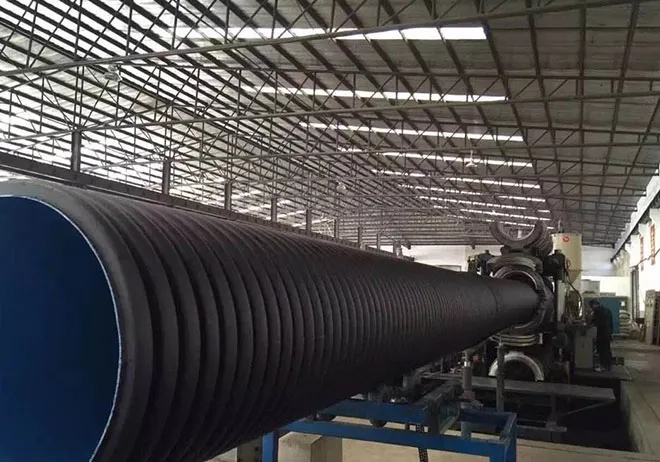
HDPE corrugated pipe is fundamentally derived from polyethylene, a thermoplastic polymer produced from the monomer ethylene. The ‘high-density’ designation indicates a minimal degree of branching in the polymer chains, resulting in a higher crystalline structure. This crystallinity contributes to increased tensile strength, rigidity, and chemical resistance. Raw material grades typically conform to ASTM D3350 PE3458, PE3608, or PE4710 standards, defining minimum density and molecular weight requirements. Manufacturing begins with HDPE resin pellets, which are melted and extruded through a circular die. A corrugation process, employing rollers or molds, forms the characteristic ribbed exterior, significantly enhancing the pipe’s ring stiffness and load-bearing capacity. Crucially, precise control of extrusion temperature (typically 180-220°C), die pressure, and cooling rates is vital to prevent warping, dimensional inconsistencies, and potential stress cracking. The corrugation profile (e.g., single-wall, double-wall) dictates the pipe’s structural performance. Post-extrusion, the pipe undergoes quality control checks including dimensional accuracy, hydrostatic pressure testing, and impact resistance assessments. The choice of pigment additives also affects the pipe’s UV resistance and long-term durability.
Performance & Engineering
The performance of HDPE corrugated pipe is largely governed by its structural integrity under load. Ring stiffness, measured in PSI, is a critical parameter indicating the pipe’s resistance to flattening and deformation under external pressure, such as soil overburden. This is directly related to the corrugation profile and wall thickness. Buried HDPE pipe is subject to various stresses, including vertical load from soil and traffic, lateral pressure from surrounding materials, and internal hydrostatic pressure from fluid flow. Engineers employ finite element analysis (FEA) to model these stresses and ensure the pipe’s structural adequacy. Environmental resistance is another key consideration. HDPE is chemically inert to most common soil constituents, but prolonged exposure to strong acids or solvents can cause degradation. UV exposure necessitates the inclusion of UV stabilizers in the resin formulation to prevent embrittlement. Compliance with AASHTO M294 (for drainage applications) and ASTM F2306 (for sanitary and storm sewers) dictates specific performance requirements related to joint tightness, crush resistance, and long-term creep resistance. Proper installation, including adequate bedding and compaction, is essential to maximize the pipe’s service life. The Manning’s equation is utilized to calculate flow capacity based on pipe diameter, slope, and roughness coefficient.
Technical Specifications
| Parameter | Units | Typical Value (12" Pipe, Double-Wall) | Test Standard |
|---|---|---|---|
| Nominal Diameter | inches | 12 | ASTM F2306 |
| Wall Thickness | inches | 0.60 | ASTM F2306 |
| Ring Stiffness | PSI | 75 | ASTM D2412 |
| Tensile Strength at Yield | PSI | 4,000 | ASTM D638 |
| Elongation at Break | % | 500 | ASTM D638 |
| Hydrostatic Design Stress | PSI | 1,600 | ASTM F2306 |
Failure Mode & Maintenance
HDPE corrugated pipe, while durable, is susceptible to several failure modes. Fatigue cracking can occur under repeated loading, particularly in areas with stress concentrations (e.g., bell-and-spigot joints). Slow Crack Growth (SCG) is a significant concern, induced by sustained tensile stress in the presence of certain chemicals or detergents. UV degradation can lead to embrittlement and cracking, especially in exposed sections. Soil settlement or improper installation can cause excessive bending stress, leading to pipe deformation or rupture. Joint failures, due to inadequate sealing or improper assembly, are also common. Maintenance typically involves visual inspections for cracks, deformation, or joint leaks. Regular cleaning to remove debris and sediment can prevent blockages and reduce internal pressure. For SCG concerns, avoiding contact with aggressive chemicals is crucial. In cases of significant deformation or cracking, pipe replacement is often the most practical solution. Geotechnical investigations prior to installation are vital to assess soil conditions and minimize the risk of settlement. Proper backfilling and compaction procedures are also essential to ensure uniform support and prevent stress concentrations.
Industry FAQ
Q: What is the impact of resin price fluctuations on wholesale HDPE corrugated pipe pricing?
A: HDPE pipe pricing is directly correlated to the cost of polyethylene resin, which is itself tied to crude oil prices. Significant fluctuations in crude oil can result in substantial price variations for HDPE pipe, typically with a lag of a few weeks to months. Long-term contracts with resin suppliers can mitigate some of this risk, but pricing adjustments are often included to account for market volatility. Understanding current resin market conditions is vital for accurate cost forecasting.
Q: How does the corrugation profile affect the load-bearing capacity of the pipe?
A: The corrugation profile dramatically impacts ring stiffness and load-bearing capacity. Double-wall corrugated pipe offers significantly higher ring stiffness than single-wall pipe for a given diameter and thickness, making it suitable for deeper burial depths and heavier traffic loads. The shape and depth of the corrugations also influence performance, with deeper, more defined corrugations generally providing greater structural support.
Q: What is the typical service life expectancy of properly installed HDPE corrugated pipe?
A: When properly installed and protected from excessive UV exposure and aggressive chemicals, HDPE corrugated pipe can have a service life exceeding 50 years. However, factors such as soil conditions, load intensity, and environmental exposure can affect longevity. Regular inspections and proactive maintenance can help maximize the pipe's operational lifespan.
Q: What considerations are important when selecting the appropriate pipe diameter for a drainage application?
A: Pipe diameter selection requires careful hydraulic analysis to ensure adequate flow capacity. Factors to consider include anticipated flow rates, slope, pipe roughness coefficient (Manning’s n), and potential debris accumulation. Undersized pipes can lead to backwater effects and reduced performance, while oversized pipes may increase costs unnecessarily.
Q: Are there any specific installation practices to prevent Slow Crack Growth (SCG)?
A: Preventing SCG requires minimizing sustained tensile stress and avoiding contact with aggressive chemicals. Proper bedding and compaction are essential to provide uniform support and reduce stress concentrations. Using appropriate joint sealing materials and avoiding the use of harsh cleaning agents within the pipe system are also crucial preventative measures. Selecting pipe formulations with enhanced SCG resistance is also recommended for environments with potential chemical exposure.
Conclusion
Wholesale HDPE corrugated pipe provides a robust and cost-effective solution for a wide range of subsurface infrastructure applications. Its inherent material properties, coupled with advancements in manufacturing techniques, offer significant advantages over traditional materials. However, realizing the full potential of this technology necessitates a thorough understanding of its technical specifications, performance characteristics, and potential failure modes.
Successful implementation relies on informed material selection, proper installation practices, and ongoing maintenance. Continued innovation in HDPE resin formulations and pipe design will further enhance its performance and longevity, solidifying its position as a critical component of modern infrastructure systems. Adherence to relevant industry standards is paramount to ensure both structural integrity and long-term operational reliability.
-
DN25 HDPE Compression Fitting-HORON INTERNATIONAL|Reliable Irrigation Solutions
NewsFeb.11,2026
-
hdpe coupling joint product Manufacturing Analysis
News2026-11-18
-
ppr pipe heating time products Performance Analysis
News2026-11-16
-
hdpe pipe sizes factory Performance Analysis
News2026-11-09
-
HDPE Pipe Sizes Service Performance Analysis
News2026-10-26
-
wholesale 15mm ppr pipe Material Science and Performance Analysis
News2026-10-20
-
wholesale pvc pipe price per foot Technical Analysis
News2026-09-21
-
wholesale long pvc pipe Technical Analysis and Manufacturing Specifications
News2026-09-15
-
wholesale plumbing kitchen sink water lines Material Performance
News2026-09-15
-
wholesale hdpe drip irrigation Material Science
News2026-09-15
-
wholesale hot water ppr pipe Performance Analysis
News2026-09-15
-
wholesale ppr plumbing Performance Analysis
News2026-09-15
-
wholesale ppr pipe supplier Performance Analysis
News2026-09-13
-
wholesale 50mm ppr pipe Performance Analysis
News2026-09-13
-
wholesale hdpe drip pipe Performance Analysis
News2026-09-13
-
wholesale hdpe pipe 63mm price Manufacturing Specification and Performance Analysis
News2026-09-13