
Feb . 11, 2026 00:01 Back to list
wholesale hdpe corrugated pipe double wall Performance Engineering

Introduction
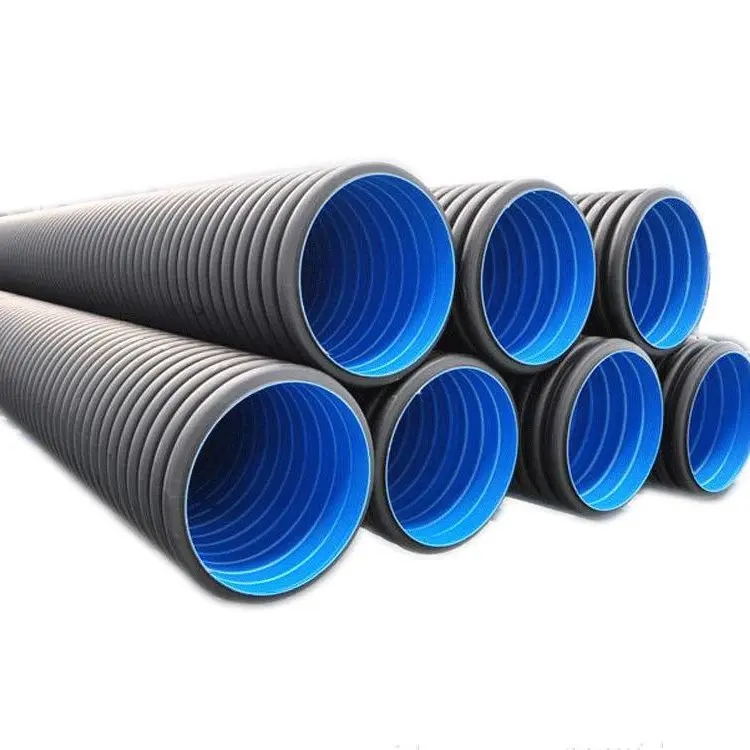
High-Density Polyethylene (HDPE) corrugated double-wall pipe represents a significant advancement in subsurface drainage and infrastructure solutions. Positioned within the civil engineering and construction materials supply chain, it serves as a robust alternative to traditional concrete, steel, and single-wall HDPE piping. Its core performance characteristics—high strength-to-weight ratio, exceptional durability, and resistance to corrosion—address critical pain points related to long-term infrastructure integrity and reduced maintenance costs. This guide provides a comprehensive technical overview of HDPE corrugated double-wall pipe, covering material science, manufacturing processes, performance engineering, failure modes, and relevant industry standards. The increasing demand stems from its versatility in applications ranging from stormwater management and sanitary sewer systems to agricultural drainage and culverts, requiring a thorough understanding of its capabilities and limitations.
Material Science & Manufacturing
HDPE corrugated double-wall pipe is primarily manufactured from high-density polyethylene resin, typically conforming to ASTM D3350 or equivalent international standards. The resin’s molecular structure – characterized by minimal branching – imparts high tensile strength, rigidity, and chemical resistance. Key material properties include a density range of 0.941 to 0.965 g/cm³, a ductile yield strength of 8.27 – 10.34 MPa, and a Rockwell hardness ranging from D55 to D65. The manufacturing process commonly employs extrusion. HDPE resin is melted and formed into a double-walled profile using specialized extrusion dies. This creates a corrugated outer wall for structural strength and a smooth inner wall for optimal hydraulic flow. Critical process parameters include melt temperature (180-240°C), extrusion speed, die temperature, and cooling rate. Maintaining precise temperature control is paramount to achieving uniform wall thickness and consistent corrugated profile geometry. Following extrusion, pipes are often subjected to hydrostatic pressure testing to ensure long-term structural integrity and leak-proof performance. The inclusion of UV stabilizers (typically carbon black) is crucial for outdoor applications, mitigating degradation from prolonged sunlight exposure. Material compatibility considerations dictate that HDPE should not be in direct contact with highly concentrated oxidizing acids or aromatic hydrocarbons.
Performance & Engineering
The performance of HDPE corrugated double-wall pipe is governed by its structural capacity to withstand external loads – soil overburden, traffic loads, and hydrostatic pressure. Engineering design relies heavily on established load and resistance factor design (LRFD) principles, utilizing factors of safety to account for uncertainties in material properties and loading conditions. The pipe’s corrugated outer wall provides enhanced buckling resistance compared to smooth-wall pipes of similar material and thickness. Force analysis involves calculating bending moments and stresses induced by external loads, considering the pipe’s ring stiffness (a measure of its resistance to deformation) and burial depth. Environmental resistance is a crucial factor. HDPE exhibits excellent resistance to most chemicals commonly found in soil and wastewater; however, prolonged exposure to strong acids or solvents should be avoided. Compliance requirements are dictated by various national and international standards (detailed in the footer). These standards specify minimum pipe stiffness, crush resistance, and joint integrity requirements. For trenchless installation methods (e.g., directional drilling), consideration must be given to the pipe’s pull force capacity and allowable bending radius to prevent damage during installation. Hydrostatic testing, performed according to ASTM D3212, ensures the pipe's ability to withstand internal pressure without leakage or failure. Furthermore, the smoothness of the inner wall minimizes friction losses and maximizes hydraulic capacity.
Technical Specifications
| Parameter | Unit | Typical Value (12” Diameter Pipe) | Testing Standard |
|---|---|---|---|
| Nominal Diameter | inches | 12 | ASTM D3212 |
| Pipe Stiffness | psi | 60 - 80 | ASTM D2412 |
| Crush Strength | psi | 1500 - 2000 | ASTM D2412 |
| Hydrostatic Design Pressure | psi | 100 - 150 | ASTM D3212 |
| Minimum Tensile Strength | psi | 4000 | ASTM D3350 |
| UV Resistance (Carbon Black Content) | % | 2.0 – 2.5 | ASTM D3350 |
Failure Mode & Maintenance
Common failure modes in HDPE corrugated double-wall pipe include fatigue cracking, particularly under repeated loading conditions (e.g., traffic loads). This can be exacerbated by improper installation or substandard backfill compaction. Delamination, the separation of layers within the pipe wall, can occur due to manufacturing defects or exposure to aggressive chemicals. Environmental stress cracking (ESC) can result from exposure to certain chemicals under sustained tensile stress. Oxidation, although less common due to HDPE’s inherent stability, can occur with prolonged exposure to high temperatures and oxygen. Joint failures are often attributed to improper connection techniques (e.g., insufficient bell-and-spigot engagement or inadequate gasket compression). Maintenance involves regular visual inspections to identify signs of cracking, deformation, or leakage. Backfill settlement should be monitored and corrected promptly to prevent excessive stress on the pipe. Cleaning to remove debris and sediment can maintain hydraulic capacity. In the event of a localized failure, repair options include sleeve repairs or cut-and-replace sections, adhering to manufacturer’s recommendations and relevant industry standards. Preventive measures, such as proper installation practices, appropriate backfill material selection, and protection from sharp objects during installation, are paramount to extending the service life of the pipe. Detailed failure analysis, often involving microscopic examination of fractured surfaces, can identify the root cause and prevent recurrence.
Industry FAQ
Q: What is the impact of soil corrosivity on the long-term performance of HDPE pipe?
A: While HDPE itself is highly resistant to corrosion, the surrounding soil environment can influence its performance. Highly corrosive soils containing sulfates or chlorides can accelerate degradation of any metallic components used in joints or connections, leading to eventual failure. Geotechnical investigations are crucial to assess soil corrosivity and select appropriate joint materials (e.g., stainless steel hardware) or corrosion protection measures.
Q: How does burial depth affect the load-bearing capacity of HDPE corrugated pipe?
A: Increased burial depth provides greater coverage and distributes external loads over a wider area, increasing the pipe's load-bearing capacity. However, excessive burial depth can also lead to increased soil pressure and potential for buckling. Design calculations must account for burial depth, soil properties, and anticipated traffic loads to ensure adequate structural integrity.
Q: What are the recommended backfill materials for HDPE corrugated pipe installations?
A: Granular materials such as sand, gravel, or crushed stone are generally recommended for backfilling around HDPE pipe. These materials provide uniform support and promote proper load distribution. Avoid using materials containing large rocks or debris that could damage the pipe. Proper compaction is essential to achieve the desired support and prevent settlement. Select backfill materials per ASTM D2487.
Q: What is the service life expectancy of a properly installed HDPE corrugated pipe system?
A: With proper installation, appropriate backfill, and adherence to design specifications, HDPE corrugated double-wall pipe systems can have a service life expectancy exceeding 50 years. Factors such as UV exposure, chemical exposure, and loading conditions can influence the actual service life. Regular inspections and preventative maintenance can further extend the lifespan.
Q: How does temperature affect the performance and installation of HDPE pipe?
A: HDPE becomes more flexible at higher temperatures and more brittle at lower temperatures. Installation should be avoided in extremely cold weather, as the pipe may be more susceptible to cracking during handling. Thermal expansion and contraction should be considered during design, particularly in long runs of pipe, to prevent stress buildup. Adhere to manufacturer’s recommendations regarding installation temperature ranges.
Conclusion
HDPE corrugated double-wall pipe provides a durable, cost-effective, and versatile solution for a wide range of subsurface drainage and infrastructure applications. Its inherent material properties – high strength, chemical resistance, and lightweight – combined with optimized manufacturing processes and robust engineering design principles, ensure long-term performance and reliability. Understanding the nuances of material science, installation practices, potential failure modes, and relevant industry standards is paramount for successful implementation.
Continued innovation in HDPE resin formulations, coupled with advancements in extrusion technology, will likely lead to even higher-performing pipe systems in the future. Increased emphasis on sustainable infrastructure solutions will further drive demand for HDPE, as it is a recyclable material with a relatively low environmental footprint. Proper quality control and adherence to established standards remain essential to realizing the full potential of this valuable infrastructure component.
-
DN25 HDPE Compression Fitting-HORON INTERNATIONAL|Reliable Irrigation Solutions
NewsFeb.11,2026
-
wholesale pvc pipe price per foot Technical Analysis
News2026-09-21
-
wholesale long pvc pipe Technical Analysis and Manufacturing Specifications
News2026-09-15
-
wholesale plumbing kitchen sink water lines Material Performance
News2026-09-15
-
wholesale hdpe drip irrigation Material Science
News2026-09-15
-
wholesale hot water ppr pipe Performance Analysis
News2026-09-15
-
wholesale ppr plumbing Performance Analysis
News2026-09-15
-
wholesale ppr pipe supplier Performance Analysis
News2026-09-13
-
wholesale 50mm ppr pipe Performance Analysis
News2026-09-13
-
wholesale hdpe drip pipe Performance Analysis
News2026-09-13
-
wholesale hdpe pipe 63mm price Manufacturing Specification and Performance Analysis
News2026-09-13
-
wholesale hdpe pipe for potable water Manufacturing and Performance
News2026-09-13
-
wholesale pipe hdpe size Technical Analysis
News2026-09-12
-
wholesale coupler for hdpe pipe Performance Analysis
News2026-09-12
-
Wholesale HDPE Pipe Coupler Price Performance Analysis
News2026-09-12
-
wholesale 1 ppr pipe Performance Analysis
News2026-09-12