

Feb . 11, 2026 00:01 Back to list
wholesale dn25 ppr hot water pipes for kitchen Manufacturing Performance Analysis
Introduction
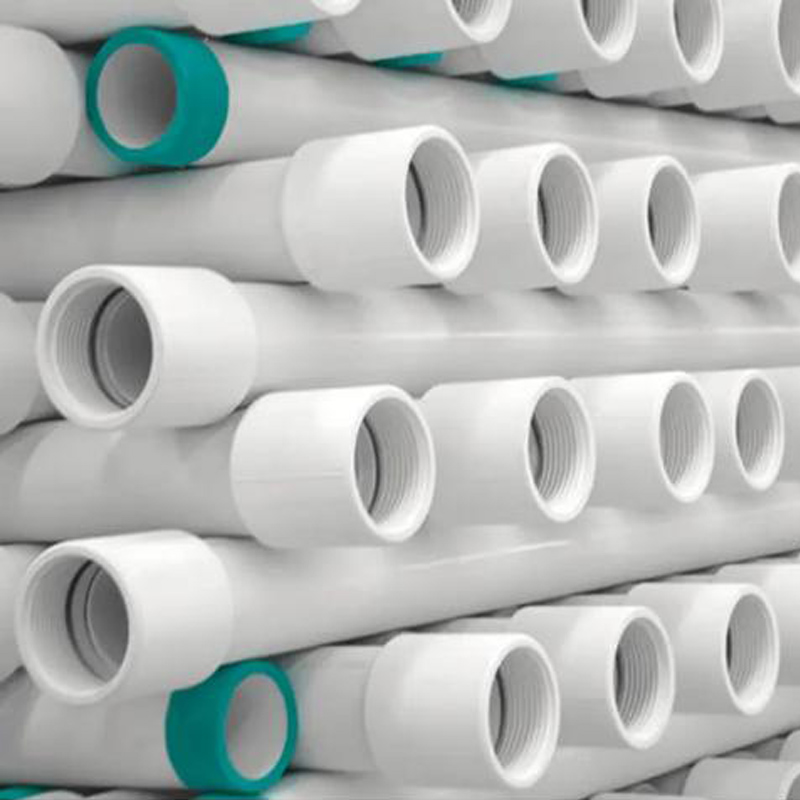
Polypropylene Random (PPR) hot water pipes, specifically DN25 (nominal diameter of 25mm) intended for kitchen applications, represent a significant advancement in plumbing technology. These pipes are increasingly favored over traditional metallic systems due to their corrosion resistance, thermal insulation properties, and ease of installation. PPR pipes function as a closed-loop distribution network for potable hot water, connecting the water heater to kitchen fixtures such as sinks and dishwashers. Within the industrial chain, PPR pipe production encompasses polymerization of polypropylene resin, extrusion into pipe form, and subsequent quality control measures. Core performance characteristics revolve around maintaining consistent water temperature, resisting pressure fluctuations, and ensuring long-term structural integrity. A critical pain point in the industry is ensuring consistent material quality and adherence to stringent pressure and temperature ratings to prevent premature failure and maintain consumer safety.
Material Science & Manufacturing
PPR pipes are primarily manufactured from polypropylene random copolymer. The key raw material, polypropylene homopolymer or copolymer, exhibits a semi-crystalline structure influencing its mechanical and thermal properties. The degree of crystallinity dictates hardness and tensile strength; random copolymers, with their amorphous regions, provide enhanced impact resistance, especially at lower temperatures. Additives, including stabilizers (typically hindered amine light stabilizers – HALS) and antioxidants, are incorporated to mitigate degradation caused by UV exposure and thermal oxidation. The manufacturing process typically begins with the compounding of polypropylene resin with additives. This mixture is then fed into an extruder, where it’s melted and forced through a die to form a seamless pipe. Critical parameters during extrusion include melt temperature (typically 200-230°C), extrusion pressure, and cooling rate. Precise control of these parameters is essential to achieve uniform wall thickness, dimensional accuracy, and a smooth inner surface minimizing flow resistance. Socket fusion welding or electrofusion welding are standard joining techniques, relying on controlled heating to create a homogenous weld joint. The weld strength is directly proportional to the contact pressure, heating temperature, and cooling time.
Performance & Engineering
The performance of DN25 PPR hot water pipes is governed by several engineering principles. Hydrostatic pressure testing, conducted according to international standards, verifies the pipe’s ability to withstand internal pressure without bursting or leaking. The stress-strain relationship of PPR dictates its resistance to deformation under load. Thermal expansion and contraction are significant considerations, requiring appropriate expansion loops or flexible connectors to accommodate temperature fluctuations and prevent stress cracking at joints. The pipe’s resistance to creep, the gradual deformation under sustained stress, is crucial for long-term performance, especially at elevated temperatures. Chemical compatibility is paramount; PPR demonstrates excellent resistance to a wide range of common household chemicals but can be affected by prolonged exposure to strong oxidizing agents. Compliance with potable water regulations is essential, ensuring the pipes do not leach harmful substances into the water supply. Force analysis during installation must account for bending moments during routing and the potential for localized stresses at support points. The long-term performance is also affected by the water quality; scaling and sedimentation can reduce flow rate and potentially lead to localized corrosion.
Technical Specifications
| Parameter | Unit | DN25 PPR Pipe (Standard Grade) | DN25 PPR Pipe (Premium Grade) |
|---|---|---|---|
| Nominal Diameter | mm | 25 | 25 |
| Wall Thickness | mm | 3.5 | 4.2 |
| Burst Pressure (23°C) | MPa | 12.5 | 16.0 |
| Maximum Operating Temperature | °C | 95 | 110 |
| Maximum Operating Pressure | MPa | 1.6 | 2.0 |
| Tensile Strength | MPa | 25 | 30 |
| Elongation at Break | % | 300 | 400 |
Failure Mode & Maintenance
DN25 PPR hot water pipes, while durable, are susceptible to specific failure modes. Fatigue cracking can occur at weld joints due to cyclic thermal stress induced by repeated heating and cooling. Delamination, a separation of layers within the pipe wall, can result from improper welding techniques or material defects. Oxidation, accelerated by high temperatures and exposure to oxygenated water, can lead to embrittlement and reduced impact resistance. Creep rupture, a time-dependent failure under sustained stress, is more likely at elevated temperatures and pressures. Scaling and sedimentation within the pipe can restrict flow and create localized stresses, exacerbating corrosion. UV degradation, particularly in exposed sections, can compromise the pipe’s mechanical properties. Maintenance involves regular inspection of weld joints for cracks or leaks, flushing the system to remove sediment buildup, and ensuring proper insulation to minimize thermal stress. Preventive maintenance should include water quality analysis to identify and mitigate corrosive elements. In the event of a leak, the affected section must be cut and replaced using appropriate socket fusion or electrofusion welding techniques, following manufacturer’s instructions precisely. Periodic pressure testing can proactively identify potential weaknesses before catastrophic failure.
Industry FAQ
Q: What is the impact of water hardness on the lifespan of PPR pipes?
A: High water hardness, characterized by elevated calcium and magnesium concentrations, promotes scaling within the pipes. This scaling reduces flow rate and creates localized thermal stresses during heating cycles. While PPR itself is resistant to calcium carbonate deposition, the buildup can lead to restricted flow and eventual pipe blockage, accelerating failure. Water softening systems are recommended in areas with hard water to mitigate these effects.
Q: How does the choice of welding technique (socket fusion vs. electrofusion) affect joint integrity?
A: Electrofusion welding generally produces stronger and more reliable joints compared to socket fusion, particularly in critical applications. Electrofusion provides precise temperature control and monitoring, ensuring complete fusion of the pipe and fitting materials. Socket fusion relies on manual alignment and temperature control, making it more susceptible to operator error. However, for standard kitchen applications, properly executed socket fusion welds are generally adequate.
Q: What are the limitations of using PPR pipes with indirect heating systems (e.g., combi boilers)?
A: PPR pipes are well-suited for most combi boiler systems, however, temperature fluctuations can be more pronounced with indirect systems. It's crucial to verify that the PPR pipe's maximum operating temperature exceeds the boiler's maximum hot water output temperature, with a sufficient safety margin. Furthermore, appropriate expansion loops must be incorporated to accommodate the thermal expansion and contraction of the pipe.
Q: How do I identify substandard PPR pipe material?
A: Substandard PPR pipe often exhibits inconsistent wall thickness, a rough inner surface, and a tendency to become brittle upon bending. Visual inspection for discoloration or imperfections is also crucial. A hydrostatic pressure test, conducted according to relevant standards, will readily identify weak or defective pipes. Purchasing from reputable suppliers with documented quality control procedures is paramount.
Q: Is PPR pipe suitable for outdoor installation, and if so, what precautions should be taken?
A: While PPR pipe can be used outdoors, it is susceptible to UV degradation. Direct sunlight exposure can cause embrittlement and reduced impact resistance. Therefore, outdoor installations require UV-stabilized PPR pipes or protective shielding (e.g., conduit, paint) to prevent degradation. Additionally, adequate insulation is essential to protect against freezing in cold climates.
Conclusion
DN25 PPR hot water pipes offer a robust and cost-effective solution for kitchen plumbing applications, providing advantages in corrosion resistance, thermal performance, and ease of installation. However, their long-term reliability is contingent upon proper material selection, meticulous manufacturing processes, and adherence to recommended installation and maintenance procedures. Understanding the potential failure modes, such as fatigue cracking and oxidation, and implementing preventive measures, is crucial for maximizing the lifespan and ensuring the safe and efficient operation of these systems.
Future advancements in PPR technology may focus on incorporating enhanced UV stabilizers, improving creep resistance at elevated temperatures, and developing more sophisticated welding techniques to further enhance joint integrity. The adoption of smart monitoring systems to detect leaks and scaling buildup proactively could also revolutionize maintenance practices and extend the operational life of PPR plumbing networks. Consistent adherence to relevant international standards remains paramount for ensuring quality and safety within the industry.
-
DN25 HDPE Compression Fitting-HORON INTERNATIONAL|Reliable Irrigation Solutions
NewsFeb.11,2026
-
hdpe coupling joint product Manufacturing Analysis
News2026-11-18
-
ppr pipe heating time products Performance Analysis
News2026-11-16
-
hdpe pipe sizes factory Performance Analysis
News2026-11-09
-
HDPE Pipe Sizes Service Performance Analysis
News2026-10-26
-
wholesale 15mm ppr pipe Material Science and Performance Analysis
News2026-10-20
-
wholesale pvc pipe price per foot Technical Analysis
News2026-09-21
-
wholesale long pvc pipe Technical Analysis and Manufacturing Specifications
News2026-09-15
-
wholesale plumbing kitchen sink water lines Material Performance
News2026-09-15
-
wholesale hdpe drip irrigation Material Science
News2026-09-15
-
wholesale hot water ppr pipe Performance Analysis
News2026-09-15
-
wholesale ppr plumbing Performance Analysis
News2026-09-15
-
wholesale ppr pipe supplier Performance Analysis
News2026-09-13
-
wholesale 50mm ppr pipe Performance Analysis
News2026-09-13
-
wholesale hdpe drip pipe Performance Analysis
News2026-09-13
-
wholesale hdpe pipe 63mm price Manufacturing Specification and Performance Analysis
News2026-09-13