

Feb . 11, 2026 00:01 Back to list
wholesale dn150 hdpe Performance Engineering
Introduction
DN150 High-Density Polyethylene (HDPE) pipe represents a crucial component in fluid conveyance systems across diverse industrial sectors, including water distribution, irrigation, mining, and industrial process piping. Its technical position within the industry chain lies between raw polyethylene resin production and the final installed pipeline network. This 150mm (6 inch) nominal diameter HDPE pipe distinguishes itself through a robust combination of chemical resistance, high strength-to-weight ratio, and a relatively low-cost manufacturing process, making it a favored alternative to traditional materials like ductile iron, steel, and concrete. Core performance characteristics center on its pressure bearing capacity, resistance to environmental stress cracking, and long-term durability in both above and below-ground applications. The primary industry pain points addressed by DN150 HDPE include corrosion prevention in aggressive environments, minimizing pressure loss due to internal roughness, and ensuring long-term leak-free operation, especially in critical infrastructure.
Material Science & Manufacturing
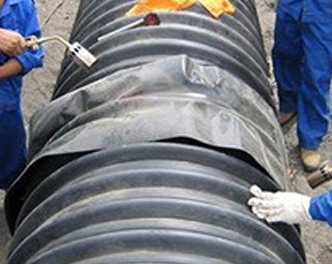
DN150 HDPE pipe is manufactured from high-density polyethylene, a thermoplastic polymer produced from the polymerization of ethylene. The raw material’s properties are fundamental to the final product performance. HDPE’s density ranges from 0.93 to 0.97 g/cm³, directly influencing its tensile strength (typically 20-35 MPa) and impact resistance. Molecular weight distribution plays a critical role; broader distributions generally improve processability but can slightly reduce strength. The manufacturing process typically employs extrusion techniques. Polyethylene resin is melted and forced through a die that shapes the pipe. Key parameters during extrusion include melt temperature (180-220°C), die pressure (critical for dimensional accuracy), and cooling rate (affecting crystallinity and mechanical properties). Butt fusion, electrofusion, and mechanical jointing are common joining methods, demanding precise temperature and pressure control to achieve a homogenous weld. Post-extrusion quality control focuses on dimensional accuracy (diameter, wall thickness), hydrostatic pressure testing (to verify burst resistance), and material identification (using FTIR spectroscopy to confirm resin grade). The presence of carbon black is common, providing UV protection and enhancing the pipe’s resistance to slow crack growth. Proper material selection, particularly regarding PE32 or PE40 grades, is critical for different operating pressures and environmental conditions.
Performance & Engineering
The performance of DN150 HDPE pipe is dictated by its ability to withstand internal pressure, external loads, and environmental stressors. Force analysis involves calculating hoop stress (σ = (PD)/(2t), where P is pressure, D is diameter, and t is wall thickness) to ensure the pipe can handle the maximum operating pressure. External loads, such as soil overburden during burial, require consideration of the pipe’s ovality and buckling resistance. Finite Element Analysis (FEA) is frequently employed to model stress distribution under complex loading scenarios. Environmental resistance is a key consideration, specifically resistance to UV degradation, oxidation, and slow crack growth (SCG). UV stabilizers (typically carbon black) are incorporated to mitigate UV damage. SCG, initiated by stress concentrations, is influenced by temperature, resin type, and the presence of contaminants. Compliance requirements are stringent. For potable water applications, the pipe must meet NSF/ANSI 61 standards for contaminant leaching. For gas distribution, compliance with EN 1555-1/2/3 is essential, covering material properties, testing procedures, and installation guidelines. Long-term performance is also assessed through accelerated aging tests, simulating decades of service life under controlled conditions. The Manning equation is used to calculate flow capacity, accounting for pipe roughness (HDPE has a very low roughness coefficient, minimizing frictional losses).
Technical Specifications
| Parameter | Unit | PE32 (SDR17) | PE40 (SDR21) |
|---|---|---|---|
| Nominal Diameter | mm | 150 | 150 |
| Standard Dimension Ratio (SDR) | - | 17 | 21 |
| Wall Thickness | mm | 6.2 | 5.1 |
| Burst Pressure (23°C) | MPa | 12.4 | 9.8 |
| Pressure Rating (PN) | bar | 10 | 8 |
| Density | kg/m³ | 930-950 | 930-950 |
| Hydrostatic Stress Resistance | Hours | >1000 | >1000 |
Failure Mode & Maintenance
DN150 HDPE pipe, while durable, is susceptible to specific failure modes. Slow Crack Growth (SCG) is a prevalent issue, initiated by stress concentrations (e.g., at fittings, welds) and exacerbated by environmental factors like temperature and residual stresses. Fatigue cracking can occur under cyclic loading, especially in applications involving pressure fluctuations or ground movement. Oxidation, particularly at elevated temperatures, degrades the polymer matrix, reducing strength and increasing brittleness. Joint failures are common, resulting from inadequate fusion parameters (temperature, pressure, dwell time) or improper surface preparation. External damage, from excavation activities or ground settlement, can lead to cracking or puncture. Maintenance should include regular visual inspections for cracks, deformation, or leaks. Hydrostatic testing can verify the integrity of the pipeline. For repairs, electrofusion welding is often preferred for its ability to create consistent, reliable joints. Preventive maintenance involves ensuring proper bedding and backfill materials are used during installation to minimize stress on the pipe. Periodic pressure testing and monitoring for SCG indicators are crucial for long-term reliability. Addressing external threats through protective casing or warning tape during burial can mitigate damage from excavation.
Industry FAQ
Q: What is the impact of different polyethylene resin grades (PE32, PE40) on the long-term performance of DN150 HDPE pipe?
A: PE32 offers higher strength and a lower SDR, enabling higher pressure ratings and better resistance to SCG. However, it's more expensive and may be less flexible. PE40, while having a lower pressure rating, is more cost-effective and offers improved ductility. The choice depends on the specific application's pressure requirements, temperature, and soil conditions. PE40 is generally suitable for lower-pressure, less demanding environments, while PE32 is preferred for critical infrastructure and aggressive environments.
Q: How does the pipe’s wall thickness affect its burst pressure and long-term performance?
A: Wall thickness is inversely proportional to hoop stress, therefore a thicker wall results in a higher burst pressure. Increasing wall thickness improves resistance to both internal pressure and external loads. However, increasing wall thickness also increases material cost and weight. Proper wall thickness selection is a critical balance between performance, cost, and installation considerations.
Q: What are the key considerations for ensuring a reliable butt fusion or electrofusion weld?
A: Proper surface preparation (cleaning and removing contaminants) is paramount. Accurate temperature and pressure control during the fusion process are critical, as deviations can lead to weak or incomplete welds. Adherence to manufacturer’s recommended welding parameters is essential. Post-weld inspection (visual and non-destructive testing) is necessary to verify weld integrity. Operator training and certification are crucial for consistent weld quality.
Q: What methods can be used to detect Slow Crack Growth (SCG) in DN150 HDPE pipe?
A: Visual inspection for hairline cracks, particularly around fittings and welds, is the first line of defense. Non-destructive testing methods, such as ultrasonic testing or eddy current testing, can detect subsurface cracks. Regular hydrostatic testing can identify areas of weakness. Monitoring residual stress levels and maintaining appropriate operating pressures can help prevent SCG initiation.
Q: How does soil corrosivity impact the long-term performance of buried DN150 HDPE pipe?
A: While HDPE itself is corrosion-resistant, highly corrosive soils can accelerate degradation over time. Electrochemical corrosion of surrounding metallic components (e.g., fittings) can create localized corrosion cells. Proper protective measures, such as applying a corrosion-inhibiting coating to metallic components and ensuring adequate electrical isolation, are essential in corrosive environments. The use of appropriate bedding materials and backfill can also mitigate corrosive effects.
Conclusion
DN150 HDPE pipe represents a technologically advanced and cost-effective solution for fluid conveyance, offering a compelling alternative to traditional piping materials. Its superior chemical resistance, high strength-to-weight ratio, and ease of installation contribute to its widespread adoption across numerous industries. However, understanding the nuances of material science, manufacturing processes, and potential failure modes is critical for ensuring long-term performance and reliability.
Successful implementation relies on meticulous attention to detail during installation, employing proper joining techniques, and implementing a proactive maintenance program. Adherence to relevant international standards, combined with a comprehensive understanding of the operating environment, will maximize the service life and minimize the risk of failure in DN150 HDPE pipeline systems.
-
DN25 HDPE Compression Fitting-HORON INTERNATIONAL|Reliable Irrigation Solutions
NewsFeb.11,2026
-
hdpe coupling joint product Manufacturing Analysis
News2026-11-18
-
ppr pipe heating time products Performance Analysis
News2026-11-16
-
hdpe pipe sizes factory Performance Analysis
News2026-11-09
-
HDPE Pipe Sizes Service Performance Analysis
News2026-10-26
-
wholesale 15mm ppr pipe Material Science and Performance Analysis
News2026-10-20
-
wholesale pvc pipe price per foot Technical Analysis
News2026-09-21
-
wholesale long pvc pipe Technical Analysis and Manufacturing Specifications
News2026-09-15
-
wholesale plumbing kitchen sink water lines Material Performance
News2026-09-15
-
wholesale hdpe drip irrigation Material Science
News2026-09-15
-
wholesale hot water ppr pipe Performance Analysis
News2026-09-15
-
wholesale ppr plumbing Performance Analysis
News2026-09-15
-
wholesale ppr pipe supplier Performance Analysis
News2026-09-13
-
wholesale 50mm ppr pipe Performance Analysis
News2026-09-13
-
wholesale hdpe drip pipe Performance Analysis
News2026-09-13
-
wholesale hdpe pipe 63mm price Manufacturing Specification and Performance Analysis
News2026-09-13