

Feb . 11, 2026 00:01 Back to list
wholesale column pipe for submersible pump Material Performance
Introduction
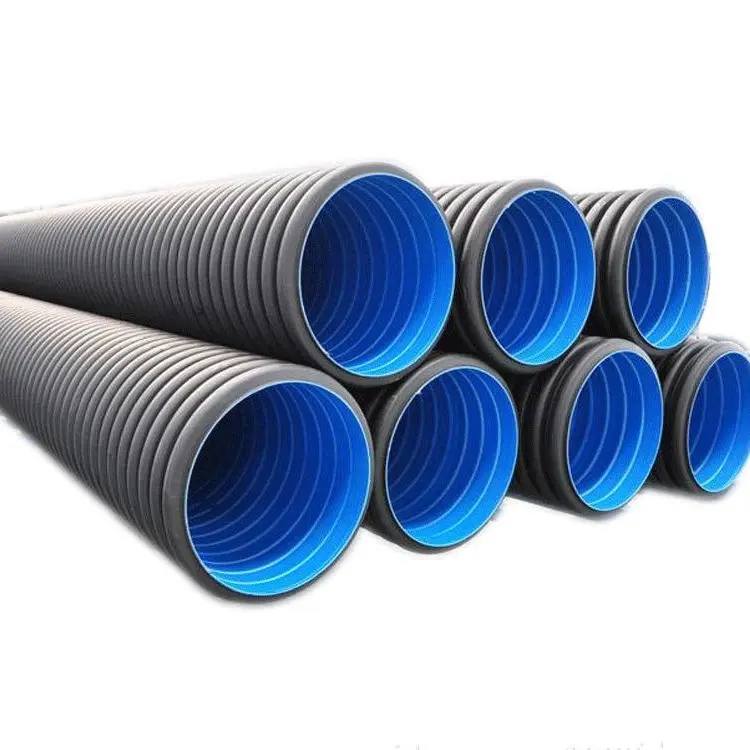
Wholesale column pipe for submersible pumps represents a critical component in fluid extraction systems, particularly within the water well, oil and gas, and dewatering industries. These pipes facilitate the transfer of fluids from the submersible pump to the surface, enduring significant hydrostatic pressure, potential corrosion, and mechanical stress. Unlike standard pipeline steel, column pipe is specifically engineered for extended vertical deployment and the unique challenges associated with submerged operation. Its performance directly impacts pump efficiency, longevity, and overall system reliability. The industry faces continuous pressure to optimize pipe weight, enhance corrosion resistance, and reduce installation costs, leading to advancements in material selection and manufacturing techniques. This guide provides a comprehensive technical overview of wholesale column pipe for submersible pumps, covering material science, manufacturing processes, performance characteristics, failure modes, maintenance strategies, and relevant industry standards.
Material Science & Manufacturing
Column pipe is predominantly manufactured from carbon steel, with specific grades selected based on the anticipated operating conditions. Common grades include ASTM A53 Grade B, API 5L Grade B and X42. The chemical composition is carefully controlled to ensure weldability, ductility, and resistance to sulfide stress cracking (SSC) in sour service applications. Higher strength alloys, such as alloy steels containing chromium and molybdenum, are employed when dealing with highly corrosive environments or exceptionally high pressures. The manufacturing process typically involves seamless extrusion or electric resistance welding (ERW) followed by heat treatment. Seamless pipes offer superior strength and resistance to axial loading, while ERW pipes are more cost-effective for large-diameter applications. Critical parameters during manufacturing include wall thickness control, dimensional accuracy, and surface finish. Non-destructive testing (NDT) methods, such as ultrasonic testing (UT) and radiographic testing (RT), are employed to detect defects and ensure structural integrity. Internal threading, typically utilizing trapezoidal threads according to API standards, is a crucial step in enabling secure coupling between pipe sections. The thread geometry and dimensional tolerances are critical to prevent leakage and ensure proper load transfer. Coating application, including epoxy or polyethylene coatings, is often applied to enhance corrosion resistance and prolong service life.
Performance & Engineering
The performance of column pipe is dictated by its ability to withstand internal pressure, external hydrostatic pressure, axial tensile and compressive loads, and bending stresses. Force analysis is critical in determining the appropriate pipe size and wall thickness for a given application. Internal pressure calculations adhere to ASME Boiler and Pressure Vessel Code Section 8, Division 1. External hydrostatic pressure is particularly relevant in deep well applications, where the pipe can experience significant compressive stress. Axial loads arise from the weight of the fluid column, the pump assembly, and any applied tension or compression forces. Buckling analysis is performed to ensure that the pipe does not collapse under compressive loads. Environmental resistance is a major performance consideration. Corrosion can occur due to the presence of dissolved gases (CO2, H2S), chlorides, and other corrosive agents in the fluid. Material selection and protective coatings are critical in mitigating corrosion. Compliance requirements vary depending on the application and geographical location. For example, oil and gas applications are subject to stringent regulations regarding safety and environmental protection. Functional implementation involves proper pipe alignment, coupling torque control, and stress relief techniques to prevent premature failure. Thermal expansion and contraction must also be considered during installation to avoid inducing excessive stresses in the pipe string.
Technical Specifications
| Parameter | Unit | ASTM A53 Grade B | API 5L Grade B |
|---|---|---|---|
| Outside Diameter | inches | 2.375 - 8.625 | 2.375 - 20 |
| Wall Thickness | inches | 0.083 - 0.5 | 0.065 - 1 |
| Yield Strength (Minimum) | psi | 36,000 | 32,000 |
| Tensile Strength (Minimum) | psi | 60,000 | 65,000 |
| Elongation (Minimum) | % | 20 | 20 |
| Maximum Sulfur Content | % | 0.033 | 0.024 |
Failure Mode & Maintenance
Common failure modes for wholesale column pipe include corrosion-induced pitting and cracking, fatigue cracking due to cyclic loading, sulfide stress cracking (SSC) in sour service environments, and thread failure due to improper coupling torque or corrosion. Pitting corrosion initiates at surface defects and propagates rapidly, leading to localized wall thinning and potential leakage. Fatigue cracking typically occurs at stress concentrations, such as welds or thread roots, and is exacerbated by fluctuating pressure or axial loads. SSC is a brittle fracture mechanism that occurs in the presence of hydrogen sulfide and tensile stress. Thread failure can result from stripping of the threads or cracking due to corrosion or excessive loading. Preventative maintenance strategies include regular visual inspections for corrosion and damage, periodic non-destructive testing (NDT) to detect internal flaws, proper coupling torque control, and application of protective coatings. In the event of a failure, a thorough failure analysis should be conducted to determine the root cause and implement corrective actions. This may involve metallurgical examination of the failed component, chemical analysis of the fluid, and review of operating conditions. Regular cleaning to remove scale and deposits can also help prevent corrosion and improve fluid flow.
Industry FAQ
Q: What is the primary difference between seamless and ERW column pipe, and when would you recommend one over the other?
A: Seamless pipe is manufactured without a weld seam, providing superior strength and resistance to axial stress, making it ideal for high-pressure applications and deep well deployments where collapse resistance is paramount. ERW (Electric Resistance Welded) pipe is more cost-effective for larger diameters and lower-pressure scenarios. However, the weld seam represents a potential weakness, requiring rigorous quality control. We recommend seamless pipe for critical applications and ERW pipe where cost is a significant factor and the operating conditions are less demanding.
Q: How does H2S impact column pipe integrity, and what mitigation strategies are available?
A: Hydrogen sulfide (H2S) promotes sulfide stress cracking (SSC), a brittle fracture mechanism that can lead to sudden and catastrophic failure. Mitigation strategies include using corrosion-resistant alloys (CRAs) such as duplex stainless steels, applying internal coatings resistant to H2S permeation, and implementing H2S scavenging chemicals in the fluid. Careful control of pH and chloride levels can also help minimize SSC susceptibility.
Q: What is the role of coupling torque in ensuring a reliable seal and preventing thread damage?
A: Proper coupling torque is crucial for creating a pressure-tight seal and distributing loads evenly across the threads. Under-torquing can lead to leakage, while over-torquing can strip the threads or induce excessive stress. Torque specifications are provided by the pipe manufacturer and must be strictly adhered to. Regularly calibrating torque wrenches is essential to ensure accurate torque application.
Q: What NDT methods are commonly used to inspect column pipe for defects, and what types of defects can they detect?
A: Common NDT methods include ultrasonic testing (UT), which can detect internal flaws such as laminations, voids, and cracks; radiographic testing (RT), which provides a visual image of the pipe’s internal structure; and magnetic particle inspection (MPI), which detects surface cracks. UT is widely used for detecting volumetric defects, while RT is preferred for detecting planar defects. MPI is suitable for detecting surface and near-surface cracks in ferromagnetic materials.
Q: How do you determine the appropriate wall thickness for column pipe based on operational parameters?
A: Wall thickness is determined through a combination of calculations and considerations. Factors include maximum internal pressure, external hydrostatic pressure, axial tensile and compressive loads, anticipated corrosion rate, and safety factors. Calculations are based on established engineering codes such as ASME B31.3. Finite element analysis (FEA) may be used for complex loading scenarios. Consult with a qualified engineer to ensure accurate and safe design.
Conclusion
Wholesale column pipe for submersible pumps represents a highly engineered product crucial for the reliable operation of fluid extraction systems. Its performance is heavily reliant on careful material selection, precise manufacturing processes, and adherence to industry standards. Understanding the potential failure modes and implementing proactive maintenance strategies are vital for maximizing service life and minimizing downtime. Continuous advancements in material science and manufacturing techniques are driving improvements in pipe strength, corrosion resistance, and cost-effectiveness.
Looking ahead, the demand for column pipe is expected to grow alongside increasing global water and energy needs. Further research and development are focused on developing novel corrosion-resistant alloys, optimizing pipe geometries for improved hydraulic performance, and implementing advanced monitoring techniques for early detection of defects. A strong emphasis on quality control and rigorous testing will remain essential to ensure the long-term reliability and safety of these critical components.
-
DN25 HDPE Compression Fitting-HORON INTERNATIONAL|Reliable Irrigation Solutions
NewsFeb.11,2026
-
hdpe coupling joint product Manufacturing Analysis
News2026-11-18
-
ppr pipe heating time products Performance Analysis
News2026-11-16
-
hdpe pipe sizes factory Performance Analysis
News2026-11-09
-
HDPE Pipe Sizes Service Performance Analysis
News2026-10-26
-
wholesale 15mm ppr pipe Material Science and Performance Analysis
News2026-10-20
-
wholesale pvc pipe price per foot Technical Analysis
News2026-09-21
-
wholesale long pvc pipe Technical Analysis and Manufacturing Specifications
News2026-09-15
-
wholesale plumbing kitchen sink water lines Material Performance
News2026-09-15
-
wholesale hdpe drip irrigation Material Science
News2026-09-15
-
wholesale hot water ppr pipe Performance Analysis
News2026-09-15
-
wholesale ppr plumbing Performance Analysis
News2026-09-15
-
wholesale ppr pipe supplier Performance Analysis
News2026-09-13
-
wholesale 50mm ppr pipe Performance Analysis
News2026-09-13
-
wholesale hdpe drip pipe Performance Analysis
News2026-09-13
-
wholesale hdpe pipe 63mm price Manufacturing Specification and Performance Analysis
News2026-09-13