

Feb . 11, 2026 00:01 Back to list
wholesale bulk pvc pipe for sale Performance Analysis

Introduction
Polyvinyl Chloride (PVC) pipe, in wholesale bulk quantities, represents a foundational element in modern infrastructure. Its utilization spans a wide array of applications, including potable water distribution, irrigation, drainage, sewage, and increasingly, industrial fluid transfer. This technical guide details the material science, manufacturing processes, performance characteristics, failure modes, and relevant standards governing bulk PVC pipe, aimed at providing a comprehensive understanding for procurement managers, engineers, and quality control personnel. The core performance attributes of PVC pipe – durability, corrosion resistance, cost-effectiveness, and ease of installation – position it as a critical material in construction and industrial projects globally. However, achieving optimal performance necessitates a thorough understanding of its inherent properties and potential limitations. This guide addresses the challenges of material selection and application, with an emphasis on long-term reliability and compliance with industry regulations.
Material Science & Manufacturing
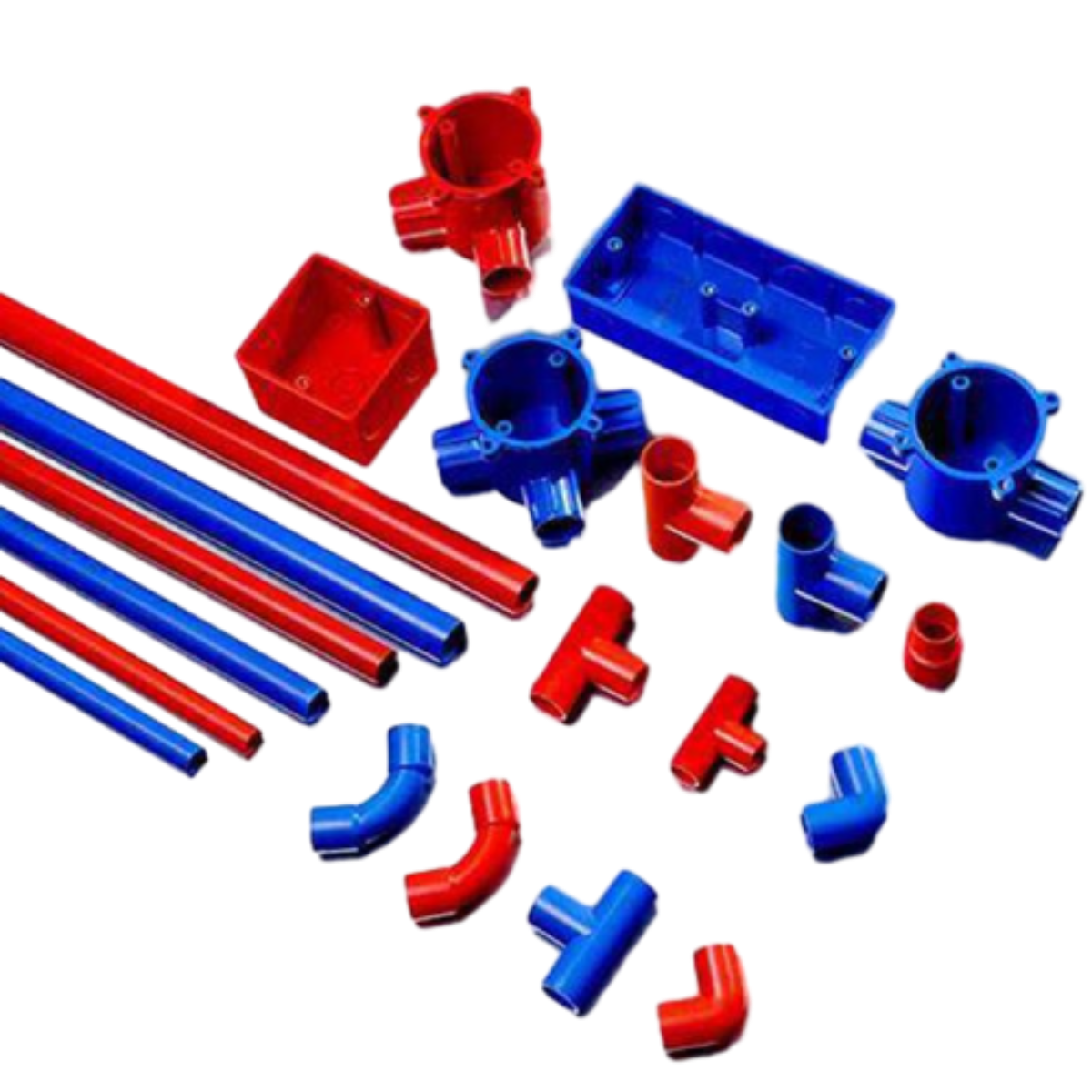
PVC, a thermoplastic polymer, is produced through the polymerization of vinyl chloride monomer (VCM). The resulting material is inherently rigid and requires plasticizers to achieve flexibility, leading to different PVC formulations: Rigid PVC (RPVC) and Flexible PVC (FPVC). Bulk PVC pipe typically utilizes RPVC due to its superior mechanical strength and pressure resistance. The raw materials involved beyond VCM include stabilizers (typically calcium-zinc or lead-based, though lead is increasingly restricted due to environmental concerns), lubricants, and impact modifiers. Manufacturing commences with the compounding of these materials, followed by extrusion. The extrusion process involves melting the PVC compound and forcing it through a die to create the desired pipe dimensions. Critical parameters during extrusion include melt temperature, screw speed, die pressure, and cooling rate. Precise control of these parameters is essential for maintaining consistent wall thickness, dimensional accuracy, and material homogeneity. Post-extrusion, pipes are often subjected to hydrostatic testing to verify pressure handling capabilities and are cut to specified lengths. Quality control at this stage includes visual inspection for defects, dimensional measurements, and material testing to confirm adherence to standards like ASTM D1785. The molecular weight distribution of the PVC resin directly influences the pipe’s impact resistance and long-term creep performance. Higher molecular weight distributions generally equate to enhanced durability.
Performance & Engineering
The performance of bulk PVC pipe is fundamentally governed by its mechanical properties, specifically tensile strength, impact resistance (measured by Izod or Charpy tests), and flexural modulus. These parameters dictate the pipe’s ability to withstand internal pressure, external loads (soil overburden, traffic loads), and impact during installation or operation. Force analysis considers hoop stress (resulting from internal pressure) and longitudinal stress (due to pressure and thermal expansion/contraction). The long-term hydrostatic strength of PVC is a critical design consideration, as PVC exhibits creep – a time-dependent deformation under sustained stress. Environmental resistance is another crucial factor. While PVC is inherently resistant to many chemicals, prolonged exposure to certain solvents and aggressive compounds can lead to degradation. UV exposure also causes degradation, necessitating the inclusion of UV stabilizers in the formulation, particularly for above-ground applications. Compliance requirements are stringent, varying by region and application. For potable water systems, pipes must meet NSF/ANSI 61 standards to ensure they do not leach harmful contaminants into the water supply. For pressure applications, pipes must comply with standards like ASTM D2412. The selection of the appropriate Schedule (e.g., Schedule 40, Schedule 80) is determined by the operating pressure and temperature requirements of the system. Furthermore, the coefficient of linear thermal expansion for PVC is significantly higher than that of metal pipes, requiring appropriate expansion joints and allowance for thermal movement in the system design.
Technical Specifications
| Parameter | Unit | Schedule 40 | Schedule 80 |
|---|---|---|---|
| Outside Diameter | inches | 1.063 | 1.063 |
| Inside Diameter | inches | 0.840 | 0.957 |
| Wall Thickness | inches | 0.111 | 0.106 |
| Pressure Rating (at 73°F) | psi | 400 | 600 |
| Burst Pressure | psi | 1600 | 2400 |
| Tensile Strength | psi | 6000 | 6000 |
Failure Mode & Maintenance
PVC pipe, while durable, is susceptible to several failure modes. Brittle fracture can occur due to excessive impact, particularly at low temperatures. Long-term creep, as previously mentioned, can lead to deformation and eventual failure under sustained pressure. Chemical attack by incompatible substances can cause softening, swelling, and cracking. UV degradation causes embrittlement and loss of impact resistance. Soil stresses, especially in unstable ground conditions, can lead to ovalization and cracking. Joint failures are common, often resulting from improper solvent welding or inadequate support. Failure analysis frequently reveals the root cause as a combination of factors, such as material defects, improper installation, and exceeding design limitations. Preventative maintenance includes regular visual inspections for cracks, leaks, or deformation. Proper bedding and backfill are crucial for providing adequate support and minimizing stress on the pipe. Avoiding direct contact with incompatible chemicals is essential. For above-ground applications, applying a UV-resistant coating or utilizing UV-stabilized PVC formulations extends service life. Periodic hydrostatic testing can identify potential weaknesses before catastrophic failure occurs. In cases of minor damage, repairs can often be made using PVC cement and appropriate fittings, adhering strictly to manufacturer’s instructions. Major damage usually necessitates pipe replacement.
Industry FAQ
Q: What is the impact of water hammer on PVC pipe systems?
A: Water hammer, or hydraulic shock, occurs when there's a sudden change in flow velocity, creating pressure surges. PVC pipe, while relatively robust, can be susceptible to damage from repeated or severe water hammer events. The pressure surges can exceed the pipe’s pressure rating, leading to cracks or joint failures. Mitigation strategies include the use of surge suppressors, slow-closing valves, and proper pipe anchoring.
Q: How does soil corrosivity affect the longevity of buried PVC pipe?
A: While PVC is inherently corrosion-resistant, aggressive soil conditions can accelerate degradation. Highly acidic or alkaline soils, or those with high sulfate content, can leach plasticizers from the PVC, making it more brittle over time. Proper bedding material and the use of protective coatings can mitigate these effects.
Q: What are the key differences between Schedule 40 and Schedule 80 PVC pipe?
A: The primary difference lies in the wall thickness. Schedule 80 pipe has a thicker wall than Schedule 40 pipe, resulting in a higher pressure rating and greater impact resistance. Schedule 80 is typically used in higher-pressure applications or where greater mechanical strength is required. However, Schedule 80 also has a smaller internal diameter for the same nominal pipe size.
Q: Is PVC pipe suitable for transporting flammable liquids?
A: Generally, PVC pipe is not recommended for transporting flammable liquids. PVC is not inherently flame-retardant and can contribute to fire spread. Regulations often prohibit the use of PVC for flammable liquid applications, and alternative materials like steel or CPVC (Chlorinated PVC) are typically required.
Q: What considerations should be made when joining PVC pipe in cold weather?
A: Cold temperatures reduce the flexibility of PVC and the viscosity of PVC cement. This can lead to incomplete solvent welding and weak joints. Warming the pipe and cement slightly (within manufacturer’s recommendations) can improve the bond. Avoid applying cement in freezing conditions. Proper curing time is crucial, and may need to be extended in colder temperatures.
Conclusion
Bulk PVC pipe remains a dominant material in numerous infrastructure applications due to its cost-effectiveness, durability, and ease of installation. However, achieving long-term performance and reliability necessitates a comprehensive understanding of its material properties, manufacturing processes, and potential failure modes. Careful consideration of operating conditions, environmental factors, and adherence to relevant industry standards are paramount.
Moving forward, advancements in PVC formulations – including bio-based plasticizers and enhanced UV stabilizers – will further improve its sustainability and extend its service life. Continued research into non-destructive testing methods will enable more accurate assessment of pipe integrity and proactive maintenance strategies. The judicious selection of PVC pipe, coupled with proper installation and maintenance practices, will continue to ensure its role as a critical component of modern infrastructure for decades to come.
-
DN25 HDPE Compression Fitting-HORON INTERNATIONAL|Reliable Irrigation Solutions
NewsFeb.11,2026
-
hdpe coupling joint product Manufacturing Analysis
News2026-11-18
-
ppr pipe heating time products Performance Analysis
News2026-11-16
-
hdpe pipe sizes factory Performance Analysis
News2026-11-09
-
HDPE Pipe Sizes Service Performance Analysis
News2026-10-26
-
wholesale 15mm ppr pipe Material Science and Performance Analysis
News2026-10-20
-
wholesale pvc pipe price per foot Technical Analysis
News2026-09-21
-
wholesale long pvc pipe Technical Analysis and Manufacturing Specifications
News2026-09-15
-
wholesale plumbing kitchen sink water lines Material Performance
News2026-09-15
-
wholesale hdpe drip irrigation Material Science
News2026-09-15
-
wholesale hot water ppr pipe Performance Analysis
News2026-09-15
-
wholesale ppr plumbing Performance Analysis
News2026-09-15
-
wholesale ppr pipe supplier Performance Analysis
News2026-09-13
-
wholesale 50mm ppr pipe Performance Analysis
News2026-09-13
-
wholesale hdpe drip pipe Performance Analysis
News2026-09-13
-
wholesale hdpe pipe 63mm price Manufacturing Specification and Performance Analysis
News2026-09-13