

Feb . 11, 2026 00:01 Back to list
wholesale 40mm pvc pipe Technical Overview

Introduction
Polyvinyl Chloride (PVC) pipe, specifically wholesale 40mm diameter Schedule 40 PVC, is a widely utilized thermoplastic product in diverse industrial, agricultural, and infrastructural applications. Positioned within the fluid conveyance sector, it serves as a cost-effective alternative to metallic piping systems for non-pressurized and low-pressure applications. Its technical prominence stems from its inherent corrosion resistance, ease of installation, and relatively low material cost. Core performance characteristics include resistance to a broad spectrum of chemicals, high tensile strength relative to its weight, and a smooth internal surface minimizing friction loss. This guide provides a comprehensive technical overview of 40mm PVC pipe, covering material science, manufacturing processes, performance engineering, failure modes, and relevant industry standards, targeted towards procurement managers and engineering professionals.
Material Science & Manufacturing
40mm PVC pipe is predominantly manufactured from Polyvinyl Chloride resin, a synthetic plastic polymer. The base resin comprises chlorine (57%) and ethylene (43%) obtained from salt and oil/gas, respectively. Key properties of the PVC resin include amorphous structure, high molecular weight, and inherent rigidity. Additives are crucial to tailoring the material properties: plasticizers (typically phthalates or alternatives like DINCH) enhance flexibility, stabilizers (typically organotin compounds or calcium-zinc blends) prevent thermal degradation during processing, lubricants (stearates) improve processing characteristics, and impact modifiers (acrylics) enhance toughness.
The extrusion process is the dominant manufacturing technique. PVC resin, combined with the aforementioned additives, is fed into a twin-screw extruder. This extruder utilizes heat (typically between 180-220°C) and mechanical shear to melt and homogenize the mixture. The molten PVC is then forced through a die with a 40mm internal diameter and the desired wall thickness (determined by the Schedule number – Schedule 40 is a standard wall thickness). Following extrusion, the pipe is rapidly cooled using a water bath to solidify the PVC and maintain dimensional stability. Critical process parameters include screw speed, barrel temperature profile, die temperature, and cooling water temperature. Precise control of these parameters ensures consistent wall thickness, dimensional accuracy, and prevents defects such as surface imperfections or incomplete fusion. Post-extrusion, pipes are often marked with relevant information including size, Schedule number, material designation, and manufacturer’s details, typically via inkjet printing or embossing.
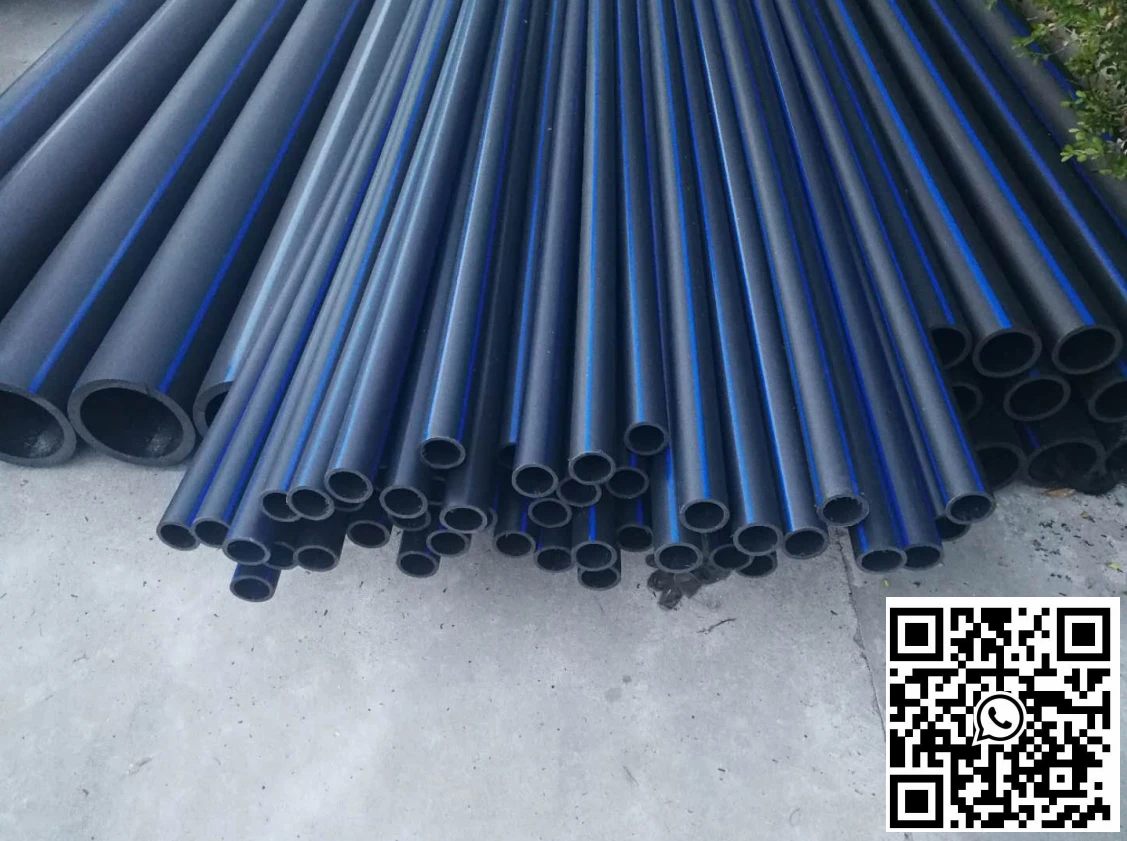
Performance & Engineering
The performance of 40mm PVC pipe is governed by several engineering principles. Hydrostatic pressure resistance is a critical design consideration, dictated by the pipe’s Schedule number and operating temperature. Schedule 40 provides a specific wall thickness designed for rated pressure applications. Force analysis considers both internal hydrostatic pressure and external loads, such as soil loads in buried applications or mechanical stress from fittings. The tensile strength of PVC (typically between 50-70 MPa) provides resistance to bursting forces.
Environmental resistance is a key advantage. PVC demonstrates excellent resistance to many acids, bases, and salts, making it suitable for chemical processing and wastewater conveyance. However, prolonged exposure to strong oxidizing agents or aromatic hydrocarbons can cause degradation. UV radiation also contributes to degradation, leading to embrittlement and discoloration. UV stabilizers are added to the formulation to mitigate this effect, but long-term outdoor exposure still requires consideration. Thermal expansion and contraction must be accounted for in installation design. PVC has a relatively high coefficient of thermal expansion (approximately 8 x 10^-5 / °C), necessitating expansion joints or flexible couplings to prevent stress buildup and potential failure. Compliance requirements are primarily dictated by local building codes and industry standards (detailed in the footer section). These standards specify minimum wall thicknesses, pressure ratings, and material quality requirements.
Technical Specifications
| Parameter | Unit | Schedule 40 (Typical) | ASTM D1785 Standard |
|---|---|---|---|
| Nominal Pipe Size | mm | 40 | 40 |
| Outside Diameter | mm | 42.2 | 42.2 |
| Wall Thickness | mm | 2.0 | ≥2.0 |
| Pressure Rating (at 23°C) | psi | 400 | ≥400 |
| Tensile Strength | MPa | 55-70 | ≥55 |
| Impact Strength (Izod Notched) | J/m | 400-600 | ≥300 |
Failure Mode & Maintenance
Failure modes in 40mm PVC pipe are diverse. Fatigue cracking can occur under cyclical pressure or mechanical stress, particularly around fittings. This is exacerbated by stress concentrations and imperfections in the material. Environmental Stress Cracking (ESC) is a significant concern, where the combined effect of tensile stress and exposure to specific chemicals (e.g., certain solvents, detergents) causes cracking. Delamination can occur due to inadequate fusion during extrusion or exposure to UV radiation and weathering. Degradation and oxidation, resulting from prolonged UV exposure or high temperatures, lead to embrittlement and reduced mechanical properties. Impact damage, caused by physical strikes, can lead to cracking or complete failure.
Preventative maintenance includes regular visual inspections for cracks, discoloration, or deformation. Proper installation, adhering to manufacturer’s guidelines and relevant standards, is crucial. Avoiding excessive bending radii and providing adequate support minimizes stress. Protecting the pipe from direct sunlight through coating or burying it mitigates UV degradation. When using adhesives for joining, ensuring chemical compatibility is vital. For chemical conveyance, verify that the conveyed fluid is compatible with PVC. If ESC is suspected, reduce the stress on the pipe or change the conveyed fluid. In the event of a detected crack, the affected section should be replaced immediately. Routine cleaning to remove debris and buildup prevents localized stress and corrosion.
Industry FAQ
Q: What is the impact of temperature on the pressure rating of 40mm PVC pipe?
A: The pressure rating of PVC pipe decreases with increasing temperature. The published pressure ratings are typically specified at 23°C. As the temperature rises, the material’s strength reduces, and the pipe becomes more susceptible to failure at the same pressure. Derating factors are provided by manufacturers and standards like ASTM D1785 to adjust the pressure rating for higher operating temperatures. Ignoring this derating can lead to catastrophic failure.
Q: How does the Schedule number relate to the pipe’s strength and application?
A: The Schedule number (e.g., Schedule 40, Schedule 80) indicates the wall thickness of the pipe. A higher Schedule number signifies a thicker wall, resulting in greater strength, higher pressure rating, and increased resistance to impact and deformation. Schedule 40 is commonly used for low-pressure applications like irrigation and drainage, while Schedule 80 is preferred for higher-pressure systems or applications requiring greater durability.
Q: What are the limitations of using PVC pipe in direct sunlight?
A: Prolonged exposure to ultraviolet (UV) radiation from sunlight causes degradation of the PVC polymer, leading to embrittlement, discoloration, and a reduction in its mechanical properties. This degradation can significantly shorten the lifespan of the pipe and increase the risk of failure. Mitigation strategies include using UV-stabilized PVC formulations, coating the pipe with a UV-resistant paint, or burying the pipe to shield it from sunlight.
Q: What considerations should be made when joining 40mm PVC pipe with solvent cement?
A: Proper solvent cement application is critical for a leak-proof and durable joint. Surfaces must be clean, dry, and free of contaminants. Using the correct type of solvent cement compatible with the PVC formulation is essential. The cement should be applied evenly and liberally to both the pipe and fitting, followed by a quick assembly and holding the joint firmly for the recommended curing time. Proper ventilation is crucial when working with solvent cement.
Q: Is PVC pipe suitable for conveying potable water, and what certifications are required?
A: Yes, certain formulations of PVC pipe are suitable for conveying potable water. However, the PVC must meet specific requirements and certifications to ensure it does not leach harmful chemicals into the water. NSF/ANSI Standard 61 is the primary certification for potable water components, verifying that the material meets stringent health and safety standards. Always verify that the PVC pipe has the appropriate NSF certification before using it for potable water applications.
Conclusion
40mm PVC pipe remains a cost-effective and versatile solution for a broad spectrum of fluid conveyance applications. Its inherent corrosion resistance, ease of installation, and readily available manufacturing processes contribute to its widespread adoption. However, understanding its material properties, potential failure modes, and limitations regarding temperature, UV exposure, and chemical compatibility are crucial for ensuring long-term performance and reliability. Careful consideration of these factors during design, installation, and maintenance is paramount.
Future advancements in PVC formulations are likely to focus on enhancing UV resistance, improving impact strength, and developing more sustainable plasticizer alternatives. Continued adherence to industry standards and rigorous quality control will be vital for maintaining the integrity and longevity of PVC piping systems. As environmental regulations evolve, the development of recyclable and biodegradable PVC alternatives will become increasingly important.
-
DN25 HDPE Compression Fitting-HORON INTERNATIONAL|Reliable Irrigation Solutions
NewsFeb.11,2026
-
hdpe coupling joint product Manufacturing Analysis
News2026-11-18
-
ppr pipe heating time products Performance Analysis
News2026-11-16
-
hdpe pipe sizes factory Performance Analysis
News2026-11-09
-
HDPE Pipe Sizes Service Performance Analysis
News2026-10-26
-
wholesale 15mm ppr pipe Material Science and Performance Analysis
News2026-10-20
-
wholesale pvc pipe price per foot Technical Analysis
News2026-09-21
-
wholesale long pvc pipe Technical Analysis and Manufacturing Specifications
News2026-09-15
-
wholesale plumbing kitchen sink water lines Material Performance
News2026-09-15
-
wholesale hdpe drip irrigation Material Science
News2026-09-15
-
wholesale hot water ppr pipe Performance Analysis
News2026-09-15
-
wholesale ppr plumbing Performance Analysis
News2026-09-15
-
wholesale ppr pipe supplier Performance Analysis
News2026-09-13
-
wholesale 50mm ppr pipe Performance Analysis
News2026-09-13
-
wholesale hdpe drip pipe Performance Analysis
News2026-09-13
-
wholesale hdpe pipe 63mm price Manufacturing Specification and Performance Analysis
News2026-09-13