

Feb . 11, 2026 00:01 Back to list
wholesale 4 hdpe drain pipe Performance Analysis
Introduction
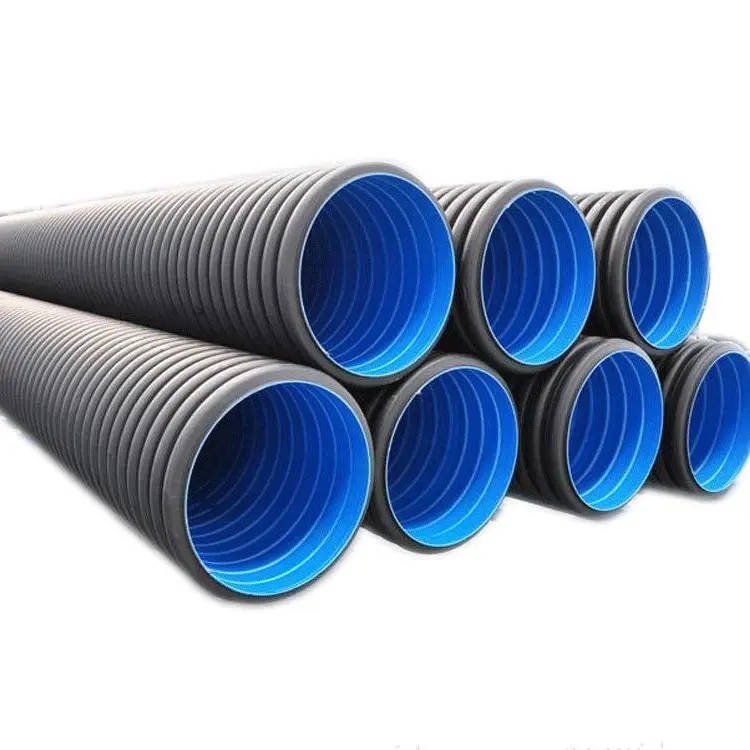
High-Density Polyethylene (HDPE) drain pipe, specifically 4-inch diameter, represents a critical component in subsurface drainage infrastructure across diverse applications including stormwater management, agricultural irrigation, and wastewater conveyance. Positioned within the broader industrial piping chain, HDPE pipe offers a compelling alternative to traditional materials like concrete, PVC, and ductile iron due to its superior corrosion resistance, lightweight nature, and cost-effectiveness. Its core performance characteristics – encompassing flow capacity, structural integrity under load, and long-term durability – are dictated by its material composition, manufacturing process, and adherence to rigorous industry standards. This guide provides an in-depth technical analysis of wholesale 4-inch HDPE drain pipe, covering material science, manufacturing processes, performance engineering, failure modes, and industry best practices.
Material Science & Manufacturing
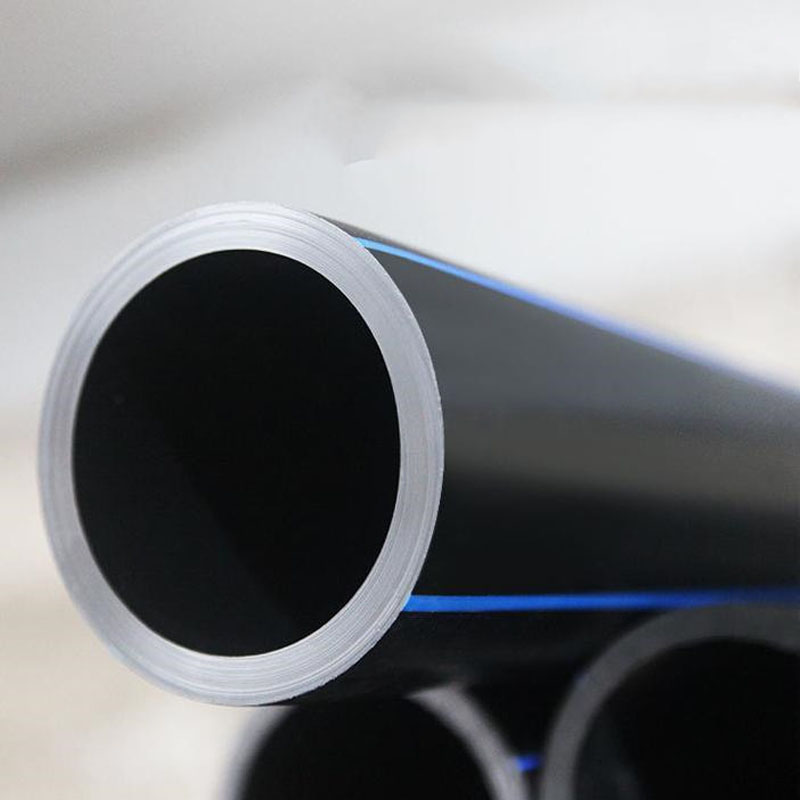
The foundation of 4-inch HDPE drain pipe lies in its material properties. HDPE is a thermoplastic polymer produced from the polymerization of ethylene. Crucially, the density (typically 0.941 – 0.965 g/cm³) dictates its strength and resistance to environmental stress cracking (ESCR). Raw material selection prioritizes high molecular weight HDPE resins, typically designated as HDPE PE3408 or PE4710, conforming to ASTM D3350. These resins exhibit a balance of stiffness, ductility, and chemical inertness. The manufacturing process typically employs extrusion. Polyethylene pellets are fed into an extruder, melted, and forced through a circular die to form a continuous pipe. Key parameters during extrusion include melt temperature (180-210°C), die pressure, and cooling rate. Precise control of these parameters is vital to ensure dimensional accuracy, uniform wall thickness, and the absence of defects like sags or ovality. Pipe stiffness, measured by the pipe’s ability to resist flattening under external loads (measured in PSI), is directly influenced by the melt flow index of the resin and the extrusion process. Post-extrusion, pipes are often subjected to hydrostatic testing to verify pressure integrity and dimensional stability as per ASTM F477. Co-extruded stripes or markings, indicating size, material grade, and manufacturer information, are also commonly applied during this stage. The addition of carbon black is standard practice, providing UV protection and enhancing long-term durability.
Performance & Engineering
The performance of 4-inch HDPE drain pipe is governed by several engineering principles. Structural integrity under load is paramount, particularly when subjected to backfill cover and surface traffic. The pipe’s ability to withstand crushing loads is defined by its Pipe Stiffness (PSI) and Burst Pressure (PSI). The Manning’s equation dictates flow capacity, with a typical roughness coefficient (n) of 0.009 for HDPE. This low roughness minimizes frictional losses, enhancing hydraulic efficiency. Long-term performance is heavily influenced by environmental resistance. HDPE exhibits excellent resistance to most acids, alkalis, and solvents commonly found in subsurface environments. However, prolonged exposure to strong oxidizing agents and high temperatures can lead to degradation. Joint integrity is crucial to prevent infiltration and exfiltration. Common joining methods include butt fusion, socket fusion, and mechanical couplings. Butt fusion, producing a homogenous weld, is generally preferred for larger diameter pipes and critical applications. Installation procedures must adhere to industry best practices, including proper bedding and backfill compaction, to prevent stress concentrations and ensure long-term stability. Compliance requirements vary based on application and location, but generally include ASTM F477 (hydrostatic design stress), ASTM D3212 (joint fusion procedures), and local building codes pertaining to drainage systems.
Technical Specifications
| Parameter | Units | Typical Value | Test Standard |
|---|---|---|---|
| Nominal Pipe Size | inches | 4 | ASTM D1785 |
| Outside Diameter | inches | 4.500 | ASTM D1785 |
| Wall Thickness | inches | 0.250 | ASTM D1785 |
| Pipe Stiffness (PSI) | psi | 42 | ASTM D2412 |
| Burst Pressure | psi | 1680 | ASTM D1597 |
| Density | g/cm³ | 0.950 | ASTM D792 |
| Manning’s Roughness Coefficient | - | 0.009 | Hydraulic Calculation |
Failure Mode & Maintenance
Despite its inherent durability, 4-inch HDPE drain pipe is susceptible to certain failure modes. Environmental Stress Cracking (ESC) is a primary concern, particularly in environments containing detergents, solvents, or aggressive chemicals. This manifests as slow crack propagation, ultimately leading to pipe failure. Fatigue cracking can occur under cyclical loading, such as from traffic or soil movement, initiating at stress concentrations like joints or dents. Creep, the gradual deformation under sustained load, can also compromise structural integrity over extended periods. Joint failure, often due to improper fusion techniques or inadequate preparation, represents a significant point of vulnerability. UV degradation, while mitigated by carbon black, can still occur in exposed sections over very long durations. Maintenance primarily focuses on preventative measures. Regular inspections to identify signs of cracking, deformation, or joint separation are crucial. Proper backfilling procedures, minimizing point loads and ensuring adequate compaction, are essential. Addressing any soil settlement or erosion around the pipe is vital to prevent stress concentrations. For minor cracks, repair sleeves or wraps can provide temporary solutions, but complete replacement is often the most reliable long-term remedy. Maintaining accurate records of installation details, including joint fusion parameters and backfill materials, facilitates effective troubleshooting and preventative maintenance.
Industry FAQ
Q: What is the impact of soil corrosivity on the lifespan of HDPE drain pipe?
A: Soil corrosivity, specifically the presence of sulfates and chlorides, can accelerate degradation of surrounding materials and potentially contribute to stress corrosion cracking in HDPE if combined with tensile stresses. While HDPE itself is highly corrosion-resistant, the surrounding environment can impact bedding materials and joint integrity. Proper soil analysis and the use of appropriate bedding materials are critical mitigation strategies.
Q: How does temperature fluctuation affect HDPE pipe performance?
A: HDPE exhibits a relatively high coefficient of thermal expansion. Significant temperature fluctuations can induce expansion and contraction, creating stresses at joints and potentially leading to deformation. Flexible joints and proper allowance for thermal movement during installation are crucial to accommodate these effects. Operating temperatures significantly above 60°C (140°F) can reduce long-term strength.
Q: What are the advantages of butt fusion over socket fusion for 4-inch HDPE pipe?
A: Butt fusion creates a homogenous weld with mechanical properties comparable to the base material, resulting in a stronger, more reliable joint. Socket fusion, while suitable for smaller diameters, can introduce localized stress concentrations and a slightly weaker weld. Butt fusion is generally preferred for 4-inch pipe and applications requiring high structural integrity.
Q: Can HDPE drain pipe be used in applications with significant hydrostatic pressure?
A: Yes, but careful consideration of the design pressure and the pipe’s hydrostatic design stress (HDS) is essential. The HDS, determined per ASTM F477, represents the maximum allowable internal pressure. Proper pipe selection and installation are crucial to ensure the pipe can withstand the operating conditions.
Q: What are the common causes of joint failure in HDPE drain pipe systems?
A: Common causes include inadequate surface preparation prior to fusion, improper fusion parameters (temperature, pressure, time), misalignment of pipe ends during fusion, and contamination of the fusion area. Following ASTM D3212 guidelines and employing qualified fusion operators are critical to prevent joint failures.
Conclusion
Wholesale 4-inch HDPE drain pipe provides a robust and cost-effective solution for a wide range of subsurface drainage applications. Its inherent material properties – high density polyethylene – confer excellent corrosion resistance, durability, and hydraulic efficiency. However, realizing its full potential necessitates a thorough understanding of material science, manufacturing processes, and engineering principles. Proper installation techniques, adherence to industry standards, and proactive maintenance strategies are paramount to mitigate potential failure modes and ensure long-term performance.
Future advancements in HDPE pipe technology are likely to focus on enhancing UV resistance, improving jointing techniques, and incorporating smart monitoring systems for proactive leak detection and performance assessment. Continued research and development will further solidify HDPE’s position as a leading material in drainage infrastructure, offering sustainable and reliable solutions for decades to come.
-
DN25 HDPE Compression Fitting-HORON INTERNATIONAL|Reliable Irrigation Solutions
NewsFeb.11,2026
-
hdpe coupling joint product Manufacturing Analysis
News2026-11-18
-
ppr pipe heating time products Performance Analysis
News2026-11-16
-
hdpe pipe sizes factory Performance Analysis
News2026-11-09
-
HDPE Pipe Sizes Service Performance Analysis
News2026-10-26
-
wholesale 15mm ppr pipe Material Science and Performance Analysis
News2026-10-20
-
wholesale pvc pipe price per foot Technical Analysis
News2026-09-21
-
wholesale long pvc pipe Technical Analysis and Manufacturing Specifications
News2026-09-15
-
wholesale plumbing kitchen sink water lines Material Performance
News2026-09-15
-
wholesale hdpe drip irrigation Material Science
News2026-09-15
-
wholesale hot water ppr pipe Performance Analysis
News2026-09-15
-
wholesale ppr plumbing Performance Analysis
News2026-09-15
-
wholesale ppr pipe supplier Performance Analysis
News2026-09-13
-
wholesale 50mm ppr pipe Performance Analysis
News2026-09-13
-
wholesale hdpe drip pipe Performance Analysis
News2026-09-13
-
wholesale hdpe pipe 63mm price Manufacturing Specification and Performance Analysis
News2026-09-13