

Feb . 11, 2026 00:01 Back to list
wholesale 32mm pvc pipe Material Performance

Introduction
32mm Polyvinyl Chloride (PVC) pipe is a widely utilized thermoplastic product in industrial and infrastructural applications, particularly within water distribution, drainage, and chemical conveyance systems. It represents a significant component of the broader PVC piping industry, derived from vinyl chloride monomer (VCM) polymerization. Its prevalence stems from a combination of cost-effectiveness, corrosion resistance, and ease of installation. Within the supply chain, it functions as a semi-finished product, ready for integration into larger plumbing, irrigation, or industrial processing networks. Core performance characteristics include pressure capacity, tensile strength, chemical inertness, and adherence to relevant piping standards, representing critical factors for specifying engineers and procurement professionals. A primary industry pain point is maintaining consistent quality control across manufacturers, especially concerning long-term durability and resistance to environmental stress cracking (ESC).
Material Science & Manufacturing
The foundational material for 32mm PVC pipe is PVC resin, typically produced via suspension polymerization of vinyl chloride monomer. Additives such as stabilizers (typically lead-based, calcium-zinc, or organic-based), lubricants, plasticizers (phthalates or alternatives), and impact modifiers are incorporated to enhance processing characteristics and final product performance. The raw material properties influencing pipe performance include molecular weight distribution, K-value (a measure of molecular weight), and thermal stability. Manufacturing typically employs extrusion processes. PVC compound is fed into a single-screw or twin-screw extruder, where it's heated, homogenized, and forced through a die to create a continuous tube. Key parameters in extrusion include die temperature, screw speed, haul-off speed, and cooling water flow rate. Maintaining precise temperature control is critical to prevent degradation and ensure dimensional accuracy. Post-extrusion, the pipe undergoes cooling, sizing, cutting, and often, marking with relevant information like size, pressure rating, and manufacturing standards. Quality control involves rigorous testing of material properties, dimensional accuracy, and hydrostatic pressure resistance. Batch-to-batch consistency of the PVC compound is paramount, dictating the final mechanical properties and long-term performance of the pipe.
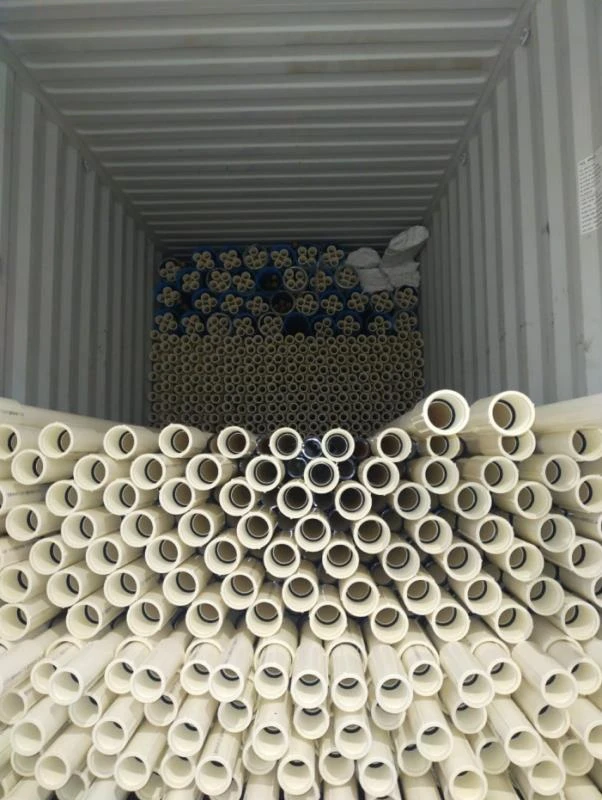
Performance & Engineering
The performance of 32mm PVC pipe is dictated by its ability to withstand internal hydrostatic pressure, external soil loads, and various environmental stresses. Force analysis typically involves calculating hoop stress (resulting from internal pressure) and longitudinal stress (due to end loads). The pipe's pressure rating, commonly expressed in PSI or bars, is determined through hydrostatic pressure testing, exceeding the expected operating pressure. Environmental resistance is crucial; PVC is susceptible to degradation from UV exposure, leading to embrittlement and reduced impact strength. UV stabilizers are added to mitigate this effect, but their effectiveness diminishes over time. Chemical resistance is generally excellent, with PVC being inert to many acids, bases, and salts. However, exposure to certain solvents and aromatic hydrocarbons can cause swelling and softening. Compliance requirements are stringent, governed by standards like ASTM D1785 (for PVC pipe), ASTM D2412 (for PVC fittings), and local plumbing codes. Engineering considerations include allowance for thermal expansion and contraction, particularly in long pipeline runs. Proper jointing techniques, utilizing solvent cement or mechanical couplings, are essential to maintain structural integrity and prevent leaks. The Modulus of Elasticity (Young’s Modulus) of PVC influences pipe deflection under load and is a crucial parameter in structural design calculations.
Technical Specifications
| Parameter | Unit | Schedule 40 | Schedule 80 |
|---|---|---|---|
| Nominal Pipe Size | mm | 32 | 32 |
| Outside Diameter | mm | 42.2 | 42.2 |
| Wall Thickness | mm | 2.4 | 3.2 |
| Pressure Rating @ 23°C | PSI | 450 | 600 |
| Tensile Strength | MPa | 55 | 55 |
| Impact Strength (Izod Notched) | J/m | 80 | 100 |
| Density | g/cm³ | 1.40 | 1.40 |
Failure Mode & Maintenance
Common failure modes for 32mm PVC pipe include environmental stress cracking (ESC), particularly in buried applications where exposure to soil chemicals and stress concentrations occur. ESC manifests as brittle cracks, often propagating along longitudinal lines. Fatigue cracking can occur under cyclical pressure loads, exacerbated by material defects or improper installation. UV degradation causes surface chalking and embrittlement, reducing impact resistance. Joint failures are frequent, stemming from inadequate solvent cementing (insufficient cement application, improper curing time) or mechanical coupling malfunction. Chemical attack, though less common, can occur with exposure to incompatible solvents. Maintenance involves regular visual inspection for cracks, leaks, or discoloration. Proper backfilling procedures are critical to prevent soil-induced stresses. For minor leaks, repair can be achieved using PVC repair couplings or epoxy-based patching compounds. For extensive damage, pipe replacement is typically required. Preventing failures involves selecting appropriate PVC compound formulations (considering soil conditions and chemical exposure), employing proper installation techniques, and implementing regular inspection programs. Long-term performance is significantly affected by the quality of the PVC compound, particularly the stabilizer system and the presence of impact modifiers.
Industry FAQ
Q: What is the impact of temperature on the pressure rating of 32mm PVC pipe?
A: The pressure rating of PVC pipe decreases with increasing temperature. PVC’s mechanical properties degrade at elevated temperatures, reducing its ability to withstand internal pressure. De-rating factors are typically applied, as outlined in ASTM D1785, to adjust the allowable pressure based on operating temperature. For instance, the pressure rating may be reduced by 50% at 60°C. Therefore, understanding the maximum operating temperature is crucial for safe pipeline design.
Q: How does the type of solvent cement affect the long-term performance of PVC joints?
A: The type of solvent cement is critical. Using an incompatible cement, or failing to follow the manufacturer's instructions, can result in weak joints prone to failure. The cement acts as a solvent, partially dissolving the PVC surfaces to create a weld. Proper cement selection ensures chemical compatibility and adequate solvency. Cement formulations vary based on PVC resin type and application (e.g., pressure vs. non-pressure). Always use a cement specifically formulated for PVC and adhere to recommended drying times.
Q: What are the common causes of Environmental Stress Cracking (ESC) in buried PVC pipe?
A: ESC is primarily caused by the combined effect of sustained mechanical stress, exposure to aggressive chemicals in the surrounding soil, and the inherent susceptibility of PVC to certain chemicals. Soil containing organic matter, sulfates, or chlorides can accelerate ESC. Improper bedding and backfilling practices, leading to localized stress concentrations, also contribute. Selecting a PVC compound with enhanced ESC resistance (e.g., containing higher levels of impact modifiers) and ensuring proper installation are key preventative measures.
Q: What is the difference between Schedule 40 and Schedule 80 PVC pipe, and when should each be used?
A: Schedule 40 and Schedule 80 refer to the pipe’s wall thickness. Schedule 80 has a thicker wall than Schedule 40, resulting in a higher pressure rating and increased rigidity. Schedule 40 is typically used for lower-pressure applications, such as irrigation or drainage. Schedule 80 is preferred for higher-pressure systems, chemical processing, or applications requiring greater structural strength. The choice depends on the specific operating conditions and design requirements.
Q: How does UV exposure affect the lifespan of outdoor PVC pipe?
A: UV exposure causes chain scission in the PVC polymer, leading to embrittlement, discoloration, and reduced impact strength. Prolonged exposure can significantly shorten the lifespan of the pipe. UV stabilizers are incorporated into the PVC compound to mitigate this effect, but their effectiveness degrades over time. Protecting the pipe from direct sunlight through shielding, painting with a UV-resistant coating, or burying it underground can extend its service life.
Conclusion
32mm PVC pipe remains a dominant material in a wide array of fluid conveyance applications due to its balance of cost, performance, and ease of installation. However, ensuring long-term reliability necessitates a thorough understanding of its material properties, manufacturing processes, and potential failure modes. Careful consideration must be given to environmental factors, chemical compatibility, and proper installation techniques.
Future developments in PVC technology focus on enhancing ESC resistance through novel stabilizer formulations, incorporating bio-based plasticizers for improved sustainability, and optimizing extrusion processes for tighter dimensional control. Continued adherence to industry standards and rigorous quality control measures are essential to maintain the integrity and longevity of PVC piping systems.
-
DN25 HDPE Compression Fitting-HORON INTERNATIONAL|Reliable Irrigation Solutions
NewsFeb.11,2026
-
hdpe coupling joint product Manufacturing Analysis
News2026-11-18
-
ppr pipe heating time products Performance Analysis
News2026-11-16
-
hdpe pipe sizes factory Performance Analysis
News2026-11-09
-
HDPE Pipe Sizes Service Performance Analysis
News2026-10-26
-
wholesale 15mm ppr pipe Material Science and Performance Analysis
News2026-10-20
-
wholesale pvc pipe price per foot Technical Analysis
News2026-09-21
-
wholesale long pvc pipe Technical Analysis and Manufacturing Specifications
News2026-09-15
-
wholesale plumbing kitchen sink water lines Material Performance
News2026-09-15
-
wholesale hdpe drip irrigation Material Science
News2026-09-15
-
wholesale hot water ppr pipe Performance Analysis
News2026-09-15
-
wholesale ppr plumbing Performance Analysis
News2026-09-15
-
wholesale ppr pipe supplier Performance Analysis
News2026-09-13
-
wholesale 50mm ppr pipe Performance Analysis
News2026-09-13
-
wholesale hdpe drip pipe Performance Analysis
News2026-09-13
-
wholesale hdpe pipe 63mm price Manufacturing Specification and Performance Analysis
News2026-09-13