

Feb . 11, 2026 00:01 Back to list
wholesale 24 inch diameter pvc pipe price Technical Analysis
Introduction
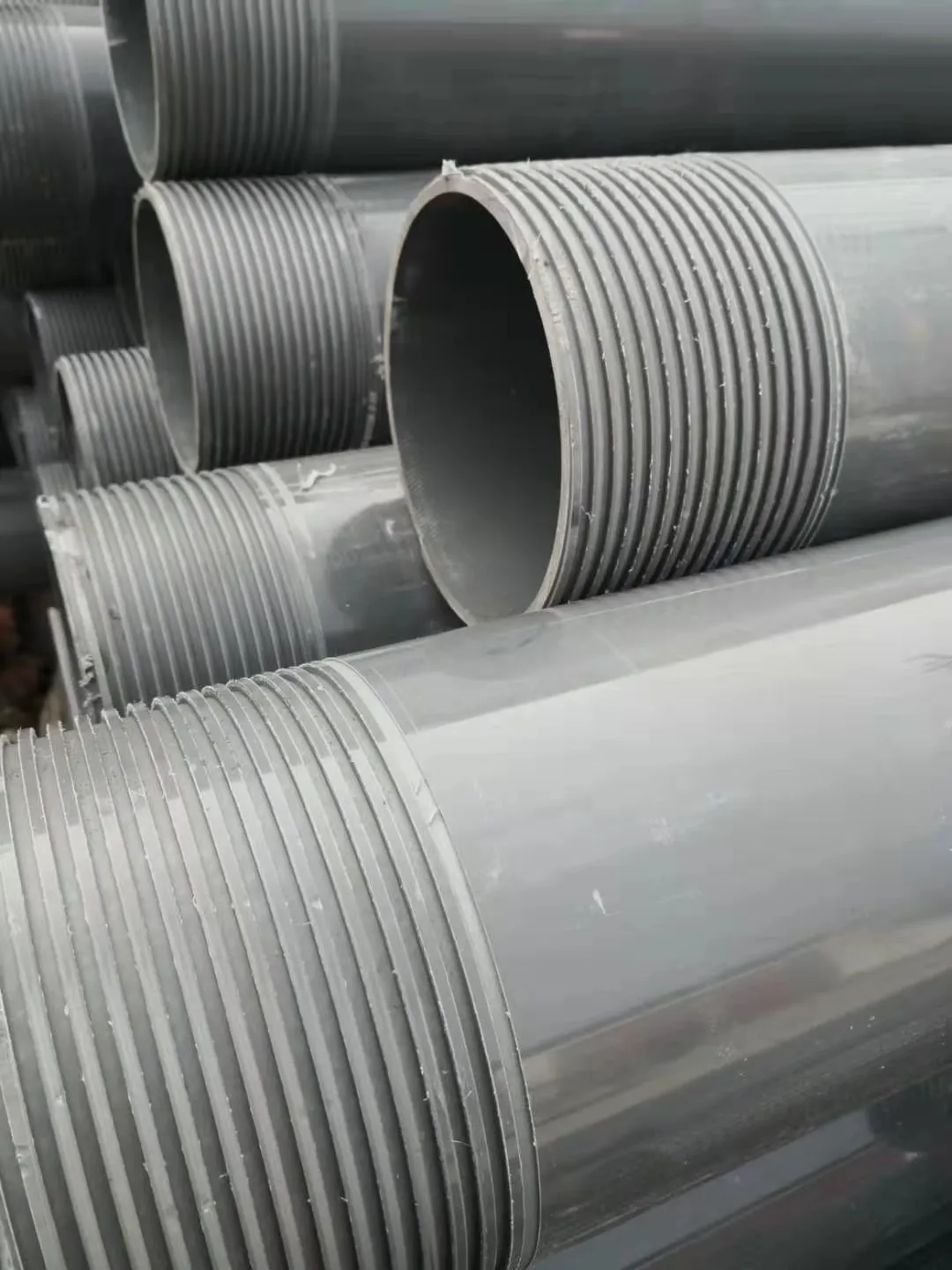
24-inch diameter Polyvinyl Chloride (PVC) pipe represents a crucial component in large-scale infrastructure projects, notably in water and wastewater management, irrigation, and industrial fluid transport. Its wholesale pricing is a significant factor for project budgets, influenced by raw material costs (primarily ethylene and chlorine), manufacturing processes, and regional demand. This guide provides a comprehensive technical overview of 24-inch PVC pipe, focusing on material science, manufacturing nuances, performance characteristics, potential failure modes, and relevant industry standards. The increasing demand for durable, corrosion-resistant piping solutions positions PVC as a dominant material, particularly where cost-effectiveness is paramount. Understanding the technical specifications and potential limitations is vital for engineers, procurement managers, and project stakeholders to ensure optimal system longevity and performance. PVC's position in the industry chain extends from petrochemical feedstock production through extrusion and quality control to on-site installation and long-term operation.
Material Science & Manufacturing
The foundational material for 24-inch PVC pipe is PVC resin, a thermoplastic polymer produced through the polymerization of vinyl chloride monomer (VCM). The inherent properties of PVC – including its chemical resistance, low cost, and ease of processing – make it ideally suited for piping applications. However, PVC resin is typically rigid and brittle. To enhance its impact strength and ductility, plasticizers, primarily phthalates or alternative plasticizers like DINCH, are incorporated during compounding. Stabilizers, such as organotin compounds or calcium-zinc stabilizers, are added to prevent thermal degradation during processing and extend the service life of the pipe. Fillers, often calcium carbonate, are used to reduce cost and improve stiffness.
Manufacturing of 24-inch PVC pipe primarily employs the extrusion process. The PVC compound, carefully formulated with the aforementioned additives, is fed into a single-screw or twin-screw extruder. The extruder melts and homogenizes the compound, then forces it through a circular die of the desired diameter (24 inches). Precise control of the extrusion temperature profile – typically ranging from 180°C to 220°C – is critical to ensure complete fusion and avoid degradation. The extruded pipe is then cooled using water jackets, calibrated to maintain dimensional accuracy, and cut to specified lengths. Quality control measures throughout the process include monitoring melt flow index, density, impact strength, and dimensional tolerances. The Schedule designation (e.g., Schedule 40, Schedule 80) determines the pipe wall thickness and, consequently, its pressure-bearing capacity. Further processing may involve socketing or bell-and-spigot fabrication for joining purposes.
Performance & Engineering
The structural integrity of 24-inch PVC pipe under operational conditions is governed by several engineering principles. Hydrostatic pressure testing, conducted in accordance with ASTM D1598, verifies the pipe's ability to withstand internal pressure without failure. The pipe’s burst pressure is significantly higher than its typical operating pressure, providing a safety factor. External loads, such as soil loads in buried applications, must also be considered. The pipe's stiffness, measured by its modulus of elasticity, dictates its ability to resist deformation under load. Buckling analysis is crucial for long, unsupported spans of pipe.
Environmental resistance is another key performance parameter. PVC exhibits excellent resistance to a wide range of chemicals, including acids, bases, and salts, making it suitable for corrosive environments. However, prolonged exposure to ultraviolet (UV) radiation can cause degradation, leading to embrittlement. UV stabilizers are incorporated into the PVC compound to mitigate this effect. Temperature fluctuations also impact PVC's performance. At elevated temperatures, the pipe’s strength and stiffness decrease, while at low temperatures, it becomes more brittle. Soil temperature and surrounding media temperature are critical design considerations. Compliance requirements, such as those stipulated by NSF/ANSI 61 for potable water applications, dictate the allowable levels of leachables from the pipe material to ensure water quality. Long-term creep behavior, the tendency of the pipe to slowly deform under constant stress, is also an important consideration for sustained high-pressure applications.
Technical Specifications
| Parameter | Schedule 40 | Schedule 80 | ASTM D1785 Specification |
|---|---|---|---|
| Nominal Pipe Size | 24 inches | 24 inches | 24 inches |
| Outside Diameter (OD) | 24.625 inches | 24.625 inches | 24.625 inches |
| Wall Thickness | 0.295 inches | 0.375 inches | Varies based on Schedule |
| Pressure Rating (at 73°F) | 75 psi | 100 psi | Dependent on Schedule and Temperature |
| Burst Pressure (Hydrostatic) | 300 psi | 400 psi | Minimum 4x Pressure Rating |
| Material | PVC (Polyvinyl Chloride) | PVC (Polyvinyl Chloride) | PVC Compound, Type I, Grade 1 |
Failure Mode & Maintenance
Common failure modes in 24-inch PVC pipe include slow crack growth (SCG), particularly in soils containing aggressive chemicals or experiencing significant stress concentrations. SCG initiates at stress raisers, such as scratches or gouges, and propagates slowly over time, leading to pipe rupture. Another failure mode is crazing, the formation of a network of microcracks on the pipe surface, often caused by impact or stress. Joint failures can occur due to improper installation, insufficient solvent cement application, or degradation of the sealing materials. Environmental stress cracking (ESC) can occur due to the combined effect of stress and exposure to certain chemicals. UV degradation can lead to surface cracking and embrittlement, especially in exposed applications. Oxidation of the PVC material, although slow, can reduce the pipe’s impact resistance and overall durability.
Preventative maintenance is crucial to prolong the service life of PVC pipe. Regular visual inspections should be conducted to identify any signs of cracking, deformation, or joint leakage. Soil testing should be performed to assess the chemical aggressiveness of the surrounding environment. Proper backfilling procedures, employing appropriate bedding materials and compaction techniques, minimize stress concentrations on the pipe. Protecting the pipe from UV exposure through coating or burial is essential. If repairs are necessary, qualified technicians should employ approved repair methods, such as heat fusion welding or the use of mechanical couplings. Avoid using abrasive cleaning methods that could induce stress cracking. Periodic hydrostatic testing can verify the pipe's continued integrity. Implementing a comprehensive corrosion monitoring program in aggressive environments can detect early signs of degradation.
Industry FAQ
Q: What is the impact of varying soil pH levels on the long-term performance of 24-inch PVC pipe?
A: Highly acidic or alkaline soils can accelerate the degradation of PVC. Acidic soils can leach plasticizers, making the pipe brittle, while alkaline soils can promote hydrolytic degradation. Pre-installation soil testing to determine pH levels is critical. Selecting PVC compounds with enhanced chemical resistance and employing protective coatings can mitigate these effects. Consider utilizing a geotech fabric to buffer the pipe from direct soil contact.
Q: How does the Schedule number (40 vs. 80) affect the allowable operating pressure and cost of the pipe?
A: Higher Schedule numbers indicate thicker walls. Schedule 80 pipe has a significantly higher pressure rating than Schedule 40, but also a higher material cost. The selection of Schedule depends on the application’s pressure requirements and budget constraints. Performing a detailed hydraulic analysis is vital to determine the appropriate Schedule for the intended service conditions.
Q: What are the common causes of joint failures in large-diameter PVC piping systems?
A: Joint failures are often attributed to improper solvent cementing techniques – insufficient cement application, incorrect solvent type for the PVC compound, or improper alignment of the pipe and fitting. Contamination of the joint surfaces with dirt or moisture can also compromise the seal. Thermal expansion and contraction can induce stress on the joints, leading to leaks. Utilizing properly trained installers and adhering to strict quality control procedures are crucial.
Q: How does temperature affect the pressure rating of 24-inch PVC pipe?
A: The pressure rating of PVC pipe decreases as temperature increases. Higher temperatures reduce the material’s strength and stiffness. Pressure derating factors, as specified in ASTM D1785, must be applied when operating the pipe at temperatures above 73°F. Careful consideration of the maximum operating temperature is crucial for system design.
Q: What are the implications of using non-NSF certified PVC pipe for potable water applications?
A: Non-NSF certified PVC pipe may contain leachables that exceed acceptable limits for drinking water, posing a health risk. NSF/ANSI 61 certification ensures that the pipe material meets stringent requirements for water quality. Using certified pipe is mandatory for potable water systems to comply with regulatory standards.
Conclusion
24-inch PVC pipe offers a cost-effective and durable solution for a wide range of fluid transport applications. Its inherent chemical resistance, ease of installation, and relatively low weight contribute to its widespread adoption. However, a thorough understanding of its material properties, manufacturing processes, and potential failure modes is essential for ensuring long-term performance and reliability. Careful consideration of environmental factors, proper installation techniques, and adherence to industry standards are critical to maximizing the service life of PVC piping systems.
Future advancements in PVC technology, such as the development of enhanced plasticizers and UV stabilizers, will further improve its performance and broaden its application range. Continued research into non-destructive testing methods will enable more accurate assessment of pipe integrity and proactive maintenance. The increasing focus on sustainability will drive the development of recycled PVC compounds, reducing the environmental footprint of PVC piping infrastructure. Ultimately, informed material selection and diligent engineering practices are paramount for realizing the full potential of 24-inch PVC pipe in modern infrastructure projects.
-
DN25 HDPE Compression Fitting-HORON INTERNATIONAL|Reliable Irrigation Solutions
NewsFeb.11,2026
-
hdpe coupling joint product Manufacturing Analysis
News2026-11-18
-
ppr pipe heating time products Performance Analysis
News2026-11-16
-
hdpe pipe sizes factory Performance Analysis
News2026-11-09
-
HDPE Pipe Sizes Service Performance Analysis
News2026-10-26
-
wholesale 15mm ppr pipe Material Science and Performance Analysis
News2026-10-20
-
wholesale pvc pipe price per foot Technical Analysis
News2026-09-21
-
wholesale long pvc pipe Technical Analysis and Manufacturing Specifications
News2026-09-15
-
wholesale plumbing kitchen sink water lines Material Performance
News2026-09-15
-
wholesale hdpe drip irrigation Material Science
News2026-09-15
-
wholesale hot water ppr pipe Performance Analysis
News2026-09-15
-
wholesale ppr plumbing Performance Analysis
News2026-09-15
-
wholesale ppr pipe supplier Performance Analysis
News2026-09-13
-
wholesale 50mm ppr pipe Performance Analysis
News2026-09-13
-
wholesale hdpe drip pipe Performance Analysis
News2026-09-13
-
wholesale hdpe pipe 63mm price Manufacturing Specification and Performance Analysis
News2026-09-13