

Feb . 11, 2026 00:01 Back to list
discount underground pvc pipe Material Science
Introduction
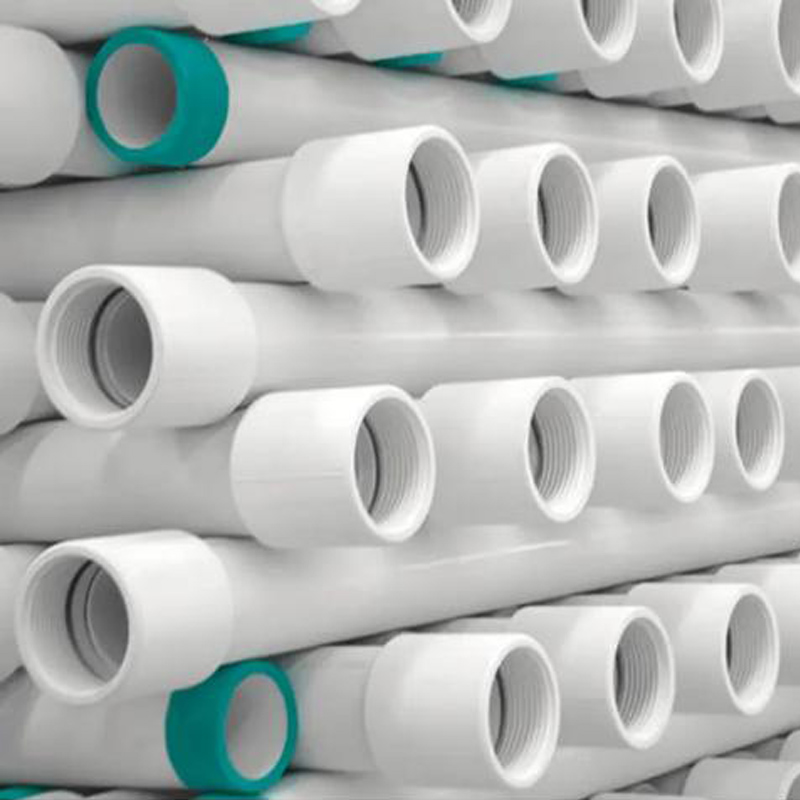
Polyvinyl chloride (PVC) pipe, specifically discount underground PVC pipe, represents a cornerstone material in subsurface infrastructure. Its primary function is the conveyance of fluids – water, wastewater, and increasingly, industrial chemicals – beneath the surface. Positioned within the broader construction materials supply chain, it serves as a direct replacement for traditional materials like ductile iron, concrete, and asbestos cement pipe, offering advantages in cost, weight, and corrosion resistance. The core performance characteristics defining this product category are its pressure rating (measured in PSI), its structural integrity dictated by pipe schedule (e.g., Schedule 40, Schedule 80), and its resistance to chemical degradation. The “discount” designation indicates a price point achieved through optimized manufacturing processes and material sourcing, often focusing on efficient polymerization and formulation. This guide provides an in-depth analysis of its material science, manufacturing processes, performance parameters, failure modes, and relevant industry standards.
Material Science & Manufacturing
The foundation of discount underground PVC pipe lies in the polymerization of vinyl chloride monomer (VCM). This process, typically suspension polymerization, yields PVC resin – a white, brittle powder. Critical raw materials include ethylene (for VCM production), chlorine (also for VCM production), and additives such as stabilizers (typically calcium-zinc or lead-based, though lead is increasingly restricted due to environmental concerns), plasticizers (phthalates or alternative non-phthalate options to increase flexibility), lubricants (to aid processing), and impact modifiers (to enhance toughness). Manufacturing begins with the compounding of PVC resin with these additives, meticulously controlling ratios to achieve target mechanical properties. Extrusion is the primary shaping process. The compounded PVC is fed into an extruder, where it’s heated and plasticized, then forced through a die to form the pipe’s desired diameter and wall thickness. Critical process parameters include extruder screw speed, barrel temperature profile (ranging from 130°C to 200°C, depending on formulation), die pressure, and cooling rate. Subsequent processes include cutting to length, socketing (bell-end creation), and quality control inspections, including hydrostatic pressure testing and dimensional checks. The quality of the PVC resin, the homogeneity of the compound, and the precise control of extrusion parameters directly influence the final product’s performance and longevity. Poor mixing can lead to localized weaknesses; inconsistent temperatures can create stress concentrations.
Performance & Engineering
The performance of underground PVC pipe is governed by several key engineering principles. Firstly, hydrostatic design stress (HDS) is crucial. This is the internal pressure the pipe can withstand without failure, determined by the pipe’s dimensions (diameter and wall thickness), the material’s yield strength, and a safety factor. The Barlow formula (S = P D / 2t, where S = stress, P = pressure, D = diameter, t = wall thickness) provides a fundamental basis for calculating HDS. Secondly, soil loading presents external stresses. Backfill material, traffic loads, and ground water contribute to compressive stresses on the pipe. The pipe’s structural capacity to resist these loads is assessed using methods defined in ASTM D2412. Thirdly, long-term creep resistance is vital. PVC, like all polymers, exhibits creep – slow deformation under sustained stress. Factors influencing creep include temperature, stress level, and the formulation of the PVC compound. Fourthly, chemical resistance is paramount. Exposure to aggressive soils, industrial effluents, or corrosive groundwater can lead to degradation. PVC’s resistance to most acids, alkalis, and salts is generally excellent, but specific chemicals (e.g., concentrated organic solvents) can cause swelling or dissolution. Compliance with relevant codes (e.g., AWWA standards for potable water systems) dictates minimum performance requirements for these parameters. The impact of temperature on PVC’s mechanical properties is significant; lower temperatures increase brittleness, while higher temperatures reduce strength and stiffness.
Technical Specifications
| Parameter | Schedule 40 (inches) | Schedule 80 (inches) | ASTM D1785 Specification |
|---|---|---|---|
| Nominal Pipe Size (NPS) | 1/2" to 12" | 1/2" to 12" | 1/2" to 24" |
| Wall Thickness (minimum) | 0.133" (1/2") to 0.375" (12") | 0.154" (1/2") to 0.438" (12") | Varies per NPS and Schedule |
| Pressure Rating (at 73°F) | Up to 400 PSI | Up to 600 PSI | Dependent on Size and Schedule |
| Tensile Strength (ASTM D638) | > 6,000 PSI | > 6,000 PSI | > 6,000 PSI |
| Flexural Modulus (ASTM D790) | ~400,000 PSI | ~400,000 PSI | ~400,000 PSI |
| Impact Resistance (ASTM D2444) | > 10 ft-lb (non-propagating crack) | > 10 ft-lb (non-propagating crack) | Dependent on temperature and formulation |
Failure Mode & Maintenance
Underground PVC pipe is subject to several potential failure modes. Slow crack growth (SCG) is a primary concern, initiated by sustained tensile stress combined with aggressive environmental factors. This is exacerbated by poor quality materials or improper installation. Another critical failure mode is soil-induced cracking, resulting from excessive bending stress caused by uneven backfill compaction or external loads. Long-term creep deformation can lead to ovalization and eventual joint failure. Chemical attack, particularly from organic solvents or highly acidic/alkaline soils, can cause material degradation and loss of mechanical properties. Joint failures are common, resulting from improper solvent welding, inadequate gasket seating, or differential settlement. Maintenance is largely preventative. Proper backfill compaction is crucial to distribute loads evenly. Avoiding contact with incompatible chemicals is essential. Regular visual inspections can detect signs of cracking or deformation. If cracking is observed, localized repairs using appropriate PVC repair couplings are recommended. Hydrostatic testing can verify the integrity of the pipeline. In cases of significant degradation, complete pipe replacement may be necessary. Failure analysis should include material testing (e.g., tensile strength, impact resistance) to determine the root cause of the failure and prevent recurrence.
Industry FAQ
Q: What is the impact of soil corrosivity on the lifespan of discount underground PVC pipe?
A: Soil corrosivity significantly impacts lifespan. Aggressive soils containing high levels of sulfates, chlorides, or organic matter can accelerate chemical attack and SCG. Employing a higher-grade PVC compound with enhanced chemical resistance and ensuring proper bedding and backfill are crucial mitigation strategies. Soil testing prior to installation is highly recommended to identify potential threats.
Q: How does temperature affect the pressure rating of PVC pipe?
A: Elevated temperatures decrease the pressure rating of PVC pipe. As temperature increases, the material’s tensile strength and modulus of elasticity decrease, reducing its ability to withstand internal pressure. Pressure derating factors, as specified in ASTM D1785, must be applied when operating at temperatures above 73°F.
Q: What are the best practices for solvent welding PVC pipe joints?
A: Proper solvent welding is critical. Surfaces must be clean, dry, and free of debris. Apply primer liberally, followed immediately by solvent cement. Ensure adequate ventilation. Apply sufficient pressure to the joint for the recommended dwell time to allow for proper fusion. Avoid twisting or bending the pipe during the welding process.
Q: What are the differences between Schedule 40 and Schedule 80 PVC pipe, and when should each be used?
A: Schedule 80 pipe has a thicker wall than Schedule 40, resulting in a higher pressure rating and increased structural strength. Schedule 40 is suitable for lower-pressure applications, while Schedule 80 is preferred for higher-pressure systems or applications where increased impact resistance is required. Schedule 80 is also recommended when external loads are significant.
Q: Are there specific regulations regarding the use of lead-based stabilizers in PVC pipe for potable water systems?
A: Yes. Increasingly stringent regulations restrict or prohibit the use of lead-based stabilizers in PVC pipe used for potable water applications. Calcium-zinc stabilizers are now commonly used as a safer alternative. Compliance with NSF/ANSI Standard 61 is essential to ensure that the pipe material does not leach harmful contaminants into the water supply.
Conclusion
Discount underground PVC pipe provides a cost-effective and reliable solution for a wide range of fluid conveyance applications. However, realizing its full potential requires a thorough understanding of its material properties, manufacturing processes, and potential failure modes. Proper material selection, meticulous installation practices, and adherence to relevant industry standards are paramount to ensuring long-term performance and minimizing the risk of premature failure. The ongoing development of advanced PVC formulations and improved manufacturing techniques continues to enhance the durability and sustainability of this essential infrastructure component.
Future advancements will likely focus on the development of bio-based plasticizers and stabilizers, further reducing the environmental impact of PVC production. The increasing adoption of non-destructive testing (NDT) methods, such as ultrasonic testing, will enable more effective condition assessment and proactive maintenance of underground PVC pipelines. Continued research into SCG mechanisms and mitigation strategies will be crucial for extending the lifespan of these critical assets and ensuring the reliable delivery of essential fluids.
-
DN25 HDPE Compression Fitting-HORON INTERNATIONAL|Reliable Irrigation Solutions
NewsFeb.11,2026
-
hdpe coupling joint product Manufacturing Analysis
News2026-11-18
-
ppr pipe heating time products Performance Analysis
News2026-11-16
-
hdpe pipe sizes factory Performance Analysis
News2026-11-09
-
HDPE Pipe Sizes Service Performance Analysis
News2026-10-26
-
wholesale 15mm ppr pipe Material Science and Performance Analysis
News2026-10-20
-
wholesale pvc pipe price per foot Technical Analysis
News2026-09-21
-
wholesale long pvc pipe Technical Analysis and Manufacturing Specifications
News2026-09-15
-
wholesale plumbing kitchen sink water lines Material Performance
News2026-09-15
-
wholesale hdpe drip irrigation Material Science
News2026-09-15
-
wholesale hot water ppr pipe Performance Analysis
News2026-09-15
-
wholesale ppr plumbing Performance Analysis
News2026-09-15
-
wholesale ppr pipe supplier Performance Analysis
News2026-09-13
-
wholesale 50mm ppr pipe Performance Analysis
News2026-09-13
-
wholesale hdpe drip pipe Performance Analysis
News2026-09-13
-
wholesale hdpe pipe 63mm price Manufacturing Specification and Performance Analysis
News2026-09-13