

Feb . 11, 2026 00:01 Back to list
discount pvc pipes Performance Analysis

Introduction
Polyvinyl Chloride (PVC) pipes represent a ubiquitous material in modern infrastructure, serving a wide range of applications from potable water distribution and irrigation to sewage conveyance and industrial fluid handling. Discount PVC pipe refers to PVC piping sold at reduced pricing, often reflecting variations in resin formulation, manufacturing process, or schedule (wall thickness). While cost-effectiveness is a primary driver for adoption, understanding the technical implications of these reductions is crucial. This guide provides an in-depth analysis of discount PVC pipes, encompassing material science, manufacturing, performance characteristics, potential failure modes, and relevant industry standards. The core performance of PVC lies in its chemical resistance, lightweight nature, and ease of installation, but cost-optimized formulations can impact long-term durability and operational reliability. A key industry pain point is balancing initial cost savings with lifecycle costs and potential system failures associated with compromised material quality. This guide aims to equip engineers, procurement managers, and contractors with the knowledge necessary to make informed decisions regarding the selection and implementation of discount PVC piping systems.
Material Science & Manufacturing
PVC is a thermoplastic polymer produced through the polymerization of vinyl chloride monomer (VCM). The resulting material is inherently rigid and brittle, necessitating the addition of plasticizers to enhance flexibility and impact resistance. Discount PVC often utilizes higher concentrations of secondary plasticizers, which, while reducing cost, can compromise long-term flexibility and increase the risk of leaching. The primary raw material, PVC resin, typically consists of 57% chlorine and 43% carbon. The quality of the resin, the type and concentration of plasticizers (DINP, DOP, DOTP being common examples), and the inclusion of stabilizers (typically calcium-zinc or lead-based, though lead is increasingly restricted due to environmental concerns) dictate the final properties. Manufacturing processes typically involve extrusion. PVC compound is melted and forced through a die to create the desired pipe diameter and wall thickness. Critical parameters include extrusion temperature (typically 180-210°C), screw speed, and die design. Cooling is essential to solidify the pipe; inadequate cooling can lead to dimensional instability. For schedule 40 (standard wall) and schedule 80 (heavy wall) pipes, precise control of die pressure and cooling rate is paramount to maintaining consistent wall thickness and ensuring adherence to dimensional tolerances (ASTM D1785). Lower-cost manufacturers may reduce cooling times or utilize less precise extrusion equipment, resulting in variations in wall thickness and potentially compromising burst pressure ratings. Compounding also plays a role; the addition of fillers (e.g., calcium carbonate) reduces the amount of PVC resin required, lowering cost, but also decreasing impact strength. The manufacturing of fittings (elbows, tees, couplings) often utilizes injection molding. Here, melt flow rate, mold temperature, and injection pressure are key parameters. Recycled PVC is frequently used in fittings, and the proportion of recycled material directly impacts the fitting's structural integrity.
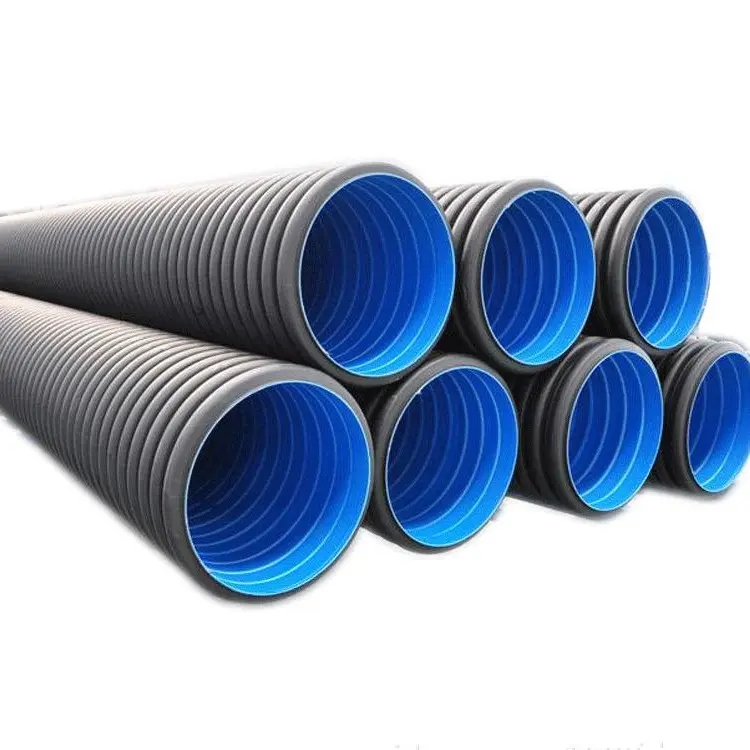
Performance & Engineering
The primary engineering consideration for PVC pipe is its ability to withstand internal pressure. This is dictated by the pipe's dimensions (diameter and wall thickness) and the material's tensile strength and modulus of elasticity. Hydrostatic pressure testing (ASTM D1597) is crucial to verify the pipe's burst pressure. Discount PVC pipe may exhibit reduced burst pressure ratings compared to standard formulations, particularly if lower-quality plasticizers or higher filler content are used. External loads, such as soil loading or traffic loads, also need to be considered. The pipe's ability to resist deflection under external loads is governed by its modulus of elasticity and its burial depth. PVC is susceptible to creep, which is the time-dependent deformation under sustained load. This is particularly important in buried applications where the pipe is subjected to continuous soil pressure. Chemical resistance is a key advantage of PVC. It is generally resistant to acids, alkalis, and salts. However, prolonged exposure to certain solvents (e.g., chlorinated hydrocarbons) can cause swelling and degradation. Temperature plays a significant role; PVC becomes brittle at low temperatures and can soften at high temperatures. Long-term performance is also affected by UV exposure, which can cause embrittlement and discoloration. UV stabilizers are added to PVC formulations to mitigate this effect, but their concentration can be reduced in discount formulations. Thermal expansion and contraction are also important considerations. PVC has a relatively high coefficient of thermal expansion, meaning that its length changes significantly with temperature fluctuations. This needs to be accounted for in the design of piping systems to prevent stress on joints and fittings. Joint integrity is paramount. Solvent welding is the most common method for joining PVC pipes and fittings. Proper solvent cement application and curing are critical to achieving a watertight seal. Mechanical joints (e.g., rubber gasket joints) are also used, particularly in applications where disassembly is required.
Technical Specifications
| Parameter | Schedule 40 (Standard) | Schedule 80 (Heavy Wall) | Discount PVC (Typical) |
|---|---|---|---|
| Material | PVC (Polyvinyl Chloride) | PVC (Polyvinyl Chloride) | PVC (with secondary plasticizers & fillers) |
| Burst Pressure (psi) @ 73°F | 2000 | 3200 | 1600-2400 (dependent on formulation) |
| Tensile Strength (psi) | 6,000 - 7,000 | 7,000 - 8,000 | 5,000 - 6,500 |
| Modulus of Elasticity (psi) | 300,000 - 350,000 | 350,000 - 400,000 | 250,000 - 320,000 |
| Water Absorption (% after 24hrs) | < 0.1 | < 0.1 | 0.1 – 0.3 |
| Hardness (Shore D) | 70-75 | 75-80 | 60-70 |
Failure Mode & Maintenance
Discount PVC pipe is susceptible to several failure modes. Brittle fracture is a common occurrence, particularly at low temperatures or when subjected to impact loads. This is exacerbated by the use of lower-quality plasticizers, which reduce impact strength. Creep rupture can occur over time due to sustained internal pressure, especially in buried applications. Reduced tensile strength and modulus of elasticity in discount PVC accelerate this process. Chemical degradation can result from exposure to incompatible solvents or aggressive chemicals. While PVC is generally resistant, prolonged exposure can cause swelling, cracking, or leaching of plasticizers. UV degradation leads to embrittlement and discoloration, weakening the pipe's structural integrity. Proper UV protection (e.g., painting or using UV-stabilized formulations) is crucial. Joint failure is a frequent issue, often stemming from improper solvent welding techniques (insufficient cement application, incorrect curing time) or the use of incompatible solvent cements. Delamination can occur in multilayer pipes or fittings, particularly if the bonding between layers is compromised. Maintenance primarily involves visual inspections for cracks, leaks, or discoloration. Periodic hydrostatic testing can verify the pipe's continued structural integrity. For buried pipelines, regular leak detection surveys are recommended. When repairs are necessary, solvent welding is the preferred method for joining PVC pipes and fittings. Damaged sections should be cut out and replaced with new pipe and fittings. Ensure proper cleaning and priming before applying solvent cement. Use only solvent cement specifically designed for PVC piping. Avoid using abrasive cleaners or solvents that can damage the PVC material.
Industry FAQ
Q: What is the impact of using secondary plasticizers in discount PVC pipe on its long-term performance?
A: Secondary plasticizers, while reducing cost, generally exhibit lower thermal stability and increased migration rates compared to primary plasticizers like DOP. This leads to embrittlement over time, reducing flexibility and impact resistance. Increased plasticizer migration also means the pipe becomes more brittle and susceptible to cracking, particularly in higher-temperature environments. This accelerates creep and reduces the lifespan of the piping system.
Q: How does the filler content in discount PVC pipe affect its mechanical properties?
A: Increasing filler content (typically calcium carbonate) lowers the cost of the PVC compound but reduces its tensile strength, impact resistance, and modulus of elasticity. While fillers improve stiffness to a degree, they don't compensate for the loss of polymer properties. Higher filler content also increases the risk of porosity and reduces the pipe's overall durability.
Q: Is discount PVC pipe suitable for potable water applications?
A: Suitability depends on the specific formulation and compliance with relevant regulations. Discount PVC pipe may contain plasticizers that are not approved for potable water contact. It is critical to verify that the pipe is certified to NSF/ANSI Standard 61 for potable water use. The potential for leaching of plasticizers into the water supply must be considered.
Q: What are the key considerations when solvent welding discount PVC pipe?
A: Proper surface preparation is paramount. The pipe and fitting surfaces must be clean, dry, and free of contaminants. Use a PVC primer to soften the surfaces and promote adhesion. Apply a generous, even coat of solvent cement and quickly assemble the joint. Hold the joint firmly for the recommended curing time (typically 30-60 seconds) to ensure a complete bond. Ensure the solvent cement is compatible with the specific PVC formulation.
Q: How does the wall thickness (schedule) affect the suitability of PVC pipe for different applications?
A: Schedule 40 is suitable for general-purpose applications with moderate pressure requirements. Schedule 80 provides greater strength and is recommended for higher-pressure applications, industrial processes, and buried pipelines subject to heavy loads. Discount PVC pipe with reduced wall thickness compared to its labeled schedule will have significantly reduced pressure-bearing capacity and is not recommended for critical applications.
Conclusion
Discount PVC pipe offers a cost-effective alternative to standard formulations, but compromises in material quality and manufacturing processes can impact long-term performance and reliability. Understanding these trade-offs is crucial for making informed decisions. Careful consideration must be given to the application's specific requirements, including pressure, temperature, chemical exposure, and external loads. Prioritizing material certifications (NSF/ANSI 61 for potable water) and conducting thorough quality control inspections are essential steps in mitigating potential risks.
Ultimately, a lifecycle cost analysis, factoring in potential maintenance and replacement expenses, should be conducted before selecting discount PVC pipe. While the initial savings may be attractive, the long-term costs associated with premature failure can outweigh these benefits. Selecting a reputable supplier with a proven track record of quality control and adherence to industry standards is also highly recommended. Continuous monitoring and proactive maintenance programs can help extend the lifespan of discount PVC piping systems and minimize the risk of costly failures.
-
DN25 HDPE Compression Fitting-HORON INTERNATIONAL|Reliable Irrigation Solutions
NewsFeb.11,2026
-
hdpe coupling joint product Manufacturing Analysis
News2026-11-18
-
ppr pipe heating time products Performance Analysis
News2026-11-16
-
hdpe pipe sizes factory Performance Analysis
News2026-11-09
-
HDPE Pipe Sizes Service Performance Analysis
News2026-10-26
-
wholesale 15mm ppr pipe Material Science and Performance Analysis
News2026-10-20
-
wholesale pvc pipe price per foot Technical Analysis
News2026-09-21
-
wholesale long pvc pipe Technical Analysis and Manufacturing Specifications
News2026-09-15
-
wholesale plumbing kitchen sink water lines Material Performance
News2026-09-15
-
wholesale hdpe drip irrigation Material Science
News2026-09-15
-
wholesale hot water ppr pipe Performance Analysis
News2026-09-15
-
wholesale ppr plumbing Performance Analysis
News2026-09-15
-
wholesale ppr pipe supplier Performance Analysis
News2026-09-13
-
wholesale 50mm ppr pipe Performance Analysis
News2026-09-13
-
wholesale hdpe drip pipe Performance Analysis
News2026-09-13
-
wholesale hdpe pipe 63mm price Manufacturing Specification and Performance Analysis
News2026-09-13