

Feb . 11, 2026 00:01 Back to list
discount pvc pipe class 7 Performance Analysis
Introduction
Discount PVC Pipe Class 7 refers to a schedule 7 PVC (Polyvinyl Chloride) pipe, designated for pressure applications. Positioned within the broader infrastructure supply chain, it serves as a critical component for potable water distribution, irrigation, drainage, and certain industrial fluid transport systems. This classification defines a specific wall thickness, directly impacting the pipe’s pressure bearing capacity and structural integrity. Unlike higher schedule PVC pipes, Class 7 offers a balance between cost-effectiveness and adequate performance for lower-pressure environments. Its primary performance characteristics revolve around tensile strength, burst pressure, and resistance to chemical degradation. A key pain point in the industry is balancing cost with longevity, particularly in applications where soil conditions or fluid composition accelerate degradation. Effective material selection, proper installation techniques, and a clear understanding of service limitations are paramount to mitigate potential failures and ensure long-term system reliability.
Material Science & Manufacturing
The primary raw material for Discount PVC Pipe Class 7 is Polyvinyl Chloride resin, typically sourced as a white powder. This resin is a thermoplastic polymer synthesized from vinyl chloride monomer (VCM). Key additives include plasticizers (typically phthalates or non-phthalate alternatives) to enhance flexibility, stabilizers (commonly calcium-zinc or lead-based, though lead is increasingly restricted due to environmental concerns) to prevent thermal degradation during processing, and lubricants to facilitate extrusion. The resin’s inherent rigidity is modified by the plasticizer content, impacting the pipe’s flexibility and impact resistance. Manufacturing utilizes primarily the extrusion process. PVC resin and additives are thoroughly mixed and fed into a single-screw extruder. The screw conveys and melts the mixture, which is then forced through a die shaped to the desired pipe dimensions. Critical parameters include die temperature (typically 180-200°C), screw speed, and haul-off speed. Maintaining consistent die temperature is vital to prevent melt fracture and ensure dimensional accuracy. Post-extrusion, pipes are cooled in a water bath, printed with markings denoting size, schedule, and manufacturer, and then cut to specified lengths. Quality control involves hydrostatic pressure testing to verify burst strength and dimensional checks to confirm adherence to ASTM D1785 standards. A frequent manufacturing defect is localized wall thinning, often caused by inconsistent resin flow within the extrusion die.
Performance & Engineering
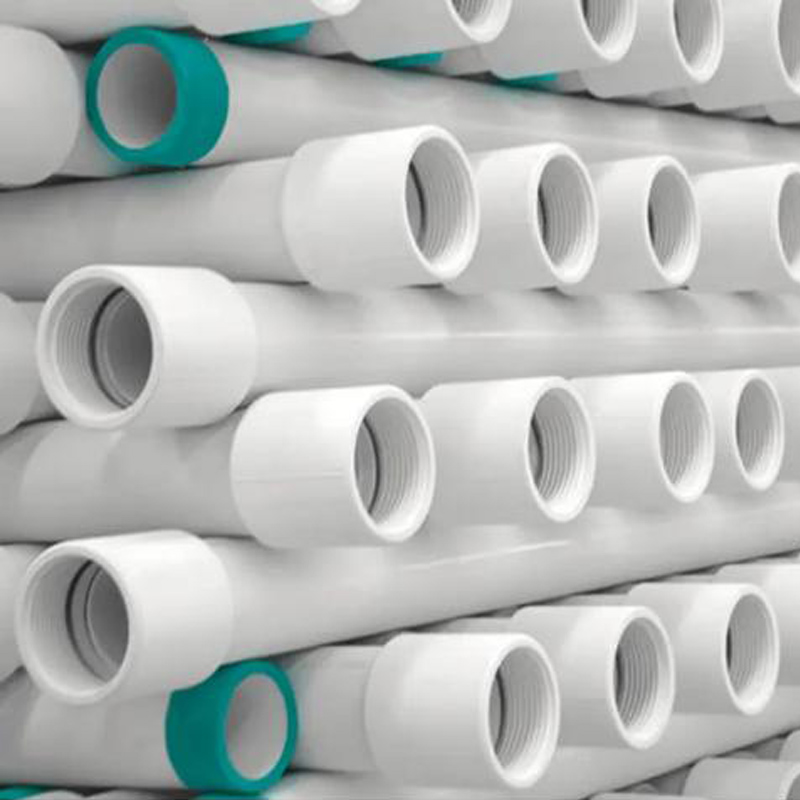
The performance of Discount PVC Pipe Class 7 is fundamentally governed by its ability to withstand internal pressure without failure. This is assessed through hydrostatic burst testing, and the design basis for pressure rating is established based on a significant safety factor. The pipe's wall thickness, defined by Schedule 7, directly correlates with its pressure handling capability. Force analysis considers hoop stress, induced by internal fluid pressure, and longitudinal stress, arising from end loads or thermal expansion/contraction. The pipe's resistance to environmental stress cracking (ESC) is a critical concern, particularly when exposed to prolonged contact with certain solvents or aggressive soils. ESC is a time-dependent failure mode initiated by tensile stress and accelerated by chemical attack. Compliance with standards like NSF/ANSI 61 ensures the pipe material does not leach harmful contaminants into potable water. Installation practices – including proper bedding and backfilling – are crucial to prevent external loads from exceeding the pipe’s structural capacity. Thermal expansion and contraction are also significant considerations. PVC has a relatively high coefficient of thermal expansion, and insufficient allowance for movement can induce stress concentrations at joints, potentially leading to leaks or failures. Jointing methods, such as solvent cementing or gasketed connections, must be performed correctly to ensure a watertight seal and maintain structural integrity. Corrosion resistance is a key advantage of PVC, but long-term exposure to UV radiation can cause surface degradation, reducing mechanical properties.
Technical Specifications
| Parameter | Units | Schedule 7 | Typical Variation |
|---|---|---|---|
| Nominal Pipe Size (NPS) | inches | 0.5 - 12 | Standard Sizes per ASTM D1785 |
| Wall Thickness | inches | 0.065 | ±0.005 |
| Outside Diameter | inches | 0.84 - 12.75 | ±0.01 |
| Pressure Rating | psi | 200 @ 73°F | Dependent on temperature; derating required above 73°F |
| Tensile Strength | psi | 6,000 - 8,000 | Varies with formulation and processing |
| Flexural Modulus | psi | 300,000 - 400,000 | Temperature dependent |
Failure Mode & Maintenance
Discount PVC Pipe Class 7 is susceptible to several failure modes. Environmental Stress Cracking (ESC) is a primary concern, particularly in soils containing aggressive chemicals or when exposed to certain solvents. This manifests as slow crack propagation, often starting at stress concentrators like fittings or dents. UV degradation can cause surface embrittlement and discoloration, reducing impact resistance and long-term strength. Physical damage, such as impact from excavation equipment, can cause cracking or puncture. Improperly cemented joints are a common failure point, leading to leaks. Hydrostatic pressure fluctuations, coupled with water hammer, can induce fatigue cracking over time. Maintenance largely focuses on preventative measures. Regular visual inspections for signs of cracking, discoloration, or joint leaks are essential. Proper bedding and backfilling are critical to prevent external loads. Avoid direct exposure to strong solvents or chemicals. For buried pipelines, cathodic protection is generally not required due to PVC’s non-conductive nature, but consideration should be given to protecting metallic fittings. In the event of a leak, the damaged section should be cut out and replaced with a new section of compatible pipe and fittings, using appropriate solvent cement and following manufacturer's instructions. For ESC related failures, complete system assessment is recommended to identify the source of chemical exposure and implement mitigation strategies.
Industry FAQ
Q: What is the impact of temperature on the pressure rating of Schedule 7 PVC pipe?
A: The pressure rating of Schedule 7 PVC decreases as temperature increases. This is due to the reduction in the material's tensile strength and increased creep at higher temperatures. ASTM D1785 provides derating factors for various temperatures. For instance, the 200 psi rating is typically specified at 73°F (23°C). Above this temperature, the allowable pressure must be reduced proportionally to maintain a safe operating margin.
Q: How does the type of solvent cement affect joint integrity?
A: The selection of the appropriate solvent cement is critical for achieving a watertight and structurally sound joint. Different formulations are designed for specific PVC formulations and operating conditions. Using an incompatible cement can result in a weak bond that is prone to failure. It is crucial to use a cement specifically formulated for PVC and follow the manufacturer's instructions regarding surface preparation, application technique, and curing time.
Q: What are the primary causes of Environmental Stress Cracking (ESC) in PVC pipe?
A: ESC is primarily caused by the combined action of tensile stress and exposure to aggressive chemicals. Common culprits include certain hydrocarbons, chlorinated solvents, and some pesticides. Sustained tensile stress can originate from internal pressure, external loads, or residual stresses from manufacturing. The presence of these chemicals accelerates crack initiation and propagation, leading to eventual failure.
Q: Can Schedule 7 PVC pipe be used for burial applications? What considerations are necessary?
A: Yes, Schedule 7 PVC is commonly used for buried applications, but proper installation is essential. Adequate bedding and backfilling are critical to protect the pipe from external loads and prevent damage during backfilling operations. The soil type should be assessed for corrosivity, and appropriate protective measures may be necessary. Proper trench width and depth should be maintained to ensure adequate support.
Q: How does UV exposure affect the long-term performance of PVC pipe?
A: Prolonged exposure to ultraviolet (UV) radiation can cause surface degradation of PVC, leading to discoloration, embrittlement, and a reduction in impact resistance. While the bulk material properties are not immediately affected, the surface degradation can accelerate other failure mechanisms. UV stabilization additives are often incorporated into PVC formulations to mitigate this effect. For above-ground applications, shielding the pipe from direct sunlight or using UV-resistant coatings is recommended.
Conclusion
Discount PVC Pipe Class 7 presents a cost-effective solution for a range of low-to-moderate pressure fluid conveyance applications. Its performance is fundamentally tied to careful material selection, adherence to established manufacturing standards (ASTM D1785), and proper installation techniques. Understanding the potential failure modes—particularly Environmental Stress Cracking and UV degradation—is crucial for ensuring long-term system reliability.
Future developments in PVC formulations may focus on enhancing ESC resistance, improving UV stability, and incorporating sustainable additives. Continued refinement of extrusion processes will contribute to improved dimensional accuracy and reduced material waste. A proactive approach to maintenance, including regular inspections and timely repairs, will remain essential for maximizing the service life and minimizing the total cost of ownership of PVC piping systems.
-
DN25 HDPE Compression Fitting-HORON INTERNATIONAL|Reliable Irrigation Solutions
NewsFeb.11,2026
-
hdpe coupling joint product Manufacturing Analysis
News2026-11-18
-
ppr pipe heating time products Performance Analysis
News2026-11-16
-
hdpe pipe sizes factory Performance Analysis
News2026-11-09
-
HDPE Pipe Sizes Service Performance Analysis
News2026-10-26
-
wholesale 15mm ppr pipe Material Science and Performance Analysis
News2026-10-20
-
wholesale pvc pipe price per foot Technical Analysis
News2026-09-21
-
wholesale long pvc pipe Technical Analysis and Manufacturing Specifications
News2026-09-15
-
wholesale plumbing kitchen sink water lines Material Performance
News2026-09-15
-
wholesale hdpe drip irrigation Material Science
News2026-09-15
-
wholesale hot water ppr pipe Performance Analysis
News2026-09-15
-
wholesale ppr plumbing Performance Analysis
News2026-09-15
-
wholesale ppr pipe supplier Performance Analysis
News2026-09-13
-
wholesale 50mm ppr pipe Performance Analysis
News2026-09-13
-
wholesale hdpe drip pipe Performance Analysis
News2026-09-13
-
wholesale hdpe pipe 63mm price Manufacturing Specification and Performance Analysis
News2026-09-13