

Feb . 11, 2026 00:01 Back to list
discount pvc irrigation pipe Performance Analysis

Introduction
Polyvinyl chloride (PVC) irrigation pipe represents a foundational component in modern agricultural and landscape water management systems. Often referred to as ‘discount PVC irrigation pipe’ due to its comparatively lower cost compared to alternative materials like metal or high-density polyethylene (HDPE), it is utilized for conveying water to irrigation emitters, sprinklers, and other agricultural equipment. This guide provides a comprehensive technical overview of PVC irrigation pipe, covering material science, manufacturing processes, performance characteristics, potential failure modes, and relevant industry standards. Its position in the industry chain is primarily as a finished product, requiring minimal on-site fabrication beyond cutting and joining with solvent cement or threaded connections. Core performance metrics revolve around pressure rating, flow capacity, UV resistance, and long-term durability under soil and environmental conditions. The widespread adoption of PVC irrigation pipe is driven by its cost-effectiveness, ease of installation, and resistance to corrosion, but challenges exist concerning potential brittleness at low temperatures and vulnerability to physical damage.
Material Science & Manufacturing
Discount PVC irrigation pipe is primarily manufactured from Polyvinyl Chloride, a thermoplastic polymer composed of carbon, hydrogen, and chlorine. The specific formulation often includes plasticizers, stabilizers, and lubricants to enhance flexibility, processing characteristics, and resistance to degradation. Common plasticizers include phthalates or alternative, non-phthalate options depending on regulatory requirements. Stabilizers, such as tin-based compounds or organic stabilizers, protect against thermal and UV degradation. The manufacturing process typically involves extrusion. PVC resin, along with additives, is fed into an extruder where it is heated and homogenized. This molten mixture is then forced through a die of the desired pipe diameter and wall thickness. Cooling is achieved using water jackets, resulting in a rigid PVC pipe. Parameter control during extrusion is critical: temperature profiles must be meticulously maintained to prevent degradation and ensure consistent melt viscosity. Die geometry directly impacts dimensional accuracy and pipe ovality. The molecular weight of the PVC resin influences impact resistance and long-term creep performance. Schedule 40 and Schedule 80 are common designations relating to wall thickness and pressure rating. PVC compounds used for irrigation pipe must exhibit low leachability of additives to prevent contamination of irrigation water.
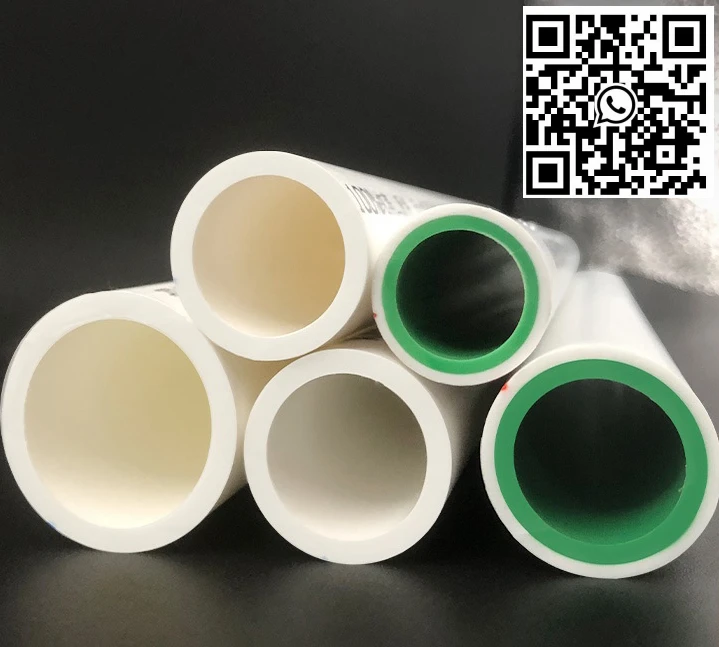
Performance & Engineering
The performance of PVC irrigation pipe is heavily influenced by hydrostatic pressure, tensile strength, and resistance to environmental stressors. Force analysis considers both internal water pressure and external soil loads. Burst pressure testing, conducted according to ASTM D1501, determines the maximum pressure the pipe can withstand before failure. Tensile strength, measured by ASTM D810, indicates the material’s resistance to stretching and breaking under load. Environmental resistance includes UV exposure, which can cause embrittlement and discoloration, and chemical compatibility with fertilizers and pesticides commonly used in agricultural applications. Long-term creep resistance – the tendency of the pipe to slowly deform under sustained pressure – is crucial for maintaining dimensional stability over the lifespan of the irrigation system. Engineering considerations extend to joint design; solvent cementing creates a strong, watertight bond, but proper surface preparation and cement application are essential. Threaded connections offer flexibility but require careful torquing to avoid leaks or damage. Proper pipe support and bedding are vital to prevent stress concentrations and potential cracking due to soil settlement or thermal expansion/contraction. Flow capacity is governed by the Hazen-Williams equation, which accounts for pipe diameter, roughness, and flow rate.
Technical Specifications
| Parameter | Schedule 40 (inches) | Schedule 80 (inches) | ASTM Standard |
|---|---|---|---|
| Nominal Pipe Size (NPS) | 0.5 - 12 | 0.5 - 12 | D1785 |
| Wall Thickness | 0.065 - 0.154 | 0.095 - 0.218 | D1785 |
| Pressure Rating (psi at 73°F) | Up to 300 | Up to 600 | D1501 |
| Tensile Strength (psi) | 6,000 - 8,000 | 6,500 - 8,500 | D810 |
| Impact Resistance (ft-lb) | 5 - 10 | 8 - 15 | D2444 |
| Maximum Use Temperature (°F) | 140 | 140 | D1785 |
Failure Mode & Maintenance
PVC irrigation pipe is susceptible to several failure modes. Brittle fracture, particularly at low temperatures, can occur due to impact or stress concentrations. This is exacerbated by UV degradation, which reduces ductility. Long-term hydrostatic stress can lead to slow crack propagation, especially in areas with poor solvent cement joints or pre-existing flaws. Soil movement and settlement can induce bending stresses exceeding the pipe’s flexural strength, causing cracking. Chemical attack from aggressive fertilizers or pesticides can degrade the PVC matrix, reducing its mechanical properties. Delamination can occur if the PVC compound is improperly formulated or processed. Maintenance involves regular inspection for cracks, leaks, and signs of UV degradation. Joints should be visually inspected for evidence of separation or solvent cement failure. Areas prone to physical damage should be protected with concrete sleeves or other protective measures. If cracks are detected, the affected section should be replaced. Avoid exceeding the maximum pressure rating of the pipe. Winterization procedures, such as draining the system, are crucial in climates prone to freezing temperatures to prevent pipe rupture due to ice expansion. Regular flushing can remove sediment buildup, which can contribute to pressure loss and accelerated wear.
Industry FAQ
Q: What is the impact of soil acidity on the longevity of PVC irrigation pipe?
A: High soil acidity can accelerate the degradation of PVC, particularly if the pipe is directly buried without adequate protective bedding. Acidic soil can leach calcium stabilizers from the PVC compound, leading to increased brittleness and reduced impact resistance. Using a protective bedding material, such as sand or gravel, and selecting a PVC compound with enhanced chemical resistance are recommended mitigation strategies.
Q: How does the color of PVC pipe relate to its UV resistance?
A: Darker colored PVC pipe generally offers better UV resistance than lighter colored pipe. Pigments used to color PVC absorb UV radiation, protecting the polymer matrix from degradation. However, the effectiveness of UV protection depends on the type and concentration of pigment used. UV stabilizers are often added to PVC compounds regardless of color to further enhance resistance.
Q: What are the key differences between Schedule 40 and Schedule 80 PVC pipe, and when should each be used?
A: Schedule 80 PVC pipe has a thicker wall than Schedule 40, resulting in a higher pressure rating and greater impact resistance. Schedule 40 is typically used for lower-pressure irrigation systems, while Schedule 80 is preferred for applications requiring higher pressure or increased durability, such as main distribution lines or areas prone to physical damage.
Q: Can PVC irrigation pipe be used for potable water applications?
A: While some PVC formulations are certified for potable water use, not all PVC irrigation pipe meets these standards. The plasticizers and additives used in some irrigation pipe may not be approved for contact with drinking water. NSF/ANSI Standard 61 certification ensures that a PVC product is safe for potable water applications.
Q: What is the proper procedure for solvent cementing PVC pipe to ensure a watertight seal?
A: Proper solvent cementing involves several steps: 1) Clean and dry both surfaces to be joined. 2) Apply primer to both surfaces to soften the PVC. 3) Apply solvent cement evenly around the outside of the spigot and to the inside of the bell. 4) Immediately insert the spigot fully into the bell with a slight twisting motion. 5) Hold the joint firmly for 30 seconds to allow the cement to set. Ensure proper ventilation during application.
Conclusion
Discount PVC irrigation pipe remains a prevalent material choice in agricultural and landscape irrigation due to its cost-effectiveness and acceptable performance characteristics. However, a thorough understanding of its material properties, manufacturing processes, and potential failure modes is crucial for ensuring long-term system reliability. Careful consideration of environmental factors, soil conditions, and operational pressures is paramount in selecting the appropriate pipe schedule and implementing proper installation and maintenance procedures.
Future trends will likely focus on the development of more sustainable PVC formulations with reduced plasticizer content and enhanced UV resistance. Furthermore, advancements in non-destructive testing methods will allow for more accurate assessment of pipe integrity and prediction of remaining service life, minimizing the risk of unexpected failures and maximizing irrigation system efficiency.
-
DN25 HDPE Compression Fitting-HORON INTERNATIONAL|Reliable Irrigation Solutions
NewsFeb.11,2026
-
hdpe coupling joint product Manufacturing Analysis
News2026-11-18
-
ppr pipe heating time products Performance Analysis
News2026-11-16
-
hdpe pipe sizes factory Performance Analysis
News2026-11-09
-
HDPE Pipe Sizes Service Performance Analysis
News2026-10-26
-
wholesale 15mm ppr pipe Material Science and Performance Analysis
News2026-10-20
-
wholesale pvc pipe price per foot Technical Analysis
News2026-09-21
-
wholesale long pvc pipe Technical Analysis and Manufacturing Specifications
News2026-09-15
-
wholesale plumbing kitchen sink water lines Material Performance
News2026-09-15
-
wholesale hdpe drip irrigation Material Science
News2026-09-15
-
wholesale hot water ppr pipe Performance Analysis
News2026-09-15
-
wholesale ppr plumbing Performance Analysis
News2026-09-15
-
wholesale ppr pipe supplier Performance Analysis
News2026-09-13
-
wholesale 50mm ppr pipe Performance Analysis
News2026-09-13
-
wholesale hdpe drip pipe Performance Analysis
News2026-09-13
-
wholesale hdpe pipe 63mm price Manufacturing Specification and Performance Analysis
News2026-09-13