

Feb . 11, 2026 00:01 Back to list
discount ppr pipes in full Performance Analysis
Introduction
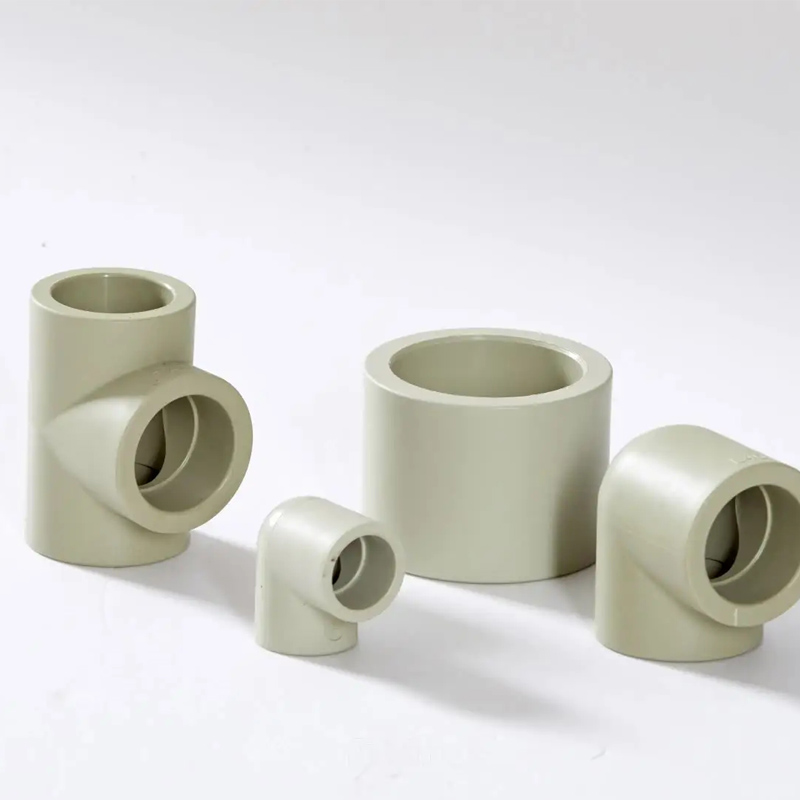
Polypropylene Random (PPR) pipes represent a significant advancement in fluid conveyance systems, widely adopted in potable water supply, heating, and cooling applications. These pipes, categorized as thermoplastic pipes, offer a compelling alternative to traditional metal piping due to their corrosion resistance, lightweight nature, and ease of installation. "Discount PPR pipes in full" refers to a comprehensive range of PPR piping components, including pipes, fittings (elbows, tees, couplings, valves), and accessories offered at competitive pricing, typically indicating bulk sourcing and streamlined manufacturing processes. Their technical position within the industrial chain is as a finished product directly integrated into building infrastructure and industrial process systems. Core performance characteristics center around pressure resistance, temperature tolerance, chemical inertness, and long-term durability, making them a crucial element in modern plumbing and industrial engineering. The rising demand is driven by the need for cost-effective, reliable, and environmentally sound piping solutions, addressing the pain points of corrosion-related failures and high installation costs associated with metallic systems.
Material Science & Manufacturing
PPR pipes are manufactured from polypropylene random copolymer, a thermoplastic polymer exhibiting a unique combination of properties. The base material, polypropylene, is a polyolefin produced through the polymerization of propylene monomers. The "random" designation indicates a random distribution of comonomers (typically ethylene) within the polymer chain, leading to improved impact resistance and flexibility compared to homopolymer polypropylene. Raw material quality is paramount; the polypropylene resin must adhere to stringent purity standards to ensure optimal pipe performance. The manufacturing process typically begins with the extrusion of the polypropylene resin. The resin is melted and forced through a die to form the desired pipe diameter and wall thickness. Key parameters controlled during extrusion include melt temperature (typically 190-230°C), screw speed, and die pressure. These parameters directly impact the pipe's dimensional accuracy, surface finish, and mechanical properties. Subsequent cooling and calibration processes ensure the pipe maintains its shape and dimensions. Hydrostatic testing is a critical quality control step where pipes are subjected to internal pressure to verify their burst resistance and leak-proof integrity. Socket fusion welding is the most common joining method, relying on heating both the pipe and fitting surfaces to achieve a homogenous weld. Electrofusion welding is used for larger diameter pipes, utilizing an electrical current to create the weld. Chemical compatibility considerations are critical; while PPR is highly resistant to many chemicals, prolonged exposure to strong oxidizing agents and certain solvents can lead to degradation.

Performance & Engineering
The performance of PPR pipes is governed by several engineering principles. Hydrostatic pressure testing, as per international standards, verifies the pipe’s ability to withstand internal pressure without failure. Stress analysis, particularly utilizing Finite Element Analysis (FEA), is employed during design to optimize pipe wall thickness and ensure structural integrity under various operating conditions. Temperature-pressure ratings are critical; PPR pipes are typically categorized based on their ability to handle sustained exposure to elevated temperatures. The long-term hydrostatic strength (LTHS) is a key performance indicator, representing the maximum sustained internal pressure the pipe can withstand over a specified service life (typically 50 years). Environmental resistance is another key consideration. PPR exhibits excellent resistance to UV radiation, though prolonged direct sunlight exposure can lead to some surface degradation. Coefficient of linear expansion is a significant engineering property; PPR exhibits a relatively high coefficient of linear expansion compared to metals, requiring careful consideration in system design to accommodate thermal expansion and contraction. This is typically managed through the incorporation of expansion loops and appropriate support systems. Compliance requirements are stringent. PPR pipes used for potable water applications must meet health and safety regulations concerning the leaching of chemicals into the water supply, typically adhering to NSF/ANSI 61 standards. The impact strength of PPR is crucial in resisting external loads and preventing brittle fracture. The ductile nature of the material allows for some deformation before failure, enhancing its robustness.
Technical Specifications
| Parameter | Unit | PN16 (SDR 11.6) | PN20 (SDR 9.1) |
|---|---|---|---|
| Nominal Diameter | mm | 20-125 | 20-125 |
| Wall Thickness | mm | 2.3-10.6 | 2.8-14.0 |
| Burst Pressure | MPa | 2.4 | 3.2 |
| Working Pressure (20°C) | MPa | 1.6 | 2.0 |
| Working Pressure (60°C) | MPa | 1.12 | 1.4 |
| Density | g/cm³ | 0.905-0.925 | 0.905-0.925 |
Failure Mode & Maintenance
Several failure modes can affect PPR pipe systems. Fatigue cracking can occur under cyclic pressure loading, particularly at joints or areas of stress concentration. This is exacerbated by temperature fluctuations and UV exposure. Creep rupture, a time-dependent failure, can occur under sustained high temperatures and internal pressure, leading to slow deformation and eventual failure. Delamination, although less common, can occur if the weld is improperly performed, creating a weak bond between the pipe and fitting. Oxidation, while PPR is generally resistant, can occur over extended periods, particularly in harsh chemical environments, leading to material degradation. Thermal expansion and contraction, if not properly accounted for, can induce stress on joints and fittings, leading to leaks. Maintenance typically involves visual inspections for leaks, cracks, or deformation. Periodic pressure testing can verify system integrity. Proper support systems are crucial to prevent excessive stress on pipes and fittings. For minor leaks at joints, re-fusing the connection, ensuring proper surface preparation and weld parameters, is often effective. Avoid using abrasive cleaners or solvents, as these can damage the pipe material. Regular flushing of the system can prevent sediment buildup and maintain flow rates. If significant corrosion or degradation is observed, replacement of the affected pipe section is recommended.
Industry FAQ
Q: What is the long-term impact of varying water quality (e.g., hard water, chlorine levels) on PPR pipe lifespan?
A: Varying water quality can affect the lifespan of PPR pipes, though generally, PPR exhibits good resistance. Hard water can lead to scaling inside the pipes, reducing flow rate and potentially creating stress points. High chlorine levels, while used for disinfection, can slowly degrade the polymer over extended periods. Regular flushing and the use of appropriate water treatment systems can mitigate these effects. PPR is generally more resistant to chlorine degradation than many other plastic piping materials.
Q: How does the SDR (Standard Dimension Ratio) affect the pressure rating and suitability for different applications?
A: The SDR is a critical parameter. A lower SDR (e.g., SDR 9.1) indicates a thicker wall relative to the diameter, resulting in a higher pressure rating. PPR pipes with lower SDRs are suitable for higher-pressure applications, such as industrial processes or high-rise buildings. Higher SDRs (e.g., SDR 11.6) are suitable for lower-pressure applications, like residential potable water systems. Selecting the correct SDR is crucial for ensuring long-term reliability and safety.
Q: What are the best practices for socket fusion welding to ensure a leak-proof joint?
A: Proper surface preparation is essential. Pipe and fitting surfaces must be clean, dry, and free of contaminants. Use the correct welding tool and temperature settings for the specific pipe diameter and SDR. Ensure adequate heating time and uniform pressure during the welding process. Allow the weld to cool completely before applying pressure to the joint. Regularly calibrate the welding tool to maintain accuracy.
Q: Compared to PEX piping, what are the key advantages and disadvantages of using PPR in residential plumbing systems?
A: PPR generally offers a lower material cost than PEX. It's also easier to visually inspect for damage. However, PEX is more flexible, making it easier to install in tight spaces. PEX also has a lower coefficient of linear expansion, reducing stress on joints. PPR requires precise welding techniques, while PEX can be connected with simpler crimp or expansion fittings. PPR also exhibits slightly lower resistance to chlorine degradation compared to PEX.
Q: What are the implications of using discount PPR pipes versus premium brands in terms of long-term performance and warranty?
A: Discount PPR pipes may utilize lower-grade raw materials or have less stringent quality control processes, potentially impacting long-term performance and durability. Premium brands typically offer more comprehensive warranties and adhere to stricter manufacturing standards. While "discount" doesn't automatically equate to inferior quality, thorough due diligence, including material certifications and independent testing, is crucial when selecting a lower-cost option. A comprehensive lifecycle cost analysis should be performed, factoring in potential maintenance and replacement costs.
Conclusion
PPR piping systems represent a robust and cost-effective solution for a wide range of fluid conveyance applications. The material’s inherent corrosion resistance, coupled with its ease of installation and weldability, provides significant advantages over traditional metallic piping. Understanding the material science principles governing PPR behavior, including its thermal properties and chemical compatibility, is crucial for ensuring long-term system reliability.
The selection of appropriate SDR ratings, coupled with adherence to industry best practices for welding and installation, is paramount. While "discount PPR pipes in full" offer an economically attractive option, careful consideration must be given to material quality and supplier reliability to mitigate potential risks. Ongoing monitoring and preventative maintenance programs are essential for maximizing the service life and minimizing the total cost of ownership of PPR piping systems.
-
DN25 HDPE Compression Fitting-HORON INTERNATIONAL|Reliable Irrigation Solutions
NewsFeb.11,2026
-
hdpe coupling joint product Manufacturing Analysis
News2026-11-18
-
ppr pipe heating time products Performance Analysis
News2026-11-16
-
hdpe pipe sizes factory Performance Analysis
News2026-11-09
-
HDPE Pipe Sizes Service Performance Analysis
News2026-10-26
-
wholesale 15mm ppr pipe Material Science and Performance Analysis
News2026-10-20
-
wholesale pvc pipe price per foot Technical Analysis
News2026-09-21
-
wholesale long pvc pipe Technical Analysis and Manufacturing Specifications
News2026-09-15
-
wholesale plumbing kitchen sink water lines Material Performance
News2026-09-15
-
wholesale hdpe drip irrigation Material Science
News2026-09-15
-
wholesale hot water ppr pipe Performance Analysis
News2026-09-15
-
wholesale ppr plumbing Performance Analysis
News2026-09-15
-
wholesale ppr pipe supplier Performance Analysis
News2026-09-13
-
wholesale 50mm ppr pipe Performance Analysis
News2026-09-13
-
wholesale hdpe drip pipe Performance Analysis
News2026-09-13
-
wholesale hdpe pipe 63mm price Manufacturing Specification and Performance Analysis
News2026-09-13