

Feb . 11, 2026 00:01 Back to list
discount ppr pipe 20mm price Performance Analysis

Introduction
Polypropylene Random (PPR) pipe, specifically the 20mm diameter variant, represents a significant advancement in fluid conveyance systems across diverse applications, including potable water distribution, heating systems, and industrial fluid transport. Its position within the plumbing and piping industry chain is as a direct replacement for traditional metallic piping, offering advantages in corrosion resistance, weight, and ease of installation. This technical guide provides a comprehensive analysis of the material science, manufacturing processes, performance characteristics, potential failure modes, and relevant industry standards associated with discount PPR pipe 20mm price. Core performance indicators include pressure rating (PN), temperature resistance, chemical compatibility, and long-term hydrostatic strength, all of which are critical parameters for engineers and procurement managers. A key industry pain point is ensuring consistent material quality across varied suppliers and maintaining long-term system integrity, particularly in aggressive chemical environments or high-temperature applications. The focus on 'discount' pricing necessitates a rigorous understanding of the trade-offs between cost and performance, ensuring that reduced costs do not compromise essential engineering properties.
Material Science & Manufacturing
PPR pipe is produced from polypropylene random copolymer, a thermoplastic polymer derived from propylene monomer. The 'random' designation indicates the random distribution of comonomers, typically ethylene, within the polymer chain. This randomization disrupts the polymer’s crystallinity, resulting in increased flexibility and impact resistance compared to homopolymer polypropylene. Raw material properties are paramount: the Melt Flow Index (MFI) dictates processability during extrusion, influencing wall thickness uniformity and mechanical properties. Density, typically ranging from 0.905 to 0.92 g/cm³, impacts the pipe’s weight and structural integrity. The manufacturing process predominantly involves extrusion. Polypropylene granules are fed into an extruder, melted, and forced through a circular die to form the pipe. Key parameters include extrusion temperature (190-230°C), die pressure, and cooling rate. Precise control of these parameters is crucial to prevent degradation and ensure dimensional accuracy. Socket fusion welding or electrofusion welding are commonly employed joining methods. Socket fusion involves heating both the pipe and fitting before insertion, creating a homogenous weld. Electrofusion utilizes an electrical current to melt and fuse the materials. Maintaining consistent welding parameters (time, temperature, voltage) is vital to achieve robust, leak-proof joints. Quality control involves hydrostatic testing to verify pressure resistance and dimensional inspection to ensure compliance with standards.
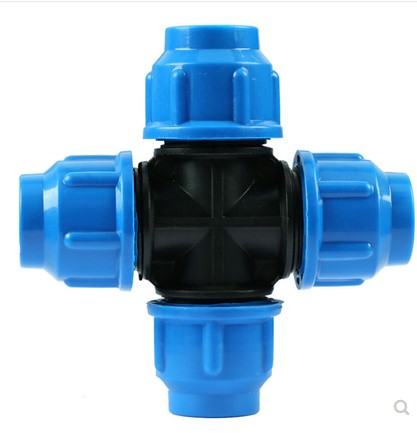
Performance & Engineering
The performance of PPR pipe is dictated by its mechanical and thermal properties. Tensile strength, typically between 20-30 MPa, determines the pipe’s resistance to cracking under load. Elongation at break, generally 200-500%, indicates ductility and impact resistance. The pressure rating (PN) is a critical engineering parameter, defined as the maximum internal pressure the pipe can withstand at a specified temperature (usually 20°C). Common PN ratings for 20mm PPR pipe are PN16 (1.6 MPa) and PN20 (2.0 MPa). Environmental resistance is a key consideration. PPR exhibits excellent resistance to many common chemicals, including acids and alkalis, but prolonged exposure to strong oxidizing agents can cause degradation. Temperature resistance is another critical factor. PPR pipe can typically handle water temperatures up to 95°C for short periods and 70°C for continuous use. Force analysis during installation and operation must account for thermal expansion and contraction. Provision for expansion loops or flexible connectors is essential to prevent stress on the pipe and joints. Compliance requirements vary by region, often adhering to standards such as DIN 8077 (Germany) or EN ISO 15876 (Europe). These standards specify material properties, manufacturing tolerances, testing procedures, and marking requirements. The long-term hydrostatic strength (LTHS) is a crucial performance indicator, representing the pipe’s ability to withstand sustained internal pressure over its service life. Accelerated aging tests are conducted to estimate LTHS.
Technical Specifications
| Parameter | Unit | PN16 (Typical Value) | PN20 (Typical Value) |
|---|---|---|---|
| Nominal Diameter | mm | 20 | 20 |
| Wall Thickness | mm | 2.3 | 2.8 |
| Pressure Rating | MPa | 1.6 | 2.0 |
| Maximum Operating Temperature | °C | 95 (Short Term), 70 (Continuous) | 95 (Short Term), 70 (Continuous) |
| Tensile Strength | MPa | 22 | 25 |
| Elongation at Break | % | 300 | 400 |
Failure Mode & Maintenance
Several failure modes can affect the service life of PPR pipe. Creep rupture, the gradual deformation and eventual failure under sustained pressure, is a common concern, particularly at elevated temperatures. Oxidation, caused by exposure to oxygen at high temperatures, can lead to embrittlement and reduced impact resistance. UV degradation, resulting from prolonged exposure to sunlight, can cause surface cracking and loss of mechanical properties. Hydrostatic fatigue, induced by repeated pressure fluctuations, can lead to crack initiation and propagation. Incorrect installation practices, such as insufficient weld penetration or excessive bending radius, can create stress concentrations and premature failure points. Maintenance primarily focuses on preventative measures. Regular visual inspections can identify signs of oxidation, cracking, or leaks. Avoid exposing PPR pipe to direct sunlight for extended periods. Protect joints from mechanical damage. If leaks are detected, the affected section should be replaced using appropriate welding techniques. Periodic pressure testing can verify system integrity. In cases of suspected creep rupture, a thorough assessment of operating temperatures and pressures is necessary. Avoid using abrasive cleaning agents that can scratch the pipe surface. For systems carrying aggressive fluids, consider using PPR pipe with enhanced chemical resistance.
Industry FAQ
Q: What is the impact of varying water hardness on the lifespan of PPR piping systems?
A: Water hardness, primarily due to calcium and magnesium content, can lead to scale formation within PPR pipes. While PPR itself is resistant to scale adhesion, excessive buildup can reduce the internal diameter, increasing flow resistance and potentially leading to localized pressure drops. More significantly, scale can act as a thermal insulator, increasing the operating temperature of the water and accelerating potential creep rupture. Water softening systems are recommended for areas with high water hardness to mitigate these effects.
Q: How does the manufacturing process influence the long-term hydrostatic strength (LTHS) of PPR pipes?
A: The manufacturing process has a profound impact on LTHS. Variations in extrusion temperature, cooling rate, and polymer molecular weight distribution affect the pipe's crystalline structure and the presence of residual stresses. Inconsistent welding parameters during joint formation introduce localized weaknesses. Rigorous quality control measures, including hydrostatic testing and dimensional inspection, are crucial to ensure consistent LTHS across batches. Proper annealing after extrusion can relieve residual stresses and improve long-term performance.
Q: What is the acceptable bending radius for 20mm PPR pipe to avoid stress cracking?
A: The acceptable bending radius is critical to prevent stress cracking. Generally, the bending radius should be at least 5 times the outer diameter of the pipe. For a 20mm PPR pipe, this translates to a minimum bending radius of 100mm. Sharp bends introduce significant stress concentrations, increasing the risk of failure. Utilizing appropriate bending tools and adhering to manufacturer’s recommendations is essential.
Q: What are the advantages and disadvantages of electrofusion welding versus socket fusion welding for PPR pipes?
A: Electrofusion welding provides a more controlled and consistent weld, resulting in higher weld strength and improved leak resistance, particularly in critical applications. However, it requires specialized equipment and skilled operators. Socket fusion welding is simpler and more cost-effective, but it is more susceptible to operator error and variations in weld quality. Electrofusion is generally preferred for larger diameter pipes and high-pressure applications, while socket fusion is suitable for smaller diameters and less demanding applications.
Q: What are the implications of using dissimilar materials in conjunction with PPR pipe (e.g., metal fittings)?
A: Galvanic corrosion can occur when PPR pipe is connected to dissimilar metals in the presence of an electrolyte (water). This is less of a concern with modern PPR formulations which have reduced electrical conductivity, but proper dielectric unions or insulating fittings should be used to prevent potential corrosion. Thermal expansion differences between PPR and metal can also create stress at the joints, necessitating the use of expansion loops or flexible connectors.
Conclusion
Discount PPR pipe 20mm price represents a cost-effective solution for a wide range of fluid conveyance applications, offering significant advantages over traditional metallic piping in terms of corrosion resistance and ease of installation. However, realizing these benefits requires a thorough understanding of the material science, manufacturing processes, and performance characteristics. Careful consideration must be given to factors such as operating temperature, pressure rating, chemical compatibility, and installation practices.
Maintaining long-term system integrity hinges on proper selection of pipe and fittings, adherence to industry standards, and implementation of preventative maintenance procedures. While the ‘discount’ aspect necessitates cost optimization, compromising on material quality or installation expertise can lead to premature failure and negate any initial savings. A holistic approach, encompassing design, materials, installation, and maintenance, is essential to maximize the service life and reliability of PPR piping systems.
-
DN25 HDPE Compression Fitting-HORON INTERNATIONAL|Reliable Irrigation Solutions
NewsFeb.11,2026
-
hdpe coupling joint product Manufacturing Analysis
News2026-11-18
-
ppr pipe heating time products Performance Analysis
News2026-11-16
-
hdpe pipe sizes factory Performance Analysis
News2026-11-09
-
HDPE Pipe Sizes Service Performance Analysis
News2026-10-26
-
wholesale 15mm ppr pipe Material Science and Performance Analysis
News2026-10-20
-
wholesale pvc pipe price per foot Technical Analysis
News2026-09-21
-
wholesale long pvc pipe Technical Analysis and Manufacturing Specifications
News2026-09-15
-
wholesale plumbing kitchen sink water lines Material Performance
News2026-09-15
-
wholesale hdpe drip irrigation Material Science
News2026-09-15
-
wholesale hot water ppr pipe Performance Analysis
News2026-09-15
-
wholesale ppr plumbing Performance Analysis
News2026-09-15
-
wholesale ppr pipe supplier Performance Analysis
News2026-09-13
-
wholesale 50mm ppr pipe Performance Analysis
News2026-09-13
-
wholesale hdpe drip pipe Performance Analysis
News2026-09-13
-
wholesale hdpe pipe 63mm price Manufacturing Specification and Performance Analysis
News2026-09-13