

Feb . 11, 2026 00:01 Back to list
discount ppr Performance Analysis

Introduction
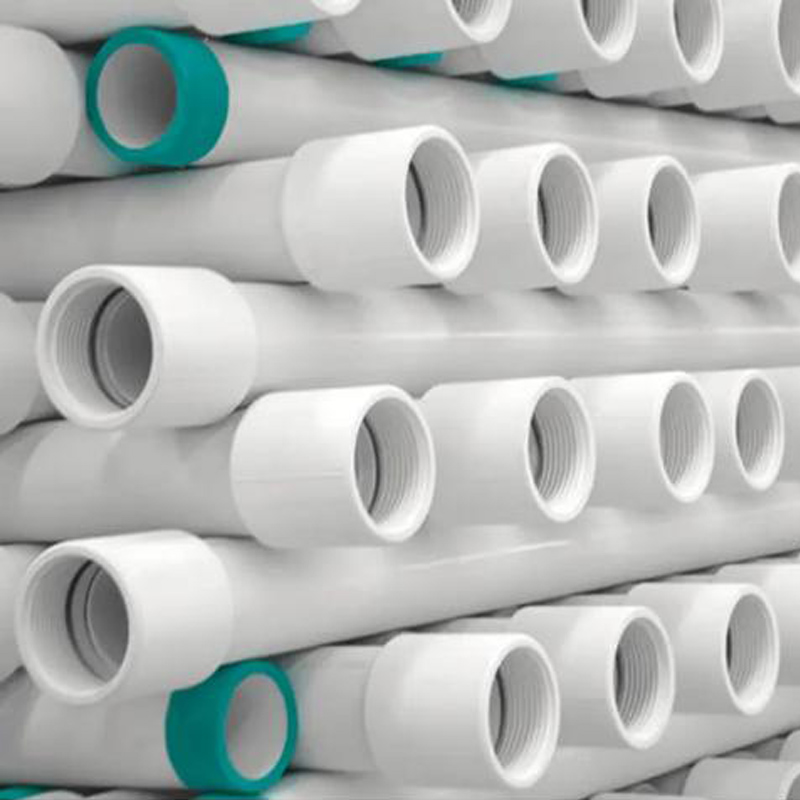
Polypropylene Random Copolymer (PPR) pipe represents a significant advancement in thermoplastic piping systems, primarily utilized for potable water supply, heating systems, and industrial applications. Discount PPR refers to PPR pipe offered at competitive pricing, often without compromising core performance characteristics. PPR occupies a crucial position in the infrastructure supply chain, bridging the gap between raw petrochemical feedstocks and finished building and industrial systems. Its core performance advantages stem from its inherent corrosion resistance, low thermal conductivity, and smooth internal surface, minimizing friction loss and scaling. A primary industry pain point is maintaining consistent weld integrity across varying operator skill levels, impacting long-term system reliability. Discount PPR often requires more stringent quality control measures to ensure these critical parameters are consistently met, addressing concerns regarding potential material variability and manufacturing inconsistencies inherent in price-competitive offerings. Understanding the nuances of PPR material properties, manufacturing processes, and potential failure modes is paramount for informed procurement and successful implementation.
Material Science & Manufacturing
PPR is manufactured through the copolymerization of propylene monomer with ethylene comonomer using a Ziegler-Natta catalyst. The random arrangement of ethylene units within the polypropylene chain disrupts crystallinity, resulting in a material with enhanced flexibility and impact resistance compared to homopolymer polypropylene. Raw material polypropylene is sourced from petrochemical refining, with purity levels critically affecting final product performance. Key physical properties include a density of approximately 0.905 – 0.92 g/cm³, a glass transition temperature (Tg) around -10°C, and a melting point ranging from 130-170°C, depending on the ethylene content. Manufacturing typically involves extrusion processes: the polypropylene granules are melted and forced through a die to form the pipe. Crucial parameters include melt temperature (190-230°C), extrusion speed, and die pressure. Controlled cooling is essential to prevent warping and ensure dimensional accuracy. Socket fusion welding, butt fusion welding, and electrofusion welding are common joining methods. Socket fusion relies on heating both the pipe and fitting, then inserting the pipe into the fitting to create a homogenous weld. Butt fusion is employed for larger diameter pipes, utilizing friction heat generated by rotating the pipe ends against each other. Electrofusion uses an electrically heated sleeve surrounding the pipe and fitting. Chemical compatibility is generally excellent with most potable water and common chemicals; however, prolonged exposure to strong oxidizing agents should be avoided. The presence of UV stabilizers is crucial to prevent degradation when exposed to sunlight.
Performance & Engineering
PPR piping systems are designed to withstand hydrostatic pressure, thermal expansion and contraction, and external loads. Force analysis considers hoop stress (resulting from internal pressure) and longitudinal stress (due to temperature changes). The pressure rating is directly related to pipe wall thickness and material strength; standard ratings range from PN10 (1.0 MPa) to PN25 (2.5 MPa). Thermal expansion coefficients of approximately 0.2 mm/m°C necessitate the incorporation of expansion loops or flexible connectors in long pipeline runs to prevent stress cracking at joints. Environmental resistance is generally high; however, prolonged exposure to temperatures exceeding the maximum operating temperature (typically 95°C) can lead to creep deformation and reduced mechanical properties. Compliance requirements vary by region, but generally adhere to standards such as DIN 8077 and EN ISO 15876. These standards dictate material quality, dimensional tolerances, and testing procedures. Functional implementation requires careful consideration of pipe support intervals, anchoring points, and the selection of appropriate fittings to ensure long-term system integrity. A common engineering challenge is mitigating noise transmission in water distribution systems; the smooth internal surface of PPR helps to reduce friction-induced noise, but additional measures, such as pipe insulation or vibration damping, may be necessary in sensitive applications. The impact resistance, measured by Charpy impact testing, is critical for applications subject to potential mechanical damage.
Technical Specifications
| Parameter | PN10 (SDR 11) | PN16 (SDR 9) | PN20 (SDR 7.3) | PN25 (SDR 6.3) |
|---|---|---|---|---|
| Nominal Diameter (mm) | 20-160 | 20-125 | 20-63 | 20-63 |
| Wall Thickness (mm) | 2.0-11.0 | 2.3-14.0 | 2.9-18.6 | 3.5-22.7 |
| Hydrostatic Pressure (MPa) | 1.0 | 1.6 | 2.0 | 2.5 |
| Maximum Operating Temperature (°C) | 95 | 95 | 95 | 95 |
| Density (g/cm³) | 0.905-0.92 | 0.905-0.92 | 0.905-0.92 | 0.905-0.92 |
| Oxygen Permeability (cm³/m²·day·bar) | < 0.05 | < 0.05 | < 0.05 | < 0.05 |
Failure Mode & Maintenance
Common failure modes in PPR piping systems include: 1) Thermal fatigue cracking: Repeated thermal cycling can induce stress concentrations at weld points, leading to crack initiation and propagation. 2) Hydrostatic burst: Excessive internal pressure, or pressure surges, can exceed the pipe's strength, causing catastrophic failure. 3) Oxidation: Long-term exposure to high temperatures and oxygen can lead to degradation of the polymer, reducing its mechanical properties. 4) UV Degradation: Prolonged exposure to ultraviolet radiation can cause embrittlement and surface cracking. 5) Weld Defects: Improper welding techniques, insufficient heating, or contamination can result in weak or incomplete welds, prone to leakage. Maintenance includes regular visual inspections for leaks, cracks, or discoloration. Pressure testing should be conducted periodically to verify system integrity. For minor leaks at weld points, re-welding may be possible, provided the damaged area is adequately cleaned and prepared. If significant degradation is observed, pipe replacement is recommended. Preventive maintenance includes ensuring adequate pipe support to minimize stress, implementing water hammer arrestors to mitigate pressure surges, and protecting the piping from direct sunlight. Chemical cleaning should be performed cautiously, using cleaning agents compatible with polypropylene. Avoid abrasive cleaning methods that could damage the pipe surface.
Industry FAQ
Q: What are the key differences between PPR-C and PPR-U, and which is more suitable for hot water applications?
A: PPR-C (Polypropylene-Copolymer) and PPR-U (Polypropylene-Homopolymer) differ in their molecular structure and properties. PPR-C, with its random copolymerization of propylene and ethylene, exhibits higher impact resistance and flexibility, making it suitable for a wider range of applications including hot and cold water systems. PPR-U, while more cost-effective, has lower impact strength and is generally recommended for cold water applications only. For hot water, PPR-C is the preferred choice due to its superior temperature resistance and durability.
Q: How does the quality of the welding equipment and operator skill impact the long-term reliability of a PPR system?
A: Welding quality is paramount for PPR system performance. Inconsistent heating temperatures, insufficient welding time, or improper alignment can lead to weak welds prone to failure. High-quality welding equipment with precise temperature control and consistent heating elements is essential. Equally important is operator training and certification to ensure proper welding techniques are consistently applied. Regular equipment calibration and operator refresher courses are recommended.
Q: What are the implications of using “discount PPR” versus branded, certified materials?
A: Discount PPR may potentially compromise on material purity, dimensional accuracy, and quality control processes. This can lead to variations in mechanical properties, increased susceptibility to failure, and potential non-compliance with industry standards. Branded, certified materials undergo rigorous testing and adhere to strict quality control procedures, guaranteeing consistent performance and long-term reliability. While cost is a consideration, the long-term costs associated with failures and repairs can outweigh the initial savings.
Q: How does PPR perform in seismically active zones compared to other piping materials like CPVC or PEX?
A: PPR offers good flexibility and impact resistance, providing inherent advantages in seismically active zones. However, its performance is contingent on proper installation and anchoring. CPVC (Chlorinated Polyvinyl Chloride) generally has higher tensile strength but lower elongation, making it more brittle. PEX (Cross-linked Polyethylene) offers excellent flexibility and impact resistance, often considered superior to PPR in seismic applications, particularly when utilizing flexible connections and earthquake-resistant fittings. Seismic design considerations, including pipe support spacing and flexible couplings, are crucial for all piping materials in these areas.
Q: What methods are available to detect leaks in PPR piping systems without destructive testing?
A: Non-destructive leak detection methods include acoustic leak detection, using sensitive microphones to identify the sound of escaping water, and tracer gas detection, where an inert gas is introduced into the system and detected at leak points using a specialized sensor. Thermal imaging can also be used to identify temperature differences caused by water leaks. Regular visual inspections for water stains or dampness are also effective for identifying obvious leaks, although they may not detect small, slow leaks.
Conclusion
Discount PPR piping represents a cost-effective solution for various fluid conveyance applications, provided a thorough understanding of its material properties, manufacturing processes, and potential failure modes is maintained. Prioritizing consistent weld quality, selecting appropriate materials for specific operating conditions, and implementing proactive maintenance strategies are crucial for ensuring long-term system reliability. Careful consideration of these factors mitigates the risks associated with price-competitive materials and maximizes the benefits of PPR’s inherent corrosion resistance and ease of installation.
Future developments in PPR technology are focused on enhancing material performance through the incorporation of advanced additives, improving welding techniques, and developing smart monitoring systems for early leak detection. As demand for sustainable and efficient infrastructure solutions grows, PPR is poised to play an increasingly important role, particularly when coupled with responsible sourcing and rigorous quality control practices.
-
DN25 HDPE Compression Fitting-HORON INTERNATIONAL|Reliable Irrigation Solutions
NewsFeb.11,2026
-
hdpe coupling joint product Manufacturing Analysis
News2026-11-18
-
ppr pipe heating time products Performance Analysis
News2026-11-16
-
hdpe pipe sizes factory Performance Analysis
News2026-11-09
-
HDPE Pipe Sizes Service Performance Analysis
News2026-10-26
-
wholesale 15mm ppr pipe Material Science and Performance Analysis
News2026-10-20
-
wholesale pvc pipe price per foot Technical Analysis
News2026-09-21
-
wholesale long pvc pipe Technical Analysis and Manufacturing Specifications
News2026-09-15
-
wholesale plumbing kitchen sink water lines Material Performance
News2026-09-15
-
wholesale hdpe drip irrigation Material Science
News2026-09-15
-
wholesale hot water ppr pipe Performance Analysis
News2026-09-15
-
wholesale ppr plumbing Performance Analysis
News2026-09-15
-
wholesale ppr pipe supplier Performance Analysis
News2026-09-13
-
wholesale 50mm ppr pipe Performance Analysis
News2026-09-13
-
wholesale hdpe drip pipe Performance Analysis
News2026-09-13
-
wholesale hdpe pipe 63mm price Manufacturing Specification and Performance Analysis
News2026-09-13