

Feb . 11, 2026 00:01 Back to list
discount ppr ct pipe Performance Analysis
Introduction
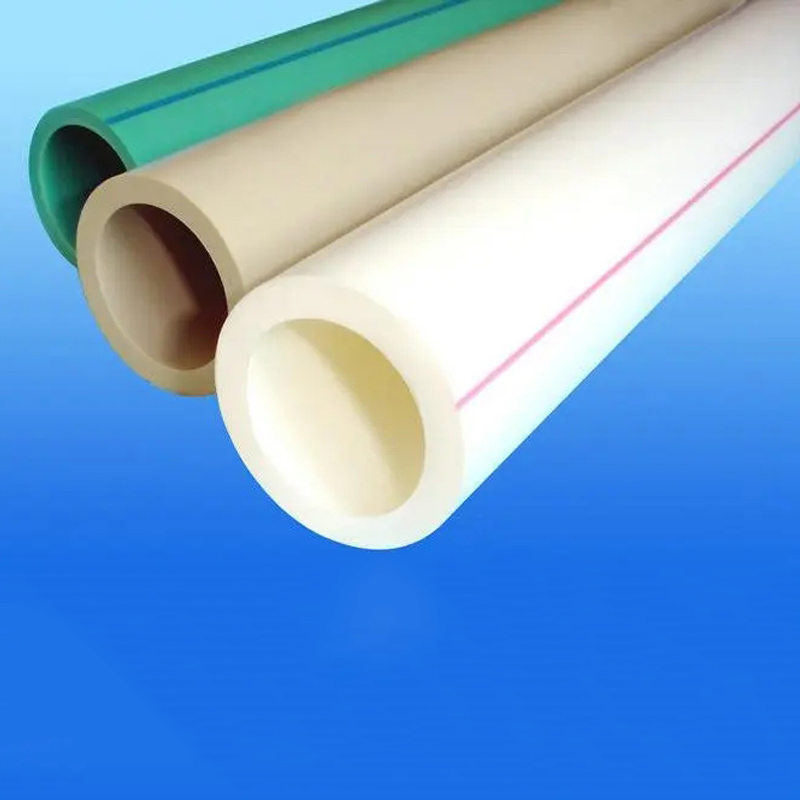
Polypropylene Random Copolymer (PPR) Composite Tube (CT) represents a significant advancement in pressure piping systems, primarily utilized for hot and cold water distribution in residential, commercial, and industrial applications. Distinguished by its cost-effectiveness and ease of installation, PPR CT pipe occupies a critical position within the building materials supply chain. It directly competes with traditional materials like copper, PVC-U, and PEX, offering a balance of performance characteristics and affordability. The 'CT' designation indicates the inclusion of a fiber reinforcement layer, typically glass fiber, enhancing the pipe’s pressure resistance and dimensional stability. Core performance characteristics include high flow capacity due to smooth internal surfaces, resistance to corrosion from common waterborne chemicals, and thermal stability suitable for a wide range of water temperatures. A key industry pain point revolves around maintaining consistent weld integrity in the field, requiring skilled installers and appropriate fusion equipment. Another is public perception regarding long-term creep resistance under sustained pressure and temperature.
Material Science & Manufacturing
The foundation of PPR CT pipe lies in polypropylene random copolymer resin. This material is produced through the polymerization of propylene monomer with ethylene comonomer, resulting in a material with improved flexibility and resistance to thermal deformation compared to homopolymer polypropylene. Raw material selection is critical; variations in molecular weight distribution, melt flow index (MFI), and ethylene content directly impact the finished pipe’s properties. The glass fiber reinforcement layer typically utilizes E-glass fibers, chosen for their cost-effectiveness and tensile strength. The manufacturing process begins with extrusion of the inner and outer polypropylene layers. This is followed by a helical winding or braiding process to apply the glass fiber layer. Finally, a co-extrusion process bonds the layers together. Key parameters controlled during manufacturing include extrusion temperature (typically 190-230°C for PP-R), fiber tension (critical for consistent reinforcement), and cooling rate (influencing crystallinity and dimensional stability). Improper cooling can lead to residual stress and warping. Chemical compatibility is ensured by selecting PP-R grades with high resistance to chlorine and other commonly found water treatment chemicals. Quality control includes rigorous testing of MFI, hydrostatic pressure testing, and visual inspection for defects in the fiber layer.
Performance & Engineering
The performance of PPR CT pipe is governed by several engineering principles. Hoop stress analysis is crucial for determining the pipe’s ability to withstand internal pressure. The glass fiber reinforcement significantly increases the pipe’s resistance to hoop stress and axial stress, reducing the risk of burst failure. Environmental resistance is another key consideration. While PP-R exhibits good resistance to many chemicals, prolonged exposure to UV radiation can cause degradation, leading to embrittlement. Therefore, UV stabilizers are often incorporated into the material formulation. Temperature fluctuations induce thermal expansion and contraction. The coefficient of linear thermal expansion for PP-R is approximately 0.15 mm/m°C. Proper expansion loops and anchors are essential in long pipe runs to accommodate this movement and prevent stress buildup. Compliance requirements vary by region. PPR CT pipe must meet relevant standards for potable water safety, such as NSF/ANSI 61 in North America and DVGW W544 in Europe. The selection of appropriate fitting types (socket fusion, electrofusion) and installation techniques is paramount to ensuring a leak-proof and durable piping system. Fatigue life under cyclical pressure loading is a critical performance parameter, often assessed through accelerated aging tests.
Technical Specifications
| Parameter | Unit | Typical Value (DN20, PN20) | Testing Standard |
|---|---|---|---|
| Nominal Diameter | mm | 20 | ISO 15876 |
| Nominal Pressure | bar | 20 | ISO 15876 |
| Hydrostatic Pressure Test | bar | ≥ 48 | ISO 15876 |
| Burst Pressure | bar | ≥ 80 | ISO 15876 |
| Tensile Strength (PP-R) | MPa | ≥ 25 | ISO 6259 |
| Elongation at Break (PP-R) | % | ≥ 300 | ISO 6259 |
| Coefficient of Linear Thermal Expansion | mm/m°C | 0.15 | ASTM E831 |
Failure Mode & Maintenance
Common failure modes in PPR CT pipe include slow crack growth (SCG) due to residual stress or exposure to aggressive chemicals, particularly chlorinated water. This manifests as small cracks that propagate over time, leading to leaks. Another failure mode is delamination of the fiber reinforcement layer, often caused by improper manufacturing or excessive bending during installation. Oxidation of the PP-R material can occur at elevated temperatures over prolonged periods, reducing its mechanical properties. Fatigue cracking can occur under cyclical pressure loading, particularly near joints or fittings. Joint failure is also a common issue, often resulting from inadequate fusion welding or improper fitting selection. Maintenance primarily involves visual inspection for leaks, cracks, or signs of deformation. Periodic hydrostatic testing can be conducted to verify the integrity of the system. If SCG is suspected, the affected pipe section should be replaced. For minor leaks, repair sleeves or clamps can provide a temporary fix. Preventive maintenance includes proper water treatment to minimize corrosion and scaling, and insulation to protect the pipe from extreme temperatures. The lifespan of PPR CT pipe is typically 50+ years under normal operating conditions, but can be significantly reduced by improper installation, aggressive water chemistry, or exposure to UV radiation.
Industry FAQ
Q: What is the impact of water hardness on the lifespan of PPR CT pipe?
A: High water hardness can lead to the formation of scale deposits on the inner surface of the pipe, reducing flow capacity and potentially creating localized stress concentrations that can contribute to fatigue cracking. While PP-R itself is resistant to scaling, the build-up can impact system performance and lifespan. Water softening is recommended in areas with very hard water.
Q: How does the glass fiber reinforcement affect the long-term creep resistance of the pipe?
A: The glass fiber layer significantly improves creep resistance compared to pure PP-R pipe. Creep is the tendency of a material to deform permanently under sustained stress. The fiber reinforcement provides additional stiffness and prevents excessive deformation over time, particularly at elevated temperatures and pressures.
Q: What are the critical parameters to control during socket fusion welding?
A: Critical parameters include heater temperature, heating time, insertion depth, and cooling time. Incorrect heater temperature can lead to insufficient or excessive melting, resulting in weak joints. Improper heating or cooling times can cause stress concentrations and premature failure. Consistent application of these parameters is crucial for weld integrity.
Q: What is the recommended maximum operating temperature for PPR CT pipe?
A: The recommended maximum continuous operating temperature for PPR CT pipe is typically 70°C (158°F). Short-term temperature excursions up to 95°C (203°F) may be acceptable, but prolonged exposure to higher temperatures can lead to degradation of the material and reduced performance.
Q: How does the pipe compare to PEX in terms of oxygen permeability?
A: PPR CT pipe exhibits significantly lower oxygen permeability than PEX (Cross-linked Polyethylene). This is a critical consideration for closed heating systems, as oxygen ingress can promote corrosion of metal components. PPR CT pipe is often preferred in these applications due to its superior barrier properties.
Conclusion
Discount PPR CT pipe represents a compelling alternative to traditional piping materials, offering a balance of cost-effectiveness, ease of installation, and reliable performance. The material's inherent resistance to corrosion, combined with the enhanced strength and dimensional stability provided by the glass fiber reinforcement, makes it suitable for a wide range of potable water and heating applications. However, successful implementation requires diligent attention to manufacturing quality control, proper installation techniques, and adherence to relevant industry standards.
Future developments in PPR CT pipe technology may focus on incorporating advanced materials, such as nano-fillers, to further enhance mechanical properties and barrier performance. Improvements in welding techniques and fitting designs will also contribute to increased reliability and longevity. Ongoing research into long-term creep behavior and resistance to aggressive water chemistries will be essential for optimizing the design and application of these piping systems.
-
DN25 HDPE Compression Fitting-HORON INTERNATIONAL|Reliable Irrigation Solutions
NewsFeb.11,2026
-
hdpe coupling joint product Manufacturing Analysis
News2026-11-18
-
ppr pipe heating time products Performance Analysis
News2026-11-16
-
hdpe pipe sizes factory Performance Analysis
News2026-11-09
-
HDPE Pipe Sizes Service Performance Analysis
News2026-10-26
-
wholesale 15mm ppr pipe Material Science and Performance Analysis
News2026-10-20
-
wholesale pvc pipe price per foot Technical Analysis
News2026-09-21
-
wholesale long pvc pipe Technical Analysis and Manufacturing Specifications
News2026-09-15
-
wholesale plumbing kitchen sink water lines Material Performance
News2026-09-15
-
wholesale hdpe drip irrigation Material Science
News2026-09-15
-
wholesale hot water ppr pipe Performance Analysis
News2026-09-15
-
wholesale ppr plumbing Performance Analysis
News2026-09-15
-
wholesale ppr pipe supplier Performance Analysis
News2026-09-13
-
wholesale 50mm ppr pipe Performance Analysis
News2026-09-13
-
wholesale hdpe drip pipe Performance Analysis
News2026-09-13
-
wholesale hdpe pipe 63mm price Manufacturing Specification and Performance Analysis
News2026-09-13