

Feb . 11, 2026 00:01 Back to list
discount pipe hdpe size Performance Analysis
Introduction
High-Density Polyethylene (HDPE) piping represents a substantial segment within the broader thermoplastic piping industry. Discount pipe HDPE size refers to a range of polyethylene pipes offered at competitive pricing, typically categorized by nominal diameter and pressure rating (Schedule 40, Schedule 80, etc.). These pipes are fundamentally utilized in diverse applications including water distribution, gas transmission, irrigation, drainage, and industrial fluid handling. Their position in the industry chain is as a crucial component replacing traditional materials like ductile iron, steel, and PVC, offering advantages in corrosion resistance, flexibility, and ease of installation. Core performance characteristics center around maintaining pressure integrity, resisting environmental stress cracking (ESCR), and exhibiting long-term durability, making them a key infrastructural element. The proliferation of “discount” pricing reflects economies of scale in manufacturing and increased competition amongst producers, demanding a thorough understanding of material grades and manufacturing quality to ensure performance consistency.
Material Science & Manufacturing
HDPE pipe production begins with polyethylene resin, typically derived from the polymerization of ethylene. The resin's density – crucial for defining 'high-density' – ranges from 0.93 to 0.97 g/cm³. Higher density translates to increased tensile strength and rigidity. Raw material selection dictates the final pipe’s performance; PE3408, PE3608, and PE4710 are common grades, each with varying molecular weight distribution and melt flow index. Manufacturing predominantly employs extrusion processes. The resin is melted and forced through a die, forming a continuous tube. Key parameters include die temperature (typically 180-210°C), extrusion speed, and cooling rate. Improper cooling can lead to residual stresses and dimensional instability. Butt fusion, electrofusion, and socket fusion are the primary joining methods. Butt fusion, requiring precise temperature and pressure control (typically 130-140°C and 0.4-0.6 MPa), creates homogenous welds, vital for maintaining pressure ratings. Electrofusion employs resistive heating, offering greater control but potentially introducing localized stress concentrations. Quality control necessitates rigorous testing of melt flow index, density, and oxidation induction time to verify resin integrity. Furthermore, hydrostatic testing (applying internal pressure to failure) validates pipe burst pressure and identifies manufacturing defects.
Performance & Engineering
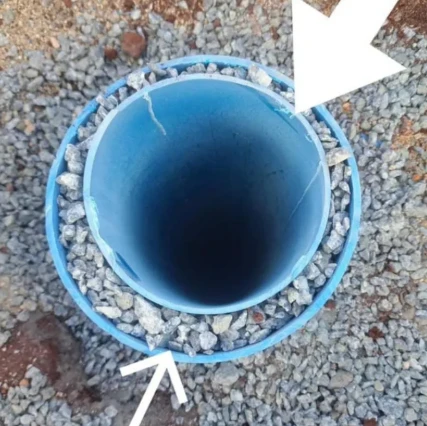
The mechanical performance of HDPE pipe is significantly influenced by its structural integrity under internal and external pressures. Force analysis considers hoop stress (generated by internal pressure) and longitudinal stress (due to end loads and thermal expansion/contraction). The Barlow’s formula (S = P D / 2t, where S is hoop stress, P is internal pressure, D is outer diameter, and t is wall thickness) is fundamental to determining appropriate wall thickness for a given application. Environmental resistance is paramount. HDPE exhibits excellent chemical resistance to acids, bases, and solvents, but susceptibility to UV degradation necessitates the addition of carbon black or UV stabilizers. Long-term hydrostatic strength (LTHS) is a critical parameter defined by ISO 1167, quantifying the pipe’s ability to withstand sustained internal pressure over 50 years. Creep rupture, a time-dependent failure mechanism, must be considered, particularly at elevated temperatures. Compliance requirements vary by region and application. For potable water systems, NSF/ANSI 61 certification verifies the material’s non-toxic nature. Gas transmission pipelines require compliance with DOT regulations (in the US) or equivalent standards in other countries. Proper bedding and backfill are crucial to prevent external stresses and ensure long-term performance; granular materials offering uniform support are preferred.
Technical Specifications
| Nominal Pipe Size (inches) | Pressure Rating (PSI) | Wall Thickness (inches) | Hydrostatic Design Stress (HDS) (psi) |
|---|---|---|---|
| 1/2 | 100 | 0.062 | 1600 |
| 3/4 | 100 | 0.083 | 1600 |
| 1 | 100 | 0.093 | 1600 |
| 2 | 100 | 0.154 | 1600 |
| 4 | 100 | 0.218 | 1600 |
| 6 | 100 | 0.280 | 1600 |
Failure Mode & Maintenance
HDPE pipe failures typically stem from several mechanisms. Slow Crack Growth (SCG), also known as Environmental Stress Cracking (ESCR), occurs when sustained tensile stress combines with aggressive environmental factors. This is particularly prevalent in areas with poor bedding or where pipes are subjected to external loads. Fatigue cracking can occur under cyclical pressure fluctuations, especially in pump stations or areas with water hammer. Oxidation, accelerated by UV exposure and high temperatures, leads to embrittlement and loss of mechanical properties. Joint failures are common, often resulting from improper fusion parameters (insufficient heat, pressure, or cooling time) or contamination during the fusion process. Delamination can occur in multilayer pipes if adhesion between layers is compromised. Preventative maintenance includes regular visual inspections for cracks, deformation, or joint leaks. Pressure testing can identify subtle leaks before they escalate. Proper bedding and backfill are crucial for mitigating SCG. For gas lines, periodic leak surveys using electronic detectors are essential. In cases of SCG or oxidation-induced failures, pipe replacement is typically the only viable solution. For joint failures, re-fusion or mechanical coupling may be possible, depending on the extent of the damage.
Industry FAQ
Q: What is the impact of temperature on the long-term performance of HDPE pipe?
A: Elevated temperatures significantly reduce the long-term hydrostatic strength (LTHS) of HDPE. Higher temperatures accelerate creep rupture and oxidative degradation. LTHS is typically calculated based on a reference temperature (e.g., 23°C), and derating factors are applied for higher operating temperatures. Therefore, careful consideration of the maximum operating temperature is crucial when selecting HDPE pipe for a specific application.
Q: How does the quality of the HDPE resin affect the overall pipe performance?
A: Resin quality is paramount. Factors like molecular weight distribution, melt flow index, and oxidation induction time directly influence the pipe’s mechanical properties and resistance to ESCR. Using virgin resin is generally preferred over recycled material, particularly for critical applications. Consistent resin quality, verified through rigorous testing, is essential for ensuring predictable pipe performance.
Q: What are the key considerations when selecting a joining method (butt fusion, electrofusion, socket fusion)?
A: Butt fusion is generally preferred for larger diameter pipes due to its homogenous weld quality and lower cost. However, it requires skilled operators and precise control of temperature and pressure. Electrofusion provides greater control but can introduce localized stress concentrations. Socket fusion is suitable for smaller diameters and simpler applications. The choice depends on pipe size, application requirements, and operator skill level.
Q: What is the role of UV stabilizers in HDPE pipe and how effective are they?
A: UV stabilizers, typically carbon black, are added to HDPE to protect it from degradation caused by ultraviolet radiation. Carbon black absorbs UV energy, preventing it from breaking down the polymer chains. The effectiveness of UV stabilization depends on the concentration of carbon black and the duration of exposure. While effective, UV stabilization does not eliminate the need for proper burial or shielding from prolonged sunlight exposure.
Q: How does improper bedding and backfill contribute to HDPE pipe failures?
A: Improper bedding and backfill are major contributors to SCG. Sharp rocks or uneven surfaces can create localized stresses on the pipe wall, increasing susceptibility to cracking. Inadequate compaction can lead to differential settlement and pipe distortion. Corrosive materials in the backfill can also accelerate degradation. Proper bedding and backfill, using granular materials and ensuring uniform support, are crucial for mitigating these risks.
Conclusion
Discount pipe HDPE size offers a cost-effective solution for a multitude of fluid conveyance applications, provided a comprehensive understanding of material science, manufacturing processes, and performance characteristics is maintained. The advantages of corrosion resistance, flexibility, and ease of installation are compelling, but realizing these benefits requires meticulous attention to detail throughout the entire lifecycle, from resin selection and pipe extrusion to installation procedures and ongoing maintenance.
Ultimately, the long-term viability of HDPE piping systems relies on adhering to established industry standards, implementing robust quality control measures, and prioritizing preventative maintenance. Continued advancements in HDPE resin technology, coupled with improved installation techniques, will further enhance the durability and reliability of these systems, solidifying their role as a critical component of modern infrastructure.
-
DN25 HDPE Compression Fitting-HORON INTERNATIONAL|Reliable Irrigation Solutions
NewsFeb.11,2026
-
hdpe coupling joint product Manufacturing Analysis
News2026-11-18
-
ppr pipe heating time products Performance Analysis
News2026-11-16
-
hdpe pipe sizes factory Performance Analysis
News2026-11-09
-
HDPE Pipe Sizes Service Performance Analysis
News2026-10-26
-
wholesale 15mm ppr pipe Material Science and Performance Analysis
News2026-10-20
-
wholesale pvc pipe price per foot Technical Analysis
News2026-09-21
-
wholesale long pvc pipe Technical Analysis and Manufacturing Specifications
News2026-09-15
-
wholesale plumbing kitchen sink water lines Material Performance
News2026-09-15
-
wholesale hdpe drip irrigation Material Science
News2026-09-15
-
wholesale hot water ppr pipe Performance Analysis
News2026-09-15
-
wholesale ppr plumbing Performance Analysis
News2026-09-15
-
wholesale ppr pipe supplier Performance Analysis
News2026-09-13
-
wholesale 50mm ppr pipe Performance Analysis
News2026-09-13
-
wholesale hdpe drip pipe Performance Analysis
News2026-09-13
-
wholesale hdpe pipe 63mm price Manufacturing Specification and Performance Analysis
News2026-09-13