

Feb . 11, 2026 00:01 Back to list
discount perforated land drainage pipe Performance Engineering
Introduction
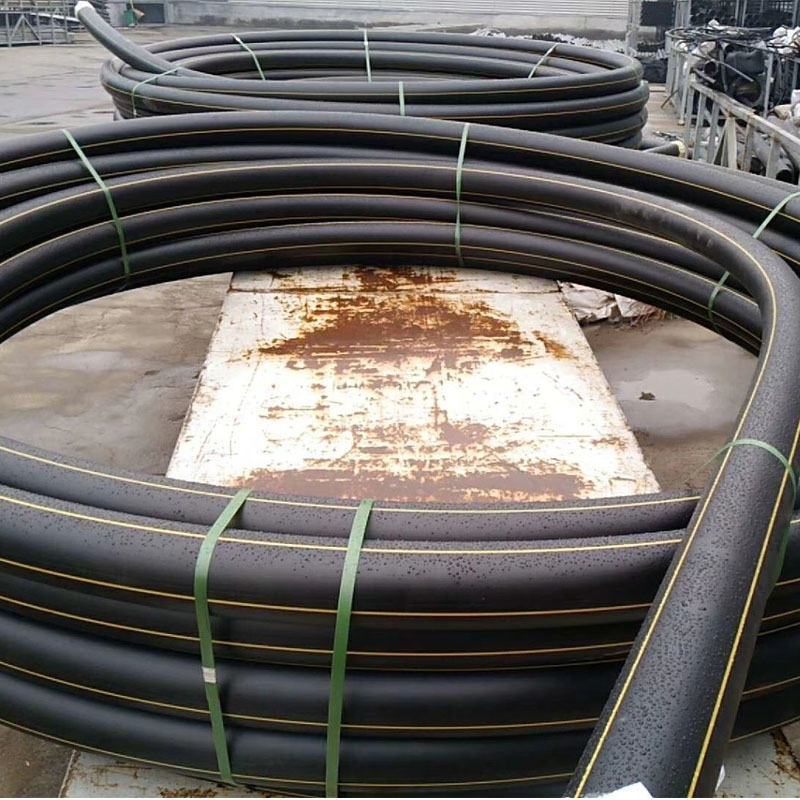
Discount perforated land drainage pipe is a corrugated, flexible pipe system utilized for subsurface drainage, primarily in agricultural, residential, and civil engineering applications. Positioned within the broader landscape drainage infrastructure, its function is to remove excess groundwater and surface water runoff, preventing waterlogging and soil saturation. These pipes are typically manufactured from polyethylene high-density (HDPE) or polypropylene (PP), distinguished by perforations strategically placed along the pipe body to facilitate water ingress. Core performance characteristics are defined by flow capacity, structural integrity under load, and resistance to environmental degradation. The ‘discount’ designation typically refers to cost-effective manufacturing processes and material selection, targeting price-sensitive markets without necessarily compromising fundamental functionality, although a careful consideration of material grade and perforation quality is critical. A primary industry pain point centers around balancing cost-effectiveness with long-term durability and preventing premature failure due to crushing, root intrusion, or siltation.
Material Science & Manufacturing
The predominant raw material for discount perforated land drainage pipe is HDPE or PP. HDPE offers excellent chemical resistance, flexibility, and a high strength-to-density ratio, while PP provides greater rigidity and temperature resistance. The choice between the two often depends on the intended application and regional climate. Manufacturing typically involves extrusion. Raw resin pellets are fed into an extruder, melted, and forced through a die to create the corrugated pipe profile. Critical parameters during extrusion include melt temperature (typically 180-220°C for HDPE and 230-260°C for PP), die pressure, and cooling rate. Proper control of these parameters is essential to ensure consistent wall thickness and dimensional accuracy. Perforations are created using a drilling or punching process immediately following extrusion while the pipe is still pliable. The size, number, and pattern of perforations significantly influence the pipe's flow capacity and susceptibility to siltation. Laser cutting is also utilized for higher precision and reduced burring, but typically increases manufacturing cost. Quality control involves hydrostatic pressure testing to verify structural integrity, dimensional checks to ensure compliance with standards (see footer), and visual inspection for defects in the perforations. Material additives such as UV stabilizers are often incorporated to enhance resistance to sunlight degradation, particularly important for exposed sections of the drainage system. The manufacturing process must adhere to strict tolerances to prevent pipe deformation or collapse under backfill loads.
Performance & Engineering
The performance of perforated land drainage pipe is fundamentally governed by hydraulic principles and structural mechanics. Flow capacity is directly related to the pipe diameter, the number and size of perforations, and the hydraulic gradient. Darcy-Weisbach equation and Manning’s equation are commonly used to calculate flow rates, considering factors such as pipe roughness and water viscosity. Engineering considerations include the soil permeability surrounding the pipe, as this impacts the rate at which water can enter the drainage system. Backfill material selection is crucial; gravel or crushed stone provides optimal permeability and prevents siltation. The pipe's structural integrity must withstand the combined loads of soil overburden, surface traffic (if applicable), and hydrostatic pressure. The ring stiffness (measured in psi) is a key parameter indicating the pipe’s resistance to flattening. Discount pipes may have lower ring stiffness values than premium grades, necessitating careful consideration of burial depth and load distribution. Compliance with local building codes and environmental regulations is paramount. These regulations often specify minimum pipe diameter, perforation spacing, and backfill requirements. Furthermore, the system must be designed to prevent differential settlement, which can lead to pipe cracking or joint separation. Geotextile fabric is frequently used to wrap the pipe and backfill to prevent soil intrusion and maintain long-term permeability.
Technical Specifications
| Parameter | HDPE (Discount Grade) | HDPE (Standard Grade) | PP |
|---|---|---|---|
| Material | High-Density Polyethylene (HDPE) | High-Density Polyethylene (HDPE) | Polypropylene (PP) |
| Nominal Diameter (inches) | 4 – 12 | 4 – 24 | 4 – 12 |
| Ring Stiffness (psi) | 18 – 36 | 48 – 72 | 55 – 85 |
| Perforation Diameter (inches) | 0.25 – 0.5 | 0.25 – 0.75 | 0.25 – 0.5 |
| Perforation Spacing (inches) | 6 – 12 | 6 – 12 | 6 – 12 |
| Wall Thickness (mm) | 2.0 – 3.5 | 3.5 – 5.0 | 3.0 – 4.5 |
Failure Mode & Maintenance
Common failure modes in discount perforated land drainage pipe include crushing due to excessive backfill compaction or heavy loads, root intrusion blocking perforations, siltation reducing flow capacity, and UV degradation causing material embrittlement. Fatigue cracking can occur over time due to repeated loading and unloading cycles, particularly in areas with unstable soil conditions. Delamination, though less common, can result from manufacturing defects or prolonged exposure to aggressive chemicals. Oxidation, particularly in PP pipes, can occur at elevated temperatures or in the presence of oxidizing agents. Maintenance involves periodic inspection of the drainage system, typically through visual examination of outlet points for reduced flow or blockages. Root intrusion can be addressed through chemical root killers or mechanical removal. Siltation can be mitigated by flushing the system with high-pressure water or using silt fences during construction. Preventative maintenance includes ensuring proper backfill compaction and avoiding the use of corrosive materials near the drainage pipe. Early detection of cracks or deformations is crucial to prevent catastrophic failure. Replacement of damaged sections should be performed promptly, using materials that meet or exceed the original specifications. Furthermore, regular monitoring of groundwater levels can provide valuable insights into the system’s performance and identify potential issues before they escalate.
Industry FAQ
Q: What is the impact of using a lower ring stiffness pipe in a high-traffic area?
A: Utilizing a lower ring stiffness pipe in a high-traffic area significantly increases the risk of pipe deformation and eventual collapse. The reduced load-bearing capacity makes it susceptible to flattening under the weight of vehicles or heavy equipment. This can lead to restricted flow, blockage, and costly repairs. It is crucial to use a pipe with a sufficiently high ring stiffness rating or implement additional load distribution measures, such as a concrete slab or reinforced backfill.
Q: How does perforation size and spacing affect siltation?
A: Smaller perforations are less prone to siltation but can restrict flow rate. Wider spacing reduces the overall surface area for water ingress, potentially leading to localized water buildup. An optimal balance must be achieved based on the soil type and anticipated sediment load. Geotextile fabric wrapped around the pipe is critical for mitigating siltation regardless of perforation design.
Q: What are the long-term effects of UV exposure on HDPE and PP drainage pipes?
A: Prolonged UV exposure causes both HDPE and PP to become brittle and lose their impact resistance. HDPE is inherently more UV-resistant than PP, but both materials benefit from the incorporation of UV stabilizers during manufacturing. For exposed sections of pipe, consider using UV-resistant coatings or burying the pipe deeper to minimize sunlight exposure.
Q: What type of backfill material is most effective for preventing siltation and maintaining flow capacity?
A: Clean, washed gravel or crushed stone with a uniform particle size distribution is the most effective backfill material. The material should be free of fines (silt and clay) and have good permeability to allow water to flow freely towards the perforations. Geotextile fabric should be used to separate the backfill material from the surrounding soil, preventing migration of fines and maintaining long-term permeability.
Q: Are there specific codes or standards governing the installation depth of perforated drainage pipe?
A: Installation depth is typically governed by local building codes and engineering design specifications. Generally, the minimum burial depth is determined by the expected traffic load and frost line. Deeper burial provides greater protection from damage and freezing, but can also increase installation costs. Consultation with a qualified engineer is recommended to ensure compliance with all applicable regulations.
Conclusion
Discount perforated land drainage pipe provides a cost-effective solution for subsurface water management, but requires careful consideration of material properties, manufacturing quality, and installation practices. While offering competitive pricing, potential drawbacks related to lower ring stiffness and UV resistance necessitate a thorough assessment of site-specific conditions and anticipated loads. Optimizing perforation design, selecting appropriate backfill materials, and adhering to relevant industry standards are crucial for ensuring long-term performance and minimizing the risk of premature failure.
Future development in this sector will likely focus on enhancing material formulations for increased durability and UV resistance, improving manufacturing processes for tighter tolerances and reduced defects, and incorporating smart technologies for remote monitoring and predictive maintenance. A growing emphasis on sustainable drainage systems may also drive demand for more environmentally friendly pipe materials and installation techniques. Continued research into optimized perforation patterns and geotextile materials will further enhance the efficiency and longevity of these vital drainage infrastructure components.
-
DN25 HDPE Compression Fitting-HORON INTERNATIONAL|Reliable Irrigation Solutions
NewsFeb.11,2026
-
hdpe coupling joint product Manufacturing Analysis
News2026-11-18
-
ppr pipe heating time products Performance Analysis
News2026-11-16
-
hdpe pipe sizes factory Performance Analysis
News2026-11-09
-
HDPE Pipe Sizes Service Performance Analysis
News2026-10-26
-
wholesale 15mm ppr pipe Material Science and Performance Analysis
News2026-10-20
-
wholesale pvc pipe price per foot Technical Analysis
News2026-09-21
-
wholesale long pvc pipe Technical Analysis and Manufacturing Specifications
News2026-09-15
-
wholesale plumbing kitchen sink water lines Material Performance
News2026-09-15
-
wholesale hdpe drip irrigation Material Science
News2026-09-15
-
wholesale hot water ppr pipe Performance Analysis
News2026-09-15
-
wholesale ppr plumbing Performance Analysis
News2026-09-15
-
wholesale ppr pipe supplier Performance Analysis
News2026-09-13
-
wholesale 50mm ppr pipe Performance Analysis
News2026-09-13
-
wholesale hdpe drip pipe Performance Analysis
News2026-09-13
-
wholesale hdpe pipe 63mm price Manufacturing Specification and Performance Analysis
News2026-09-13