

Feb . 11, 2026 00:01 Back to list
discount irrigation hdpe pipe Performance Analysis
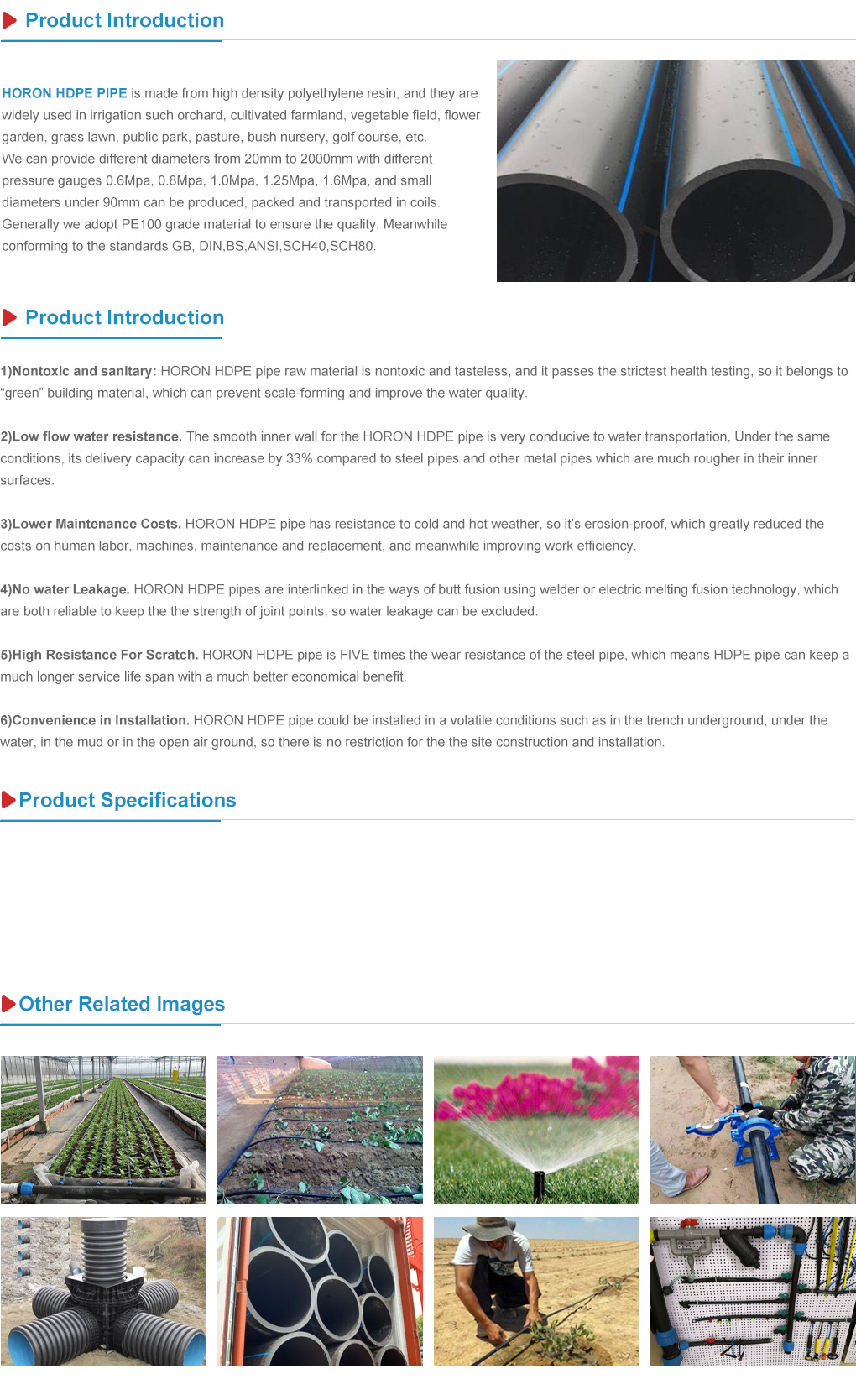
Introduction
High-Density Polyethylene (HDPE) pipe for irrigation represents a significant advancement in agricultural water conveyance systems. Positioned as a cost-effective alternative to traditional materials like PVC, metal, and concrete, HDPE irrigation pipe occupies a crucial niche in the broader water management infrastructure. Its core performance characteristics – including flexibility, durability, and resistance to chemical degradation – address critical pain points within the agricultural sector concerning water delivery efficiency and long-term operational costs. This guide provides an in-depth technical overview of discount irrigation HDPE pipe, covering its material science, manufacturing processes, performance parameters, failure modes, and relevant industry standards. The focus is on providing actionable intelligence for procurement managers, engineers, and agricultural specialists involved in irrigation system design, installation, and maintenance. The ‘discount’ aspect, while a market descriptor, necessitates stringent quality control to maintain performance equivalence with standard-grade HDPE, a point thoroughly addressed herein.
Material Science & Manufacturing
HDPE irrigation pipe is manufactured from polyethylene resin, typically utilizing high-density polyethylene grades conforming to PE100 or PE80 standards. The raw material’s physical properties are paramount: density ranging from 0.93 to 0.97 g/cm³, a tensile strength between 20-30 MPa, and a ductile elongation of 300-700%. The polyethylene resin is often compounded with additives such as carbon black for UV resistance, antioxidants to prevent thermal degradation, and stabilizers to enhance long-term performance. The manufacturing process primarily employs extrusion. Granulated resin is fed into an extruder, melted, and forced through a die to form a continuous pipe. Critical process parameters include melt temperature (180-250°C), extrusion speed, and die geometry. Control of these parameters is crucial to achieving consistent wall thickness, diameter tolerance (±0.5%), and smooth internal/external surfaces. Pipe dimensions are governed by standards like ASTM D2447. Further, butt fusion welding, electrofusion welding, or mechanical fittings are utilized for joining pipe sections. Welding parameters, particularly temperature and pressure, are dictated by the HDPE grade and pipe diameter, and deviations can compromise joint integrity. Quality control involves hydrostatic testing to verify pressure rating and dimensional inspection to confirm adherence to specifications. Degradation of the polymer during processing, manifested as chain scission, can be minimized through precise temperature control and the use of high-quality antioxidants.
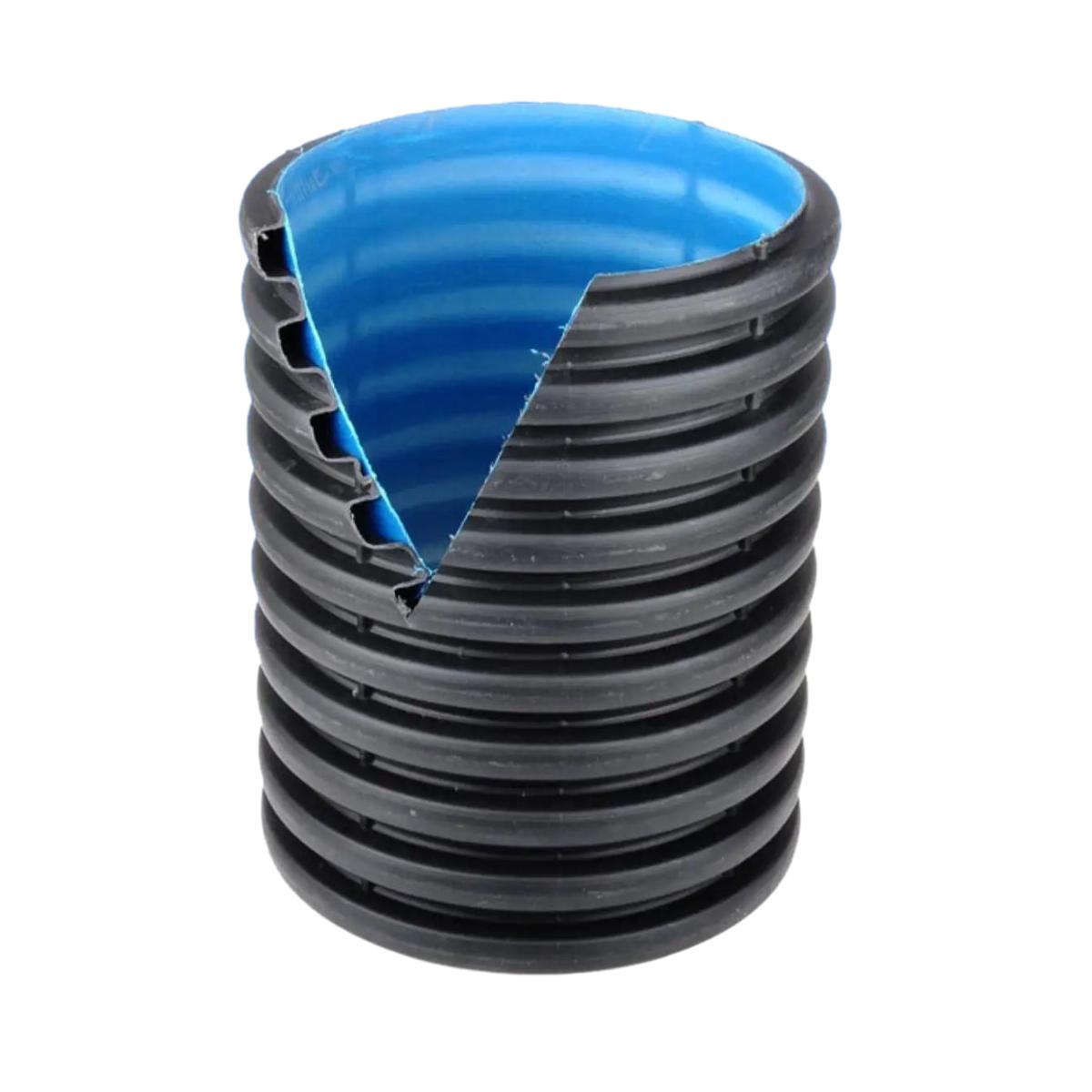
Performance & Engineering
The performance of HDPE irrigation pipe is fundamentally governed by its ability to withstand internal hydrostatic pressure (IHP) and external loads. IHP is determined by the pipe's dimensions (diameter and wall thickness) and its Material Designation Condition (MDC), typically referenced in ASTM D2447. The Barlow’s formula (P = 2Sσt/D) provides a theoretical calculation, where P is IHP, S is a safety factor, σ is the hydrostatic design stress, t is the wall thickness, and D is the outer diameter. Engineering design must account for surge pressures within the irrigation system, which can significantly exceed the static operating pressure. External loads include soil load (for buried applications), traffic load, and bending stresses caused by uneven ground settlement. HDPE's flexibility allows it to accommodate some degree of ground movement without catastrophic failure, unlike rigid materials. However, excessive bending can lead to localized stress concentrations and potential cracking. Furthermore, long-term creep behavior, where the pipe slowly deforms under constant load, must be considered, particularly in warm climates. UV radiation exposure is also a critical factor, necessitating the use of UV stabilizers and/or buried installation. Chemical compatibility is another key performance aspect. While HDPE exhibits excellent resistance to most agricultural chemicals, prolonged exposure to certain strong oxidizers or solvents can cause degradation. Compliance with local regulations regarding water quality and material safety is mandatory, ensuring the absence of harmful leachates.
Technical Specifications
| Parameter | Unit | PE100 (Standard Grade) | PE80 (Discount Grade) |
|---|---|---|---|
| Hydrostatic Design Stress (HDS) | MPa | 12.5 | 10.0 |
| Minimum Burst Pressure | MPa | 37.5 | 30.0 |
| Density | g/cm³ | 0.955-0.965 | 0.940-0.955 |
| Carbon Black Content (UV Stabilization) | % | 2.0-2.5 | 1.5-2.0 |
| Tensile Strength at Yield | MPa | 35-40 | 30-35 |
| Elongation at Break | % | 500-700 | 400-600 |
Failure Mode & Maintenance
Common failure modes in HDPE irrigation pipe include slow crack growth (SCG), particularly at stress concentrators such as fittings or areas with localized damage. SCG is exacerbated by the presence of residual stress from manufacturing or installation and is often initiated by minor imperfections. Another prevalent issue is UV degradation, leading to surface cracking and loss of mechanical properties. Oxidation, particularly at elevated temperatures, can also cause embrittlement. Furthermore, improper installation, such as excessive bending radius or inadequate joint welding, can induce stress and lead to premature failure. Delamination can occur if the pipe is subjected to repeated freeze-thaw cycles, especially if the pipe is not fully drained. Failure analysis involves visual inspection for cracks, dimensional measurements to assess wall thinning, and material testing to determine the remaining mechanical properties. Maintenance procedures include regular visual inspections, pressure testing to detect leaks, and flushing to remove sediment buildup. Damaged sections should be replaced using appropriate welding techniques. Preventative measures include proper pipe selection based on application requirements, adherence to installation guidelines, and implementation of a corrosion monitoring program in aggressive environments. Protecting exposed pipe sections from UV radiation and physical damage is critical for maximizing service life. Consideration should be given to surge protection devices to mitigate the effects of water hammer.
Industry FAQ
Q: What are the key differences between PE100 and PE80 HDPE pipe, and how does this impact long-term cost-effectiveness?
A: PE100 possesses a higher hydrostatic design stress (HDS) and burst pressure compared to PE80, translating to a longer service life and reduced risk of failure under equivalent operating conditions. While PE80 may offer a lower upfront cost, the increased probability of failure and the associated repair/replacement costs often make PE100 the more cost-effective option over the long term, particularly in high-pressure or critical applications. The discount typically associated with PE80 needs to be carefully weighed against these potential downstream costs.
Q: How does soil corrosivity affect the longevity of HDPE irrigation pipe, and what protective measures can be implemented?
A: Highly corrosive soils can accelerate the degradation of HDPE, particularly if the pipe is not adequately protected. Corrosive factors include high salt concentrations, acidic or alkaline pH levels, and the presence of redox-active metals. Protective measures include applying a protective coating to the pipe exterior, using sacrificial anodes, and ensuring proper bedding material is used during installation. A thorough soil analysis should be conducted prior to installation to identify potential corrosivity concerns.
Q: What is the acceptable bending radius for HDPE irrigation pipe to avoid stress cracking?
A: The acceptable bending radius is dependent on the pipe diameter and wall thickness. Generally, a minimum bending radius of 20 times the outer diameter is recommended to prevent excessive stress concentration. Exceeding this limit can lead to SCG and premature failure, particularly during periods of high pressure. Installation guidelines provided by the pipe manufacturer should always be consulted.
Q: What are the best practices for welding HDPE pipe to ensure a reliable, leak-proof joint?
A: Proper welding technique is critical. Butt fusion welding requires precise temperature control, adequate clamping pressure, and a clean welding surface. Electrofusion welding demands proper voltage and current settings. All welding personnel should be certified and follow established welding procedures. A hydrostatic test should always be performed after welding to verify joint integrity.
Q: How does UV exposure impact the performance of HDPE pipe, and what methods can be used for UV protection?
A: Prolonged UV exposure causes degradation of the polymer matrix, leading to embrittlement, cracking, and loss of mechanical properties. Effective UV protection methods include incorporating carbon black into the HDPE formulation, using UV-stabilized coatings, and burying the pipe below the surface to shield it from direct sunlight. For exposed sections, UV-resistant sleeves or wraps should be utilized.
Conclusion
Discount irrigation HDPE pipe presents a viable option for agricultural water conveyance, but maintaining performance parity with standard-grade materials necessitates meticulous attention to material quality, manufacturing control, and installation practices. Understanding the interplay between material science, engineering principles, and potential failure modes is critical for ensuring long-term reliability and cost-effectiveness. A comprehensive approach to procurement, incorporating thorough specification reviews and quality assurance testing, is essential to mitigate risks associated with reduced material costs.
Future developments in HDPE pipe technology are focused on enhancing UV resistance through improved additive formulations, developing more durable welding techniques, and integrating smart monitoring systems to detect leaks and predict potential failures. Further research is also needed to optimize pipe designs for specific irrigation applications and to assess the long-term performance of recycled HDPE materials in agricultural settings.
-
DN25 HDPE Compression Fitting-HORON INTERNATIONAL|Reliable Irrigation Solutions
NewsFeb.11,2026
-
hdpe coupling joint product Manufacturing Analysis
News2026-11-18
-
ppr pipe heating time products Performance Analysis
News2026-11-16
-
hdpe pipe sizes factory Performance Analysis
News2026-11-09
-
HDPE Pipe Sizes Service Performance Analysis
News2026-10-26
-
wholesale 15mm ppr pipe Material Science and Performance Analysis
News2026-10-20
-
wholesale pvc pipe price per foot Technical Analysis
News2026-09-21
-
wholesale long pvc pipe Technical Analysis and Manufacturing Specifications
News2026-09-15
-
wholesale plumbing kitchen sink water lines Material Performance
News2026-09-15
-
wholesale hdpe drip irrigation Material Science
News2026-09-15
-
wholesale hot water ppr pipe Performance Analysis
News2026-09-15
-
wholesale ppr plumbing Performance Analysis
News2026-09-15
-
wholesale ppr pipe supplier Performance Analysis
News2026-09-13
-
wholesale 50mm ppr pipe Performance Analysis
News2026-09-13
-
wholesale hdpe drip pipe Performance Analysis
News2026-09-13
-
wholesale hdpe pipe 63mm price Manufacturing Specification and Performance Analysis
News2026-09-13