

Feb . 11, 2026 00:01 Back to list
discount hdpe to steel transition coupling Performance Analysis
Introduction
HDPE to steel transition couplings are critical components in pipeline systems requiring the connection of High-Density Polyethylene (HDPE) pipes to steel piping, vessels, or equipment. These couplings bridge the material and functional differences between the two, accommodating thermal expansion, contraction, and potential ground movement. Their application spans industries including water and wastewater treatment, oil and gas, mining, and industrial processing. The primary function is to provide a leak-proof, structurally sound connection capable of withstanding operating pressures, temperatures, and external loads. The ‘discount’ designation typically refers to a cost-effective manufacturing approach, often involving standardized dimensions and materials, impacting long-term performance considerations. Proper selection and installation are paramount to ensure system integrity and avoid catastrophic failures. This guide details the material science, manufacturing processes, performance characteristics, potential failure modes, and maintenance procedures associated with these couplings, adhering to relevant international standards.
Material Science & Manufacturing
The construction of an HDPE to steel transition coupling necessitates a robust understanding of the constituent materials. Steel components typically utilize carbon steel (A53 Grade B, API 5L X42 are common) selected for its weldability, tensile strength, and cost-effectiveness. However, depending on the application's corrosive environment, stainless steel (304, 316) may be specified. HDPE, a thermoplastic polymer derived from petroleum, offers flexibility, chemical resistance, and ease of installation. Its density, typically between 0.93 and 0.97 g/cm³, directly impacts its mechanical properties. Manufacturing involves several processes. The steel flange or hub is typically forged or cast, followed by machining to precise dimensions and surface finish. HDPE components are often manufactured via injection molding, ensuring dimensional accuracy and repeatability. The critical interface between the steel and HDPE usually employs a mechanical locking system – often a specialized gasket and bolted flange arrangement or a swaged connection – to ensure a pressure-tight seal. Welding processes (SMAW, GMAW, SAW) are employed to fabricate steel parts, requiring stringent quality control to prevent defects like porosity or incomplete fusion. HDPE welding (butt fusion, socket fusion, electrofusion) requires precise temperature control to ensure optimal polymer chain entanglement and structural integrity. Parameter control, including welding temperatures, pressures, and cooling rates, directly impacts long-term performance and resistance to creep.
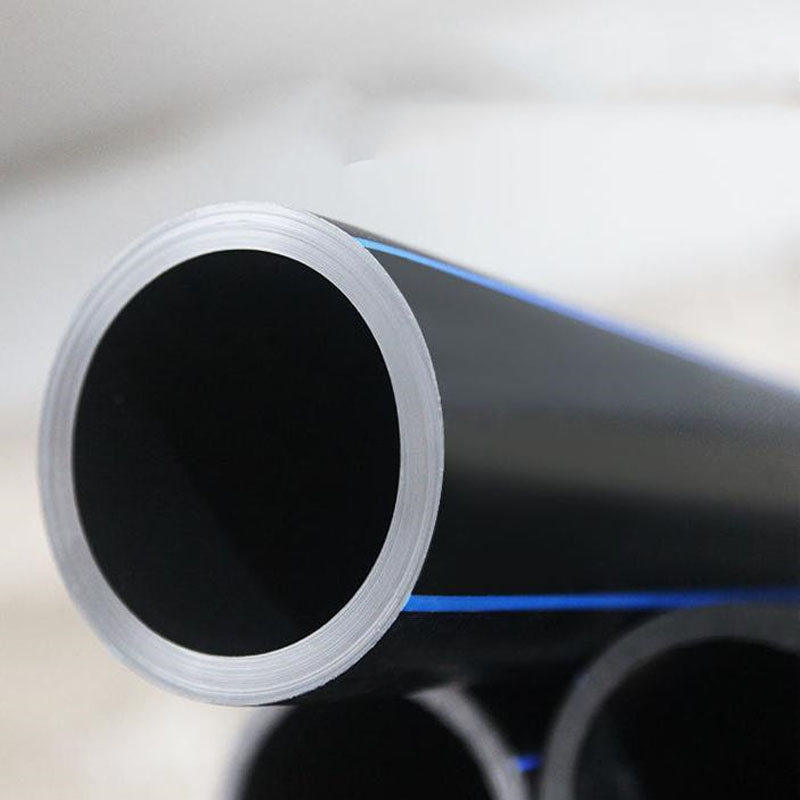
Performance & Engineering
The performance of HDPE to steel transition couplings is governed by several engineering principles. Force analysis must account for internal pressure, external loads (soil loading, traffic loads), and thermal stresses. The steel component primarily handles tensile and bending stresses, while the HDPE component contributes to sealing and accommodates movement. Environmental resistance is a key consideration. Steel is susceptible to corrosion, particularly in the presence of chlorides, sulfides, or acidic conditions. Protective coatings (epoxy, galvanization) are frequently applied to mitigate corrosion. HDPE exhibits excellent chemical resistance but is vulnerable to UV degradation and slow crack growth (SCG) in certain environments. Compliance requirements vary by region and application. Pressure ratings must conform to ASME B31.3 (Process Piping), EN 1092-1 (Flanges and their Joints), or equivalent standards. Leak testing is crucial – typically employing hydrostatic testing to verify seal integrity. Finite Element Analysis (FEA) is often employed to optimize coupling design and predict stress distribution under various loading scenarios. Thermal expansion differentials between steel and HDPE necessitate careful design of the connection to prevent stress concentrations and potential failure. The coefficient of thermal expansion for HDPE is significantly higher than steel (approximately 10 times greater), requiring expansion loops or flexible designs.
Technical Specifications
| Parameter | Typical Value (Carbon Steel/HDPE) | Testing Standard | Acceptance Criteria |
|---|---|---|---|
| Nominal Pipe Size | 2" – 24" (50mm – 600mm) | ANSI/ASME B36.10M | Within +/- 1% tolerance |
| Pressure Rating | Up to 150 PSI (10.3 bar) | ASME B31.3 | Hydrostatic test at 1.5x operating pressure for 30 minutes, no leakage |
| Operating Temperature Range | -40°C to 80°C (-40°F to 176°F) | ASTM D1694 | Material remains ductile within specified range |
| Steel Material | A53 Grade B, API 5L X42 | ASTM A53/API 5L | Meets specified chemical composition and mechanical properties |
| HDPE Material | PE100 | ISO 1035-5 | Minimum Required Strength (MRS) >= 10 MPa |
| Gasket Material | EPDM, Nitrile | ASTM D2000 | Meets specified sealing properties and chemical compatibility |
Failure Mode & Maintenance
HDPE to steel transition couplings are susceptible to several failure modes. Corrosion of the steel component is a primary concern, leading to pitting, stress corrosion cracking, and eventual structural failure. Fatigue cracking can occur due to cyclic loading, particularly in the bolted flange region. HDPE components can experience slow crack growth (SCG) induced by residual stresses and environmental factors (e.g., exposure to certain chemicals). Delamination of the HDPE from the steel interface can occur due to inadequate bonding or thermal stresses. UV degradation can embrittle the HDPE, reducing its impact resistance. Improper installation – over-tightening bolts, inadequate welding procedures – can introduce residual stresses and compromise the seal. Maintenance involves regular visual inspections for signs of corrosion, cracking, or leakage. Torque checks on bolts should be performed periodically. Protective coatings should be inspected and repaired as needed. Hydrostatic testing should be conducted at specified intervals to verify seal integrity. In applications prone to SCG, periodic non-destructive testing (NDT) – ultrasonic testing or radiographic testing – may be warranted. Replacement of the coupling is recommended if significant corrosion, cracking, or delamination is detected.
Industry FAQ
Q: What is the impact of using a ‘discount’ coupling on long-term reliability?
A: ‘Discount’ couplings often utilize lower-grade materials or simplified manufacturing processes. This can lead to reduced corrosion resistance, lower mechanical strength, and increased susceptibility to failure over time. While initial cost savings may be realized, the potential for premature failure and associated downtime costs should be carefully evaluated.
Q: How do I mitigate the risk of galvanic corrosion between steel and HDPE?
A: Galvanic corrosion can occur when dissimilar metals are in contact in the presence of an electrolyte. While HDPE is non-conductive, contact with conductive fluids can create a path for corrosion. Using sacrificial anodes or applying a dielectric coating to the steel component can help mitigate this risk.
Q: What are the key considerations when selecting a gasket material?
A: Gasket material selection is crucial for ensuring a leak-proof seal. The material must be chemically compatible with the fluid being conveyed, resistant to temperature variations, and capable of maintaining its sealing properties under pressure. EPDM and Nitrile are common choices, but specific application requirements should dictate the optimal material.
Q: What is the recommended procedure for butt-fusing HDPE to the coupling?
A: Butt fusion requires precise temperature control and alignment. The steel and HDPE surfaces must be clean and free of contaminants. The HDPE pipe and coupling should be heated to the appropriate temperature based on the HDPE grade and diameter. Consistent pressure should be applied during the fusion process, and a cooling period allowed for the joint to solidify. Adherence to DVS 2207 is highly recommended.
Q: How important is proper bolt torque during flange installation?
A: Proper bolt torque is critical. Under-torquing can lead to leakage, while over-torquing can distort the flange and damage the gasket. A calibrated torque wrench should be used, and torque values should adhere to the manufacturer’s specifications and relevant flange standards (e.g., ASME PCC-1).
Conclusion
HDPE to steel transition couplings are essential components for joining dissimilar piping systems, offering a balance between cost-effectiveness and functionality. However, their performance is heavily reliant on material selection, manufacturing quality, and proper installation. A thorough understanding of the potential failure modes – corrosion, fatigue, SCG, and delamination – is critical for ensuring long-term system integrity.
Careful consideration should be given to the trade-offs between ‘discount’ options and higher-quality alternatives, prioritizing reliability and safety. Regular inspection and maintenance, including torque checks, visual assessments, and hydrostatic testing, are essential for preventing catastrophic failures and maximizing the service life of these critical connections. Adherence to relevant international standards is paramount.
-
DN25 HDPE Compression Fitting-HORON INTERNATIONAL|Reliable Irrigation Solutions
NewsFeb.11,2026
-
hdpe coupling joint product Manufacturing Analysis
News2026-11-18
-
ppr pipe heating time products Performance Analysis
News2026-11-16
-
hdpe pipe sizes factory Performance Analysis
News2026-11-09
-
HDPE Pipe Sizes Service Performance Analysis
News2026-10-26
-
wholesale 15mm ppr pipe Material Science and Performance Analysis
News2026-10-20
-
wholesale pvc pipe price per foot Technical Analysis
News2026-09-21
-
wholesale long pvc pipe Technical Analysis and Manufacturing Specifications
News2026-09-15
-
wholesale plumbing kitchen sink water lines Material Performance
News2026-09-15
-
wholesale hdpe drip irrigation Material Science
News2026-09-15
-
wholesale hot water ppr pipe Performance Analysis
News2026-09-15
-
wholesale ppr plumbing Performance Analysis
News2026-09-15
-
wholesale ppr pipe supplier Performance Analysis
News2026-09-13
-
wholesale 50mm ppr pipe Performance Analysis
News2026-09-13
-
wholesale hdpe drip pipe Performance Analysis
News2026-09-13
-
wholesale hdpe pipe 63mm price Manufacturing Specification and Performance Analysis
News2026-09-13