

Feb . 11, 2026 00:01 Back to list
discount hdpe sewer pipe Performance and Engineering
Introduction
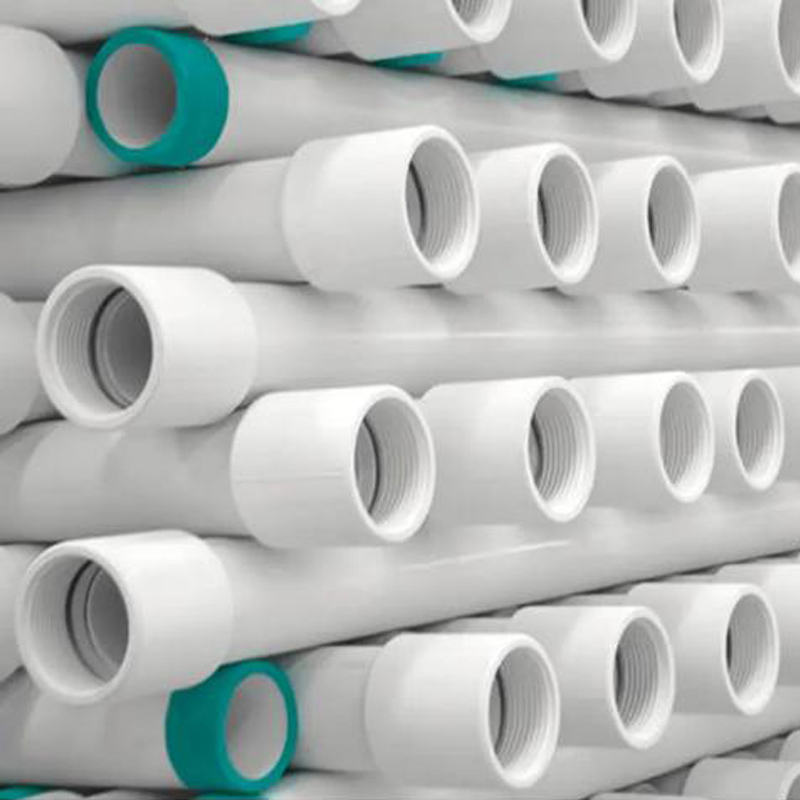
High-Density Polyethylene (HDPE) sewer pipe represents a significant advancement in gravity-flow wastewater and stormwater conveyance systems. Positioned as a direct alternative to traditional materials like concrete, ductile iron, and PVC, HDPE sewer pipe offers a unique combination of durability, chemical resistance, and installation efficiency. Its technical position within the broader infrastructure chain involves manufacturing, fabrication (including fusion welding), and installation adhering to stringent municipal and national standards. Core performance characteristics revolve around long-term hydraulic capacity, structural integrity under load, and resistance to corrosive elements found in typical sewer environments. The ‘discount’ aspect typically relates to economies of scale in production and transportation, allowing for competitive pricing without compromising adherence to relevant specifications. Addressing the industry's pain points of joint failure, corrosion, and difficult installation, HDPE pipe provides a reliable, cost-effective solution for both new construction and rehabilitation projects.
Material Science & Manufacturing
HDPE sewer pipe is manufactured from high-density polyethylene resins, typically utilizing polyethylene grades conforming to ASTM D3350 or similar international standards. The raw material’s key physical properties include a density ranging from 0.93 to 0.97 g/cm³, a tensile strength between 20-30 MPa, and a relatively low coefficient of friction. Manufacturing processes primarily involve extrusion. Resin pellets are fed into an extruder where they are heated and melted, then forced through a die to form a continuous pipe profile. Key parameters controlled during extrusion include melt temperature (typically 180-220°C), die pressure, and cooling rate. Wall thickness is critical and precisely regulated to meet specific pipe stiffness (PSI) requirements. Fusion welding, using techniques like butt fusion, socket fusion, and electrofusion, is the standard method for joining HDPE pipe sections. Proper weld procedure specifications (WPS) and welder qualification are essential to ensure joint integrity. The polyethylene's semi-crystalline structure influences its long-term creep resistance and susceptibility to slow crack growth; these are mitigated through appropriate resin selection and weld quality control. Chemical compatibility is a strong suit; HDPE exhibits excellent resistance to a wide range of chemicals commonly found in wastewater, including acids, bases, and solvents.

Performance & Engineering
The performance of HDPE sewer pipe is governed by a combination of structural mechanics and hydraulic principles. Force analysis considers both external loads (soil overburden, traffic loads) and internal pressure from the conveyed fluid. HDPE’s flexibility allows it to distribute loads more effectively than rigid materials, reducing stress concentrations. Pipe stiffness, measured in PSI, is a crucial parameter defining the pipe’s ability to resist deformation under load. Environmental resistance is another key factor; HDPE demonstrates excellent UV resistance when formulated with appropriate stabilizers. However, prolonged exposure to direct sunlight can still lead to degradation, necessitating protective measures like burial or coating. Compliance requirements are dictated by local and national regulations, often referencing ASTM standards (e.g., ASTM F894 for corrugated HDPE pipe, ASTM D3212 for smooth-wall HDPE pipe). Functional implementation includes consideration of pipe slope for gravity flow, minimizing turbulent flow to reduce erosion, and ensuring adequate bedding and backfill support to prevent pipe deformation. The Manning’s equation is frequently employed to determine flow capacity based on pipe diameter, slope, and roughness coefficient. HDPE pipe's lightweight nature simplifies installation, reducing labor costs and minimizing disruption to existing infrastructure.
Technical Specifications
| Parameter | Unit | Typical Value (DN/ID 150mm Pipe) | Test Standard |
|---|---|---|---|
| Nominal Pipe Size | mm | 150 | ISO 4427 |
| Outside Diameter | mm | 160 | ASTM D3212 |
| Wall Thickness | mm | 4.5 | ASTM D3212 |
| Pipe Stiffness (PSI) | psi | 44 | ASTM D2412 |
| Tensile Strength | MPa | 25 | ASTM D638 |
| Elongation at Break | % | >300 | ASTM D638 |
| Density | g/cm³ | 0.95 | ASTM D792 |
| Maximum Operating Pressure | kPa | 1000 (dependent on wall thickness & temp.) | ASTM F894 |
Failure Mode & Maintenance
Several failure modes can affect HDPE sewer pipe performance. Slow crack growth (SCG) is a primary concern, often initiated by stress concentrations at welds or imperfections in the pipe material. This is exacerbated by prolonged exposure to certain chemicals and elevated temperatures. Fatigue cracking can occur under cyclic loading, particularly in areas subjected to repeated stress from traffic or soil movement. Delamination can happen if improper fusion welding techniques are used, leading to insufficient fusion between pipe sections. Oxidation, while generally resistant, can occur with prolonged exposure to high temperatures and oxidizing agents. UV degradation can embrittle the material if not adequately protected. Maintenance typically involves regular inspection for signs of cracking, deformation, or joint separation. CCTV inspection is a common method for assessing pipe condition. Minor cracks can sometimes be repaired using heat fusion welding techniques. However, significant damage often requires pipe replacement. Proper bedding and backfill compaction are crucial preventative measures. Employing cathodic protection in corrosive environments may also extend service life. Record-keeping of installation details, including weld logs and material certifications, is essential for effective maintenance and troubleshooting.
Industry FAQ
Q: What is the long-term joint tightness performance of HDPE sewer pipe compared to PVC?
A: HDPE pipe, when properly fusion welded, exhibits superior long-term joint tightness compared to solvent-welded PVC. Fusion welding creates a homogenous joint with strength equivalent to the pipe itself, eliminating the potential for solvent degradation or separation over time. PVC joints, while initially tight, are susceptible to solvent evaporation and chemical attack, leading to potential leakage in the long run.
Q: How does HDPE sewer pipe handle ground movement or seismic activity?
A: HDPE’s inherent flexibility allows it to accommodate ground movement and seismic activity without fracturing. The pipe can deform and return to its original shape, maintaining hydraulic integrity. Rigid materials like concrete and ductile iron are more prone to cracking or joint failure under similar conditions.
Q: What is the typical service life expectancy of HDPE sewer pipe?
A: Properly installed and maintained HDPE sewer pipe can have a service life exceeding 100 years. The actual lifespan depends on factors such as soil conditions, chemical exposure, loading, and maintenance practices. This significantly surpasses the service life of many traditional pipe materials.
Q: What considerations are important during the installation of HDPE sewer pipe in cold weather?
A: Cold temperatures can affect the weldability of HDPE. Proper warming of the pipe and welding equipment is essential to achieve optimal fusion. Weld procedures may need to be adjusted based on ambient temperature. Avoiding welding in freezing conditions is crucial to prevent brittle fractures.
Q: How does HDPE compare to concrete pipe in terms of corrosion resistance?
A: HDPE exhibits exceptional corrosion resistance compared to concrete. Concrete is susceptible to acid attack, sulfate attack, and microbiologically induced corrosion (MIC), leading to deterioration and structural weakness. HDPE is virtually unaffected by these corrosive agents, ensuring long-term durability in aggressive environments.
Conclusion
HDPE sewer pipe presents a compelling solution for modern wastewater and stormwater infrastructure. Its unique combination of material properties, manufacturing processes, and installation techniques addresses critical industry pain points related to durability, corrosion, and ease of installation. The inherent flexibility, chemical resistance, and long-term performance characteristics of HDPE, coupled with the potential for cost savings through reduced maintenance and extended service life, establish it as a superior alternative to traditional piping materials.
Continued innovation in HDPE resin formulations and welding technologies will further enhance its performance and expand its applicability in increasingly demanding environments. Adherence to established standards and best practices in installation and maintenance are essential to maximizing the benefits of this advanced piping system and ensuring the long-term reliability of critical infrastructure.
-
DN25 HDPE Compression Fitting-HORON INTERNATIONAL|Reliable Irrigation Solutions
NewsFeb.11,2026
-
hdpe coupling joint product Manufacturing Analysis
News2026-11-18
-
ppr pipe heating time products Performance Analysis
News2026-11-16
-
hdpe pipe sizes factory Performance Analysis
News2026-11-09
-
HDPE Pipe Sizes Service Performance Analysis
News2026-10-26
-
wholesale 15mm ppr pipe Material Science and Performance Analysis
News2026-10-20
-
wholesale pvc pipe price per foot Technical Analysis
News2026-09-21
-
wholesale long pvc pipe Technical Analysis and Manufacturing Specifications
News2026-09-15
-
wholesale plumbing kitchen sink water lines Material Performance
News2026-09-15
-
wholesale hdpe drip irrigation Material Science
News2026-09-15
-
wholesale hot water ppr pipe Performance Analysis
News2026-09-15
-
wholesale ppr plumbing Performance Analysis
News2026-09-15
-
wholesale ppr pipe supplier Performance Analysis
News2026-09-13
-
wholesale 50mm ppr pipe Performance Analysis
News2026-09-13
-
wholesale hdpe drip pipe Performance Analysis
News2026-09-13
-
wholesale hdpe pipe 63mm price Manufacturing Specification and Performance Analysis
News2026-09-13