

Feb . 11, 2026 00:01 Back to list
discount hdpe pipe use Performance Analysis
Introduction
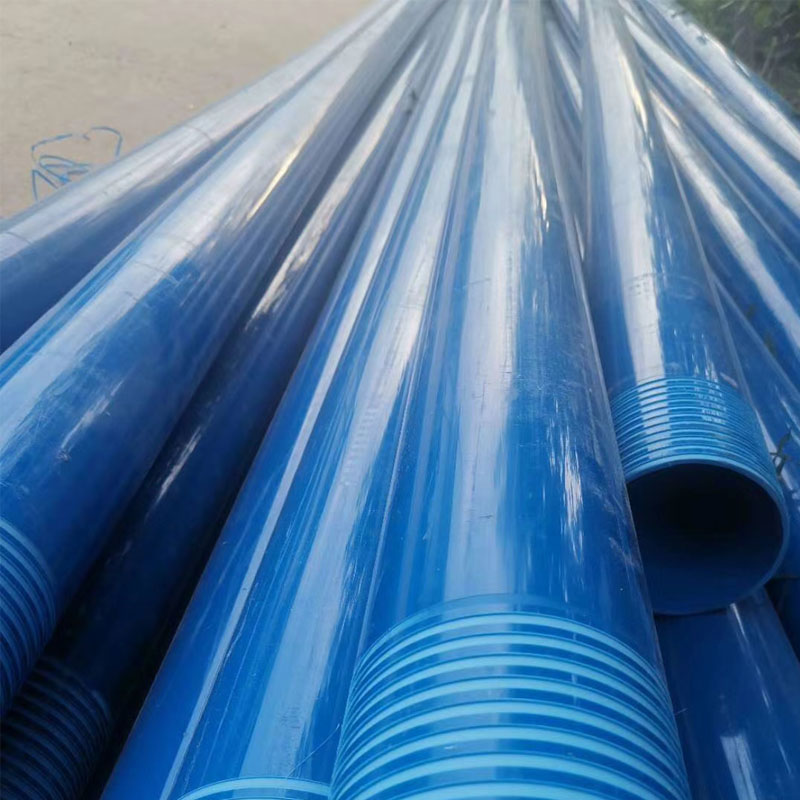
High-Density Polyethylene (HDPE) pipe represents a significant advancement in fluid conveyance technology, particularly in applications demanding durability, chemical resistance, and cost-effectiveness. Within the broader landscape of pipeline materials – encompassing ductile iron, PVC, and steel – HDPE occupies a unique position. Its widespread adoption stems from a confluence of factors, including its inherent properties and evolving installation techniques like trenchless technology. "Discount HDPE pipe use" specifically refers to the application of commercially accessible HDPE piping solutions, often characterized by a balance between material grade and cost optimization. This guide provides an in-depth exploration of HDPE pipe, focusing on its material science, manufacturing processes, performance characteristics, potential failure modes, and relevant industry standards. Core performance metrics center around pressure rating (PN), hydrostatic design stress (SDR), and long-term creep resistance, all crucial for ensuring pipeline integrity and longevity. The increasing demand for efficient water management, sewage systems, and industrial fluid transport is driving the continued expansion of HDPE pipe applications.
Material Science & Manufacturing
HDPE is a thermoplastic polymer derived from the polymerization of ethylene. Its high density (typically 0.941–0.965 g/cm³) contributes to its strength and rigidity. The material exhibits excellent chemical inertness, making it resistant to a broad spectrum of acids, bases, and solvents. Raw material selection directly impacts the pipe’s performance; virgin HDPE resin provides superior mechanical properties, while recycled HDPE offers a cost-effective alternative with slightly reduced strength. Manufacturing primarily involves extrusion processes. HDPE granules are melted and forced through a die to create a continuous pipe profile. Key process parameters include melt temperature (typically 180-210°C), die pressure, and cooling rate. Butt fusion, socket fusion, and electrofusion are common joining methods, creating homogenous welds that maintain the pipe’s structural integrity. Proper parameter control during welding is critical – excessive heat can lead to material degradation, while insufficient heat results in incomplete fusion and potential leakage. Pipe wall thickness is determined by the SDR (Standard Dimension Ratio), which is the ratio of pipe diameter to wall thickness. Lower SDR values indicate thicker walls and higher pressure ratings. The presence of carbon black as a UV stabilizer is essential for outdoor applications, preventing degradation from sunlight exposure.

Performance & Engineering
The performance of HDPE pipe is governed by several engineering principles. Hoop stress analysis is paramount for determining the pipe’s ability to withstand internal pressure. The Barlow formula (σ = PD/2t, where σ is hoop stress, P is internal pressure, D is pipe diameter, and t is wall thickness) provides a fundamental understanding of this relationship. Environmental factors significantly influence performance. Temperature variations induce expansion and contraction, requiring careful consideration in long pipeline installations to prevent buckling or joint separation. Soil loading and external pressures from traffic or burial depth must also be accounted for. HDPE’s creep resistance – its ability to resist deformation under sustained stress – is crucial for long-term performance. Creep rupture time is dependent on temperature and stress levels; higher temperatures and stresses accelerate creep. Compliance requirements vary by region and application. For potable water systems, HDPE must meet NSF/ANSI 61 standards for chemical leaching. Gas distribution applications require compliance with DOT regulations (in the US) or equivalent standards in other countries. Fatigue analysis is essential for applications involving cyclical pressure variations or dynamic loading. HDPE exhibits good fatigue resistance, but repeated stress cycles can eventually lead to crack initiation and propagation.
Technical Specifications
| Parameter | Unit | Typical Value (Discount HDPE Pipe) | Test Standard |
|---|---|---|---|
| Pressure Rating (PN) | bar | PN10, PN16 | ISO 1167 |
| Hydrostatic Design Stress (SDR) | - | SDR17, SDR21, SDR26 | ASTM D2239 |
| Density | g/cm³ | 0.94 - 0.96 | ASTM D1505 |
| Tensile Strength | MPa | >20 | ASTM D638 |
| Elongation at Break | % | >300 | ASTM D638 |
| Creep Rupture Time (20°C, 5.0 MPa) | Years | >50 | ISO 1167 |
Failure Mode & Maintenance
Several failure modes can affect HDPE pipe performance. Slow Crack Growth (SCG) is a common issue, particularly in applications involving sustained tensile stress and exposure to aggressive chemicals. SCG initiates at stress concentrators (e.g., scratches, gouges) and propagates slowly over time, eventually leading to catastrophic failure. UV degradation, even with carbon black stabilization, can reduce the pipe’s mechanical properties over prolonged exposure. Joint failures, resulting from improper fusion or inadequate surface preparation, are another frequent cause of leakage. Third-party damage from excavation or accidental impact can cause cracks or punctures. Ground movement and settlement can induce excessive stress on the pipe, leading to buckling or joint separation. Maintenance involves regular visual inspections for signs of cracking, deformation, or leakage. Pressure testing is recommended to identify potential weak points. For minor scratches or gouges, specialized HDPE repair compounds can be used. Larger defects may require pipe replacement or section repair using fusion welding. Proper backfilling procedures are essential to provide adequate support and prevent stress concentration. Consideration should be given to cathodic protection in environments with stray electrical currents to prevent corrosion of metallic fittings.
Industry FAQ
Q: What is the impact of temperature fluctuations on HDPE pipe installations?
A: HDPE exhibits a significant coefficient of thermal expansion. Temperature fluctuations cause the pipe to expand and contract, which can induce stress on joints and buried sections. Proper installation practices, including expansion loops and adequate bedding material, are crucial to accommodate these movements and prevent buckling or joint failure. The design must account for the expected temperature range in the operating environment.
Q: How does the grade of HDPE resin affect the long-term performance of the pipe?
A: Higher grade HDPE resins, such as PE100, offer superior mechanical properties, including higher tensile strength, improved creep resistance, and enhanced resistance to SCG. While "discount HDPE pipe use" often involves PE80 or recycled material, using PE100 can significantly extend the service life, particularly in demanding applications like high-pressure gas distribution or critical water infrastructure.
Q: What are the primary causes of Slow Crack Growth (SCG) in HDPE pipe, and how can it be mitigated?
A: SCG is initiated by stress concentrators (scratches, gouges) and accelerated by sustained tensile stress and exposure to certain chemicals. Mitigation strategies include careful handling during installation to avoid damaging the pipe surface, using appropriate bedding material to minimize stress, avoiding contact with incompatible chemicals, and employing higher-grade HDPE resins with improved SCG resistance.
Q: What are the acceptable methods for joining HDPE pipes, and what quality control measures are necessary?
A: Butt fusion, socket fusion, and electrofusion are the accepted joining methods. Butt fusion is typically used for larger diameters, while socket and electrofusion are suitable for smaller sizes. Quality control measures include visual inspection of the weld area, destructive testing of sample welds to verify strength, and non-destructive testing (e.g., ultrasonic testing) to detect defects. Proper operator training and adherence to established welding procedures are critical.
Q: What is the role of cathodic protection in HDPE pipeline systems, and when is it required?
A: While HDPE itself is non-conductive, metallic fittings or tracer wires within the pipeline system can be susceptible to corrosion from stray electrical currents. Cathodic protection is used to mitigate this corrosion by providing a protective electrical potential. It is typically required in areas with high levels of electrical interference, such as near railways or industrial facilities.
Conclusion
Discount HDPE pipe use represents a pragmatic approach to fluid conveyance, offering a balance of cost-effectiveness and functional performance. Understanding the material science, manufacturing nuances, and engineering considerations detailed in this guide is paramount to ensuring long-term reliability and minimizing the risk of failure. Proper installation techniques, adherence to relevant standards, and proactive maintenance are all critical components of a successful HDPE pipeline system.
Looking ahead, advancements in HDPE resin technology, coupled with increasingly sophisticated joining methods and monitoring systems, will further enhance the performance and longevity of HDPE pipelines. Continued research into SCG mitigation strategies and the development of more robust repair techniques will be essential for addressing the challenges associated with long-term operation in diverse and demanding environments. The adoption of digital twins and predictive maintenance algorithms holds promise for optimizing pipeline management and minimizing downtime.
-
DN25 HDPE Compression Fitting-HORON INTERNATIONAL|Reliable Irrigation Solutions
NewsFeb.11,2026
-
hdpe coupling joint product Manufacturing Analysis
News2026-11-18
-
ppr pipe heating time products Performance Analysis
News2026-11-16
-
hdpe pipe sizes factory Performance Analysis
News2026-11-09
-
HDPE Pipe Sizes Service Performance Analysis
News2026-10-26
-
wholesale 15mm ppr pipe Material Science and Performance Analysis
News2026-10-20
-
wholesale pvc pipe price per foot Technical Analysis
News2026-09-21
-
wholesale long pvc pipe Technical Analysis and Manufacturing Specifications
News2026-09-15
-
wholesale plumbing kitchen sink water lines Material Performance
News2026-09-15
-
wholesale hdpe drip irrigation Material Science
News2026-09-15
-
wholesale hot water ppr pipe Performance Analysis
News2026-09-15
-
wholesale ppr plumbing Performance Analysis
News2026-09-15
-
wholesale ppr pipe supplier Performance Analysis
News2026-09-13
-
wholesale 50mm ppr pipe Performance Analysis
News2026-09-13
-
wholesale hdpe drip pipe Performance Analysis
News2026-09-13
-
wholesale hdpe pipe 63mm price Manufacturing Specification and Performance Analysis
News2026-09-13