

Feb . 11, 2026 00:01 Back to list
discount hdpe pipe price Performance Analysis

Introduction
High-Density Polyethylene (HDPE) pipe represents a significant advancement in fluid transfer systems across numerous industries, including water distribution, gas transmission, mining, and irrigation. Discount HDPE pipe price refers to the commercially available cost of this piping solution, varying based on factors like diameter, Schedule (pressure rating), raw material grade, and quantity purchased. Technically positioned as a direct replacement for traditional materials such as ductile iron, steel, and PVC, HDPE offers superior corrosion resistance, lightweight characteristics, and installation efficiencies. Its core performance lies in its ability to reliably transport fluids and gases under pressure, resisting environmental stress cracking and maintaining long-term structural integrity. The current market focuses on minimizing cost without compromising crucial performance parameters, driving the demand for competitively priced, high-quality HDPE piping solutions. This guide provides an in-depth technical overview of HDPE pipe, focusing on the key properties, manufacturing processes, performance considerations, failure modes, and relevant industry standards to aid informed procurement and application decisions.
Material Science & Manufacturing
HDPE is a thermoplastic polymer synthesized from the monomer ethylene through a polymerization process. Its high density (typically 0.941 – 0.965 g/cm³) is achieved through controlled polymerization, resulting in minimal branching in the polymer chains. This linearity contributes to its strength and crystallinity. Raw materials consist of ethylene gas, typically derived from natural gas or crude oil refining, along with catalysts (often Ziegler-Natta or metallocene catalysts) and co-monomers to tailor specific properties. The manufacturing of HDPE pipe primarily employs extrusion processes. Raw HDPE pellets are fed into an extruder, where they are heated and melted. The molten plastic is then forced through a die to form the pipe shape. Key parameters in extrusion include melt temperature (typically 180-210°C), die pressure, haul-off speed (dictating wall thickness), and cooling rate. Butt fusion, socket fusion, and electrofusion welding techniques are commonly used to join HDPE pipes. Butt fusion involves heating the pipe ends and pressing them together, creating a homogeneous weld. Socket fusion uses a heating tool to melt both the pipe and fitting, allowing them to be joined. Electrofusion employs an electrical current to heat and fuse the pipe and fitting. The success of these welding processes is contingent upon maintaining precise temperature control and adequate clamping pressure to ensure a robust, leak-proof connection. Quality control involves rigorous testing of raw material properties, dimensional accuracy of the pipe, and weld strength.
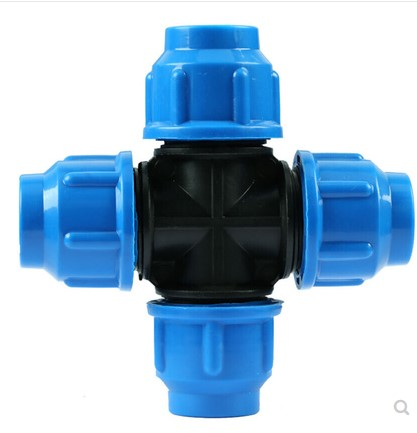
Performance & Engineering
The performance of HDPE pipe is governed by its mechanical properties, chemical resistance, and environmental durability. Tensile strength, typically ranging from 35-45 MPa, dictates its resistance to pulling forces. Impact strength, measured by Charpy or Izod tests, indicates its resistance to brittle fracture. HDPE exhibits excellent chemical resistance to acids, bases, and many solvents, making it suitable for conveying a wide range of fluids. However, it's susceptible to degradation by prolonged exposure to strong oxidizing agents and certain hydrocarbons. Environmental resistance is a critical factor. UV radiation can cause oxidative degradation, reducing the pipe’s strength and lifespan. The addition of carbon black as a UV stabilizer mitigates this effect. Long-term hydrostatic strength, determined through hydrostatic pressure testing (typically at 20°C and 50°C), is a crucial parameter for designing pipelines. Creep rupture, the time-dependent failure under constant stress, must be considered in long-term applications. The Hazen-Williams equation is commonly used to calculate flow rate and pressure drop within HDPE pipelines. Engineering design must account for thermal expansion and contraction, which can be significant due to HDPE’s relatively high coefficient of thermal expansion (approximately 0.00017 mm/mm/°C). Proper anchoring and expansion loops are essential to prevent stress buildup and potential failure. Compliance requirements vary based on application and geographic location, often adhering to standards set by AWWA, ASTM, or EN.
Technical Specifications
| Parameter | Units | Specification (Typical) | Test Method |
|---|---|---|---|
| Density | g/cm³ | 0.95 - 0.965 | ASTM D1505 |
| Hydrostatic Design Stress (HDS) | MPa | 8 - 16 (depending on Schedule) | ASTM D1597 |
| Tensile Strength at Yield | MPa | 35 - 45 | ASTM D638 |
| Impact Strength (Charpy, -20°C) | kJ/m² | > 5 | ASTM D256 |
| Environmental Stress Crack Resistance (ESCR) | Hours to Failure | > 1000 | ASTM D1694 |
| UV Resistance | % Retained Strength after 1000 hours | > 70 | ASTM D4455 |
Failure Mode & Maintenance
HDPE pipe, while durable, is susceptible to several failure modes. Slow Crack Growth (SCG), or Environmental Stress Cracking (ESC), is a primary concern, initiated by sustained tensile stress and exposure to aggressive chemicals or environments. This manifests as fine cracks propagating slowly through the pipe wall. Fatigue cracking can occur under cyclical pressure or loading conditions. Oxidative degradation, particularly due to UV exposure, leads to embrittlement and reduced strength. Joint failures are also common, stemming from improper welding techniques, contamination during fusion, or inadequate pressure. Third-party damage during excavation or installation represents a significant risk, leading to punctures or fractures. Maintenance involves regular visual inspections for cracks, leaks, or signs of degradation. Pressure testing can identify leaks and assess the integrity of the pipeline. For SCG, mitigation includes reducing stress levels, avoiding incompatible chemicals, and using high-quality HDPE materials with enhanced ESCR performance. Damaged sections should be cut out and replaced using appropriate fusion welding techniques. Periodic cleaning and flushing can remove sediment buildup and maintain flow capacity. Proper backfill and protective measures during installation are crucial to prevent third-party damage. Furthermore, maintaining records of installation details, materials used, and inspection findings is essential for proactive pipeline management.
Industry FAQ
Q: What is the impact of varying temperature on the long-term performance of HDPE pipe?
A: Temperature significantly influences the long-term hydrostatic strength and creep resistance of HDPE. Higher temperatures accelerate creep rupture and reduce the allowable operating pressure. Design calculations must incorporate temperature derating factors based on anticipated operating temperatures, as specified in standards like ASTM D1597. Selecting a higher Schedule pipe or utilizing temperature-resistant HDPE formulations are mitigation strategies.
Q: How does the pipe diameter affect the cost per unit length of HDPE pipe?
A: Generally, the cost per unit length decreases as pipe diameter increases, due to economies of scale in manufacturing. However, the wall thickness also plays a role. Larger diameter pipes require thicker walls to maintain equivalent pressure ratings, potentially offsetting some of the cost savings. Obtaining quotes for specific diameters and Schedules is crucial for accurate cost comparison.
Q: What are the key considerations for selecting the appropriate HDPE grade for potable water applications?
A: Potable water applications necessitate HDPE grades that comply with NSF/ANSI 61 standards for health effects. These standards ensure that the material does not leach harmful contaminants into the water. Additionally, the HDPE grade should exhibit excellent chemical resistance to disinfectants commonly used in water treatment, such as chlorine.
Q: Can HDPE pipe be used in corrosive soil conditions?
A: HDPE exhibits excellent resistance to most soil chemicals. However, prolonged exposure to highly acidic or alkaline soils can potentially cause degradation. Implementing protective measures, such as applying a protective coating or using a thicker-walled pipe, is recommended in corrosive soil environments. Proper cathodic protection may also be considered.
Q: What is the expected service life of a properly installed and maintained HDPE pipeline?
A: A properly installed and maintained HDPE pipeline can have a service life exceeding 50 years, and potentially reaching 100 years. This longevity is attributed to its inherent corrosion resistance and durability. However, factors such as operating pressure, temperature, UV exposure, and soil conditions will influence the actual service life. Regular inspections and proactive maintenance are essential to maximize pipeline lifespan.
Conclusion
HDPE pipe represents a robust and cost-effective solution for a wide array of fluid and gas transport applications. Its inherent properties – including high strength-to-weight ratio, exceptional chemical resistance, and ease of installation – position it as a superior alternative to traditional piping materials in many scenarios. Understanding the nuances of material science, manufacturing processes, and performance parameters is crucial for ensuring optimal pipeline design and longevity.
Ultimately, selecting “discount HDPE pipe price” options requires a diligent evaluation of technical specifications, compliance standards, and potential failure modes. Prioritizing long-term performance and reliability over initial cost savings will result in a more sustainable and economical pipeline infrastructure. Continuous monitoring, proactive maintenance, and adherence to industry best practices are essential for maximizing the service life and minimizing the total cost of ownership of HDPE piping systems.
-
DN25 HDPE Compression Fitting-HORON INTERNATIONAL|Reliable Irrigation Solutions
NewsFeb.11,2026
-
hdpe coupling joint product Manufacturing Analysis
News2026-11-18
-
ppr pipe heating time products Performance Analysis
News2026-11-16
-
hdpe pipe sizes factory Performance Analysis
News2026-11-09
-
HDPE Pipe Sizes Service Performance Analysis
News2026-10-26
-
wholesale 15mm ppr pipe Material Science and Performance Analysis
News2026-10-20
-
wholesale pvc pipe price per foot Technical Analysis
News2026-09-21
-
wholesale long pvc pipe Technical Analysis and Manufacturing Specifications
News2026-09-15
-
wholesale plumbing kitchen sink water lines Material Performance
News2026-09-15
-
wholesale hdpe drip irrigation Material Science
News2026-09-15
-
wholesale hot water ppr pipe Performance Analysis
News2026-09-15
-
wholesale ppr plumbing Performance Analysis
News2026-09-15
-
wholesale ppr pipe supplier Performance Analysis
News2026-09-13
-
wholesale 50mm ppr pipe Performance Analysis
News2026-09-13
-
wholesale hdpe drip pipe Performance Analysis
News2026-09-13
-
wholesale hdpe pipe 63mm price Manufacturing Specification and Performance Analysis
News2026-09-13