

Feb . 11, 2026 00:01 Back to list
discount hdpe pipe pdf Performance Analysis
Introduction
High-Density Polyethylene (HDPE) pipe represents a significant advancement in fluid transfer infrastructure, particularly within water, gas distribution, and industrial applications. Often referred to as PE pipe, it distinguishes itself from alternatives like PVC, ductile iron, and steel through a unique combination of durability, flexibility, and cost-effectiveness. Its position in the industry chain spans from raw material production (polyethylene resin derived from petroleum) through extrusion, quality control, and final installation. Core performance characteristics center around its pressure-bearing capacity, chemical resistance, joint integrity, and long-term durability, making it a preferred choice for trenchless technologies and demanding operational environments. Discount HDPE pipe refers to competitively priced options offering comparable performance to premium brands, often leveraging economies of scale in manufacturing or material sourcing. However, understanding the nuances of material grade, manufacturing processes, and adherence to relevant standards is paramount to ensure long-term reliability and prevent premature failure, even within ‘discount’ offerings. This guide provides a comprehensive technical overview of HDPE pipe, covering material science, manufacturing, performance, failure modes, and industry best practices.
Material Science & Manufacturing
HDPE pipe is fabricated from high-density polyethylene, a thermoplastic polymer characterized by its high strength-to-density ratio. The raw material is typically a homopolymer or copolymer of ethylene. Homopolymers exhibit greater rigidity and strength, while copolymers offer enhanced stress crack resistance, particularly at lower temperatures. The density of HDPE typically ranges from 0.93 to 0.97 g/cm³, impacting its mechanical properties. Manufacturing primarily employs extrusion processes. Polyethylene resin is melted and forced through a die to create a continuous pipe profile. Key parameters during extrusion include melt temperature (typically between 180°C and 210°C), die pressure, and cooling rate. Precise control of these parameters is critical to ensure consistent wall thickness, dimensional accuracy, and material homogeneity. Further, the Polymerization method significantly impacts properties. Ziegler-Natta catalysts are common and lead to broad molecular weight distributions, while metallocene catalysts provide narrower distributions, improving strength and creep resistance. Post-extrusion, pipes undergo quality control checks including hydrostatic pressure testing (to verify burst resistance) and dimensional inspection. Fusion welding (butt fusion, socket fusion, electrofusion) is the dominant joining method, creating a homogenous joint stronger than the base pipe material. The quality of the weld depends heavily on proper surface preparation, temperature control, and operator skill.
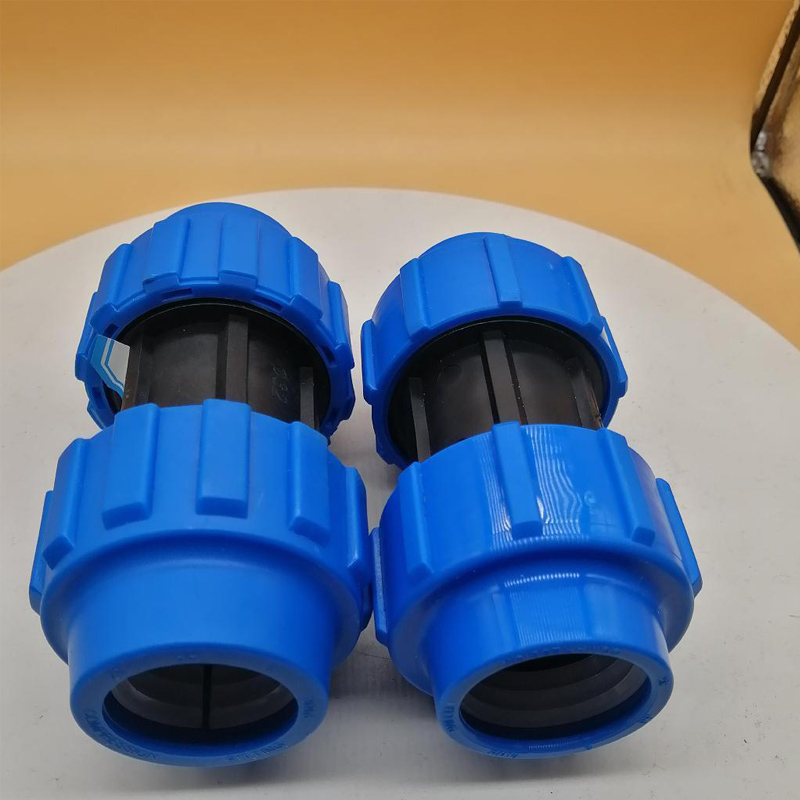
Performance & Engineering
HDPE pipe performance is dictated by several engineering considerations. Pressure rating is determined by the pipe’s dimensions (diameter and wall thickness) and the material’s hydrostatic design basis (HDB), typically expressed in psi or MPa. The HDB represents the long-term hydrostatic strength of the material, derived from accelerated testing. Stress analysis, particularly finite element analysis (FEA), is employed to assess the pipe’s ability to withstand internal pressure, external loads (soil pressure, traffic loads), and bending stresses during installation and operation. Environmental resistance is a significant advantage of HDPE. It exhibits excellent chemical resistance to a wide range of acids, bases, and solvents. However, prolonged exposure to oxidizing agents (e.g., concentrated nitric acid) should be avoided. UV degradation is another consideration, requiring the use of UV stabilizers in the material formulation, particularly for above-ground applications. Creep, the time-dependent deformation under constant stress, is a critical factor in long-term performance. Lower density HDPE grades and higher temperatures accelerate creep. Standards like ASTM D3261 outline procedures for assessing creep rupture strength. Furthermore, the pipe’s flexibility allows for some ground movement without compromising integrity, reducing the risk of catastrophic failure compared to rigid materials. Proper bedding and backfill procedures are essential to distribute loads evenly and prevent overstressing the pipe.
Technical Specifications
| Parameter | Unit | Typical Value (SDR 17) | Typical Value (SDR 11) |
|---|---|---|---|
| Material | - | HDPE PE4710 | HDPE PE4710 |
| Pressure Rating (at 23°C) | psi | 1000 | 1600 |
| Standard Dimension Ratio (SDR) | - | 17 | 11 |
| Density | g/cm³ | 0.953 | 0.953 |
| Hydrostatic Design Basis (HDB) | psi | 1600 | 2250 |
| Maximum Operating Temperature | °C | 60 | 60 |
Failure Mode & Maintenance
HDPE pipe, while durable, is susceptible to specific failure modes. Stress cracking, particularly slow crack growth (SCG), is a common issue initiated by sustained tensile stress and exposure to aggressive chemicals. SCG can lead to catastrophic failure even at pressures below the rated capacity. Fatigue cracking can occur under cyclic loading, such as from traffic or ground movement. Oxidation, though less common than with other polymers, can degrade the material over time, especially at elevated temperatures. Joint failures are often related to improper welding procedures, inadequate surface preparation, or contamination during fusion. Damage during installation, such as gouges or punctures, can create stress concentrations leading to failure. Maintenance primarily involves periodic inspections to identify signs of cracking, deformation, or corrosion. Leak detection surveys are crucial for identifying breaches in the system. For minor cracks or damage, repair sleeves or patch welding can be employed. However, significant damage typically necessitates pipe replacement. Preventive maintenance strategies include proper bedding and backfill, surge protection to mitigate pressure transients, and regular monitoring of water quality to minimize chemical attack. Cathodic protection is generally not required for HDPE pipe, as it is non-conductive, eliminating the risk of corrosion.
Industry FAQ
Q: What are the primary advantages of HDPE pipe over ductile iron in a water distribution system?
A: HDPE offers several advantages. Its lighter weight simplifies installation, reducing labor costs. It's highly resistant to corrosion, eliminating the need for protective coatings and reducing long-term maintenance. HDPE’s flexibility allows for installation in challenging terrains and reduces the risk of failure due to ground movement. Finally, it offers a smoother internal surface, minimizing head loss and improving hydraulic efficiency.
Q: How does the SDR (Standard Dimension Ratio) impact the pressure rating of HDPE pipe?
A: SDR is the ratio of a pipe’s outside diameter to its wall thickness. A lower SDR indicates a thicker wall and, consequently, a higher pressure rating. As shown in the Technical Specifications table, a pipe with an SDR of 11 will withstand higher pressure than one with an SDR of 17, given the same outside diameter.
Q: What are the key considerations when butt fusing HDPE pipe?
A: Proper surface preparation is crucial – ensuring clean, dry, and free from contamination surfaces. Maintaining correct fusion parameters (temperature, time, pressure) as per the manufacturer’s recommendations is vital. Using calibrated fusion equipment and qualified operators are also essential. Post-fusion inspection for proper weld bead formation and absence of defects is critical for joint integrity.
Q: Can HDPE pipe be used for transporting gas, and what are the specific requirements?
A: Yes, HDPE pipe is commonly used for gas distribution. However, gas applications necessitate specific material formulations (typically PE3408 or PE3608) designed for enhanced resistance to permeation and crack propagation. Standards like ASTM D3261 and relevant gas distribution codes must be strictly adhered to, including requirements for pipe traceability, pressure testing, and installation practices.
Q: How does UV exposure affect HDPE pipe, and what mitigation strategies should be employed?
A: Prolonged UV exposure can cause degradation of the HDPE material, leading to brittleness and reduced mechanical properties. Mitigation strategies include incorporating UV stabilizers into the polymer formulation, utilizing opaque pipe materials, or providing protective coatings or burial to shield the pipe from direct sunlight.
Conclusion
HDPE pipe offers a compelling combination of performance, durability, and cost-effectiveness, establishing it as a leading material choice for a wide spectrum of fluid transfer applications. Understanding the intricate interplay between material science, manufacturing processes, and engineering principles is paramount to ensuring long-term reliability and realizing the full potential of this versatile material. Discount HDPE pipe, while offering potential cost savings, necessitates rigorous quality control and adherence to industry standards to avoid compromising performance and longevity.
Future advancements in HDPE technology are focused on developing enhanced polymer formulations with improved creep resistance, increased temperature capabilities, and reduced susceptibility to stress cracking. The integration of smart technologies, such as embedded sensors for leak detection and structural health monitoring, will further optimize the performance and lifespan of HDPE pipeline infrastructure, solidifying its position as a cornerstone of modern fluid transport systems.
-
DN25 HDPE Compression Fitting-HORON INTERNATIONAL|Reliable Irrigation Solutions
NewsFeb.11,2026
-
hdpe coupling joint product Manufacturing Analysis
News2026-11-18
-
ppr pipe heating time products Performance Analysis
News2026-11-16
-
hdpe pipe sizes factory Performance Analysis
News2026-11-09
-
HDPE Pipe Sizes Service Performance Analysis
News2026-10-26
-
wholesale 15mm ppr pipe Material Science and Performance Analysis
News2026-10-20
-
wholesale pvc pipe price per foot Technical Analysis
News2026-09-21
-
wholesale long pvc pipe Technical Analysis and Manufacturing Specifications
News2026-09-15
-
wholesale plumbing kitchen sink water lines Material Performance
News2026-09-15
-
wholesale hdpe drip irrigation Material Science
News2026-09-15
-
wholesale hot water ppr pipe Performance Analysis
News2026-09-15
-
wholesale ppr plumbing Performance Analysis
News2026-09-15
-
wholesale ppr pipe supplier Performance Analysis
News2026-09-13
-
wholesale 50mm ppr pipe Performance Analysis
News2026-09-13
-
wholesale hdpe drip pipe Performance Analysis
News2026-09-13
-
wholesale hdpe pipe 63mm price Manufacturing Specification and Performance Analysis
News2026-09-13