

Feb . 11, 2026 00:01 Back to list
discount hdpe pipe for water supply price list Performance Analysis
Introduction
High-Density Polyethylene (HDPE) pipe has become a cornerstone material in modern water supply infrastructure, offering a compelling combination of durability, cost-effectiveness, and ease of installation. This technical guide provides an in-depth exploration of discount HDPE pipe for water supply, encompassing material science, manufacturing processes, performance characteristics, potential failure modes, and relevant industry standards. Within the broader polymer piping landscape, HDPE distinguishes itself through superior chemical resistance, flexibility allowing for trenchless installation techniques, and a long operational lifespan. This document is intended for procurement managers, engineers, and technicians involved in the selection, installation, and maintenance of water supply systems, addressing key concerns surrounding long-term reliability and cost optimization. The ‘discount’ aspect of pricing is directly tied to economies of scale in production and material sourcing, but does not compromise adherence to essential performance criteria. Understanding the nuanced interplay between price and performance is critical for informed decision-making.
Material Science & Manufacturing
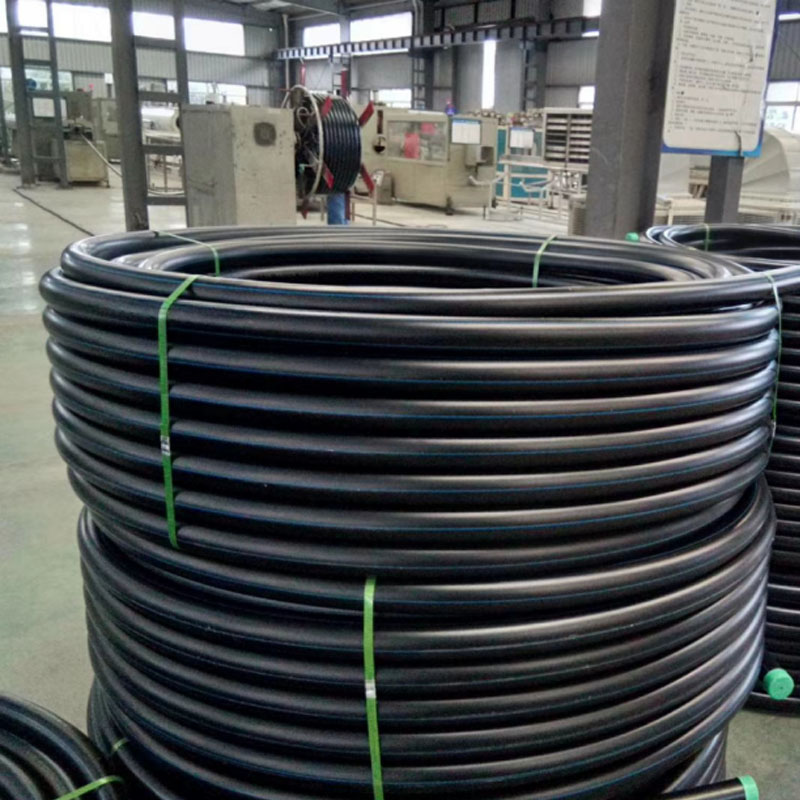
HDPE pipe is manufactured from high-density polyethylene, a thermoplastic polymer produced from the polymerization of ethylene. The density of HDPE typically ranges from 0.93 to 0.97 g/cm³, contributing to its inherent strength and resistance to environmental stress cracking. Raw material selection is paramount; virgin HDPE resin is preferred for potable water applications to ensure purity and compliance with health standards. Recycled HDPE can be utilized in non-potable applications, but stringent quality control measures are required. The primary manufacturing process for HDPE pipe is extrusion. Resin pellets are fed into an extruder, melted, and forced through a die to form a continuous pipe. Key parameters during extrusion include melt temperature (typically 180-210°C), die pressure, and cooling rate. Precise control of these parameters is essential to achieve consistent wall thickness, dimensional accuracy, and a smooth internal surface, minimizing friction losses. Post-extrusion processes include sizing, calibration, and cutting to the desired length. Fusion welding techniques, such as butt fusion, socket fusion, and electrofusion, are commonly employed to join HDPE pipe sections, creating a leak-proof and structurally sound pipeline. The weld quality is critically dependent on operator skill, proper equipment settings, and adherence to established welding procedures. Pipe wall thickness is classified by Schedule Number (e.g., Schedule 40, Schedule 80), reflecting the pressure rating and mechanical strength of the pipe.

Performance & Engineering
The performance of HDPE pipe in water supply applications is governed by its mechanical strength, pressure rating, chemical resistance, and long-term durability. Hydrostatic pressure testing, conducted in accordance with ASTM D1597, verifies the pipe’s ability to withstand internal pressure without failure. The pressure rating, expressed in psi or bar, is a critical parameter for system design. HDPE exhibits excellent resistance to a wide range of chemicals commonly found in water and soil, including acids, bases, and salts, minimizing corrosion and preventing contamination of the water supply. However, prolonged exposure to strong oxidizing agents should be avoided. The flexibility of HDPE allows for significant bending and deformation without cracking, making it suitable for installations in unstable ground conditions or areas prone to seismic activity. Stress analysis, utilizing Finite Element Analysis (FEA) software, is often employed to evaluate the structural integrity of HDPE pipelines under various loading conditions, including internal pressure, external loads from soil cover, and temperature variations. Long-term creep resistance, the ability to maintain structural integrity under sustained stress over extended periods, is a key consideration for pipeline longevity. This is often assessed through accelerated aging tests. Furthermore, HDPE’s smooth internal surface minimizes friction losses, reducing pumping energy requirements and improving hydraulic efficiency.
Technical Specifications
| Parameter | Unit | Typical Value (Schedule 40) | Typical Value (Schedule 80) |
|---|---|---|---|
| Outside Diameter | inch | 0.500 – 65.000 | 0.500 – 65.000 |
| Wall Thickness | inch | 0.062 – 3.750 | 0.093 – 5.770 |
| Pressure Rating (at 73°F) | psi | 100 | 160 |
| Density | g/cm³ | 0.953 – 0.965 | 0.953 – 0.965 |
| Tensile Strength | psi | 4000 – 5000 | 4000 – 5000 |
| Elongation at Break | % | 300 – 500 | 300 – 500 |
Failure Mode & Maintenance
While HDPE pipe is highly durable, several potential failure modes must be considered. Slow Crack Growth (SCG), also known as Environmental Stress Cracking (ESC), can occur due to sustained tensile stress in the presence of certain chemicals or contaminants. This is particularly prevalent in areas with poor water quality or aggressive soil conditions. Fatigue cracking can result from cyclic pressure fluctuations or vibrations. UV degradation can embrittle the pipe material upon prolonged exposure to sunlight. Joint failures, stemming from inadequate welding procedures or defective welds, are also a common cause of leaks. Third-party damage, caused by excavation activities or accidental impacts, can lead to catastrophic failure. Regular inspections, utilizing visual inspection and non-destructive testing methods such as ultrasonic testing, are crucial for detecting potential problems before they escalate. Leak detection surveys, employing acoustic sensors or tracer gases, can identify hidden leaks. Preventative maintenance measures include protecting exposed pipe sections from UV radiation, implementing strict excavation safety protocols, and ensuring proper jointing procedures are followed. In the event of a failure, repair options include cut-and-replace with new pipe sections, or localized repair using specialized HDPE repair sleeves or couplings. Thorough documentation of inspection findings and repair activities is essential for maintaining a reliable water supply system.
Industry FAQ
Q: What is the long-term impact of surge pressure on HDPE pipe systems?
A: Surge pressure, or water hammer, can induce significant stress waves within the pipeline, potentially leading to fatigue cracking and joint failures over time. Proper surge protection devices, such as surge tanks or air release valves, are essential to mitigate these effects. Furthermore, optimizing pump start/stop sequences and utilizing slow-closing valves can minimize surge pressure generation.
Q: How does temperature affect the performance of HDPE pipe?
A: While HDPE exhibits good performance over a wide temperature range, extreme temperatures can influence its mechanical properties. Lower temperatures increase brittleness, while higher temperatures reduce stiffness and increase creep. Pipeline design should account for anticipated temperature fluctuations and soil temperatures. Thermal expansion and contraction should be accommodated through expansion joints or flexible connections.
Q: What are the implications of using different HDPE resin grades for water supply pipes?
A: Different HDPE resin grades (e.g., PE3408, PE4710) offer varying levels of mechanical strength and resistance to environmental stress cracking. Selecting the appropriate resin grade is crucial for ensuring long-term performance and complying with relevant standards. Resin grades intended for potable water applications must meet stringent purity requirements.
Q: What is the recommended burial depth for HDPE pipe, and how does soil type impact this recommendation?
A: The recommended burial depth for HDPE pipe typically ranges from 36 to 48 inches, but this can vary depending on local regulations, frost depth, and soil conditions. In areas with rocky or abrasive soil, additional bedding material should be provided to protect the pipe from damage. Soil type affects thermal conductivity and pipe loading.
Q: How does HDPE pipe compare to PVC pipe in terms of lifecycle cost?
A: While PVC pipe may have a lower initial cost, HDPE pipe generally offers a lower lifecycle cost due to its superior durability, longer lifespan, and reduced maintenance requirements. HDPE’s resistance to corrosion and SCG minimizes the risk of costly repairs or replacements. Furthermore, HDPE’s flexibility reduces installation costs associated with trenching and jointing.
Conclusion
Discount HDPE pipe for water supply represents a robust and cost-effective solution for modern water distribution systems. Its inherent material properties – high density polyethylene’s chemical inertness, flexibility, and weldability – provide a durable, leak-resistant infrastructure capable of withstanding challenging environmental conditions. However, realizing its full potential requires meticulous attention to material selection, installation practices, and ongoing maintenance.
The long-term reliability and economic viability of HDPE pipelines are inextricably linked to adherence to industry standards and best practices. Proper surge protection, UV shielding, and regular inspections are paramount to preventing premature failure and maximizing the service life of the system. Continued research and development in HDPE resin technology and welding techniques will further enhance the performance and sustainability of this vital infrastructure component.
-
DN25 HDPE Compression Fitting-HORON INTERNATIONAL|Reliable Irrigation Solutions
NewsFeb.11,2026
-
hdpe coupling joint product Manufacturing Analysis
News2026-11-18
-
ppr pipe heating time products Performance Analysis
News2026-11-16
-
hdpe pipe sizes factory Performance Analysis
News2026-11-09
-
HDPE Pipe Sizes Service Performance Analysis
News2026-10-26
-
wholesale 15mm ppr pipe Material Science and Performance Analysis
News2026-10-20
-
wholesale pvc pipe price per foot Technical Analysis
News2026-09-21
-
wholesale long pvc pipe Technical Analysis and Manufacturing Specifications
News2026-09-15
-
wholesale plumbing kitchen sink water lines Material Performance
News2026-09-15
-
wholesale hdpe drip irrigation Material Science
News2026-09-15
-
wholesale hot water ppr pipe Performance Analysis
News2026-09-15
-
wholesale ppr plumbing Performance Analysis
News2026-09-15
-
wholesale ppr pipe supplier Performance Analysis
News2026-09-13
-
wholesale 50mm ppr pipe Performance Analysis
News2026-09-13
-
wholesale hdpe drip pipe Performance Analysis
News2026-09-13
-
wholesale hdpe pipe 63mm price Manufacturing Specification and Performance Analysis
News2026-09-13