

Feb . 11, 2026 00:01 Back to list
discount hdpe pipe for sewer line Material Science
Introduction
High-Density Polyethylene (HDPE) pipe for sewer line applications represents a significant advancement in underground infrastructure. Positioned as a cost-effective alternative to traditional materials like concrete, ductile iron, and PVC, HDPE sewer pipe leverages the inherent properties of polyethylene to deliver enhanced durability, chemical resistance, and installation efficiency. This guide provides an in-depth technical overview of discount HDPE sewer pipe, covering its material science, manufacturing processes, performance characteristics, potential failure modes, and relevant industry standards. The adoption of HDPE in sewer applications addresses critical industry pain points, including corrosion, infiltration/exfiltration, and long-term maintenance costs. Discount HDPE pipes are frequently employed in gravity sewer systems, force mains, and drainage applications where a robust and reliable solution is paramount. The 'discount' designation reflects manufacturing efficiencies and optimized material usage without compromising core performance criteria.
Material Science & Manufacturing
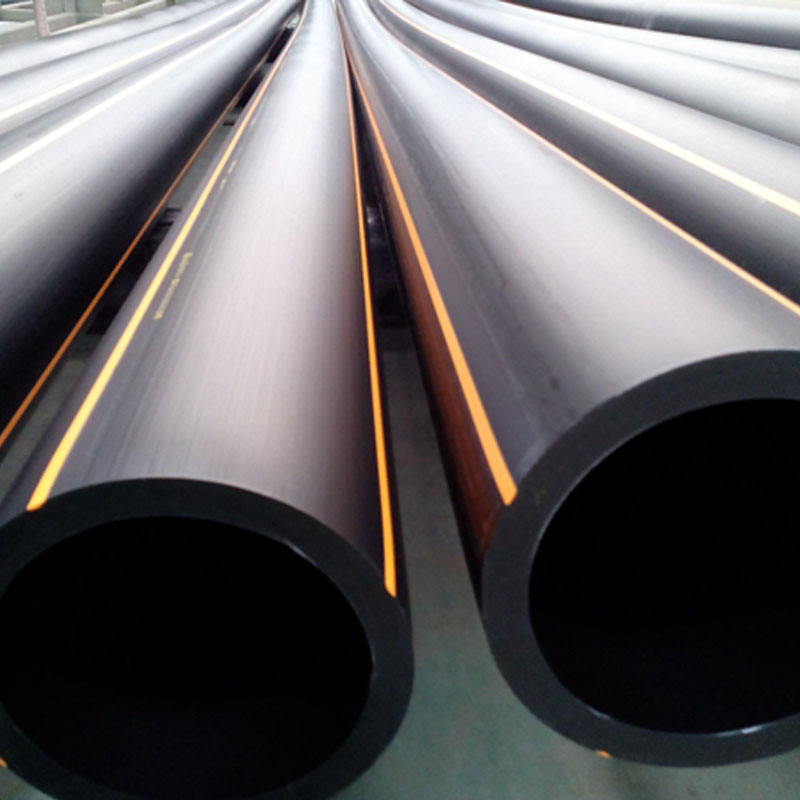
HDPE sewer pipe is manufactured from high-density polyethylene resin, typically grades conforming to ASTM D3350. This resin is characterized by its high molecular weight and low density, contributing to its strength, toughness, and resistance to chemical degradation. The raw material's properties are critical: melt flow index (MFI) dictates processability; density directly correlates to strength; and carbon black content (typically 2-6%) provides UV protection and enhances long-term durability. Manufacturing primarily employs extrusion processes. Resin is fed into an extruder where it's heated and melted, then forced through a die to create a continuous pipe profile. Key parameters during extrusion include barrel temperature profile, screw speed, and die pressure, all of which influence pipe dimensions, wall thickness uniformity, and material crystallinity. The pipe is then cooled, calibrated, and cut to specified lengths. Fusion welding techniques, including butt fusion, socket fusion, and electrofusion, are predominantly used to join HDPE pipe sections in the field. Butt fusion, the most common method, involves heating the pipe ends and pressing them together under controlled pressure, creating a homogenous weld stronger than the base material. Quality control during manufacturing includes hydrostatic testing to ensure pressure integrity and dimensional checks to verify compliance with standards.
Performance & Engineering
The performance of HDPE sewer pipe is governed by its ability to withstand internal hydrostatic pressure, external loads from soil and traffic, and the corrosive environment of sewage. Stress analysis, based on finite element modeling (FEM), is routinely used to optimize pipe wall thickness and ensure structural integrity under various loading conditions. HDPE exhibits high ductility, allowing it to deform significantly before failure, providing a margin of safety against localized stress concentrations. Its resistance to chemical attack is exceptional, unaffected by most acids, alkalis, and salts commonly found in sewage. However, prolonged exposure to strong oxidizing agents should be avoided. Long-term creep resistance is a critical consideration for buried pipelines. HDPE exhibits a time-dependent deformation under constant load, and design calculations must account for this phenomenon. Allowable stress levels are reduced based on design life and operating temperature. Joint performance is equally important. Properly executed fusion welds create joints with strength comparable to, or exceeding, the base pipe material. Leakage at joints is a major cause of infiltration/exfiltration in sewer systems, and strict adherence to welding procedures is essential. Compliance requirements, such as those stipulated by local building codes and environmental regulations, dictate minimum pipe stiffness, wall thickness, and joint integrity standards.
Technical Specifications
| Parameter | Unit | Specification (Typical) | Test Standard |
|---|---|---|---|
| Nominal Pipe Size | inch | 4 – 60 | ASTM D1785 |
| Pressure Rating | psi | Variable based on size & SDR | ASTM D2412 |
| SDR (Standard Dimension Ratio) | - | 6, 9, 11, 17, 21, 26 | - |
| Material | - | PE3408, PE3608 | ASTM D3350 |
| Density | g/cm³ | 0.941 – 0.965 | ASTM D1505 |
| Melt Flow Index | g/10 min | 0.5 – 2.0 | ASTM D1238 |
| Hydrostatic Design Stress | psi | Variable based on SDR & temperature | ASTM D2837 |
Failure Mode & Maintenance
HDPE sewer pipe, while highly durable, is susceptible to certain failure modes. Slow Crack Growth (SCG) is a primary concern, particularly in areas with high sustained stress and exposure to aggressive chemicals. This occurs due to the slow propagation of microcracks, ultimately leading to pipe rupture. Fatigue cracking can also occur due to cyclical loading from traffic or ground movement. Joint failures, typically resulting from improper welding procedures, are another common issue. External corrosion, although HDPE itself is corrosion-resistant, can occur if the pipe is damaged and exposed to aggressive soil conditions. Abrasion from sand and grit in the sewage can gradually wear away the pipe wall, reducing its structural integrity. UV degradation, while mitigated by carbon black, can still occur if the pipe is exposed to prolonged sunlight. Preventative maintenance includes regular visual inspections for cracks, leaks, or deformation. CCTV (Closed-Circuit Television) inspection is a valuable tool for assessing pipe condition and identifying potential problems. Joint integrity can be verified using non-destructive testing methods, such as ultrasonic testing. Should damage occur, repair options include point repairs using fusion-welded patches or complete pipe replacement. Proper backfill and bedding procedures are crucial to prevent external loads from causing damage or inducing stress concentrations.
Industry FAQ
Q: What are the advantages of HDPE over PVC for sewer applications?
A: HDPE offers superior impact resistance, ductility, and chemical resistance compared to PVC. It's less prone to cracking, particularly in cold weather, and its fusion-welded joints provide a leak-tight seal. HDPE's flexibility also simplifies installation in challenging terrain.
Q: How does temperature affect the performance of HDPE sewer pipe?
A: HDPE's strength and stiffness decrease with increasing temperature. Design calculations must account for the maximum operating temperature and its impact on allowable stress levels. Creep deformation is also more pronounced at higher temperatures.
Q: What welding procedures are critical for ensuring joint integrity?
A: Proper surface preparation, correct heating and cooling times, and adequate welding pressure are essential. Welders must be certified and adhere to established procedures (e.g., ASTM F2620). Regular inspection of welds is also crucial.
Q: What is the typical lifespan of an HDPE sewer pipe?
A: With proper installation and maintenance, HDPE sewer pipe can have a lifespan of 50 years or more. Factors influencing lifespan include soil conditions, operating temperature, and the nature of the sewage.
Q: How does HDPE handle infiltration and exfiltration compared to concrete pipe?
A: HDPE, when properly jointed, offers significantly better resistance to infiltration and exfiltration than concrete pipe. The fusion-welded joints create a watertight seal, preventing groundwater from entering the sewer system and sewage from leaking out.
Conclusion
Discount HDPE pipe for sewer line offers a compelling combination of cost-effectiveness, durability, and performance. Its inherent material properties, coupled with established manufacturing and joining techniques, provide a reliable solution for underground wastewater conveyance. Addressing critical industry pain points like corrosion, infiltration, and long-term maintenance costs, HDPE has become a preferred material for many sewer applications.
Future advancements in HDPE resin technology, such as the development of enhanced creep resistance formulations, will further extend the lifespan and performance of these systems. Continued adherence to rigorous quality control standards and proper installation practices remain crucial for maximizing the benefits of HDPE sewer pipe. The economic and environmental advantages of reduced leakage and extended service life position HDPE as a sustainable choice for wastewater infrastructure.
-
DN25 HDPE Compression Fitting-HORON INTERNATIONAL|Reliable Irrigation Solutions
NewsFeb.11,2026
-
hdpe coupling joint product Manufacturing Analysis
News2026-11-18
-
ppr pipe heating time products Performance Analysis
News2026-11-16
-
hdpe pipe sizes factory Performance Analysis
News2026-11-09
-
HDPE Pipe Sizes Service Performance Analysis
News2026-10-26
-
wholesale 15mm ppr pipe Material Science and Performance Analysis
News2026-10-20
-
wholesale pvc pipe price per foot Technical Analysis
News2026-09-21
-
wholesale long pvc pipe Technical Analysis and Manufacturing Specifications
News2026-09-15
-
wholesale plumbing kitchen sink water lines Material Performance
News2026-09-15
-
wholesale hdpe drip irrigation Material Science
News2026-09-15
-
wholesale hot water ppr pipe Performance Analysis
News2026-09-15
-
wholesale ppr plumbing Performance Analysis
News2026-09-15
-
wholesale ppr pipe supplier Performance Analysis
News2026-09-13
-
wholesale 50mm ppr pipe Performance Analysis
News2026-09-13
-
wholesale hdpe drip pipe Performance Analysis
News2026-09-13
-
wholesale hdpe pipe 63mm price Manufacturing Specification and Performance Analysis
News2026-09-13