

Feb . 11, 2026 00:01 Back to list
discount hdpe pipe for potable water Technical Analysis
Introduction
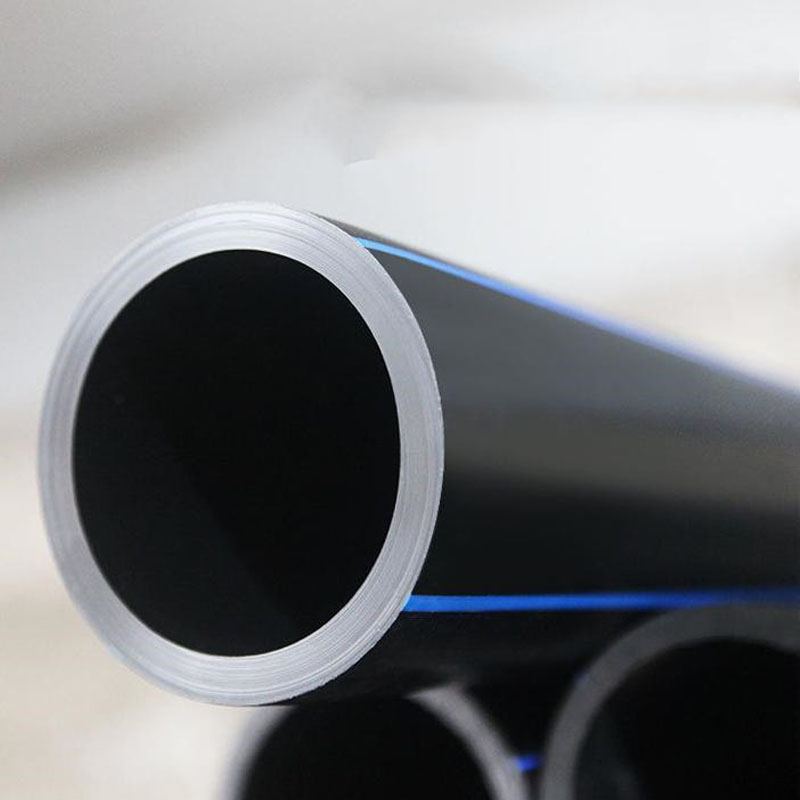
High-Density Polyethylene (HDPE) pipe for potable water applications represents a significant advancement in water distribution infrastructure. Positioned as a cost-effective alternative to traditional materials like ductile iron, concrete, and PVC, HDPE pipes offer a unique combination of durability, flexibility, and chemical resistance. This guide provides a comprehensive technical overview of discounted HDPE pipe specifically designed for potable water systems, focusing on material properties, manufacturing processes, performance characteristics, potential failure modes, and relevant industry standards. Core performance attributes include pressure bearing capacity, long-term hydrostatic strength, resistance to corrosion and scaling, and joint integrity, all crucial considerations for maintaining public health and efficient water delivery. A key industry pain point revolves around balancing initial cost savings with long-term performance and ensuring compliance with stringent potable water regulations. Discounted pricing often raises concerns regarding material quality and manufacturing consistency; this document addresses these concerns with detailed technical analysis.
Material Science & Manufacturing
HDPE pipe for potable water is primarily manufactured from high-density polyethylene resin, typically grades meeting or exceeding ASTM D3350 PE3458 or PE4710 standards. The resin's molecular weight distribution and density directly impact the pipe’s mechanical properties, particularly its tensile strength and resistance to slow crack growth. Raw materials often incorporate additives like carbon black for UV protection, antioxidants to prevent oxidative degradation, and stabilizers to enhance processing. The manufacturing process typically involves extrusion, where the polyethylene resin is melted and forced through a die to create a seamless pipe. Critical parameters during extrusion include melt temperature (typically between 180°C and 210°C), die pressure, and cooling rate. Precise control of these parameters is essential to maintain dimensional accuracy and prevent material defects. Fusion welding, utilizing techniques such as butt fusion, socket fusion, and electrofusion, creates leak-proof joints. Butt fusion, the most common method for larger diameter pipes, involves heating the pipe ends and pressing them together under controlled pressure. Material crystallinity is a crucial property, influencing strength and toughness. Higher crystallinity typically equates to increased rigidity and resistance to creep. Hydrostatic testing is performed on finished pipes to verify pressure-bearing capacity and joint integrity, conforming to standards like ASTM D2412.

Performance & Engineering
The performance of HDPE pipe is heavily influenced by its ability to withstand internal hydrostatic pressure and external loads. Force analysis, governed by Barlow’s Formula (S = P D / 2t, where S=stress, P=pressure, D=diameter, t=wall thickness), dictates the required wall thickness for a given operating pressure and diameter. Long-term hydrostatic strength (LTHS) is a critical design parameter, accounting for the effects of sustained pressure and temperature over the pipe’s service life. LTHS is typically determined through accelerated aging tests, extrapolating performance based on Arrhenius behavior. HDPE exhibits excellent resistance to chemical attack from common water treatment chemicals, including chlorine, chloramines, and fluoride. However, prolonged exposure to certain organic solvents can cause swelling and degradation. Soil loading, including vertical traffic loads and lateral earth pressure, must be considered in burial applications. HDPE’s flexibility allows it to conform to ground movement, minimizing stress concentration. Compliance with NSF/ANSI 61 ensures the pipe material does not leach harmful contaminants into the potable water. Joint performance is paramount; properly fused joints exhibit strength equal to or exceeding that of the pipe itself. Creep resistance, the tendency of the material to deform under sustained load, is an important consideration for long-term performance, particularly at elevated temperatures.
Technical Specifications
| Parameter | Unit | Typical Value (IPS Pipe) | Test Standard |
|---|---|---|---|
| Hydrostatic Design Stress (HDS) | psi | 1600 | ASTM D2412 |
| Long-Term Hydrostatic Strength (LTHS) | psi | 1200 (at 73°F / 23°C) | ASTM D2412 |
| Density | g/cm³ | 0.941 - 0.965 | ASTM D1505 |
| Complete Oxidation Time | hours | >200 | ASTM F891.8 |
| Tensile Strength (at yield) | psi | 4000 - 5000 | ASTM D638 |
| Elongation at Break | % | >300 | ASTM D638 |
Failure Mode & Maintenance
HDPE pipe, while durable, is susceptible to specific failure modes. Slow Crack Growth (SCG) is a primary concern, initiated by pre-existing flaws or stress concentrations and accelerated by sustained tensile stress and exposure to certain chemicals. Environmental Stress Cracking (ESC) is similar, but often triggered by specific aggressive environments. Fatigue cracking can occur in areas subjected to cyclical pressure fluctuations or vibrations. Joint failures are typically caused by inadequate fusion welding procedures, improper surface preparation, or contamination during the fusion process. Oxidation can degrade the material over time, particularly in high-temperature environments. Maintenance typically involves periodic inspections for visual defects such as cracks, leaks, or deformation. Leak detection methods include acoustic monitoring and pressure testing. Minor surface scratches can be repaired using compatible HDPE welding rods. For significant damage, section replacement is often the most practical solution. Preventing SCG requires careful material selection, proper installation techniques (minimizing stress concentration), and avoiding contact with incompatible chemicals. Regular flushing of the pipeline can help remove sediment and debris that could contribute to SCG initiation. Proper backfilling procedures are crucial to distribute external loads evenly and prevent pipe deformation.
Industry FAQ
Q: What is the impact of temperature on the long-term performance of HDPE pipe?
A: Elevated temperatures accelerate the degradation of HDPE, reducing its LTHS and increasing the risk of creep. Temperature derating factors, as outlined in ASTM D3261, must be applied to the HDS to account for operating temperatures above 73°F (23°C). Conversely, lower temperatures generally enhance the long-term performance, but can increase brittleness.
Q: How does the quality of discounted HDPE pipe compare to premium brands?
A: Discounts are often achieved through reduced resin costs or streamlined manufacturing processes. It’s crucial to verify that discounted pipe meets all relevant ASTM and NSF/ANSI standards. Independent laboratory testing can confirm material properties and dimensional accuracy. Focus on verifying certifications and traceability of the raw materials.
Q: What are the recommended jointing procedures for HDPE pipe in potable water applications?
A: Butt fusion is the preferred method for larger diameter pipes, ensuring a homogenous weld. Socket fusion is suitable for smaller diameters. Electrofusion provides enhanced control and traceability. All procedures must be performed by certified technicians using calibrated equipment. Proper surface preparation and cleanliness are critical for achieving a leak-proof joint.
Q: What is the expected service life of HDPE pipe for potable water?
A: Properly installed and maintained HDPE pipe can have a service life exceeding 50 years. The actual lifespan depends on operating conditions, water quality, soil characteristics, and the effectiveness of maintenance programs. Regular inspections and proactive repairs are essential for maximizing service life.
Q: How does HDPE pipe handle seismic activity?
A: HDPE’s flexibility provides excellent resistance to seismic activity. The pipe can conform to ground movement without fracturing, minimizing the risk of leaks. However, proper anchoring and restraint systems are necessary to prevent excessive movement and stress concentration at joints.
Conclusion
Discounted HDPE pipe for potable water offers a viable and cost-effective solution for water distribution systems, provided that stringent quality control measures are implemented. A thorough understanding of the material’s properties, manufacturing processes, and potential failure modes is paramount to ensuring long-term performance and compliance with industry standards. By prioritizing adherence to established specifications like ASTM D3350 and NSF/ANSI 61, and conducting rigorous quality assurance testing, the benefits of HDPE – durability, flexibility, and chemical resistance – can be realized without compromising the integrity of the potable water supply.
Looking ahead, advancements in HDPE resin technology and welding techniques will further enhance the performance and reliability of these systems. Continued research into SCG mitigation strategies and innovative inspection methods will be crucial for extending service life and minimizing maintenance costs. The adoption of smart pipeline monitoring technologies, coupled with data analytics, will enable proactive maintenance and optimize water distribution efficiency. Ultimately, the successful implementation of discounted HDPE pipe relies on a holistic approach that integrates material science, engineering principles, and best practices in installation and maintenance.
-
DN25 HDPE Compression Fitting-HORON INTERNATIONAL|Reliable Irrigation Solutions
NewsFeb.11,2026
-
hdpe coupling joint product Manufacturing Analysis
News2026-11-18
-
ppr pipe heating time products Performance Analysis
News2026-11-16
-
hdpe pipe sizes factory Performance Analysis
News2026-11-09
-
HDPE Pipe Sizes Service Performance Analysis
News2026-10-26
-
wholesale 15mm ppr pipe Material Science and Performance Analysis
News2026-10-20
-
wholesale pvc pipe price per foot Technical Analysis
News2026-09-21
-
wholesale long pvc pipe Technical Analysis and Manufacturing Specifications
News2026-09-15
-
wholesale plumbing kitchen sink water lines Material Performance
News2026-09-15
-
wholesale hdpe drip irrigation Material Science
News2026-09-15
-
wholesale hot water ppr pipe Performance Analysis
News2026-09-15
-
wholesale ppr plumbing Performance Analysis
News2026-09-15
-
wholesale ppr pipe supplier Performance Analysis
News2026-09-13
-
wholesale 50mm ppr pipe Performance Analysis
News2026-09-13
-
wholesale hdpe drip pipe Performance Analysis
News2026-09-13
-
wholesale hdpe pipe 63mm price Manufacturing Specification and Performance Analysis
News2026-09-13