

Feb . 11, 2026 00:01 Back to list
discount hdpe pipe 24 inch Performance Analysis

Introduction
High-Density Polyethylene (HDPE) pipe, specifically a 24-inch diameter variant, represents a critical component in a wide range of infrastructure projects. Its application spans water distribution, sewer systems, gas transmission, industrial piping, and increasingly, specialized applications like slurry transport and mining operations. This guide details the technical aspects of 24-inch HDPE pipe, focusing on material science, manufacturing processes, performance characteristics, potential failure modes, and relevant industry standards. The 24-inch size is a common specification for large-diameter gravity flow systems and low-pressure applications where cost-effectiveness and long-term durability are paramount. The current market demand for "discount" HDPE pipe necessitates a deep understanding of manufacturing variations and their impact on performance to ensure appropriate material selection for specific applications. This document aims to provide a comprehensive technical overview for engineers, procurement managers, and project stakeholders.
Material Science & Manufacturing
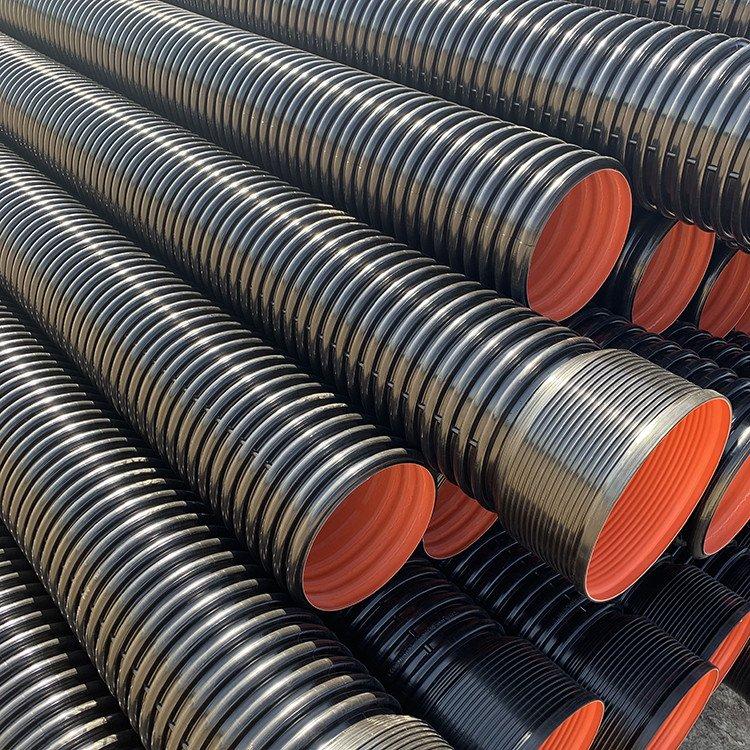
The foundation of 24-inch HDPE pipe lies in the properties of High-Density Polyethylene itself. HDPE is a thermoplastic polymer derived from the polymerization of ethylene. Its high density (typically between 0.931 and 0.955 g/cm³) results in a material with excellent tensile strength, impact resistance, and chemical inertness. Crucially, the specific grade of HDPE used (e.g., PE3408, PE4710) significantly impacts performance. PE4710, for example, exhibits superior slow crack growth resistance. Raw material resin selection is the first critical parameter. Manufacturing commonly employs extrusion processes. The HDPE resin is melted and forced through a circular die to form a continuous pipe. Extrusion parameters – melt temperature (typically 180-210°C), die pressure, and cooling rate – directly influence pipe wall thickness uniformity, crystallinity, and ultimately, long-term performance. For 24-inch pipe, co-extrusion is often used to create multi-layered structures; a black outer layer provides UV protection, while an inner layer might incorporate additives for enhanced chemical resistance or reduced friction. Jointing methods are equally crucial. Butt fusion is the dominant technique for large-diameter HDPE pipes, requiring precise temperature control (typically 130-180°C for heating phases, followed by cooling under pressure) and alignment to ensure a homogenous weld. The quality of the butt fusion joint is paramount; inadequate heating or cooling can lead to premature failure. Pipe wall thickness is determined by design calculations based on internal pressure, external loads, and required safety factors, typically adhering to standards like AWWA M55.
Performance & Engineering
The performance of a 24-inch HDPE pipe is governed by several key engineering considerations. Firstly, pressure rating is critical, dictated by the pipe’s dimensions (diameter and wall thickness) and the material’s hydrostatic design basis (HDB). The HDB, expressed in psi, represents the long-term hydrostatic strength of the HDPE. For 24-inch pipes, typical HDB values range from 1600 to 2000 psi, depending on the HDPE grade and manufacturing process. Force analysis must account for both internal pressure and external loads, including soil overburden, traffic loads (if buried), and bending stresses due to installation. HDPE’s flexibility allows it to accommodate ground movement and seismic activity better than rigid materials like concrete or ductile iron. Environmental resistance is another key aspect. HDPE exhibits excellent resistance to most chemicals, but prolonged exposure to strong oxidizing agents should be avoided. UV degradation is a concern, necessitating the use of carbon black or UV stabilizers in the pipe’s outer layer. Long-term creep resistance is also important, particularly in applications involving sustained internal pressure. HDPE exhibits creep, a time-dependent deformation under constant load, but this can be mitigated through appropriate material selection and design considerations. Compliance requirements vary by region and application. For potable water systems, the HDPE must comply with NSF/ANSI 61 standards for leaching of contaminants. For gas transmission, compliance with DOT regulations (in the US) and similar standards elsewhere is essential. The pipe’s ability to handle surge pressures (water hammer) must also be evaluated during design.
Technical Specifications
| Parameter | Unit | Typical Value (PE4710 Grade) | Test Standard |
|---|---|---|---|
| Nominal Diameter | inch | 24 | ASTM D2239 |
| Standard Dimension Ratio (SDR) | - | 17.6 | ASTM D2239 |
| Wall Thickness | mm | 8.5 | ASTM D2239 |
| Hydrostatic Design Basis (HDB) | psi | 1600 | ASTM D2239 |
| Long-Term Hydrostatic Strength | psi | 1280 | ASTM D2837 |
| Tensile Strength at Yield | MPa | 32 | ASTM D638 |
| Elongation at Break | % | 450 | ASTM D638 |
Failure Mode & Maintenance
HDPE pipe, while durable, is susceptible to several failure modes. Slow Crack Growth (SCG) is a primary concern, initiated by sustained tensile stresses and exacerbated by the presence of aggressive chemicals or notches on the pipe surface. SCG typically occurs at stress concentrations. Another failure mode is Rapid Crack Propagation (RCP), a brittle fracture that can propagate rapidly through the pipe wall once initiated. RCP is often triggered by localized damage or impact. Environmental Stress Cracking (ESC) is similar to SCG but occurs at lower stress levels in the presence of specific chemicals. Joint failures are also common, often resulting from inadequate butt fusion welding – incomplete fusion, misalignment, or contamination during the welding process. UV degradation can lead to embrittlement of the pipe’s outer layer, reducing its impact resistance. Soil stresses can induce ovalization and cracking, particularly if the pipe is not adequately bedded or backfilled. Maintenance primarily focuses on preventative measures. Regular visual inspections for cracks, deformations, and joint leaks are crucial. Proper bedding and backfill procedures are essential to distribute external loads evenly. Cathodic protection is generally not required for HDPE, as it is non-metallic. If repairs are necessary, cut-and-fuse techniques are typically employed, requiring skilled technicians and appropriate welding equipment. For significant damage, pipe replacement may be the most practical solution. Pressure testing is recommended after any repair to ensure joint integrity.
Industry FAQ
Q: What is the impact of SDR on pipe performance and cost?
A: Standard Dimension Ratio (SDR) defines the relationship between pipe diameter and wall thickness. A lower SDR indicates a thicker wall, resulting in a higher pressure rating and greater structural strength, but also increased material cost. Selecting the appropriate SDR involves balancing performance requirements with budgetary constraints. For example, a higher SDR pipe may be necessary for high-pressure applications or challenging soil conditions.
Q: How does the PE grade affect long-term performance?
A: The PE grade, such as PE3408 or PE4710, dictates the material’s inherent properties, including tensile strength, creep resistance, and SCG resistance. PE4710 offers superior SCG resistance compared to PE3408, making it a preferred choice for applications where sustained tensile stress or exposure to aggressive environments is anticipated, despite a potentially higher initial cost.
Q: What quality control measures are critical during butt fusion welding?
A: Critical quality control measures include verifying the cleanliness of the fusion surfaces, ensuring proper heating temperatures and times, maintaining adequate fusion pressure, and performing visual inspection and non-destructive testing (e.g., visual inspection, pull tests) of the completed weld. Proper operator training and adherence to established welding procedures are also paramount.
Q: What are the key considerations for bedding and backfill around the pipe?
A: Bedding material should be properly compacted and free of sharp objects that could damage the pipe. Adequate cover height is essential to protect the pipe from external loads. Granular bedding materials are preferred to promote uniform load distribution. Backfill material should also be compacted in layers to prevent settling and potential pipe stress.
Q: What is the typical service life expectancy of a properly installed 24-inch HDPE pipe?
A: With proper material selection, installation, and maintenance, a 24-inch HDPE pipe can have a service life exceeding 50 years, and potentially up to 100 years. However, the actual lifespan is dependent on operating conditions, environmental factors, and adherence to industry standards.
Conclusion
The 24-inch HDPE pipe represents a robust and cost-effective solution for a diverse array of infrastructure applications. Its inherent properties – flexibility, chemical resistance, and durability – coupled with established joining techniques like butt fusion, provide a reliable and long-lasting piping system. However, realizing these benefits requires a thorough understanding of material science, manufacturing nuances, and potential failure modes. The selection of the appropriate PE grade, adherence to stringent quality control during welding, and proper installation practices are all essential for maximizing the pipe’s service life and minimizing the risk of premature failure.
Moving forward, advancements in HDPE resin technology and welding techniques will continue to enhance the performance and reliability of these systems. The growing emphasis on sustainability and lifecycle cost analysis will likely further drive the adoption of HDPE pipe in various infrastructure projects. Ongoing research into SCG mitigation strategies and improved non-destructive testing methods will also play a crucial role in ensuring the long-term integrity of these vital assets.
-
DN25 HDPE Compression Fitting-HORON INTERNATIONAL|Reliable Irrigation Solutions
NewsFeb.11,2026
-
hdpe coupling joint product Manufacturing Analysis
News2026-11-18
-
ppr pipe heating time products Performance Analysis
News2026-11-16
-
hdpe pipe sizes factory Performance Analysis
News2026-11-09
-
HDPE Pipe Sizes Service Performance Analysis
News2026-10-26
-
wholesale 15mm ppr pipe Material Science and Performance Analysis
News2026-10-20
-
wholesale pvc pipe price per foot Technical Analysis
News2026-09-21
-
wholesale long pvc pipe Technical Analysis and Manufacturing Specifications
News2026-09-15
-
wholesale plumbing kitchen sink water lines Material Performance
News2026-09-15
-
wholesale hdpe drip irrigation Material Science
News2026-09-15
-
wholesale hot water ppr pipe Performance Analysis
News2026-09-15
-
wholesale ppr plumbing Performance Analysis
News2026-09-15
-
wholesale ppr pipe supplier Performance Analysis
News2026-09-13
-
wholesale 50mm ppr pipe Performance Analysis
News2026-09-13
-
wholesale hdpe drip pipe Performance Analysis
News2026-09-13
-
wholesale hdpe pipe 63mm price Manufacturing Specification and Performance Analysis
News2026-09-13