

Feb . 11, 2026 00:01 Back to list
discount hdpe double wall corrugated pipe Performance Analysis
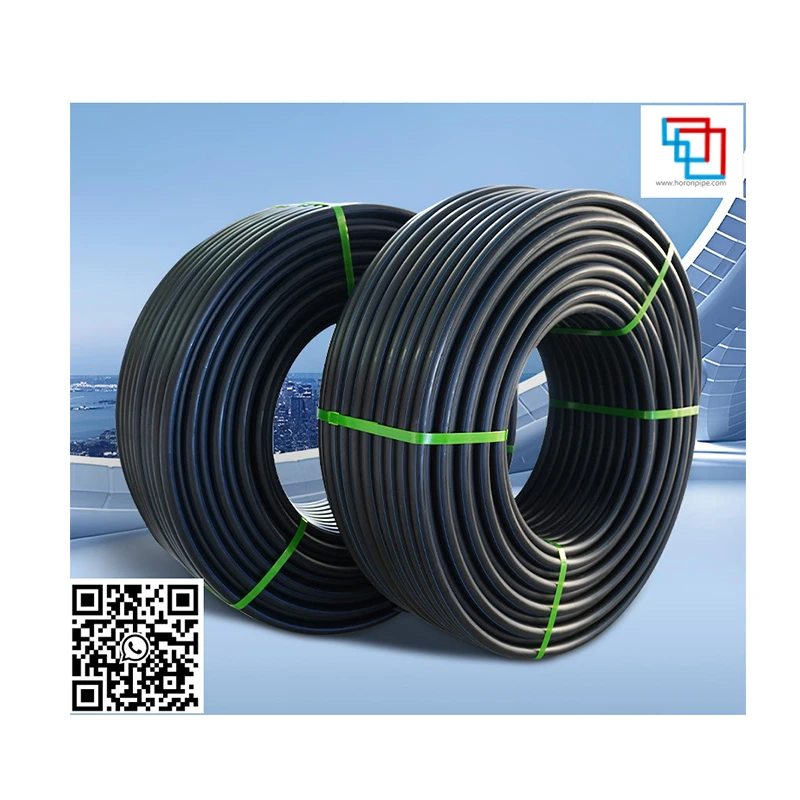
Introduction
High-Density Polyethylene (HDPE) double wall corrugated pipe represents a significant advancement in subsurface drainage and conveyance systems. Positioned within the broader infrastructure materials sector, it serves as a cost-effective and durable alternative to traditional materials like concrete, steel, and PVC. This guide provides an in-depth technical overview of discount HDPE double wall corrugated pipe, covering its material science, manufacturing processes, performance characteristics, potential failure modes, and relevant industry standards. Its core performance lies in its high strength-to-weight ratio, excellent chemical resistance, and corrugated profile which provides structural integrity under load. A critical application area is stormwater management, where minimizing infiltration and maximizing flow capacity are paramount. Cost-effectiveness is a key driver for its adoption, particularly in large-scale infrastructure projects, and increasingly, in agricultural drainage applications. The "discount" designation refers to competitive pricing strategies, primarily achieved through efficient manufacturing and economies of scale, without compromising core material properties or adherence to quality standards. Understanding these aspects is crucial for engineers, procurement managers, and contractors to make informed decisions regarding its selection and implementation.
Material Science & Manufacturing
The primary raw material for this pipe is high-density polyethylene (HDPE), a thermoplastic polymer known for its high tensile strength, chemical inertness, and flexibility. HDPE used in corrugated pipe typically falls within the resin density range of 0.941 to 0.965 g/cm³. Crucially, the grade of HDPE impacts the pipe’s performance; higher densities generally correlate with increased stiffness and load-bearing capacity. Additives such as carbon black are incorporated to provide UV resistance, protecting the pipe from degradation due to prolonged sunlight exposure. Manufacturing primarily involves extrusion and corrugation. The HDPE resin is melted and extruded through a circular die to form a smooth inner layer. This is followed by extrusion through a corrugated die, creating the characteristic ridged outer profile. The two layers—smooth inner and corrugated outer—are co-extruded, creating a bonded structure. Key process parameters requiring strict control include melt temperature (typically 180-220°C), extrusion speed, cooling rate, and corrugation profile dimensions. Incorrect cooling can lead to warping or dimensional instability. The corrugation profile itself (typically sinusoidal or annular) is engineered to optimize the pipe's bending stiffness and resistance to external loads. Wall thickness, rib height, and spacing are critical design parameters, directly influencing the pipe’s performance under load. Variations in these parameters can dramatically affect the pipe’s structural integrity and long-term durability. Quality control during manufacturing involves dimensional checks of inner diameter, outer diameter, wall thickness, corrugation profile, and visual inspection for defects such as cracks or voids.
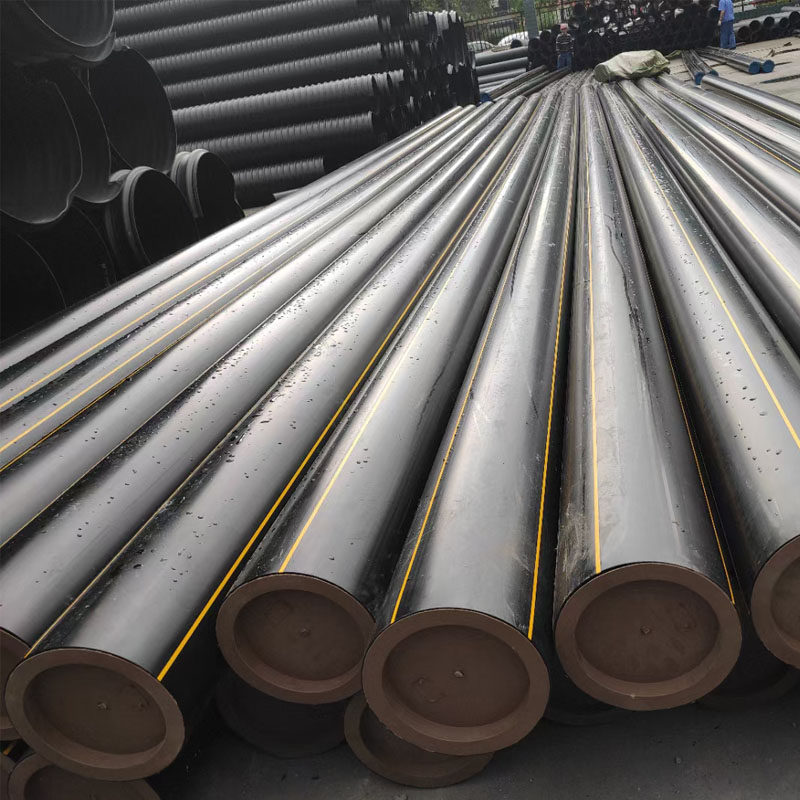
Performance & Engineering
The performance of HDPE double wall corrugated pipe is fundamentally governed by its ability to withstand both internal hydrostatic pressure and external loads. External loads include soil overburden, surface traffic, and concentrated point loads. The corrugated structure significantly enhances the pipe’s bending stiffness, allowing it to distribute loads more effectively compared to smooth-walled pipes. Engineering calculations for load-bearing capacity rely on principles of ring compression and buckling analysis. The pipe’s ring stiffness (measured in psi) is a key parameter, indicating its resistance to flattening under external pressure. This is particularly important in trenchless installation methods such as directional drilling. Environmental resistance is another critical performance attribute. HDPE exhibits excellent resistance to a wide range of chemicals, including acids, alkalis, and solvents commonly found in soil and wastewater. However, long-term exposure to certain aggressive chemicals, or high temperatures, can lead to degradation. UV resistance, achieved through the incorporation of carbon black, is essential for above-ground applications. Compliance requirements vary depending on the application and geographical location. For stormwater management, adherence to local drainage codes and regulations is mandatory. For gravity sewer applications, compliance with ASTM F2306 is critical. Proper installation practices are paramount. Adequate bedding and backfill material are essential to provide uniform support and prevent localized stress concentrations. Geotextiles are often used to separate the pipe from the surrounding soil, preventing abrasion and maintaining its structural integrity. Joints are typically sealed using gaskets or couplers to ensure watertight connections and prevent infiltration.
Technical Specifications
| Parameter | Units | Typical Value | Test Method |
|---|---|---|---|
| Nominal Diameter | inches | 12-60 | ASTM D2412 |
| Ring Stiffness | psi | 35-75 | ASTM D2412 |
| Tensile Strength | psi | 4000-5000 | ASTM D638 |
| Elongation at Break | % | 300-500 | ASTM D638 |
| Impact Resistance (IZOD Notched) | ft-lb/in | 10-20 | ASTM D256 |
| Hydrostatic Design Stress | psi | 1600-2000 | ASTM F2306 |
Failure Mode & Maintenance
Several failure modes can affect the long-term performance of HDPE double wall corrugated pipe. Fatigue cracking, induced by repeated loading and unloading, is a common issue, particularly in applications subject to heavy traffic or seismic activity. This is exacerbated by stress concentrations around joints or imperfections in the pipe wall. Environmental stress cracking (ESC) can occur due to the combined effects of stress, aggressive chemicals, and temperature. UV degradation, despite the presence of carbon black, can lead to embrittlement and reduced strength over extended periods of sunlight exposure. Delamination, the separation of the inner and outer layers, can occur due to inadequate bonding during manufacturing or damage during installation. Oxidation can affect the HDPE material, leading to reduced mechanical properties and increased susceptibility to cracking. Maintenance typically involves periodic visual inspections to identify signs of damage, such as cracks, deformation, or joint leakage. Minor cracks can sometimes be repaired using specialized HDPE welding techniques. However, significant damage usually necessitates replacement of the affected pipe section. Preventative measures include proper installation practices, adequate bedding and backfill, and protection from UV exposure. Regular cleaning to remove debris and sediment can also help prevent blockages and maintain flow capacity. For applications involving aggressive chemicals, periodic testing of the pipe material is recommended to assess its condition and predict its remaining service life.
Industry FAQ
Q: What is the long-term creep resistance of this HDPE pipe, and how does it compare to PVC?
A: HDPE exhibits a degree of creep—time-dependent deformation under sustained load—but it’s generally lower than that of PVC. This is due to HDPE's higher molecular weight and crystalline structure. However, creep is highly dependent on temperature and stress levels. At higher temperatures and loads, creep rates increase. For long-term applications, particularly those involving sustained loads, engineers should factor in creep considerations using established design methodologies and appropriate safety factors. The corrugation profile significantly enhances creep resistance by distributing the load over a larger area.
Q: How does the corrugated design impact the hydraulic capacity compared to a smooth-walled pipe of the same diameter?
A: While the corrugated design reduces the internal diameter slightly, the increased rigidity and ability to withstand greater external loads allows for shallower burial depths and potentially steeper slopes. The reduced friction factor associated with HDPE, coupled with the structural benefits of the corrugated profile, often results in comparable or even improved hydraulic capacity, especially in gravity flow applications. Accurate hydraulic modeling is necessary to determine the optimal pipe size and slope for a specific application.
Q: What is the expected service life of this pipe in typical soil conditions, and what factors can accelerate degradation?
A: Under typical soil conditions, with proper installation and adequate protection from UV exposure, the expected service life of HDPE double wall corrugated pipe is 50-100 years. Factors that can accelerate degradation include exposure to aggressive chemicals, high temperatures, excessive stress concentrations, and UV radiation. Soil pH and moisture content also play a role. Highly acidic or alkaline soils can promote degradation, as can soils with high concentrations of sulfates or chlorides.
Q: What are the recommended bedding and backfill materials to ensure long-term stability and prevent pipe deformation?
A: The recommended bedding material is a well-graded granular material, such as sand or gravel, that provides uniform support and prevents point loading. Backfill material should be non-corrosive, free of sharp objects, and properly compacted to minimize settlement and provide adequate lateral support. Geotextiles should be used to separate the pipe from the surrounding soil, preventing abrasion and maintaining its structural integrity. Compaction levels should adhere to local engineering standards and manufacturer’s recommendations.
Q: How does this pipe perform in seismic zones, and are there any specific design considerations for earthquake-prone areas?
A: HDPE double wall corrugated pipe exhibits good flexibility and energy absorption capabilities, making it relatively resilient in seismic zones. The corrugated structure allows the pipe to deform and accommodate ground movement without fracturing. However, in earthquake-prone areas, special attention should be paid to joint integrity and anchoring to prevent pipe separation or displacement. Flexible couplings and seismic restraints may be necessary to ensure the pipeline’s stability during seismic events. Site-specific geotechnical investigations and seismic hazard assessments are crucial for determining appropriate design parameters.
Conclusion
Discount HDPE double wall corrugated pipe offers a compelling combination of durability, cost-effectiveness, and ease of installation, making it a preferred choice for a wide range of drainage and conveyance applications. Its material properties, coupled with the engineered corrugated structure, provide excellent resistance to both internal and external loads, ensuring long-term performance and reliability. Understanding the nuances of material science, manufacturing processes, and potential failure modes is critical for maximizing its lifespan and minimizing maintenance requirements.
Future advancements in HDPE resin technology and manufacturing techniques promise even further improvements in pipe performance and sustainability. Ongoing research is focused on developing enhanced UV stabilizers, increasing impact resistance, and optimizing corrugation profiles for specific applications. Proper installation practices and adherence to relevant industry standards remain paramount to realizing the full benefits of this versatile and cost-effective infrastructure material.
-
DN25 HDPE Compression Fitting-HORON INTERNATIONAL|Reliable Irrigation Solutions
NewsFeb.11,2026
-
hdpe coupling joint product Manufacturing Analysis
News2026-11-18
-
ppr pipe heating time products Performance Analysis
News2026-11-16
-
hdpe pipe sizes factory Performance Analysis
News2026-11-09
-
HDPE Pipe Sizes Service Performance Analysis
News2026-10-26
-
wholesale 15mm ppr pipe Material Science and Performance Analysis
News2026-10-20
-
wholesale pvc pipe price per foot Technical Analysis
News2026-09-21
-
wholesale long pvc pipe Technical Analysis and Manufacturing Specifications
News2026-09-15
-
wholesale plumbing kitchen sink water lines Material Performance
News2026-09-15
-
wholesale hdpe drip irrigation Material Science
News2026-09-15
-
wholesale hot water ppr pipe Performance Analysis
News2026-09-15
-
wholesale ppr plumbing Performance Analysis
News2026-09-15
-
wholesale ppr pipe supplier Performance Analysis
News2026-09-13
-
wholesale 50mm ppr pipe Performance Analysis
News2026-09-13
-
wholesale hdpe drip pipe Performance Analysis
News2026-09-13
-
wholesale hdpe pipe 63mm price Manufacturing Specification and Performance Analysis
News2026-09-13