

Feb . 11, 2026 00:01 Back to list
discount hdpe coupling joint Performance Analysis
Introduction
High-Density Polyethylene (HDPE) coupling joints are integral components in fluid transfer systems across diverse industries, including municipal water distribution, industrial processing, irrigation, and gas distribution. These couplings provide a reliable, leak-proof connection for HDPE pipes, offering advantages over traditional materials like metal in terms of corrosion resistance, weight, and installation efficiency. A 'discount' HDPE coupling joint refers to a product offered at a competitive price point, frequently through bulk purchasing or direct-from-manufacturer sourcing. Their technical position within the industry chain is as a critical connecting element – directly impacting system integrity and long-term operational costs. Core performance characteristics include pressure rating, leak tightness, resistance to chemical degradation, and ease of installation, all of which are dictated by material properties, manufacturing tolerances, and adherence to industry standards. The primary pain point in the industry revolves around maintaining consistent joint integrity over extended service life, particularly in aggressive environmental conditions or with fluctuating pressures, while balancing cost-effectiveness.
Material Science & Manufacturing
The primary material for HDPE coupling joints is, naturally, high-density polyethylene, typically a grade specifically formulated for pressure applications. HDPE is a thermoplastic polymer created from the polymerization of ethylene. Key physical properties include a density ranging from 0.93 to 0.97 g/cm³, a tensile strength of 20-30 MPa, and a relatively low coefficient of friction. Crucially, the molecular weight distribution of the HDPE resin directly impacts its long-term creep resistance – a key factor in maintaining joint tightness under sustained pressure. Manufacturing typically involves injection molding, rotational molding, or compression molding, depending on the coupling’s size and complexity. Injection molding is preferred for high-volume production of smaller couplings, offering tight tolerances and consistent part quality. During injection molding, precise control of melt temperature (180-250°C), mold temperature (30-50°C), and injection pressure is essential to minimize residual stresses and ensure complete filling of the mold cavity. Critical parameter control also includes the cooling rate, which influences crystallinity and subsequent mechanical properties. Welding processes, such as butt fusion or electrofusion, are often employed to join HDPE couplings to the pipeline. These methods rely on heating the HDPE materials to their melting point and fusing them together, creating a homogenous joint. Proper surface preparation and precise temperature control are crucial for successful welds, preventing oxidation and ensuring adequate penetration.
Performance & Engineering
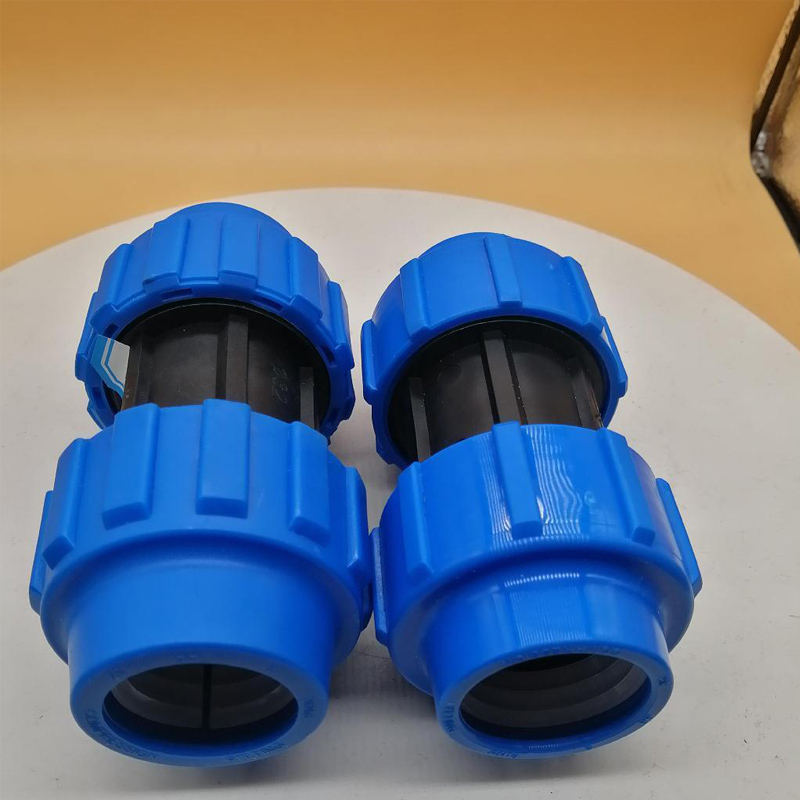
The performance of an HDPE coupling joint is fundamentally dictated by its ability to withstand internal pressure and external loads while maintaining a leak-tight seal. Force analysis involves calculating hoop stress within the coupling body under various pressure scenarios, considering the pipe diameter, wall thickness, and operating temperature. Fatigue analysis is essential, as repeated pressure cycles can induce crack propagation, particularly at stress concentration points (e.g., around weld seams or fitting interfaces). Environmental resistance is paramount. HDPE exhibits excellent resistance to many chemicals, but prolonged exposure to oxidizing agents (e.g., chlorine, nitric acid) can cause degradation. UV exposure can also lead to embrittlement, necessitating the incorporation of UV stabilizers in the HDPE formulation. Compliance requirements vary by region and application. For potable water systems, couplings must comply with NSF/ANSI 61 standards for leaching of harmful contaminants. For gas distribution, compliance with DOT regulations is mandatory. The functional implementation relies on the coupling’s specific design (e.g., socket fusion, compression, flanged). Socket fusion couplings utilize a heating tool to melt the pipe end and coupling socket, creating a welded joint. Compression couplings rely on a rubber gasket and mechanical compression to create a seal. Flanged couplings provide a bolted connection, suitable for larger diameters and higher pressures. Ensuring proper installation procedures are followed is critical to achieving optimal performance. This includes correct pipe alignment, adequate weld parameters, and proper tightening of compression fittings.
Technical Specifications
| Parameter | Units | Standard Specification (Typical) | Discount HDPE Coupling Joint Range |
|---|---|---|---|
| Pressure Rating | psi | 100-400 | 100-350 |
| Operating Temperature | °F | -40 to 140 | -40 to 140 |
| Material | - | PE100 | PE100/PE80 (depending on grade) |
| Joint Type | - | Socket Fusion, Butt Fusion, Compression | Socket Fusion, Compression |
| Diameter Range | inches | 0.5 to 63 | 0.5 to 24 |
| Standards Compliance | - | ASTM D3261, NSF/ANSI 61 | ASTM D3261 (typically) |
Failure Mode & Maintenance
HDPE coupling joints, while robust, are susceptible to several failure modes. Fatigue cracking can occur at stress concentration points due to repeated pressure cycles. This is exacerbated by improper installation or the presence of sharp edges. Creep rupture is a long-term failure mode resulting from the gradual deformation of the HDPE material under sustained pressure, particularly at elevated temperatures. Chemical attack from aggressive substances can lead to material degradation and loss of mechanical properties. Oxidation, especially in the presence of UV radiation, can cause embrittlement and cracking. Delamination can occur in couplings manufactured with insufficient fusion or inadequate bonding between layers. A common failure mode in compression couplings is gasket failure due to degradation, improper installation, or exceeding the pressure rating. Maintenance involves regular visual inspections for cracks, leaks, or signs of degradation. Periodic pressure testing can verify the integrity of the system. If leaks are detected, the affected coupling should be replaced. For welded joints, non-destructive testing methods (e.g., ultrasonic testing) can assess weld quality. Preventative maintenance includes protecting the couplings from direct sunlight and harsh chemicals. Proper storage conditions (avoiding excessive heat and UV exposure) are also crucial for maintaining their long-term performance. Addressing any ground movement or settling that might induce stress on the pipeline is also essential.
Industry FAQ
Q: What is the typical lifespan of a discount HDPE coupling joint in a potable water application?
A: The expected lifespan of an HDPE coupling joint in a potable water application typically ranges from 50 to 100 years, assuming proper installation and operation within specified pressure and temperature limits. However, water quality (e.g., chlorine levels) and soil conditions can influence longevity. Regular inspections and maintenance are vital to maximize service life.
Q: How does the quality of a ‘discount’ HDPE coupling joint compare to a premium brand?
A: ‘Discount’ HDPE coupling joints often utilize slightly lower-grade HDPE resin or have less stringent quality control measures during manufacturing. This can result in reduced creep resistance, lower impact strength, and potentially shorter service life. Premium brands generally offer superior material properties, tighter tolerances, and more comprehensive testing.
Q: What are the critical considerations when selecting an HDPE coupling joint for a gas distribution system?
A: For gas distribution, the coupling joint must meet stringent safety standards (e.g., DOT regulations). Leak tightness is paramount, and the joint must be resistant to permeation of natural gas. The material must also be compatible with the gas being transported. Pressure testing and adherence to proper installation procedures are crucial.
Q: Can HDPE coupling joints be used for connecting different pipe materials (e.g., HDPE to PVC)?
A: Direct connection between HDPE and PVC is not recommended due to differences in thermal expansion coefficients and material compatibility. Transition couplings specifically designed for connecting dissimilar materials, often incorporating a rubber gasket and mechanical compression, must be used. Careful consideration of pressure and temperature fluctuations is also essential.
Q: What is the impact of improper fusion welding on the performance of an HDPE coupling joint?
A: Improper fusion welding can result in inadequate penetration, oxidation, or residual stresses within the weld. This can significantly reduce the joint’s strength and create a potential failure point. Thorough training of welding personnel, proper equipment calibration, and adherence to established welding procedures are essential for ensuring weld quality.
Conclusion
HDPE coupling joints represent a robust and cost-effective solution for joining HDPE pipelines across a wide spectrum of industrial applications. Their performance is heavily reliant on material selection, manufacturing precision, and adherence to industry standards. While ‘discount’ options offer price advantages, careful consideration must be given to potential trade-offs in material quality and long-term reliability.
Maintaining joint integrity throughout the system's lifecycle requires regular inspections, preventative maintenance, and appropriate failure analysis techniques. Continued advancements in HDPE resin formulations and welding technologies promise to further enhance the performance and longevity of these critical components, contributing to safer and more efficient fluid transfer systems.
-
DN25 HDPE Compression Fitting-HORON INTERNATIONAL|Reliable Irrigation Solutions
NewsFeb.11,2026
-
hdpe coupling joint product Manufacturing Analysis
News2026-11-18
-
ppr pipe heating time products Performance Analysis
News2026-11-16
-
hdpe pipe sizes factory Performance Analysis
News2026-11-09
-
HDPE Pipe Sizes Service Performance Analysis
News2026-10-26
-
wholesale 15mm ppr pipe Material Science and Performance Analysis
News2026-10-20
-
wholesale pvc pipe price per foot Technical Analysis
News2026-09-21
-
wholesale long pvc pipe Technical Analysis and Manufacturing Specifications
News2026-09-15
-
wholesale plumbing kitchen sink water lines Material Performance
News2026-09-15
-
wholesale hdpe drip irrigation Material Science
News2026-09-15
-
wholesale hot water ppr pipe Performance Analysis
News2026-09-15
-
wholesale ppr plumbing Performance Analysis
News2026-09-15
-
wholesale ppr pipe supplier Performance Analysis
News2026-09-13
-
wholesale 50mm ppr pipe Performance Analysis
News2026-09-13
-
wholesale hdpe drip pipe Performance Analysis
News2026-09-13
-
wholesale hdpe pipe 63mm price Manufacturing Specification and Performance Analysis
News2026-09-13