

Feb . 11, 2026 00:01 Back to list
discount hdpe corrugated pipe sizes Performance Engineering
Introduction
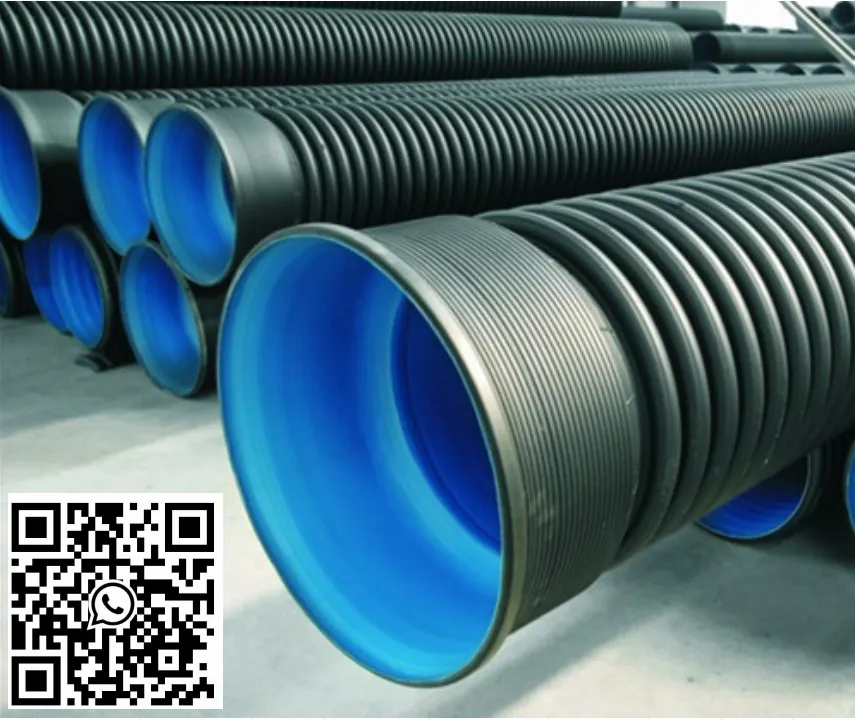
High-Density Polyethylene (HDPE) corrugated pipe represents a significant advancement in subsurface drainage and conduit solutions, particularly in applications demanding cost-effectiveness and durability. These pipes, defined by their flexible, ring-like structure, are primarily utilized for stormwater management, agricultural drainage, and as protective casings for utility installations. Unlike traditional materials like concrete or ductile iron, HDPE corrugated pipe offers a lighter weight, reduced installation complexity, and inherent corrosion resistance. The “discount” aspect of these pipes refers to their competitive pricing stemming from efficient manufacturing processes and material utilization. Their position within the industry chain sits between the raw material supplier (polyethylene resin producers) and the end-user encompassing civil engineering firms, agricultural operators, and telecommunication companies. Core performance characteristics include hydraulic capacity, structural integrity under load, and long-term chemical stability.
Material Science & Manufacturing
HDPE corrugated pipe’s performance is fundamentally linked to the properties of its base material – High-Density Polyethylene (HDPE). HDPE is a thermoplastic polymer created from the polymerization of ethylene. Key physical properties include a density typically ranging from 0.941 to 0.965 g/cm³, a tensile strength between 20-30 MPa (depending on grade and processing), and a relatively low coefficient of friction. Chemically, HDPE exhibits excellent resistance to acids, alkalis, and many solvents, making it suitable for diverse soil conditions. Manufacturing typically involves extrusion. HDPE resin is melted and forced through a circular die to create a continuous pipe profile. The corrugation is formed immediately after extrusion, using a series of forming rolls that impress the desired waveform onto the softened plastic. Critical parameters during extrusion include melt temperature (typically 180-210°C), die pressure, and cooling rate. Maintaining consistent melt temperature is vital to ensure uniform wall thickness and prevent material degradation. Cooling rate affects the crystallinity of the HDPE, impacting its strength and stiffness. The corrugation profile itself (height, pitch, and wave shape) is engineered to optimize structural rigidity and hydraulic efficiency. Post-extrusion, pipes are often subjected to quality control checks, including dimensional accuracy, hydrostatic pressure testing, and impact resistance assessment.
Performance & Engineering
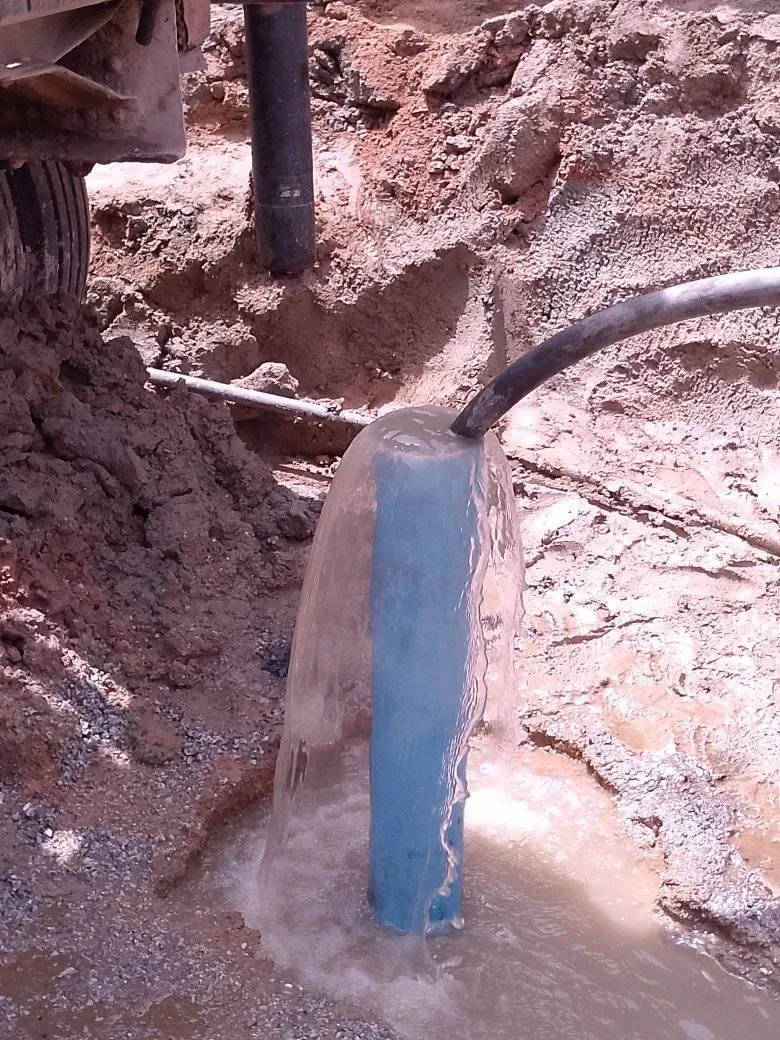
The structural performance of HDPE corrugated pipe is governed by principles of ring compression and soil-structure interaction. When buried and subjected to external loads (traffic, overburden soil), the pipe resists collapse through its corrugated profile. The corrugations act as arches, distributing the load around the circumference. The load-bearing capacity is directly related to the pipe’s diameter, wall thickness, corrugation geometry, and the surrounding soil’s properties (compaction, bearing capacity). Engineering calculations, often based on AASHTO M294 (for drainage applications) or ASTM F2306 (for sanitary and storm sewer applications), determine the required pipe stiffness to withstand anticipated loads. Environmental resistance is another key performance factor. HDPE is inherently UV resistant, but prolonged exposure can lead to degradation. Additives (UV stabilizers) are commonly incorporated into the resin formulation to mitigate this effect. Chemical compatibility is also crucial; while HDPE resists most common soil chemicals, exposure to certain aggressive solvents or hydrocarbons can cause swelling or cracking. Furthermore, long-term creep (slow deformation under sustained load) is a consideration. Engineers must account for creep effects, particularly in applications involving high sustained loads or elevated temperatures. Hydraulic performance is influenced by the pipe’s internal diameter and the corrugation pattern. The corrugations create increased surface roughness, leading to higher friction losses compared to smooth-walled pipes. However, this is often offset by the pipe’s increased structural capacity, allowing for larger diameters and higher flow rates.
Technical Specifications
| Nominal Pipe Size (inches) | Outside Diameter (inches) | Corrugation Profile (inches) | Minimum Ring Stiffness (psi) |
|---|---|---|---|
| 4 | 4.5 | 0.5 x 1.25 | 36 |
| 6 | 6.625 | 0.75 x 1.5 | 48 |
| 8 | 8.625 | 1.0 x 2.0 | 65 |
| 10 | 10.75 | 1.25 x 2.5 | 82 |
| 12 | 12.75 | 1.5 x 3.0 | 100 |
| 15 | 15.625 | 1.75 x 3.5 | 125 |
Failure Mode & Maintenance
HDPE corrugated pipe, while durable, is susceptible to several failure modes. Fatigue cracking, induced by repeated loading (e.g., from traffic), can initiate at stress concentrations, such as corrugation peaks or damaged areas. Delamination, though less common, can occur if the HDPE layers are not adequately bonded during manufacturing or if exposed to excessive shear stresses. Environmental degradation, particularly UV exposure and oxidation, can embrittle the material over time, reducing its impact resistance and increasing its susceptibility to cracking. Soil-related issues, such as aggressive chemical attack or differential settlement, can also contribute to failure. Improper installation, including inadequate bedding or compaction, is a primary cause of premature failure. Maintenance generally focuses on preventative measures. Regular inspection for signs of damage (cracks, deformation, joint separation) is crucial. Addressing drainage issues promptly to prevent hydrostatic pressure buildup is also important. If localized damage occurs, repairs can often be made using specialized couplers or by replacing the affected section of pipe. For severe damage or widespread failures, a complete replacement may be necessary. Periodic soil testing around the pipe can identify potential chemical threats and allow for proactive mitigation strategies, such as implementing barrier layers or adjusting soil pH. Correct backfill compaction is also a critical maintenance factor; overcompaction can lead to ovality, while undercompaction can result in uneven load distribution and potential collapse.
Industry FAQ
Q: What is the impact of pipe ovality on hydraulic performance and long-term durability?
A: Pipe ovality, resulting from inadequate backfill compaction or external loading, significantly reduces the pipe's hydraulic capacity by decreasing the cross-sectional area for flow. More importantly, it creates stress concentrations at the flattened sections, accelerating fatigue cracking and reducing the pipe’s overall structural integrity. Ovality exceeding manufacturer's specifications can void warranties and lead to premature failure.
Q: How does the choice of bedding material affect the long-term performance of HDPE corrugated pipe?
A: Proper bedding material is critical for distributing loads evenly and preventing stress concentrations. Angular, well-graded aggregates (e.g., Class 5 or Class 6 gravel) are preferred, as they interlock and provide stable support. Avoid using large rocks or materials with sharp edges, which can puncture the pipe. Adequate compaction of the bedding material is equally important, ensuring uniform support along the entire pipe length.
Q: What is the typical service life of a properly installed HDPE corrugated pipe system?
A: With proper installation and minimal exposure to aggressive chemicals or UV radiation, a properly installed HDPE corrugated pipe system can have a service life exceeding 50 years. However, this is heavily dependent on site-specific conditions, loading scenarios, and adherence to manufacturer's recommendations. Regular inspections and proactive maintenance can further extend the service life.
Q: Can HDPE corrugated pipe be used in high-temperature environments, such as near geothermal sources?
A: While HDPE exhibits good temperature resistance, its performance degrades at elevated temperatures. Prolonged exposure to temperatures exceeding 60°C (140°F) can cause softening, creep, and a reduction in structural strength. For high-temperature applications, specialized HDPE formulations with enhanced temperature resistance may be required, and engineering calculations must account for the reduced material properties.
Q: What are the common jointing methods for HDPE corrugated pipe and their respective strengths and weaknesses?
A: Common jointing methods include bell-and-spigot joints with rubber gaskets, split couplings, and heat fusion welding. Bell-and-spigot joints are quick and easy to install but can be susceptible to leakage if gaskets are not properly seated. Split couplings provide a flexible connection but may have a lower load-bearing capacity. Heat fusion welding creates a permanent, monolithic joint with excellent strength and leak resistance, but requires specialized equipment and skilled technicians.
Conclusion
HDPE corrugated pipe presents a compelling solution for a wide range of drainage and conduit applications, offering a balance of cost-effectiveness, durability, and ease of installation. Its performance is intrinsically linked to the material properties of HDPE, the precision of the manufacturing process, and adherence to sound engineering principles. Understanding the potential failure modes and implementing appropriate maintenance strategies are crucial for maximizing the long-term service life of these systems.
Looking forward, advancements in HDPE resin formulations, such as the incorporation of nanotechnologies to enhance UV resistance and creep resistance, promise to further improve the performance and longevity of corrugated HDPE pipe. Furthermore, the increasing adoption of Building Information Modeling (BIM) and digital twins will enable more accurate design, analysis, and maintenance of these systems, ensuring optimal performance and reduced life-cycle costs.
-
DN25 HDPE Compression Fitting-HORON INTERNATIONAL|Reliable Irrigation Solutions
NewsFeb.11,2026
-
hdpe coupling joint product Manufacturing Analysis
News2026-11-18
-
ppr pipe heating time products Performance Analysis
News2026-11-16
-
hdpe pipe sizes factory Performance Analysis
News2026-11-09
-
HDPE Pipe Sizes Service Performance Analysis
News2026-10-26
-
wholesale 15mm ppr pipe Material Science and Performance Analysis
News2026-10-20
-
wholesale pvc pipe price per foot Technical Analysis
News2026-09-21
-
wholesale long pvc pipe Technical Analysis and Manufacturing Specifications
News2026-09-15
-
wholesale plumbing kitchen sink water lines Material Performance
News2026-09-15
-
wholesale hdpe drip irrigation Material Science
News2026-09-15
-
wholesale hot water ppr pipe Performance Analysis
News2026-09-15
-
wholesale ppr plumbing Performance Analysis
News2026-09-15
-
wholesale ppr pipe supplier Performance Analysis
News2026-09-13
-
wholesale 50mm ppr pipe Performance Analysis
News2026-09-13
-
wholesale hdpe drip pipe Performance Analysis
News2026-09-13
-
wholesale hdpe pipe 63mm price Manufacturing Specification and Performance Analysis
News2026-09-13