

Feb . 11, 2026 00:01 Back to list
discount hdpe corrugated pipe catalogue Performance Analysis
Introduction
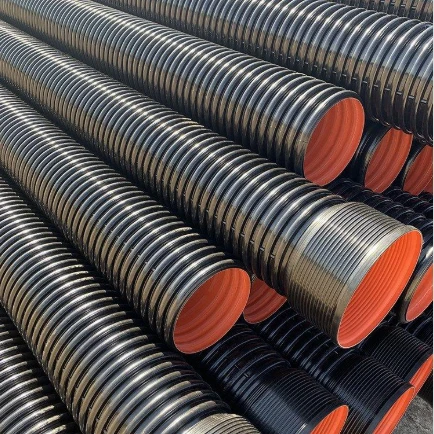
High-Density Polyethylene (HDPE) corrugated pipe represents a significant advancement in subsurface drainage and conduit solutions. Positioned within the broader infrastructure and construction materials industry, it serves as a lightweight, durable, and cost-effective alternative to traditional materials like concrete, steel, and PVC. This guide provides a comprehensive technical overview of discount HDPE corrugated pipe, addressing its material properties, manufacturing processes, performance characteristics, potential failure modes, and relevant industry standards. Its application spans a wide range of uses including stormwater management, agricultural drainage, sanitary sewer connections, and protective conduit for utilities. Core performance characteristics hinge upon ring stiffness, tensile strength, and resistance to environmental stress cracking, critical factors influencing long-term operational reliability and service life. The demand for corrugated HDPE is driven by increasing infrastructure investments, particularly in regions with challenging soil conditions or stringent environmental regulations, and a growing preference for materials offering ease of installation and reduced lifecycle costs.
Material Science & Manufacturing
HDPE corrugated pipe is predominantly manufactured from high-density polyethylene resin, a thermoplastic polymer known for its high strength-to-density ratio. The resin's molecular structure, characterized by minimal branching, contributes to its crystallinity and resulting mechanical properties. Raw material quality, specifically the Melt Flow Index (MFI) and density (typically between 0.941 and 0.965 g/cm³), directly impacts the final pipe performance. Manufacturing typically employs a double-walled, corrugated extrusion process. The process begins with heating HDPE pellets to a molten state (around 180-210°C) and extruding them through a circular die to form a smooth inner wall. Subsequently, the molten HDPE is formed into a corrugated outer wall using a series of rotating corrugating rolls. Key parameters controlled during extrusion include die temperature, screw speed, haul-off speed, and corrugation profile depth. Proper control of these parameters is crucial for maintaining consistent wall thickness, corrugation geometry, and overall pipe dimensional accuracy. Post-extrusion, the pipe undergoes cooling and cutting to the specified lengths. Additives like UV stabilizers and antioxidants are frequently incorporated into the resin formulation to enhance long-term durability and resistance to environmental degradation. The pipe’s ring stiffness is heavily influenced by the corrugation profile – deeper and more frequent corrugations generally yield higher ring stiffness.
Performance & Engineering
The performance of HDPE corrugated pipe is largely dictated by its structural integrity under load and its resistance to environmental factors. Critical engineering considerations include hydrostatic pressure resistance, ring stiffness, and long-term creep behavior. Ring stiffness, measured in psi, indicates the pipe’s ability to resist flattening under external loads from soil and traffic. The pipe’s capacity to withstand external loads is determined by the Boussinesq equation, which considers soil overburden, pipe diameter, and ring stiffness. HDPE exhibits excellent resistance to most chemicals encountered in soil and wastewater, however, prolonged exposure to strong oxidizing agents should be avoided. Environmental resistance is a key performance characteristic; HDPE is susceptible to UV degradation, which can lead to embrittlement. Therefore, the inclusion of UV stabilizers in the resin formulation is critical for applications exposed to sunlight. Furthermore, the pipe must conform to relevant industry standards regarding tensile strength, elongation at break, and impact resistance. The long-term performance of buried HDPE pipe is also affected by soil temperature fluctuations and moisture content, which can induce dimensional changes and stress concentrations. Proper bedding and backfill procedures are essential to minimize these effects and ensure long-term structural stability. Calculations relating to burial depth and expected traffic loads are vital to select the appropriate pipe stiffness and diameter for a given application.
Technical Specifications
| Parameter | Unit | Typical Value (12" Diameter) | Testing Standard |
|---|---|---|---|
| Nominal Diameter | in | 12 | ASTM F477 |
| Ring Stiffness | psi | 60 | ASTM F477 |
| Tensile Strength at Yield | psi | 4,000 | ASTM D638 |
| Elongation at Break | % | 300 | ASTM D638 |
| Impact Resistance (Izod Notched) | ft-lb/in | 15 | ASTM D256 |
| Hydrostatic Design Head | ft | 50 | ASTM F477 |
Failure Mode & Maintenance
HDPE corrugated pipe, while durable, is susceptible to specific failure modes. Common failures include cracking due to excessive bending during installation, or impact damage from heavy equipment. Environmental Stress Cracking (ESC) is a significant concern, particularly in environments containing detergents or certain hydrocarbons. ESC initiates at stress concentrations and propagates through the material, leading to premature failure. Another failure mode is creep rupture, which occurs over extended periods under sustained loads, resulting in gradual deformation and eventual collapse. UV degradation can cause surface cracking and embrittlement, reducing the pipe’s overall strength. Joint failures can occur if connections are not properly made or if the sealing gaskets degrade over time. Maintenance typically involves visual inspections for cracks, deformations, or joint leaks. Regular cleaning to remove debris and sediment can prevent blockages and maintain flow capacity. In areas prone to heavy loads, ensure adequate bedding and backfill support to prevent excessive stress on the pipe. For ESC prevention, avoid contact with incompatible chemicals and consider using HDPE grades with enhanced ESC resistance. Repair of minor cracks can be attempted using specialized HDPE repair sleeves or patches, but significant damage usually necessitates pipe replacement. Proper installation procedures, including adherence to recommended bedding and backfill specifications, are paramount in minimizing the risk of premature failure.
Industry FAQ
Q: What is the expected service life of HDPE corrugated pipe in a typical stormwater application?
A: The expected service life is generally 50-75 years, provided the pipe is properly installed, adequately bedded and backfilled, and not exposed to excessive chemical attack or UV radiation. This estimate assumes normal operating conditions and adherence to relevant industry standards.
Q: How does HDPE corrugated pipe compare to concrete pipe in terms of installation costs?
A: HDPE corrugated pipe is significantly lighter than concrete pipe, leading to reduced transportation and handling costs. Its flexibility allows for faster installation, particularly in challenging terrain or areas with numerous bends. The absence of mortar joints further reduces installation time and labor costs. Overall, installation costs for HDPE are typically 20-40% lower than for concrete.
Q: What is the impact of soil corrosivity on the performance of HDPE corrugated pipe?
A: HDPE is highly resistant to most chemicals found in soil, including acids, bases, and salts. However, exposure to strong oxidizing agents or high concentrations of hydrocarbons can potentially degrade the material. Soil testing is recommended to assess corrosivity levels and select appropriate pipe materials and protection measures if necessary.
Q: What are the key considerations for proper bedding and backfill around HDPE corrugated pipe?
A: Proper bedding and backfill are crucial for distributing loads and preventing pipe deformation. Bedding material should consist of granular materials like sand or gravel, compacted to provide uniform support. Backfill material should be non-corrosive and free of sharp objects. Compaction should be controlled to avoid over-compaction, which can induce stress on the pipe. Follow manufacturer's recommendations and relevant industry standards for bedding and backfill specifications.
Q: What testing is performed to ensure the quality of HDPE corrugated pipe?
A: Typical testing includes hydrostatic pressure testing to verify leak tightness, ring stiffness testing to assess load-bearing capacity, tensile strength and elongation testing to determine material properties, and impact resistance testing to evaluate toughness. Conformity to standards like ASTM F477, ASTM D638, and ASTM D256 is routinely verified.
Conclusion
Discount HDPE corrugated pipe offers a compelling combination of durability, cost-effectiveness, and ease of installation, making it a versatile solution for a wide range of subsurface drainage and conduit applications. Its inherent resistance to corrosion and chemical degradation, coupled with its lightweight nature, provides significant advantages over traditional materials. Understanding the material science, manufacturing processes, and performance characteristics of HDPE corrugated pipe is essential for selecting the appropriate product for a given application and ensuring long-term reliability.
Continued advancements in HDPE resin technology and manufacturing techniques are expected to further enhance the performance and sustainability of corrugated HDPE pipe. Focus areas include the development of enhanced UV stabilization formulations, improved ESC resistance, and the incorporation of recycled materials. Adherence to industry standards and best practices in installation and maintenance remains crucial for maximizing the service life and minimizing the risk of failure.
-
DN25 HDPE Compression Fitting-HORON INTERNATIONAL|Reliable Irrigation Solutions
NewsFeb.11,2026
-
hdpe coupling joint product Manufacturing Analysis
News2026-11-18
-
ppr pipe heating time products Performance Analysis
News2026-11-16
-
hdpe pipe sizes factory Performance Analysis
News2026-11-09
-
HDPE Pipe Sizes Service Performance Analysis
News2026-10-26
-
wholesale 15mm ppr pipe Material Science and Performance Analysis
News2026-10-20
-
wholesale pvc pipe price per foot Technical Analysis
News2026-09-21
-
wholesale long pvc pipe Technical Analysis and Manufacturing Specifications
News2026-09-15
-
wholesale plumbing kitchen sink water lines Material Performance
News2026-09-15
-
wholesale hdpe drip irrigation Material Science
News2026-09-15
-
wholesale hot water ppr pipe Performance Analysis
News2026-09-15
-
wholesale ppr plumbing Performance Analysis
News2026-09-15
-
wholesale ppr pipe supplier Performance Analysis
News2026-09-13
-
wholesale 50mm ppr pipe Performance Analysis
News2026-09-13
-
wholesale hdpe drip pipe Performance Analysis
News2026-09-13
-
wholesale hdpe pipe 63mm price Manufacturing Specification and Performance Analysis
News2026-09-13