

Feb . 11, 2026 00:01 Back to list
discount hdpe conduit fittings Performance Analysis

Introduction
High-Density Polyethylene (HDPE) conduit fittings represent a critical component in modern infrastructure, particularly within electrical, telecommunications, and drainage systems. These fittings, designed for use with corrugated or smooth-walled HDPE conduit, facilitate the secure and protected routing of wires and cables. Their primary function is to provide a watertight and mechanically robust connection between conduit sections, ensuring long-term reliability and safety. Within the industry chain, they bridge the gap between the manufactured conduit and the final installation, determining the overall system performance. Core performance characteristics include maintaining the conduit's ingress protection (IP) rating, withstanding axial and lateral loads, and exhibiting resistance to environmental degradation. The 'discount' designation indicates a focus on cost-effectiveness without compromising essential performance standards, making them appealing to large-scale projects and budget-conscious installations. This guide provides an in-depth exploration of HDPE conduit fittings, covering material science, manufacturing processes, performance parameters, failure modes, and relevant industry standards.
Material Science & Manufacturing
HDPE conduit fittings are primarily constructed from high-density polyethylene, a thermoplastic polymer renowned for its excellent chemical resistance, high strength-to-density ratio, and flexibility. The raw material typically comprises polyethylene resin blended with additives such as carbon black for UV protection, antioxidants to prevent thermal degradation, and stabilizers to enhance long-term performance. The polyethylene resin itself is derived from the polymerization of ethylene, a process refined over decades to control molecular weight distribution and crystallinity. These properties directly influence the fitting's mechanical strength and resistance to cracking. Manufacturing processes vary depending on the fitting type and complexity. Injection molding is widely used for producing standard fittings like elbows, tees, and couplings, offering high precision and repeatability. The process involves melting the HDPE resin and injecting it under high pressure into a precisely engineered mold cavity. Key parameters during injection molding include melt temperature, mold temperature, injection pressure, and cooling rate, all of which must be tightly controlled to avoid defects such as warpage, sink marks, or weld lines. Larger diameter fittings, or those requiring specialized features, may be produced using rotational molding (rotomolding). This process involves heating a closed mold containing powdered HDPE resin while simultaneously rotating it, causing the resin to coat the interior mold surface and fuse together. Extrusion is employed for manufacturing saddle fittings and other components requiring a continuous profile. Quality control throughout the manufacturing process is crucial, encompassing material testing, dimensional inspection, and performance validation according to industry standards. Furthermore, proper material selection is vital to ensure compatibility with various soil types and burial conditions.
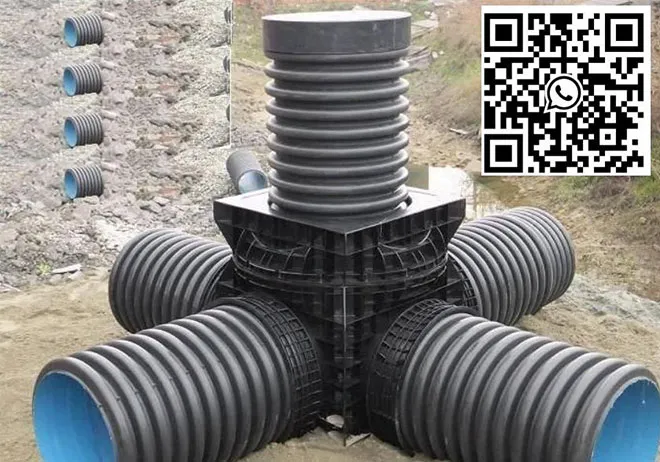
Performance & Engineering
The performance of HDPE conduit fittings is dictated by a combination of mechanical, chemical, and environmental factors. From an engineering standpoint, critical considerations include load-bearing capacity, resistance to impact, and long-term creep resistance. Fittings are subjected to both static and dynamic loads, including soil pressure, traffic loads (in direct burial applications), and tensile forces from cable pulling. Force analysis, often utilizing Finite Element Analysis (FEA), is employed to optimize fitting geometry and material thickness to withstand these stresses. Environmental resistance is paramount, particularly in underground applications where fittings are exposed to moisture, chemicals, and temperature fluctuations. HDPE’s inherent chemical inertness provides excellent resistance to acids, alkalis, and salts commonly found in soil environments. However, prolonged exposure to certain solvents or hydrocarbons can cause swelling and degradation. UV resistance is addressed through the incorporation of carbon black or UV stabilizers into the HDPE formulation. Compliance requirements are stringent and vary by region. North American standards (NEMA, NEC) and European standards (EN 61386) dictate specific requirements for fitting dimensions, material properties, and performance characteristics. Furthermore, fittings must maintain the conduit’s IP rating (Ingress Protection), preventing the ingress of dust and water. Proper installation techniques, including the use of appropriate sealing materials and torque specifications, are crucial for achieving optimal performance and ensuring long-term reliability. Consideration must be given to thermal expansion and contraction of the HDPE material, particularly in installations spanning significant temperature variations. Designing for this movement minimizes stress on the fittings and prevents potential failure.
Technical Specifications
| Parameter | Unit | Typical Value (Nominal 2" Fitting) | Testing Standard |
|---|---|---|---|
| Material | - | High-Density Polyethylene (HDPE) | ASTM D3350 |
| Tensile Strength | MPa | 20-30 | ASTM D638 |
| Impact Strength (Izod Notched) | J/m | >400 | ASTM D256 |
| Water Absorption (24hr) | % | <0.1 | ASTM D570 |
| Operating Temperature Range | °C | -40 to +85 | - |
| UV Resistance | Hours (50% Transmission) | >1000 | ASTM G154 |
Failure Mode & Maintenance
HDPE conduit fittings, while durable, are susceptible to several failure modes under specific conditions. Fatigue cracking can occur due to repeated stress cycles, particularly during cable pulling or thermal expansion/contraction. This is often initiated at stress concentration points, such as threads or sharp corners. Environmental Stress Cracking (ESC) is a significant concern, resulting from the combined effect of sustained tensile stress and exposure to certain chemicals. This is most prevalent in aggressive soil environments. Delamination can occur in fittings manufactured with improper bonding between layers, especially in rotational molded components. Oxidation, while slow in HDPE, can occur at elevated temperatures or in the presence of strong oxidizing agents, leading to material embrittlement. Another common failure mode is damage during installation – overtightening can strip threads, while improper handling can cause physical cracking. Preventative maintenance typically involves visual inspection for cracks, deformation, or signs of environmental degradation. Regularly cleaning fittings to remove dirt and debris can help prevent ESC. If cracks are detected, the fitting should be replaced immediately. Proper installation practices, including adherence to manufacturer's torque specifications and the use of appropriate cable pulling lubricants, are crucial for minimizing the risk of failure. Soil analysis to determine chemical composition can inform material selection and mitigate the risk of ESC. Periodically checking the integrity of backfill material and ensuring proper drainage can also extend the service life of the fittings. In cases of significant environmental concerns, corrosion-resistant coatings or protective wraps can be applied.
Industry FAQ
Q: What is the impact of soil acidity on the long-term performance of HDPE conduit fittings?
A: While HDPE exhibits excellent chemical resistance, prolonged exposure to highly acidic soils (low pH) can accelerate degradation. Acidic conditions can promote ESC and reduce the long-term tensile strength of the material. We recommend conducting soil analysis to determine the pH level and selecting fittings with enhanced chemical resistance or implementing protective measures, such as a concrete encasement, in highly acidic environments.
Q: How does temperature affect the load-bearing capacity of HDPE fittings?
A: Increased temperatures reduce the tensile strength and creep resistance of HDPE. This means that fittings will have a lower load-bearing capacity at higher temperatures. Conversely, lower temperatures can increase brittleness. Design calculations must account for the expected operating temperature range and ensure that the fittings can withstand the anticipated loads at the minimum operating temperature.
Q: What are the recommended torque specifications for tightening HDPE conduit fittings?
A: Overtightening can strip threads and cause cracking, while undertightening can lead to water ingress. Recommended torque specifications vary depending on fitting size and material grade. Always refer to the manufacturer's specifications, which are typically provided in the product data sheet. Using a calibrated torque wrench is essential.
Q: Can HDPE conduit fittings be used in direct burial applications without concrete encasement?
A: Yes, HDPE fittings are commonly used in direct burial applications. However, the burial depth, soil type, and anticipated traffic loads must be considered. For installations subject to heavy loads or rocky soils, providing a protective layer of sand or gravel around the conduit is recommended. Concrete encasement is generally required in areas with particularly aggressive soil conditions or high traffic loads.
Q: What is the difference between injection-molded and rotomolded HDPE fittings in terms of performance characteristics?
A: Injection-molded fittings typically offer higher dimensional accuracy and smoother surface finishes, resulting in improved mechanical strength and resistance to stress cracking. Rotomolded fittings are better suited for larger, more complex shapes and can achieve a more uniform wall thickness. However, they may exhibit slightly lower mechanical properties compared to injection-molded fittings.
Conclusion
HDPE conduit fittings are essential components in a wide range of infrastructure projects, offering a compelling combination of durability, chemical resistance, and cost-effectiveness. Their performance is intricately linked to material properties, manufacturing processes, and installation techniques. Understanding the potential failure modes and implementing appropriate preventative measures is crucial for ensuring long-term reliability and minimizing life-cycle costs. The continued development of advanced HDPE formulations and manufacturing technologies will further enhance the performance and versatility of these critical components.
Future trends indicate a growing demand for fittings with enhanced UV resistance, improved impact strength, and integrated monitoring capabilities. The increasing adoption of pre-fabricated assemblies and modular systems will also drive innovation in fitting design and manufacturing. By adhering to relevant industry standards and best practices, engineers and contractors can confidently deploy HDPE conduit fittings in demanding applications, creating robust and sustainable infrastructure solutions.
-
DN25 HDPE Compression Fitting-HORON INTERNATIONAL|Reliable Irrigation Solutions
NewsFeb.11,2026
-
hdpe coupling joint product Manufacturing Analysis
News2026-11-18
-
ppr pipe heating time products Performance Analysis
News2026-11-16
-
hdpe pipe sizes factory Performance Analysis
News2026-11-09
-
HDPE Pipe Sizes Service Performance Analysis
News2026-10-26
-
wholesale 15mm ppr pipe Material Science and Performance Analysis
News2026-10-20
-
wholesale pvc pipe price per foot Technical Analysis
News2026-09-21
-
wholesale long pvc pipe Technical Analysis and Manufacturing Specifications
News2026-09-15
-
wholesale plumbing kitchen sink water lines Material Performance
News2026-09-15
-
wholesale hdpe drip irrigation Material Science
News2026-09-15
-
wholesale hot water ppr pipe Performance Analysis
News2026-09-15
-
wholesale ppr plumbing Performance Analysis
News2026-09-15
-
wholesale ppr pipe supplier Performance Analysis
News2026-09-13
-
wholesale 50mm ppr pipe Performance Analysis
News2026-09-13
-
wholesale hdpe drip pipe Performance Analysis
News2026-09-13
-
wholesale hdpe pipe 63mm price Manufacturing Specification and Performance Analysis
News2026-09-13