

Feb . 11, 2026 00:01 Back to list
discount green pvc pipe Performance Analysis
Introduction
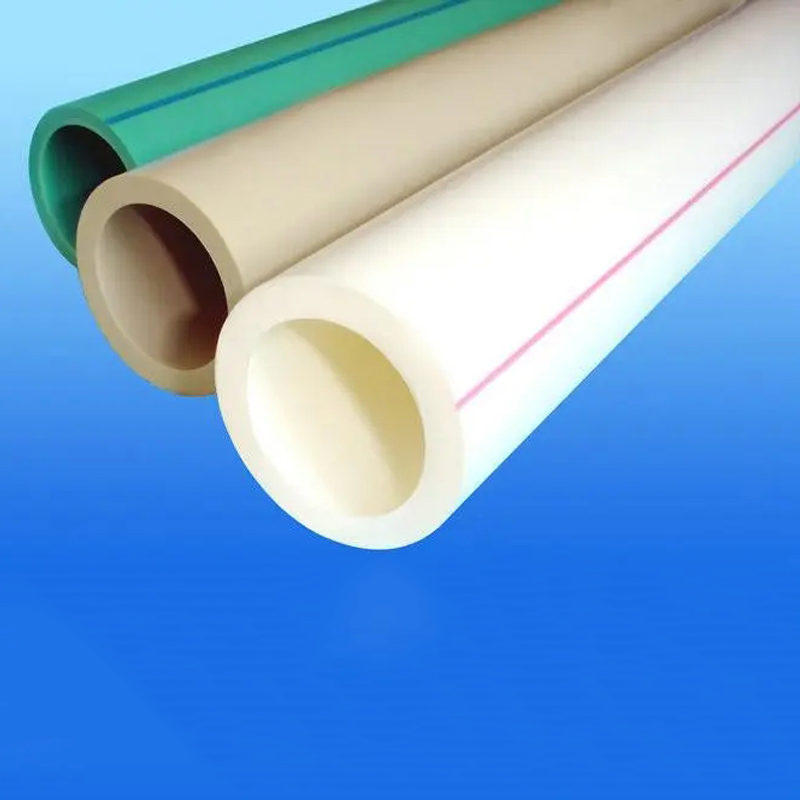
Polyvinyl chloride (PVC) pipe, specifically discount green PVC pipe, represents a significant component in fluid conveyance systems across a broad spectrum of industries including irrigation, drainage, wastewater management, and certain low-pressure industrial applications. This guide details the technical aspects of this common, yet often underestimated, engineering material. The “discount” designation generally refers to a cost-optimized formulation, typically employing higher filler content or recycled materials, impacting performance characteristics relative to premium PVC formulations. Green pigmentation is often used for identification purposes, particularly in irrigation systems, distinguishing it from potable water applications. The core performance attributes center on its chemical resistance, low cost, ease of installation, and relatively lightweight nature. Understanding the nuances of its material composition, manufacturing processes, and potential failure modes is crucial for ensuring long-term system integrity and minimizing lifecycle costs. This document provides an in-depth technical analysis geared towards procurement managers, engineers, and maintenance personnel requiring a comprehensive understanding of discount green PVC pipe.
Material Science & Manufacturing
Discount green PVC pipe is fundamentally composed of a thermoplastic polymer, polyvinyl chloride, compounded with stabilizers, lubricants, fillers, and pigments. The PVC resin itself is derived from vinyl chloride monomer (VCM) through a polymerization process. The specific grade of PVC resin (e.g., suspension PVC, emulsion PVC) significantly influences the final product's properties. The inclusion of plasticizers, while generally lower in ‘discount’ formulations to reduce cost, impacts flexibility and low-temperature performance. The green coloration is achieved through the addition of organic pigments, typically phthalocyanine-based, although the precise composition varies among manufacturers.
Manufacturing typically follows an extrusion process. PVC compound is fed into a single-screw or twin-screw extruder where it is heated and homogenized. The molten PVC is then forced through a die, shaping it into a continuous pipe. Critical parameters during extrusion include die temperature (typically 180-210°C), extrusion speed, and cooling rate. Inadequate cooling can lead to dimensional instability and warping. Post-extrusion, the pipe is often subjected to hydrostatic testing to verify its pressure-holding capabilities. The Schedule number (e.g., Schedule 40, Schedule 80) defines the pipe wall thickness, directly correlating to its pressure rating. Discount formulations often utilize a higher percentage of calcium carbonate as a filler, impacting impact strength and UV resistance. Careful control of filler dispersion is vital to prevent localized stress concentrations.
Performance & Engineering
The performance of discount green PVC pipe is largely dictated by its mechanical properties and resistance to environmental factors. Tensile strength, typically ranging from 50-70 MPa for standard PVC, is reduced in discount formulations due to filler content. Impact strength, measured using Izod or Charpy tests, is also compromised. The modulus of elasticity, approximately 3-4 GPa, governs the pipe’s rigidity and resistance to deformation. Hydrostatic pressure rating, determined by the Schedule number and temperature, is a critical engineering consideration.
Long-term performance is affected by creep – the tendency of the pipe to deform under sustained pressure. This is particularly relevant in applications involving constant fluid flow. Chemical resistance is generally excellent against acids, bases, and salts, but prolonged exposure to certain organic solvents can cause swelling and degradation. UV exposure leads to polymer chain scission, resulting in embrittlement and discoloration. The addition of UV stabilizers (typically hindered amine light stabilizers - HALS) mitigates this effect, but the concentration is often reduced in discount formulations. Proper soil loading considerations are vital for buried pipelines, preventing ovalization and potential cracking. Furthermore, thermal expansion and contraction must be accounted for in system design to prevent stress on joints and fittings.
Technical Specifications
| Parameter | Schedule 40 (Typical) | Schedule 80 (Typical) | ASTM D1785 Compliance |
|---|---|---|---|
| Material | PVC (Discount Formulation) | PVC (Discount Formulation) | Yes |
| Tensile Strength (MPa) | 50-60 | 55-65 | Minimum 55 MPa |
| Impact Strength (Izod, kJ/m²) | 3-5 | 4-6 | Minimum 4 kJ/m² |
| Modulus of Elasticity (GPa) | 3.0-3.5 | 3.2-3.7 | Typical 3.5 GPa |
| Hydrostatic Pressure Rating (at 23°C, psi) | 200-250 | 350-450 | Dependent on Size and Schedule |
| Operating Temperature Range (°C) | 0-60 | 0-60 | 0-60°C (Derated above 40°C) |
Failure Mode & Maintenance
Discount green PVC pipe is susceptible to several failure modes. Brittle fracture, particularly at low temperatures or in the presence of stress concentrators (e.g., around fittings), is a common concern, exacerbated by the reduced impact strength of discount formulations. Long-term exposure to UV radiation causes oxidative degradation, leading to embrittlement and cracking. Chemical attack from certain solvents can induce swelling and subsequent failure. Creep, as mentioned previously, can lead to deformation and eventual rupture under sustained pressure. Joint failures often occur due to improper solvent welding, insufficient curing time, or inadequate surface preparation.
Maintenance should focus on regular visual inspections for cracks, discoloration, and joint leaks. Pressure testing can identify potential weaknesses before catastrophic failure. UV protection can be enhanced by painting the pipe with a UV-resistant coating or burying it to shield it from sunlight. Proper support and anchoring are essential to prevent stress on joints. In the event of a leak, the affected section should be replaced using proper solvent welding techniques, ensuring a complete and secure bond. Avoid using abrasive cleaning agents as these can create stress risers and promote cracking. Periodic assessment of soil conditions around buried pipelines is recommended to identify and address any potential ground movement that could compromise the integrity of the system.
Industry FAQ
Q: What is the impact of higher filler content in ‘discount’ PVC pipe on its long-term durability?
A: Higher filler content, while reducing cost, generally lowers impact strength and UV resistance. This can lead to premature cracking and degradation, particularly in outdoor applications. Increased filler also necessitates careful quality control during manufacturing to ensure uniform dispersion and prevent stress concentrations.
Q: How does temperature affect the pressure rating of discount green PVC pipe?
A: Elevated temperatures reduce the tensile strength and creep resistance of PVC, leading to a lower pressure rating. ASTM D1785 provides derating factors for different temperatures and schedules. It is crucial to consult these factors when designing systems operating at temperatures above 23°C.
Q: What are the best practices for solvent welding discount PVC pipe to ensure a leak-proof joint?
A: Proper solvent welding requires clean, dry surfaces, the correct type of solvent cement for PVC, and adequate ventilation. Apply the cement liberally to both the pipe and fitting, insert the pipe fully, and allow sufficient curing time (typically 24 hours) before pressurizing the system.
Q: Is discount green PVC pipe suitable for potable water applications?
A: Generally, no. The green pigment and potentially the specific formulation used in discount PVC pipe may not meet the stringent requirements for potable water systems outlined by NSF/ANSI Standard 61. Clear or white PVC pipe certified to NSF/ANSI 61 is recommended for potable water.
Q: How can I mitigate the risk of UV degradation in exposed PVC pipe?
A: Mitigation strategies include painting the pipe with a UV-resistant coating, burying it to shield it from sunlight, or utilizing PVC formulations with a higher concentration of UV stabilizers (though this will increase cost). Regular inspection for discoloration and cracking is also recommended.
Conclusion
Discount green PVC pipe represents a cost-effective solution for a variety of non-critical fluid conveyance applications. However, its performance characteristics are demonstrably influenced by the inherent compromises made to reduce production costs, particularly concerning impact strength, UV resistance, and long-term creep behavior. A thorough understanding of these limitations, coupled with diligent attention to proper installation and maintenance practices, is paramount for ensuring reliable and safe operation.
Future trends may focus on the development of bio-based plasticizers and recycled PVC formulations to enhance the sustainability profile of these products without significantly compromising performance. Furthermore, advances in filler technology could lead to discount formulations with improved mechanical properties. Continuous monitoring of industry standards and regulatory requirements remains crucial for manufacturers and end-users alike.
-
DN25 HDPE Compression Fitting-HORON INTERNATIONAL|Reliable Irrigation Solutions
NewsFeb.11,2026
-
hdpe coupling joint product Manufacturing Analysis
News2026-11-18
-
ppr pipe heating time products Performance Analysis
News2026-11-16
-
hdpe pipe sizes factory Performance Analysis
News2026-11-09
-
HDPE Pipe Sizes Service Performance Analysis
News2026-10-26
-
wholesale 15mm ppr pipe Material Science and Performance Analysis
News2026-10-20
-
wholesale pvc pipe price per foot Technical Analysis
News2026-09-21
-
wholesale long pvc pipe Technical Analysis and Manufacturing Specifications
News2026-09-15
-
wholesale plumbing kitchen sink water lines Material Performance
News2026-09-15
-
wholesale hdpe drip irrigation Material Science
News2026-09-15
-
wholesale hot water ppr pipe Performance Analysis
News2026-09-15
-
wholesale ppr plumbing Performance Analysis
News2026-09-15
-
wholesale ppr pipe supplier Performance Analysis
News2026-09-13
-
wholesale 50mm ppr pipe Performance Analysis
News2026-09-13
-
wholesale hdpe drip pipe Performance Analysis
News2026-09-13
-
wholesale hdpe pipe 63mm price Manufacturing Specification and Performance Analysis
News2026-09-13