

Feb . 11, 2026 00:01 Back to list
discount dual wall perforated corrugated pipe Performance Engineering
Introduction
Discount dual wall perforated corrugated pipe represents a cost-effective solution for subsurface drainage and stormwater management. Positioned within the broader civil engineering and construction materials supply chain, it serves as a critical component in projects ranging from agricultural land improvement and residential developments to large-scale infrastructure initiatives. This pipe differs from traditional single-wall corrugated pipe through its enhanced structural rigidity and improved hydraulic performance, achieved via a dual-layer construction. Core performance characteristics include efficient water conveyance, long-term durability, resistance to crushing loads, and compatibility with various soil types. Understanding the nuances of its material composition, manufacturing process, and engineering properties is crucial for ensuring optimal performance and longevity in demanding applications. The increasing demand is driven by stricter environmental regulations regarding stormwater runoff and the need for sustainable drainage systems.
Material Science & Manufacturing
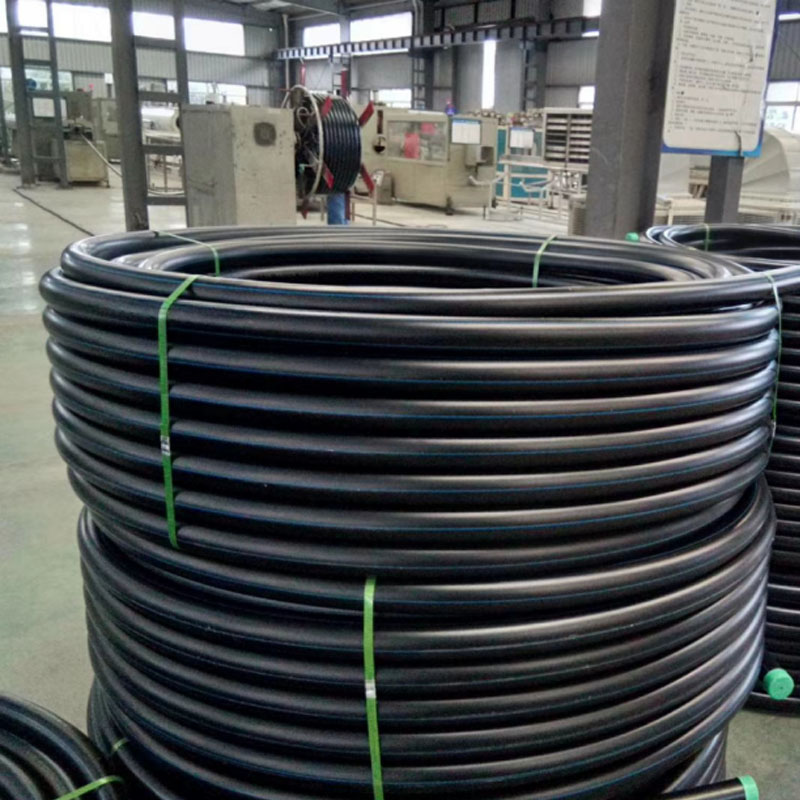
The primary material utilized in the manufacture of discount dual wall perforated corrugated pipe is high-density polyethylene (HDPE), specifically grades optimized for pipe extrusion and long-term burial. HDPE offers excellent chemical resistance, a high strength-to-weight ratio, and inherent flexibility. The dual-wall construction comprises a smooth inner wall for optimal hydraulic flow and a corrugated outer wall for increased structural strength. Perforations, typically laser-cut or die-cut, are strategically placed to facilitate water ingress. Manufacturing commences with the extrusion of HDPE pellets into the pipe profile. Critical parameters during extrusion include melt temperature (typically between 180°C and 210°C), extrusion speed, and die design, all impacting the pipe's dimensional accuracy and mechanical properties. The corrugated layer is formed through a process of shaping the molten HDPE using specialized corrugating rollers. The perforation process requires precise control to maintain consistent opening sizes and prevent weakening of the pipe wall. Post-extrusion, quality control checks including hydrostatic pressure testing and dimensional inspections are performed to ensure adherence to industry standards. The choice of HDPE resin directly impacts UV resistance; additives such as carbon black are incorporated to mitigate degradation from sunlight exposure. The quality of the HDPE resin and the consistency of the extrusion process are paramount for achieving the specified hoop strength and long-term performance.
Performance & Engineering
The performance of discount dual wall perforated corrugated pipe is governed by several key engineering principles. Crushing resistance is a critical factor, dictated by the pipe's ring stiffness, a measure of its ability to withstand external loads without collapsing. This is determined via testing according to ASTM D2412. Hydraulic capacity is influenced by the pipe diameter, the size and spacing of perforations, and the inner wall smoothness. The Manning's equation is commonly used to calculate flow rates. Soil loading and backfill compaction are crucial considerations during installation. Improper compaction can lead to excessive stress on the pipe and potential failure. Long-term creep performance – the gradual deformation of the pipe under sustained load – is also vital. HDPE exhibits creep behavior, and understanding its time-dependent deformation characteristics is essential for predicting service life. Environmental resistance, specifically to soil chemicals and temperature fluctuations, impacts long-term durability. While HDPE is generally resistant to most soil chemicals, exposure to certain aggressive compounds can cause degradation. The pipe’s design must also account for freeze-thaw cycles, which can induce stress and cracking. Proper installation techniques, including the use of appropriate bedding materials, are vital for maximizing performance and preventing premature failure. Compliance with local drainage regulations and engineering design standards is mandatory.
Technical Specifications
| Diameter (in) | Ring Stiffness (psi) | Perforation Size (in) | HDPE Resin Density (g/cm³) |
|---|---|---|---|
| 12 | 55 | 0.25 | 0.945 |
| 15 | 65 | 0.375 | 0.945 |
| 18 | 75 | 0.5 | 0.945 |
| 24 | 85 | 0.5 | 0.945 |
| 30 | 90 | 0.75 | 0.945 |
| 36 | 100 | 1.0 | 0.945 |
Failure Mode & Maintenance
Discount dual wall perforated corrugated pipe, while durable, is susceptible to several failure modes. Crushing failure can occur due to excessive loads from traffic, heavy equipment, or improperly compacted backfill. Fatigue cracking can develop over time from repeated stress cycles, particularly in areas with poor bedding support. Environmental stress cracking (ESC) can result from exposure to aggressive soil chemicals, particularly when combined with sustained tensile stress. Blockage of perforations due to sediment buildup is a common issue, reducing hydraulic capacity. UV degradation, while mitigated by carbon black additives, can still occur with prolonged sun exposure. Delamination, the separation of the inner and outer walls, can occur due to manufacturing defects or excessive stress. Maintenance typically involves periodic inspection of the pipe system to identify potential problems such as blockages or damage. Cleaning of perforations can be achieved through jetting or rodding. Repair of minor damage can be accomplished using pipe couplers and appropriate sealing materials. For significant damage, replacement of the affected pipe section is generally required. Preventative measures include proper installation techniques, appropriate backfill compaction, and the use of filter fabric to prevent sediment intrusion. Regular monitoring of soil conditions and water quality can help identify potential environmental hazards that could contribute to pipe failure.
Industry FAQ
Q: What is the impact of soil acidity on the long-term performance of this pipe?
A: High soil acidity can accelerate the degradation of HDPE, particularly if the pipe is not adequately protected. Acidic soils can leach plasticizers and reduce the polymer's molecular weight, leading to embrittlement and cracking. We recommend conducting a soil analysis and, if necessary, using a pipe with enhanced chemical resistance or providing additional protective measures such as a protective coating.
Q: How does the pipe perform in areas with high groundwater tables?
A: The perforations are designed to allow water ingress even with a high groundwater table. However, proper installation is crucial. Ensuring adequate bedding support and preventing differential settlement are essential to maintain structural integrity in saturated soils. Hydrostatic pressure can be a concern in extremely high groundwater conditions; appropriate design considerations should be made.
Q: What is the recommended backfill material for optimal pipe performance?
A: The recommended backfill material is granular, free-draining material such as gravel or sand. This ensures good drainage and minimizes the risk of hydrostatic pressure buildup. Avoid using clay-rich soils, as they can retain water and contribute to pipe failure. Proper compaction of the backfill is also critical, following the manufacturer's specifications.
Q: What is the service life expectancy of this pipe under typical conditions?
A: Under typical conditions – well-drained soil, moderate chemical exposure, and proper installation – a service life of 50 years or more is achievable. However, this is an estimate, and the actual service life can vary depending on site-specific conditions. Regular inspections and preventative maintenance can help extend the pipe's lifespan.
Q: Can this pipe be used in applications requiring a watertight seal?
A: This pipe is designed for drainage applications and is not inherently watertight due to the perforations. For watertight applications, a solid-wall pipe with appropriate sealing joints should be used. While couplings and sealants can reduce leakage, they cannot guarantee a completely watertight system.
Conclusion
Discount dual wall perforated corrugated pipe offers a practical and economical solution for a wide range of drainage applications. Its robust construction, utilizing HDPE material, provides a balance between structural strength, hydraulic efficiency, and chemical resistance. However, optimal performance is contingent upon meticulous attention to material selection, manufacturing quality control, proper installation procedures, and ongoing maintenance practices. Recognizing and mitigating potential failure modes, such as crushing, cracking, and blockage, is crucial for ensuring long-term reliability and minimizing lifecycle costs.
Looking forward, advancements in HDPE resin technology and manufacturing processes will likely lead to even more durable and high-performing corrugated pipe products. The integration of smart sensing technologies for real-time monitoring of pipe condition and flow rates represents a promising avenue for enhancing maintenance efficiency and preventing catastrophic failures. Continued adherence to industry standards and best practices will be essential for driving innovation and ensuring the sustainable use of this vital infrastructure component.
-
DN25 HDPE Compression Fitting-HORON INTERNATIONAL|Reliable Irrigation Solutions
NewsFeb.11,2026
-
hdpe coupling joint product Manufacturing Analysis
News2026-11-18
-
ppr pipe heating time products Performance Analysis
News2026-11-16
-
hdpe pipe sizes factory Performance Analysis
News2026-11-09
-
HDPE Pipe Sizes Service Performance Analysis
News2026-10-26
-
wholesale 15mm ppr pipe Material Science and Performance Analysis
News2026-10-20
-
wholesale pvc pipe price per foot Technical Analysis
News2026-09-21
-
wholesale long pvc pipe Technical Analysis and Manufacturing Specifications
News2026-09-15
-
wholesale plumbing kitchen sink water lines Material Performance
News2026-09-15
-
wholesale hdpe drip irrigation Material Science
News2026-09-15
-
wholesale hot water ppr pipe Performance Analysis
News2026-09-15
-
wholesale ppr plumbing Performance Analysis
News2026-09-15
-
wholesale ppr pipe supplier Performance Analysis
News2026-09-13
-
wholesale 50mm ppr pipe Performance Analysis
News2026-09-13
-
wholesale hdpe drip pipe Performance Analysis
News2026-09-13
-
wholesale hdpe pipe 63mm price Manufacturing Specification and Performance Analysis
News2026-09-13